When Did Discord Get Popular? The Inside Story


Discord has become a cornerstone of communication and hangout time for millions of users worldwide, welcoming gamers, content creators, influencers, musicians, crafters, coders, and various communities.
But what’s Discord all about, and how did it achieve its rise to popularity?
Discord is a communication app that allows users to chat and message each other via text, voice, and video channels.
You can access Discord through a web browser, on a wide range of mobile platforms (iOS and Android), and also as a standalone desktop app.

On a Discord server (servers can be created by individuals, groups, organizations, or businesses), you’ll find collections of chat rooms and voice rooms arranged into a tidy menu of channels, usually specifying the topic of each room, for instance, General Chat, Announcements, and Movie Chat.
Discord is especially useful for creators looking to build communities around their content. Many Discord users belong to multiple communities, making friends and supporting the creators they enjoy.
Discord’s user-friendly interface and features, such as text chat, voice chat, screen sharing, sound reactions, app integrations, high-level moderation features, forums, “Stage” channels for special events, and even subscription offerings, have made it a favorite for creators of all types.
Why Discord Stands Out
From its beginnings as an app primarily for gamers to its current status as a multifaceted communication hub, Discord’s story is one of innovation, adaptability, and community-driven growth.
Part of Discord’s success is its focus on the features its users want. Over time, it introduced more functional and intuitive features.
Unlike many chat platforms, Discord offers text chat, voice channels, and screen sharing all in one place.
Combine that with an easy-to-use interface and Discord’s affordability ($2.99/mo. for the basic plan, $9.99/mo. for Discord Nitro), and Discord quickly stood out from competitors such as Skype, Slack, and TeamSpeak.

Discord Nitro offered Discord users a long list of exclusive perks, such as custom emojis and stickers, higher-quality screen sharing, and increased upload limits, and rapidly became an in-demand tool for growing communities and fan bases.
Now, let’s learn how it all started!
How It All Began
Discord originated as OpenFeint, a social gaming platform for mobile games, founded by Jason Citron and Stanislav Vishnevskiy.
While working on OpenFeint and several subsequent gaming projects, Citron observed that the voiceover software available at the time was limited, with few features and cumbersome interfaces.
Recognizing this gap, he created a chat service designed specifically for users and multiplayer gaming sessions, ensuring it delivered both ease of use and strong performance.
Launched in May 2015, Citron’s visionary app rapidly gained popularity for its free core features, robust text and voice channels, and the ability for users to set up custom Discord servers.
Early Growth
Initially targeted solely at gamers, Discord attracted a dedicated user base of gaming enthusiasts who were tired of outdated alternatives like TeamSpeak and Skype.
By offering superior voice chat quality and customizable server options, Discord quickly became the go-to platform for online gaming communities.
Features such as screen sharing and low-latency voice channels helped distinguish Discord from competitors, and the absence of ad interruptions made it even more appealing.
Between 2016 and 2017, Discord raised additional funding, including an investment from Time Warner and support from Microsoft for Xbox Live users. The platform also began to partner with esports teams and gaming influencers, significantly boosting its visibility.
These collaborations introduced Discord to new audiences and a long list of streamers, turning it into a staple for online gaming communication.
Discord’s Turning Points
During the late 2010s, Discord’s ascent hit several key milestones:
- 2016-2017: As mentioned above, those partnerships with esports teams and gaming events exposed Discord to a truly global audience. Discord’s ability to create private, secure servers made it ideal for team coordination during gaming tournaments.
- 2018: Discord Nitro arrived and provided users with premium subscription features like animated emoji, higher-quality voice chat, and server boosting. This monetization model allowed Discord to remain ad-free while offering valuable, entertaining upgrades to its most dedicated users.
- 2020-2023: The early years of the COVID-19 pandemic were the next real game-changers for Discord. As people sought virtual spaces to connect, the platform experienced a massive influx of users and expanded well beyond gamers. From musician fan groups and hangout communities for Twitch and YouTube streamers to student study groups, science forums, and book clubs, Discord servers have suddenly become hubs for social interaction of all kinds.
Discord’s Role in the Gaming Community
Discord’s initial focus on gaming was truly instrumental in its growth.
Gaming communities quickly thrived on Discord, using voice chat and screen sharing to enhance multiplayer experiences, especially when live-streaming on Twitch and YouTube. Discord’s ability to host multiplayer events made it indispensable for gamers.

Even as Discord expanded beyond gaming, its roots in the gaming community remained a core part of its identity.
Popular gaming influencers and Twitch streamers helped spread the word, turning their audiences into loyal Discord users and building communities and fan groups right on their Discord servers.
Expanding Horizons
While Discord’s foundation was built on gaming, its appeal quickly extended to other niches. Musicians, actors, study groups, educators, hobby enthusiasts, and professional organizations began using Discord for its versatile communication tools.
Discord features like screen sharing and voice channels make it ideal for virtual classrooms and remote work. These features helped Discord’s continued growth, making it known as a platform for socializing and talking as much as for gaming.
Discord Stages, a recent addition, has expanded Discord’s usefulness even more.
Stages is a specialty voice channel that allows a few users to speak at a time, while the rest of the participants listen as the audience. They are perfect for AMAs, Q&A sessions, and live performances, and have further diversified the platform.

Discord Nitro has also been pivotal to Discord’s continuing success.
By introducing a sustainable revenue model that benefits both users and the platform (with exclusive perks such as higher-quality screen sharing, custom emojis, and server boosts), Nitro enhanced the user experience and supported Discord’s growth.
It’s become especially popular among content creators, streamers, and other entertainment talent seeking to optimize their Discord servers and offer their fans a rich community environment.
Discord’s Key Features
Several standout features help drive Discord’s popularity, contributing to the platform’s success:
- Voice Channels: Discord’s high-quality, low-latency voice chat really revolutionized communication for gamers.
- Screen Sharing: Screen sharing was another game-changer for Discord. Users used it for gaming streams, collaborative projects, and simply connecting with friends.
- Customizable Servers: Users can create spaces tailored to their community’s needs, with multiple channels, topics, and both text and voice hangout spaces. The ability to do this in such a richly featured way is unique to Discord.
- Discord Nitro: Premium features such as enhanced video quality, server boosts, and exclusive emojis and stickers elevated the experience. The ability to integrate external apps and customize a Discord soundboard made the experience even more engaging.
- Moderation: Discord’s robust security settings and moderation options help keep users' online community spaces safe, allowing them to monitor conversations and easily remove bad actors.
- Cross-Platform Accessibility: Discord’s compatibility with mobile, desktop, and web ensured seamless communication for all users.
How to Make Discord Work For You
Whether you’re a gamer, content creator, influencer, musician, actor, crafter, coder, or educator, there’s a place for you on Discord, and so many ways to maximize Discord to grow your community!
Focus on the needs of your target users (as Jason Citron did with gamers) and set up your Discord server with channels that easily direct users to different topics.
This will make it easy for them to engage with other users, have conversations, and build friendships. Encouraging users to Boost your server can unlock even more features for your Discord community to enjoy.
Use your Discord server to keep your fans and community members updated about what you or your organization is doing.
You can add custom emoji and stickers (with Discord Nitro), offer event “pings” that notify users that an event is about to happen, set up special channels solely for important community announcements, host gaming or hangout nights with text or voice chat (Discord even has its own list of in-app games for users to play now), or hold a Stage event.
Most of all, make your Discord users feel welcome! You can invite new people directly to your Discord server using invite links and set up “welcome rooms” for introductions and to share your server's guidelines.
Greet new fans when they join your Discord and make it easy for them to navigate. Of course, make sure you set up announcement channels and/or pings to let everyone know when you’re streaming or hosting any event they can attend and participate in.
Social networks and streaming platforms may change over time, but your Discord can be a reliable central location for everyone who enjoys your content and wants to support you!
Maximize Your Discord Community with Fourthwall!
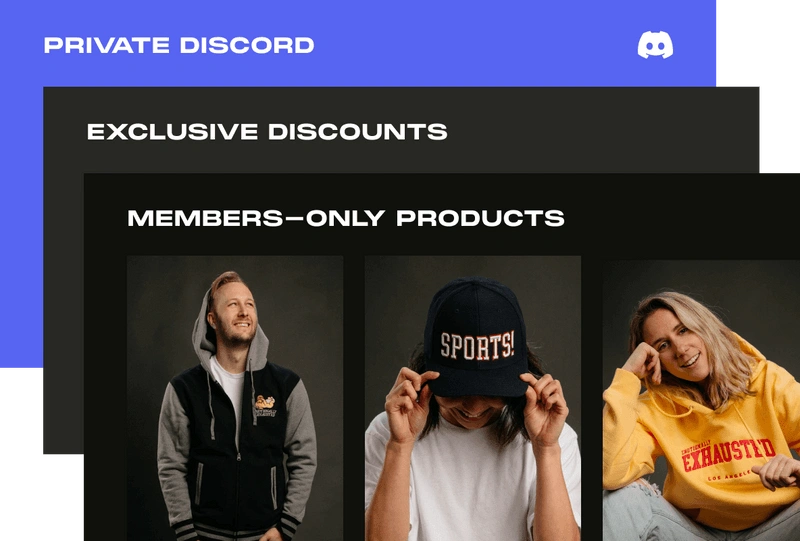
For creators looking to complement Discord’s success, Fourthwall offers even more powerful tools to further monetize and engage your communities.
Fourthwall features include customized websites and storefronts, easy-to-design custom merch, social media tools, and exclusive extras for your most devoted fans.
These features work beautifully alongside Discord, allowing server owners to build thriving, profitable, full-featured communities.
Get started on Fourthwall today and unlock the full power of your fan base and your potential!
FAQ: Discord
What is Discord and how does it work?
Discord is a communication platform that lets users chat through text, voice, and video in organized servers built around communities, topics, or creators.
Why did Discord become so popular?
Its free core features, high-quality voice chat, low-latency performance, customizable servers, and user-friendly interface made it a major upgrade from older tools like Skype, TeamSpeak, and Slack.
Is Discord just for gamers?
No—while Discord started as a gaming-focused platform, it is now used by creators, musicians, study groups, fandoms, educators, coders, book clubs, and hobbyist communities worldwide.
What are Discord servers?
Servers are community spaces with multiple channels for chatting, sharing media, voice calls, events, and discussions—each dedicated to specific topics or activities.
What features make Discord different from other chat apps?
Discord offers text chat, high-quality voice channels, video calls, screen sharing, customizable servers, advanced moderation tools, app integrations, forums, and Stage channels.
Kristi Kates is a writer at Fourthwall who covers the Creator economy from the inside, as a working musician and Partnered Twitch streamer. She brings 15+ years of music and culture journalism to her work, including a run as Editor in Chief of the indie-rock magazine Pyxis, and writes to help Creators build merch, memberships, and audiences that last.


.png)