
12 Best Two Fifteen Alternatives for Sustainable Print-on-Demand (2026)
Discover The Platforms That Are Revolutionizing Ethical Fulfillment for Modern-Day eCommerce


Looking to go green with your merch line?
In the last five years, sustainability has become a major factor for print-on-demand sellers who care more about how their products are made rather than their sales margins.
Things like eco-friendly inks, plastic-free packaging, ethical apparel, and genuine environmental accountability are now real options people are considering before choosing their POD provider.
That shift is exactly why platforms like Two Fifteen have become a standout option.
This print-on-demand service has been praised for its commitment to sustainable production and fast customer service, making it a reliable POD partner for those looking to run a clean, dependable merch business.
Below, we'll take a quick look at how Two Fifteen approaches sustainability when it comes to print-on-demand and where it may fall short. We'll also break down 12 eco-friendly alternatives that offer greener materials, low-impact fulfillment, and better options for sellers looking to grow their merch brand responsibly.
What Makes Two Fifteen Stand Out?
Two Fifteen is a UK-based print-on-demand fulfillment company that keeps everything in-house.
Their production team is known for maintaining strict quality control and fast dispatch times, all while safeguarding your brand’s reputation by embedding ethical and sustainable practices throughout the entire production process.
.jpeg)
Sustainability isn’t a side note here either. From renewable-powered facilities and plastic-free packaging to vegan, OEKO-TEX®-certified inks and organic garments from PETA- and GOTS-approved suppliers, their eco practices are woven into how the company operates.
And instead of offering a token “green” product or two, they structure entire collections around organic, vegan, and recycled categories, making it easier for brands to build an identity rooted in responsible production.
But sustainability isn't only what Two Fifteen has to offer when it comes to print-on-demand. Take a look at some of the other features that really make this company shine.
👕 Product Catalog
Two Fifteen offers more than 250 customizable products, with a strong emphasis on apparel and lifestyle goods.
The catalog covers essentials like t-shirts, hoodies, sweatshirts, activewear, children’s clothing, and accessories, alongside drinkware, giftware, and wall art.
However, where the platform truly stands out is its volume of high-quality, embroidery-ready garments and organic options, making it well-suited for clothing brands that want to position themselves as a premium, sustainable option rather than just another fast-fashion merch shop.
🖨️ Printing & Decoration Methods
The platform supports multiple production methods, allowing brands to match any style with product type and price point.
For instance, their DTG printing uses water-based inks sprayed directly onto garments, making it ideal for detailed artwork and small-batch runs, while DTF printing is used for activewear, offering durability and flexibility for performance fabrics.
If you're seeking premium positioning, their embroidery and unlimited color embroidery deliver long-lasting, high-detail finishes, and giclée printing supports high-end art reproductions.
🎨 Design Tools & Mockups
Two Fifteen includes a built-in drag-and-drop design tool that lets you upload artwork and place it directly on your chosen products.
Alongside this, a lifestyle mockup generator lets you preview how your designs will appear in realistic product settings before publishing them to your store.
To protect print quality, the platform uses a PPI-based quality scoring system that flags low-resolution files before they go to production.
It also offers clear file setup guidance, including a recommended 300 DPI resolution and a preference for JPEG and PNG files, especially for apparel.
🏷️ Branding & White Label Capabilities
Branding is one of Two Fifteen’s strongest assets, especially for apparel-focused businesses.
Sellers can replace manufacturer sizing labels with sewn or printed custom neck labels and add branded swing tickets for a retail-ready finish.
Packaging remains white-label, with options for custom packing slips and branded stickers applied to shipping bags.
From production to final delivery, your brand remains the visible identity, not the fulfillment partner’s.
🚚 Shipping & Fulfillment
All products are printed and fulfilled in-house at their UK facility, which gives them direct oversight over production timelines.
Clothing typically dispatches within five working days, while mugs and giftware ship within two.
UK orders are sent via Royal Mail 24 or 48 tracked services, and international shipping includes tracked delivery to Europe and the rest of the world.
For UK and EU-based sellers, the fulfillment process is straightforward, reliable, and fully trackable.
🔄 Automation & Integrations
Two Fifteen supports full dropshipping automation by integrating with major eCommerce platforms.
Once connected, customer orders flow directly from your store to their production team for printing, packing, and shipping under your branding.
Supported integrations include Shopify, WooCommerce, Etsy, TikTok, BigCommerce, Wix, Squarespace, Amazon, and a few others with API access.
Why You Might Want to Look for a Two Fifteen Alternative
There’s no doubt that when it comes to sustainability, Two Fifteen is a hard POD service to match.
But what makes it such a great option for some sellers can also create friction for others, especially if your business model extends beyond the UK.
Before committing, it’s worth weighing a few limitations that could impact scalability, margins, or long-term flexibility.
- Primarily UK-Focused Fulfillment: Everything is printed in the UK. This can be a problem if most of your audience is in the U.S. or globally distributed, as international shipping costs and timelines can impact margins and delivery expectations.
- No Native Storefront: Two Fifteen is a fulfillment partner, not an all-in-one website builder. You’ll need an external platform like Shopify, Etsy, or WooCommerce to run your storefront.
- Apparel-Heavy Focus: If you want massive expansion into novelty goods, tech accessories, or ultra-diverse product categories, larger global POD networks may offer more breadth.
- No Built-In Marketplace: There’s no internal discovery system. All traffic must come from your own marketing.
- Requires Proper File Prep: The 300 DPI requirement and file quality checks are great for print integrity, but beginners may find it slightly technical compared to ultra-simplified upload workflows elsewhere.
If any of these factors put a damper on your decision-making when considering Two Fifteen as your POD service, then it might be worth exploring other alternatives that are better suited to your needs.
Top Two Fifteen Alternatives for Sustainable Print-on-Demand
If Two Fifteen doesn't quite check all the boxes on how you want to sell merch, don't worry, you’ve got options.
The following platforms offer a variety of features and tools that rival Two Fifteen and offer more for print-on-demand in terms of sustainability and functionality.
1. Fourthwall
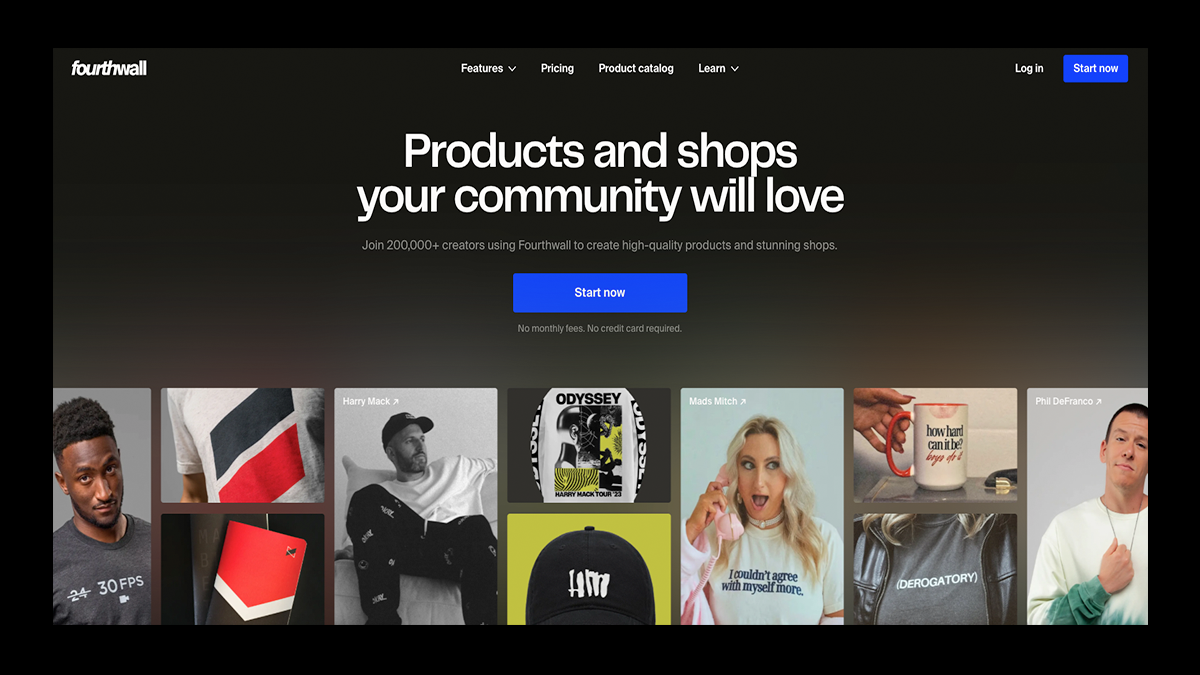
Fourthwall may not cater to sustainability as aggressively as some niche POD providers, but what it lacks in greener practices, it more than makes up for in brand-first print-on-demand tools that blow most platforms out of the water.
The platform provides users with a powerful storefront builder and intuitive design tools, including 3D mockups with access to multiple printing methods—DTG, DTF, embroidery, sublimation, and UV printing—all from one dashboard.
Its product catalog features over 370 customizable items to choose from, including eco-friendly options such as Stanley/Stella organic apparel, organic cotton tote bags, recycled sportswear, and eco-conscious headwear.
Add in reliable fulfillment with global shipping, custom package inserts for every order, and built-in email marketing tools, and Fourthwall becomes a serious contender for any brand looking to scale their merch.
2. Inkthreadable
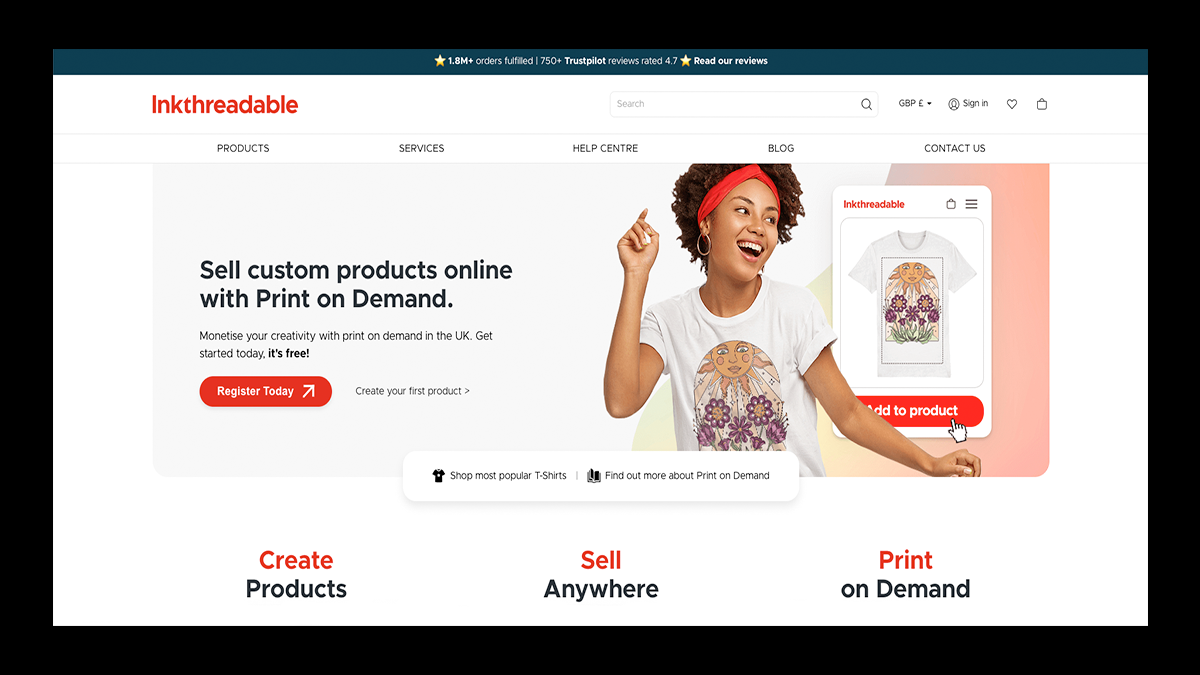
Inkthreadable is another UK-based print-on-demand provider that centers its entire operation around ethical and eco-conscious production.
Every product is made to order, reducing waste and excess inventory, while recycled packaging, water-based inks, carbon offset shipping options, and natural or recycled fabrics reinforce its sustainability commitment.
The platform integrates directly with Shopify and Etsy for streamlined automation and offers a curated catalog of apparel and lifestyle goods designed with environmentally responsible sourcing in mind.
For brands that want their supply chain to reflect their values, Inkthreadable stands out as a purpose-driven POD partner rather than just another fulfillment service.
3. Teemill
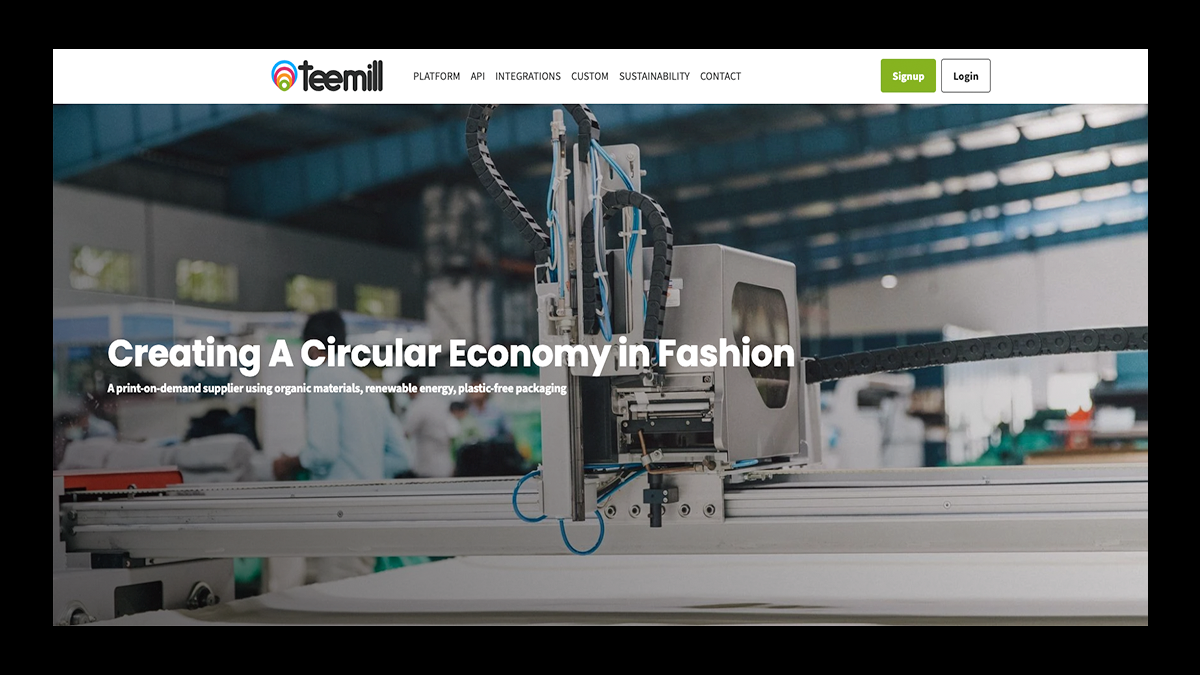
Teemill stands out as one of the few print-on-demand platforms built entirely around circular fashion.
In addition to selling organic cotton t-shirts and hoodies, this platform allows brands to take back worn products and recycle them into new garments, keeping textiles out of landfills.
Its on-demand production model ensures items are only made when ordered, automatically reducing waste while giving sellers control over what’s produced.
While the catalog is intentionally smaller and pricing reflects its sustainability focus, Teemill is a strong fit for brands that want environmental responsibility to be a core part of their business model, not just a talking point.
4. Prodigi
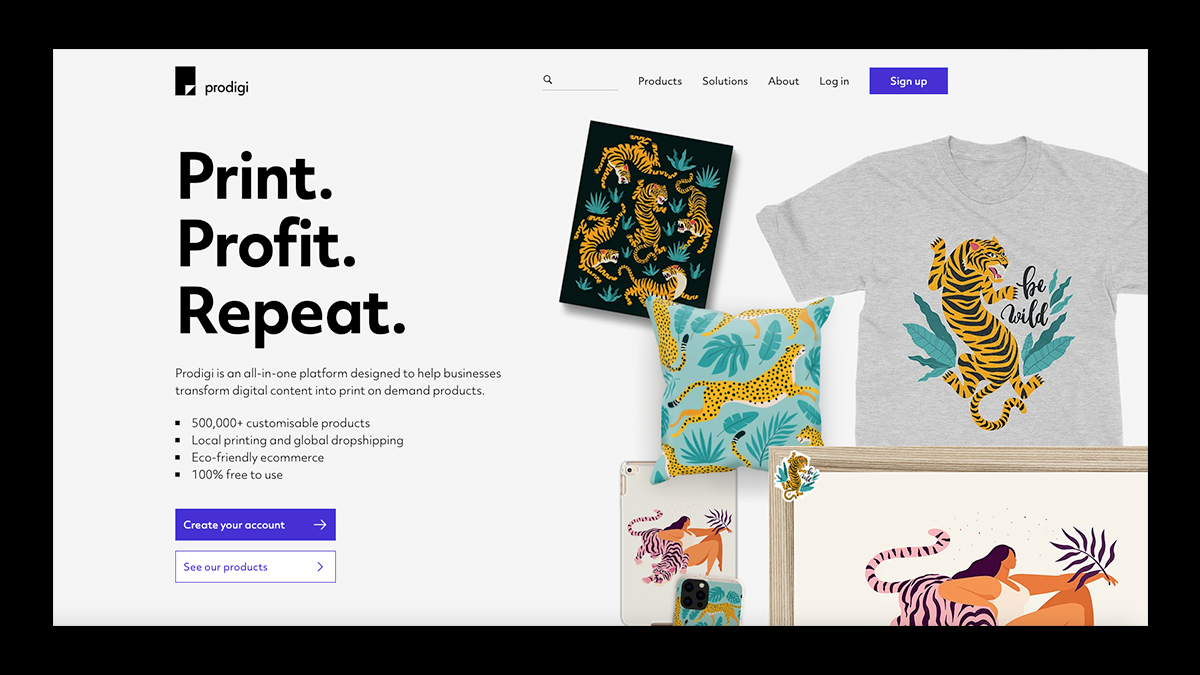
Prodigi is built for brands that want to scale globally without scaling their environmental impact.
It partners with local print facilities across the UK, EU, and U.S., automatically fulfilling orders closer to customers, thereby reducing shipping costs, emissions, and delivery times.
Prodigi’s catalog spans hundreds of thousands of customizable products—from fine art prints and canvases to homeware and apparel—using eco-friendly inks and responsibly sourced materials wherever possible.
Throw in no upfront costs, fast 24–48-hour production, and integrations across major eCommerce platforms, and Prodigi offers a rare mix of sustainability, speed, and enterprise-level flexibility.
5. PrintKK
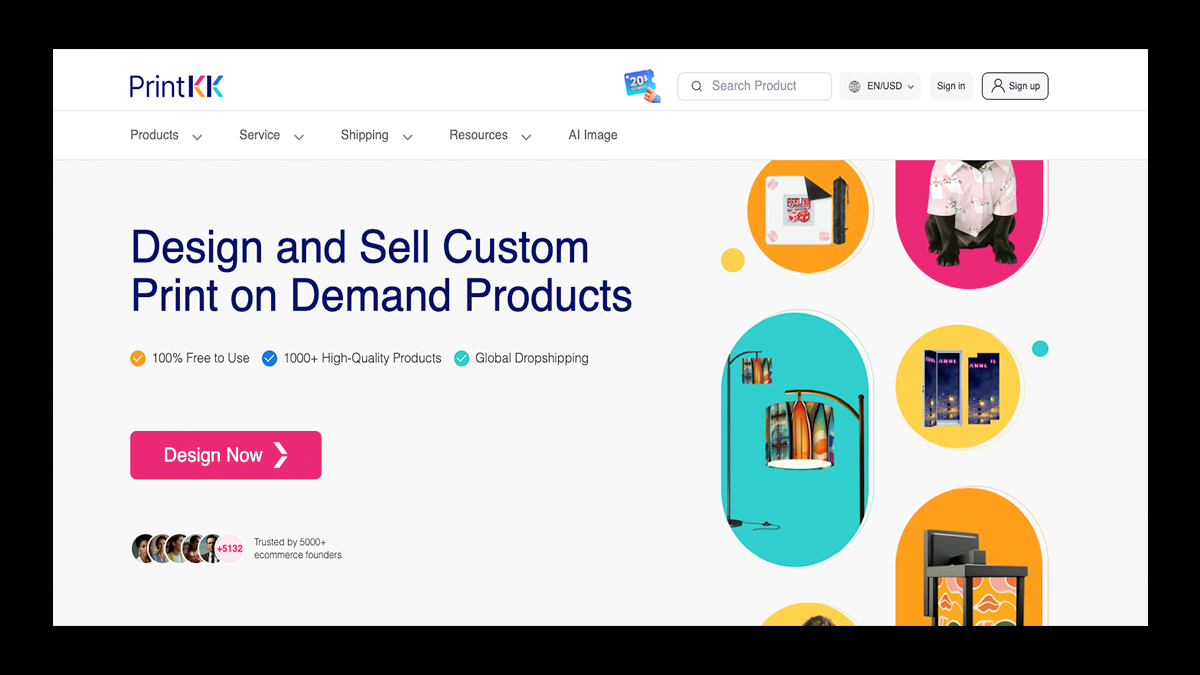
PrintKK offers made-to-order apparel and accessories made from organic cotton and recycled fabrics, paired with water-based inks that are safer for people and the environment.
It handles everything end-to-end, including printing, packaging, and shipping, allowing you to sell without inventory or excess waste.
With a portion of its revenue dedicated to carbon removal efforts, it’s a strong option for brands looking to align everyday merch sales with measurable environmental impact.
6. Gelato
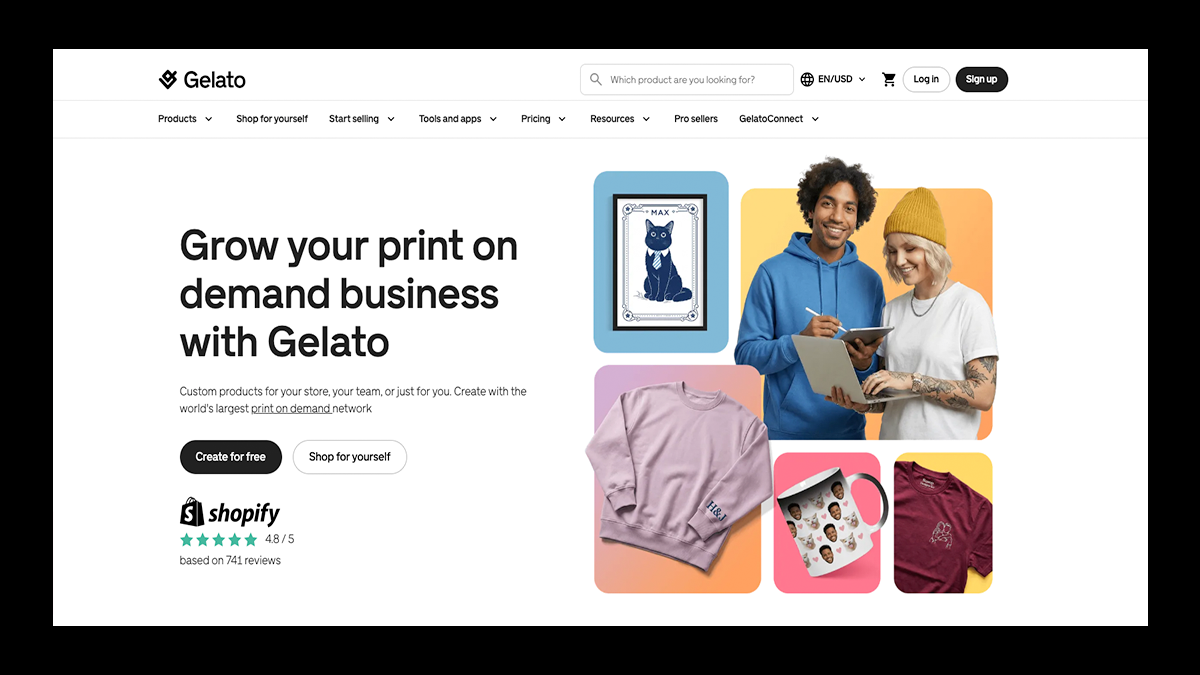
Gelato's localized production network prints orders closer to customers, reducing shipping emissions and delivery times in one move.
The platform supports over 100 products (apparel, stationery, home goods, drinkware, and cardstock) that operate on a made-to-order model to prevent overstock.
It also uses water-based inks and recyclable packaging to help reduce environmental impact.
With simple order tracking and the ability to manage multiple online stores from one dashboard, it’s a practical choice for brands focused on scale, efficiency, and smarter sustainability.
7. Printful
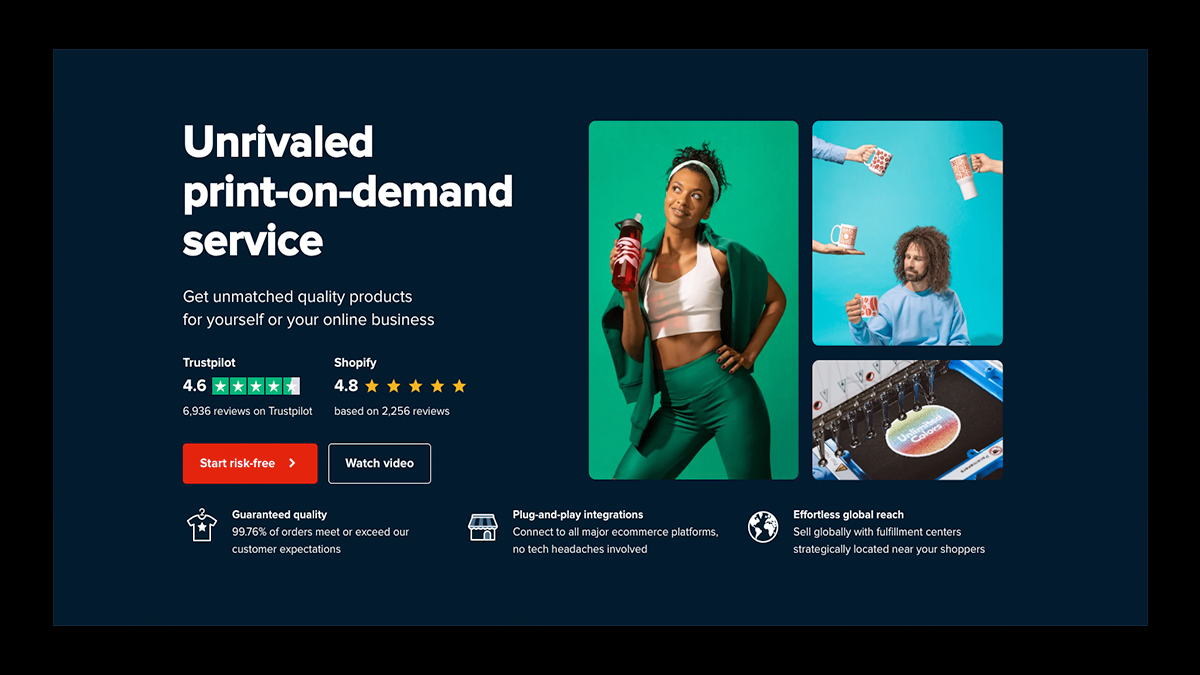
Printful does a great job of blending scale, automation, and growing sustainability initiatives into one of the most well-rounded print-on-demand platforms on the market.
With Printful, you can choose from a large catalog of apparel, home goods, and accessories, all produced on demand, so there’s no need to manage inventory or risk overstock.
On the sustainability side, it uses water-based inks, recycled packaging, and offers carbon-neutral shipping options, while also sharing transparency data to help sellers make informed decisions about the types of fabrics they can use and the closest facilities for fulfilling orders.
Although eco-friendly items can cost more, Printful remains a strong choice for brands that want reliability, global reach, and measurable steps toward greener production.
8. TPOP
This European-based POD platform puts sustainability first by designing its entire workflow around low-waste, responsible production.
From water-based inks and organic fabrics to carbon-neutral shipping and 100% plastic-free, recyclable packaging, every order is built to minimize environmental impact without adding friction for sellers.
On top of that, TPOP lets you create a complete online storefront directly on the platform, with easy-to-use tools to customize your theme, colors, fonts, logos, homepage layout, and messaging—no external website required.
If you're a creator looking for more ownership of your branding and storefront, TPOP is a strong platform to go with.
9. Printify
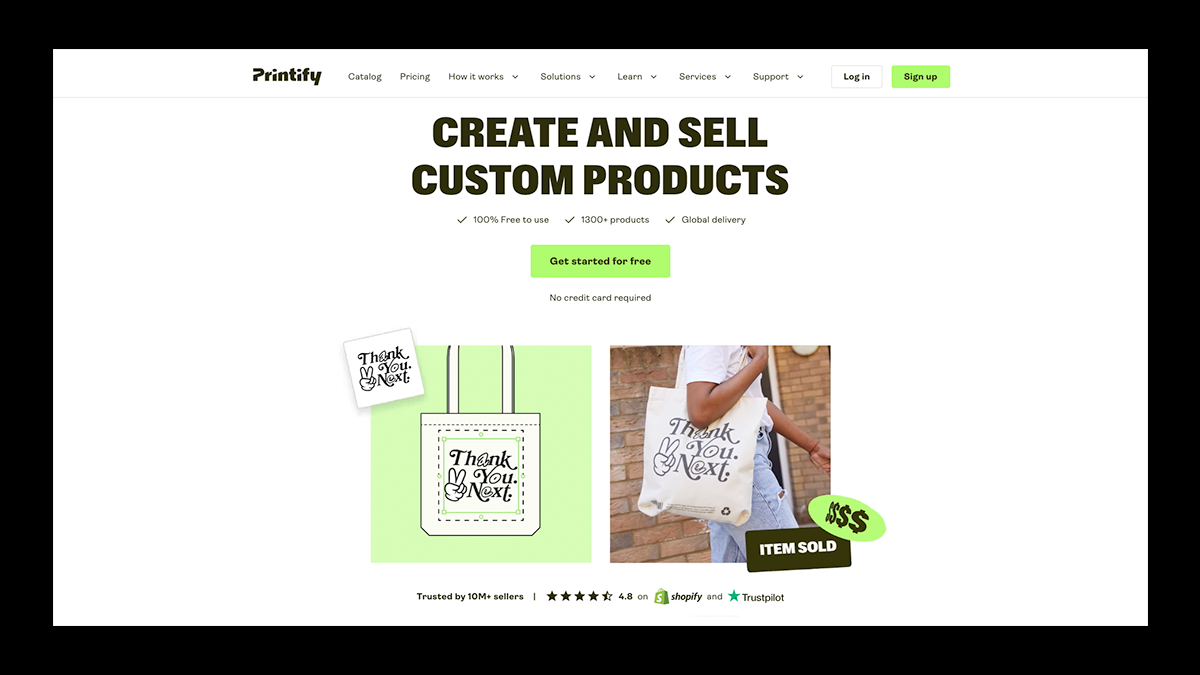
Printify positions itself by making on-demand manufacturing the default so that overproduction becomes the exception.
Through its global supplier network, sellers can choose print providers that align with sustainability goals, including options that offer organic cotton, recycled materials, water-based inks, biodegradable phone cases, eco totes, and soy candles.
Printify publicly tracks its progress through detailed ESG and sustainability reports, a Supplier Code of Conduct, and long-term commitments to reduce delivery-related emissions, which offers more transparency than most POD marketplaces.
With easy integrations, automated fulfillment, and a growing catalog of eco-friendly products, Printify is a flexible option for brands that want to scale, maintain supplier choice, and take measurable steps toward more responsible production.
10. Print Natural
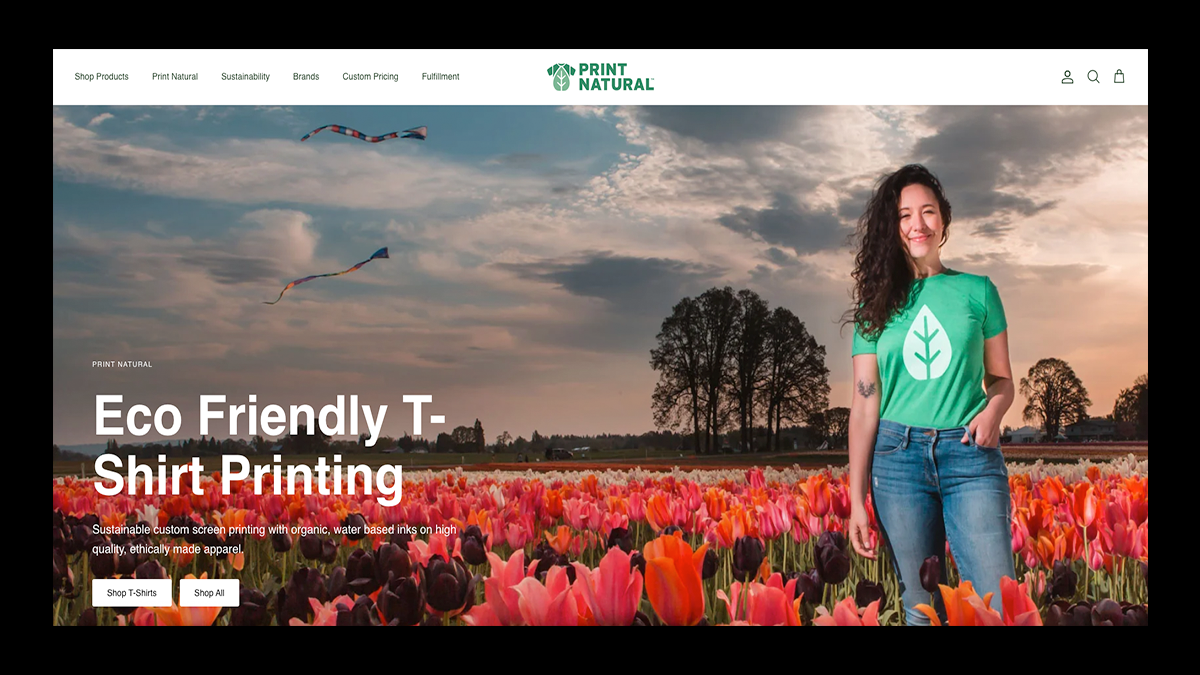
Print Natural focuses on apparel and accessories made with organic cotton and recycled materials, using eco-friendly inks and biodegradable packaging to help minimize environmental impact.
Its made-to-order production model ensures items are created only after a sale is made, helping reduce overstock and textile waste.
Print Natural is also transparent about its sourcing and manufacturing processes, giving sellers greater confidence in how their products are produced.
While its catalog is much smaller than most POD networks', it is a great option for those who prioritize cleaner materials and sustainable operations over sheer volume.
11. Custom Ink
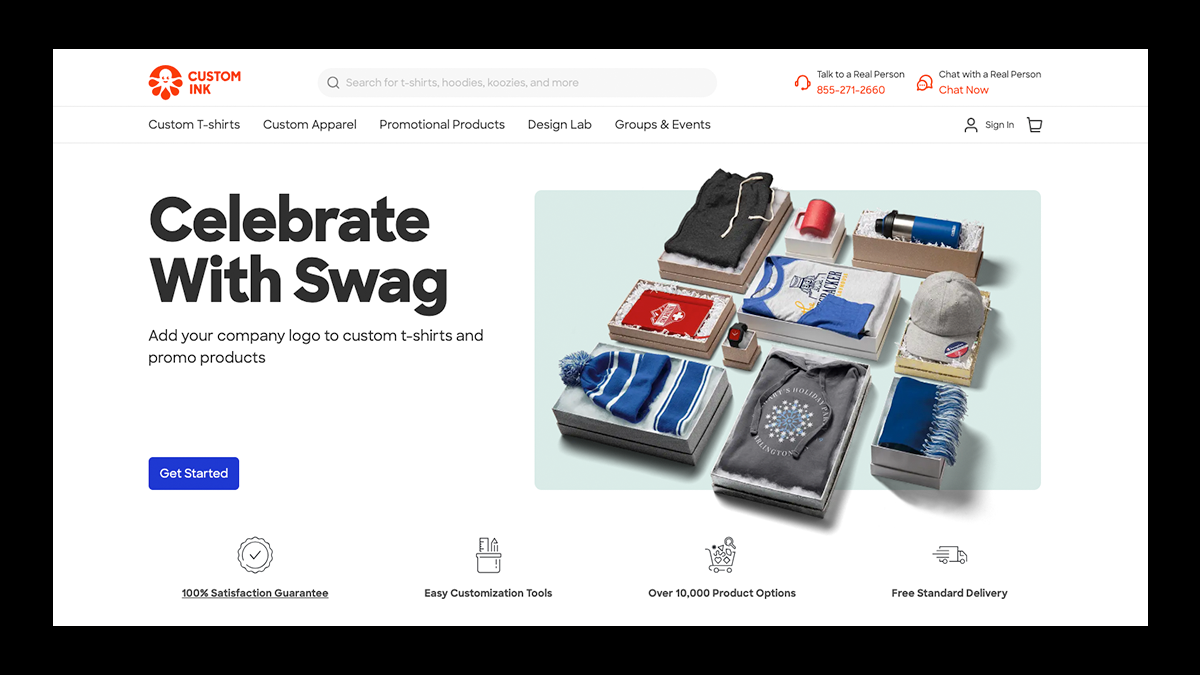
Custom Ink is best known for its intuitive design experience and wide selection of customizable merchandise, including apparel, mugs, and accessories.
The platform offers easy-to-use design tools, responsive customer support, and flexible ordering options that make it simple to create polished, professional products without holding large amounts of inventory.
When it comes to sustainability, Custom Ink incorporates eco-friendly inks, organic and recycled fabric options, and recyclable packaging to help reduce environmental impact.
While its eco-conscious products can come at a higher price point, and international shipping is a bit more limited, Custom Ink remains a strong option for brands that want dependable customization with greener options built in.
12. Contrado
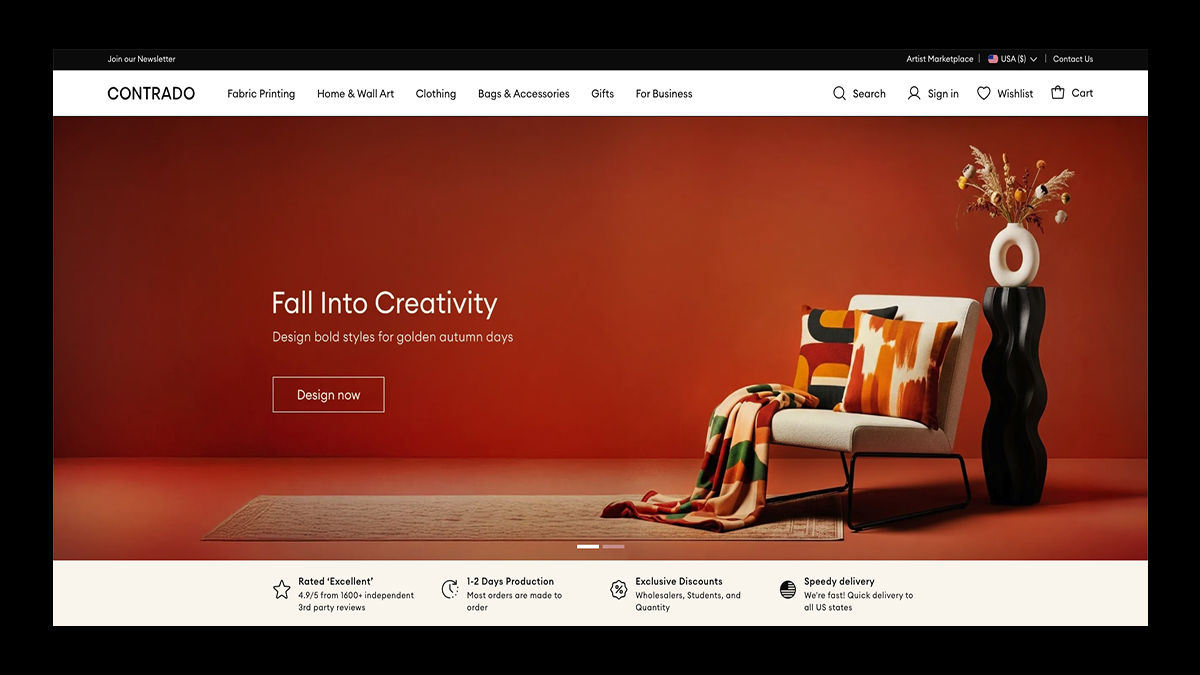
Contrado is an on-demand platform that offers handcrafted products made with ethically sourced materials and advanced printing techniques.
With over 140 premium fabrics, including cotton, silk, velvet, linen, and jersey, this platform leans heavily into high-end, design-forward production.
Its in-house web-to-print manufacturing system includes 3D preview tools, full white-label capabilities, and rigorous quality control, ensuring every item is hand-inspected before being shipped globally.
Because everything is made to order with no minimums, Contrado reduces overproduction while delivering luxury-level customization, making it an ideal choice for brands that want sustainability, craftsmanship, and premium positioning all in one.
Key Features to Look for in a Sustainable Print-on-Demand Platform
After reviewing the list of POD platforms above, a few clear patterns emerge.
The best sustainable companies don’t just swap in organic cotton and call it a day—they rethink materials, production, and transparency from the ground up.
When choosing the right platform for your merch line, consider these features ahead of time:
- Made-to-Order Production: The foundation of sustainable print-on-demand is simple: only produce what’s sold. Platforms that eliminate bulk inventory and overproduction help reduce landfill waste and unnecessary resource use from the start.
- Eco-Friendly Materials & Inks: Look for organic cotton, recycled fabrics, biodegradable phone cases, eco-fill insulation, or responsibly sourced textiles. Water-based or OEKO-TEX®-approved inks are another strong indicator that a platform is minimizing harmful chemicals.
- Sustainable Packaging: Plastic-free mailers, recycled or biodegradable packaging, and reduced packing materials matter more than most sellers realize. Packaging is one of the easiest places for a brand to shrink its environmental footprint.
- Localized or Distributed Production: Platforms with global print networks or regional fulfillment centers reduce shipping distances, cutting both carbon emissions and delivery times. Local production is often a quiet but powerful sustainability win.
- Transparency & ESG Reporting: The strongest platforms openly share sustainability reports, supplier codes of conduct, and environmental goals. Transparency around sourcing, labor standards, and emissions tracking shows long-term commitment—not surface-level marketing.
- Ethical & Circular Initiatives: Take-back programs, garment recycling systems, carbon offset partnerships, and responsible supplier onboarding are signs that a platform is thinking beyond individual orders and toward systemic impact.
Build a Brand That Actually Stands for Something
Today, it’s no longer enough to slap a design on a shirt and call it a brand. Customers want to know how it’s made, where it’s shipped from, and whether or not your values match theirs.
The key is choosing a partner that aligns with both your environmental priorities and your brand's growth goals.
If you want a platform that balances scalability with creative control, Fourthwall deserves serious consideration.
It combines a fully customizable storefront, 370+ premium products (including eco-friendly options), multiple advanced printing methods, global fulfillment, and direct integrations with YouTube, TikTok Shop, Meta, and Twitch, all in one website that's built for sellers of all sizes.
If you’re ready to launch a merch store that reflects your brand values and gives you room to scale, it’s time to build it on a platform designed to grow with you.
FAQ: Two Fifteen
Is Two Fifteen eco-friendly?
Yes, Two Fifteen operates with a strong focus on sustainability. Its production facilities are powered by renewable energy, and orders are shipped in plastic-free, biodegradable packaging. The company also uses vegan-friendly, water-based inks and offers organic and recycled garment options.
Does Two Fifteen use sustainable inks?
Two Fifteen prints using vegan, water-based inks on Kornit DTG machines. These inks are OEKO-TEX® certified, meaning they are tested for harmful substances and safe for both adults and children. This allows brands to maintain high print quality while meeting eco-conscious standards.
Where is Two Fifteen based?
Two Fifteen is based in the United Kingdom, and all printing and fulfillment are handled in-house at its UK facility. The company does not outsource production, which helps maintain consistent quality control and dispatch times. This setup is especially beneficial for UK and EU-based sellers.
Does Two Fifteen offer worldwide shipping?
Yes, Two Fifteen provides fully tracked international shipping. Orders can be delivered across Europe and to the rest of the world, though shipping times and costs vary by region. UK-based customers typically receive faster and more cost-effective delivery.
Matt Keyser is a writer at Fourthwall who lives at the intersection of social media and Creator culture. With 4+ years of experience covering industry trends, his work focuses on helping Creators and brands understand how to turn their passion into a thriving business while maintaining a constant pulse on the latest eCommerce and social media trends.


You might also like

9 Best Kajabi Alternatives for Course Creators in 2026

What to Sell Online: How to Find a Product People Want

8 Best Spreadshirt Alternatives for Print-on-Demand in 2026

7 Best Sellfy Alternatives for Creators and Brands in 2026

27 Best Digital Products to Sell as a Creator
.webp)
Top 8 Wix Alternatives for Creators Building an Online Store in 2026

How to Create and Sell Print on Demand Journals and Notebooks

9 Gumroad Alternatives for Digital Creators in 2026

10 Best Stan Store Alternatives for Creators in 2026

Keep up with the latest from Fourthwall
New features, product updates, trend breakdowns, and creator stories — straight to your inbox.