
10 Best Society6 Alternatives for Artists in 2026
Discover The Best POD Platforms That Help Artists Grow, Not Just Get Listed


If you’re an artist trying to figure out where your work actually belongs online, you’ve come to the right place.
There are plenty of platforms out there that promise “hands-off” selling, but most are built to make selling easy, not to make it last.
Real control over your pricing, your audience, and your brand often gets traded away for convenience, and that, in turn, makes your work suffer.
For years, Society6 has been a familiar option for artists who want to sell prints and home decor without worrying about production, shipping, or customer support.
It made getting started simple, and for many creators, that was enough.
But as priorities shift toward ownership, transparency, and sustainable income, more artists are asking the bigger question: Is there a better place for my art to live online?
In this guide, we’ll break down where Society6 still shines, where it starts to hold artists back, and the strongest alternatives for creators ready to move beyond marketplaces and take their art seriously in 2026.
What Is Society6?
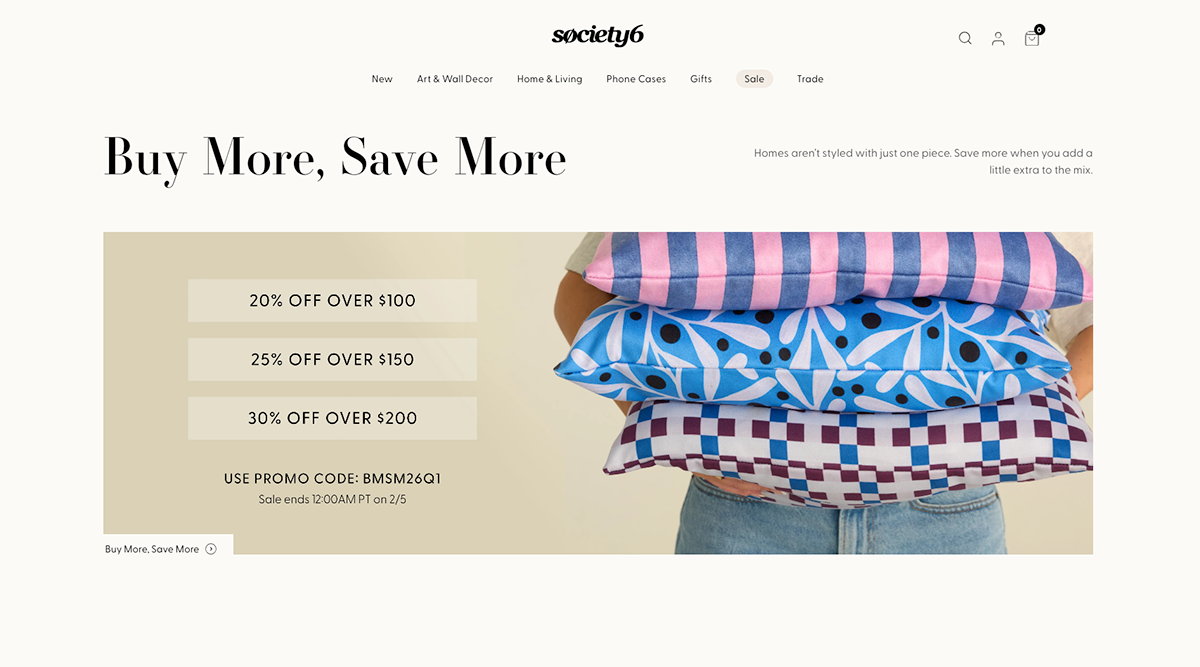
Society6 is a print-on-demand marketplace founded in 2009 with a mission to celebrate creativity and make art accessible for both artists and shoppers.
It allows independent artists from around the world to upload their designs and have them produced on a wide range of made-to-order products, while Society6 handles printing, fulfillment, shipping, and customer support behind the scenes.
What truly sets Society6 apart is its emphasis on art as a lifestyle. The platform is best known for premium wall art, home decor, and design-forward products that help customers create spaces rooted in self-expression.
Rather than focusing heavily on apparel-first merch, Society6 curates exclusive designs from emerging and established artists, pairing them with high-quality materials and polished product presentation.
In recent years, Society6 has evolved from an open marketplace into a more curated, editorial-style platform. This shift has narrowed its focus to carefully selected artwork that reflects current design trends and elevated aesthetics.
What Makes Society6 Stand Out?
Once you understand how Society6 works, its appeal becomes clearer: it’s built to remove friction for artists while delivering a polished, art-forward shopping experience.
Instead of acting like a merch factory, Society6 positions itself as a curated design marketplace—one that prioritizes presentation, quality, and simplicity over deep customization or business tooling.
Artist-First, Hands-Off Model
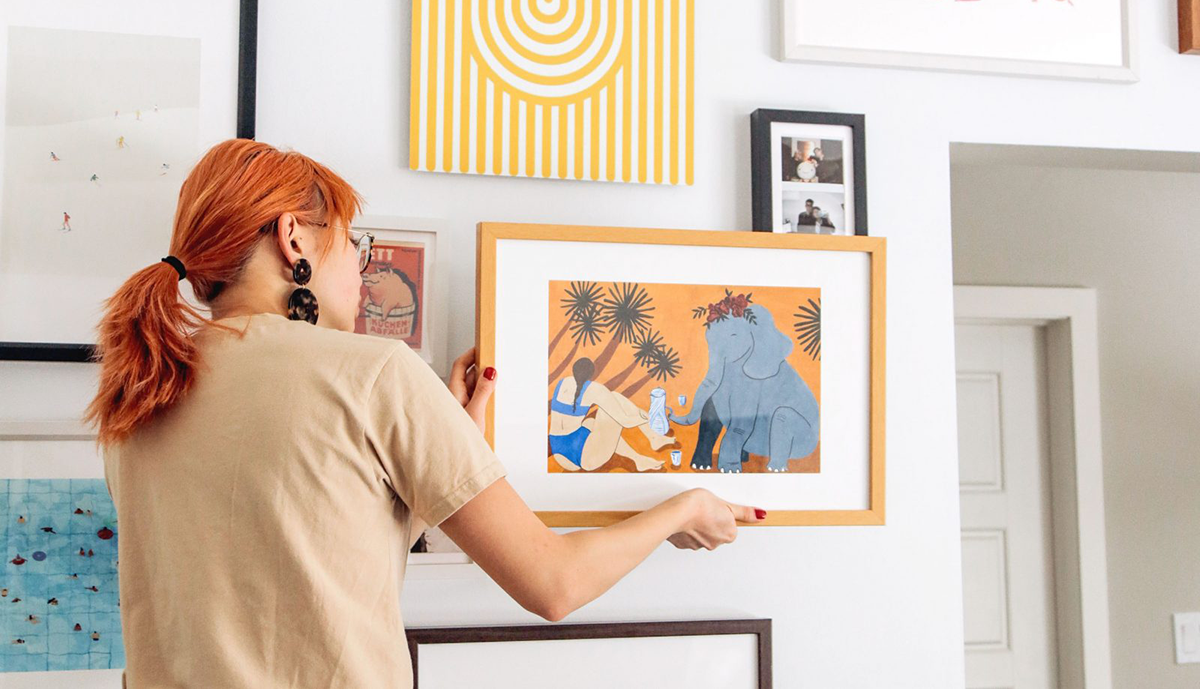
Society6 is designed for artists who want to focus on creating, not running operations.
The platform handles printing, manufacturing, shipping, returns, and customer service from start to finish, which dramatically lowers the barrier to entry.
For creatives who don’t want to touch logistics (or even think about them), this passive, hands-off structure is one of Society6’s biggest advantages.
Premium Home & Wall Decor Focus
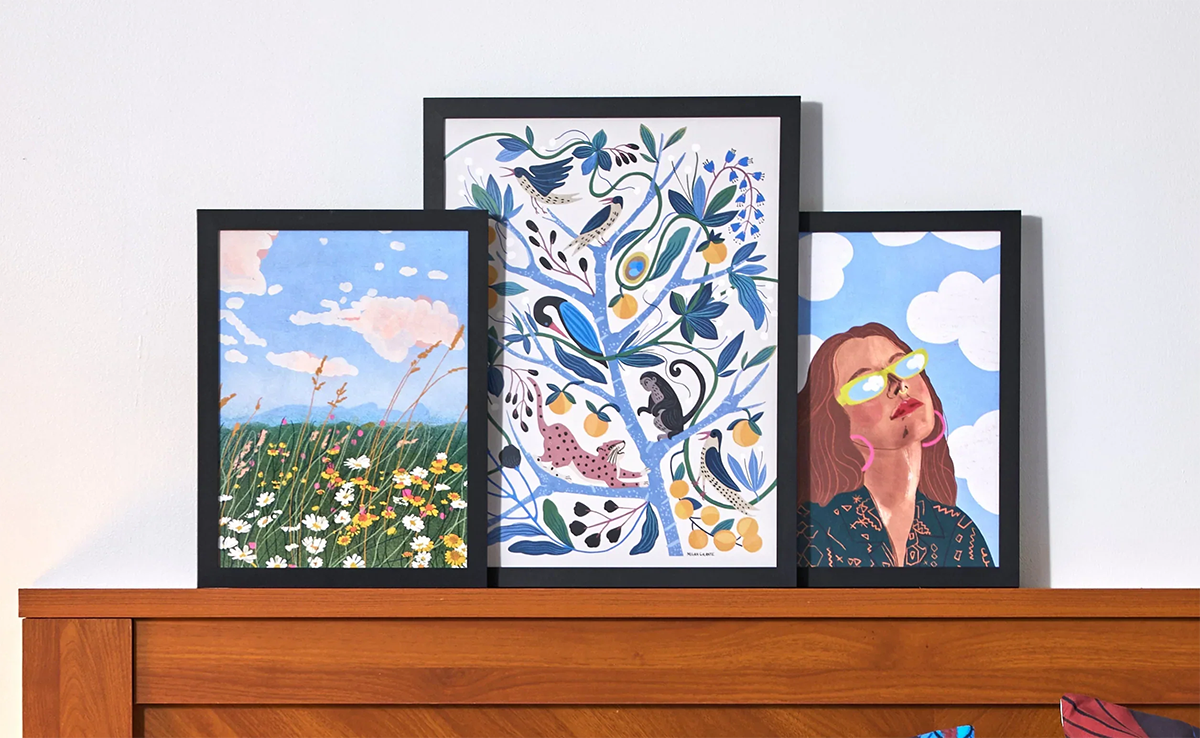
Where many POD platforms lean hard into t-shirts, hoodies, and novelty items, Society6 takes a different route.
Its strongest categories are wall art, framed prints, canvases, tapestries, rugs, and home decor that feels design-store ready.
This focus attracts a more niche, art-loving audience that’s shopping for statement pieces, not impulse merch.
High Production Quality Standards
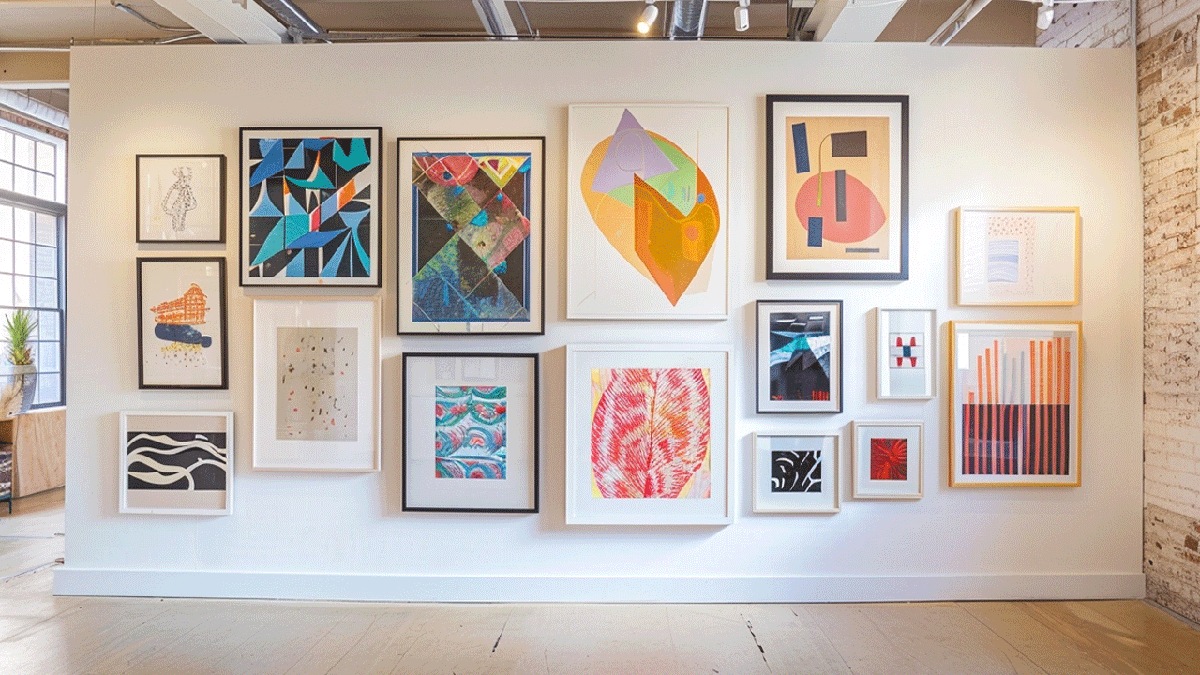
Society6 has built a reputation around quality, especially for large-format and art-centric products.
Its higher resolution requirements and strict file guidelines help ensure artwork translates cleanly onto physical products.
That extra barrier can be annoying upfront, but it protects artists from low-quality reproductions that could harm their brand in the long term.
Curated Marketplace Experience
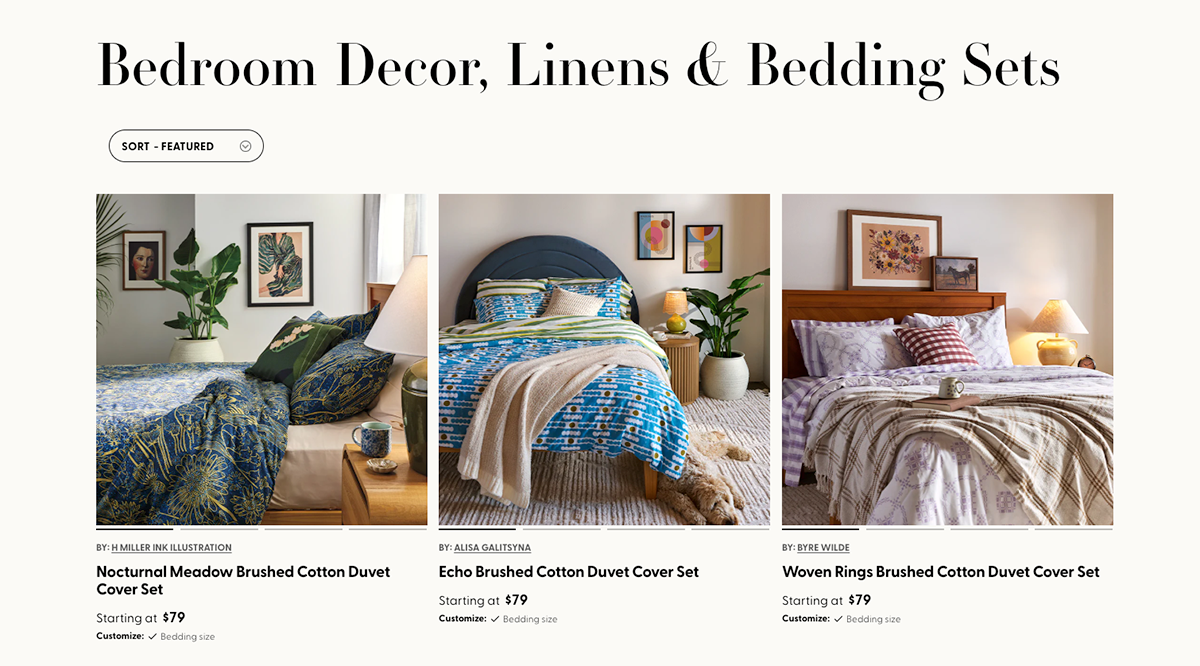
Since shifting to a curated model in 2025, Society6 has leaned into an editorial, gallery-style approach.
Not every artist is automatically accepted, which reduces overcrowding and elevates the marketplace's overall aesthetic.
For shoppers, this creates a more refined browsing experience; for accepted artists, it can mean being showcased alongside higher-quality work rather than buried in endless listings.
Simple, Predictable Royalty Structure
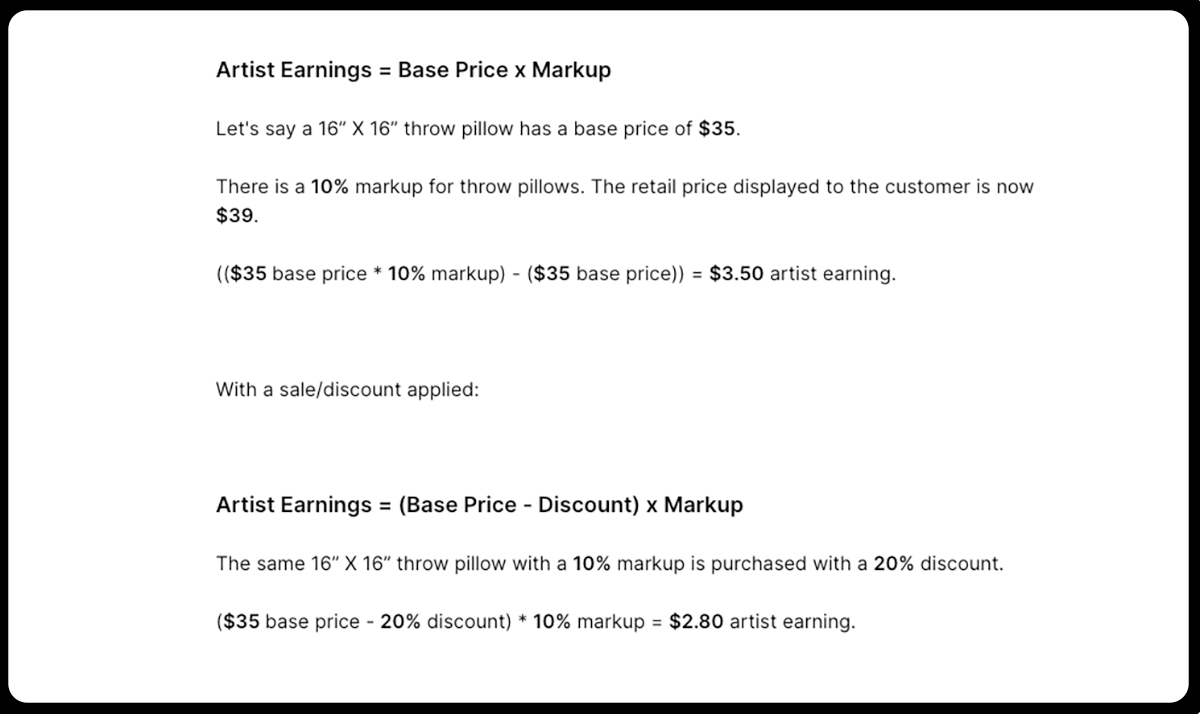
Society6 keeps artist earnings straightforward with a flat 10% commission on most products.
While this limits upside compared to platforms that allow custom markups, it also removes guesswork and keeps payouts predictable.
Art prints are the exception, giving artists pricing control where it matters most—on high-value, wall-ready pieces.
Why You Might Want a Society6 Alternative
Society6 makes selling art feel effortless, but that ease comes with built-in limits.
As soon as artists start thinking about growth, sustainability, or turning their work into a real business, the platform’s constraints become much harder to ignore.
💰 Limited Pricing Control & Low Earnings Per Sale
Society6’s fixed royalty model leaves very little room to strategically scale income.
Outside of art prints, artists can’t adjust pricing or margins, which makes it difficult to position work as premium or respond to demand.
And with a standard 10% commission, many products earn only a few dollars per sale, forcing artists to rely on high volume rather than smart pricing to increase revenue.
📊 Minimal Analytics and Performance Insights
The platform offers almost no visibility into how a shop is performing beyond basic sales numbers.
Artists can’t see where traffic comes from, which products convert best, or what designs resonate most with buyers.
For creators who want to optimize listings, test strategies, or make data-driven decisions, this lack of insight quickly becomes a roadblock.
👩🎨 Reduced Discoverability for New Artists
Society6’s curated model raises the aesthetic bar but also creates a gatekeeping effect.
Newer artists often struggle to gain acceptance or traction unless they already have an established audience.
Instead of helping artists get discovered, the platform increasingly favors those who can bring their own traffic.
🖼️ No Real Brand Ownership
Selling on Society6 means operating entirely within its ecosystem.
Artists don’t get a standalone storefront, customer data, or tools to build direct relationships with buyers.
In the long run, you’re contributing to Society6’s brand more than building your own—something many artists outgrow as their ambitions expand.
Overall Thoughts on Society6

Society6's biggest strength is how effortlessly it removes the operational side of selling.
Artists can upload work and rely on Society6 to deliver a polished, gallery-style shopping experience with consistently high production quality.
However, that convenience comes at the cost of control: fixed commissions, limited pricing flexibility, and minimal data make it difficult to grow beyond modest, volume-based earnings.
For artists who see their work as a passive revenue stream or a secondary outlet alongside other platforms, Society6 still makes sense.
But for creators aiming to build a brand, cultivate direct relationships with buyers, or scale their art into a long-term business, the platform’s limitations quickly become apparent.
Overall, Society6 functions less like a launchpad for growth and more like a curated showroom; one that's valuable for exposure, but not built for ownership or expansion.
Top Society6 Alternatives for Artists
1. Fourthwall
Fourthwall flips the Society6 model on its head by giving artists something most print-on-demand marketplaces never do: ownership.
Instead of uploading art into a shared marketplace and hoping for visibility, Fourthwall lets creators build a fully branded storefront where their work, pricing, and audience all belong to them.
The platform offers a robust POD catalog with 370+ products spanning wall art, posters, canvas prints, apparel, accessories, and home goods, making it easy for artists to build cohesive collections beyond just prints.
Fourthwall supports multiple professional printing methods, including DTG, DTF, sublimation, UV printing, and embroidery, ensuring high-quality output across a wide range of product types.
It also handles production, fulfillment, global shipping, taxes, and payments, while giving artists a fully branded storefront with real-time 3D mockups and intuitive design tools.
Beyond physical products, Fourthwall lets artists sell digital downloads, memberships, commissions, and even accept fan donations, turning a simple art shop into a scalable creative business.
💰 Pricing
- Free Plan: $0/month — No platform fees on physical products, 5% fee on digital products and memberships.
- Pro Plan: $19/month or $180/year — 0% digital product fees, free .store domain, $10/month in sample credits, unlimited team members, and priority support.
✅ Pros
- Full brand and pricing control (no fixed royalties)
- 370+ print-on-demand products, including wall art and home decor
- Multiple high-quality printing methods (DTG, DTF, sublimation, UV, embroidery)
- Built-in storefronts with a clean, professional design
- Generate 3D mockups of your products to publish on your store or social media
- Sell physical art, digital downloads, memberships, and commissions in one place
- Global fulfillment, shipping, payments, and tax handling included
- Integrates with YouTube Product Shelf, TikTok Shop, Twitch Gifting, and Meta
❌ Cons
- Requires more setup than plug-and-play marketplaces like Society6
- Smaller built-in discovery compared to large art marketplaces
2. Redbubble
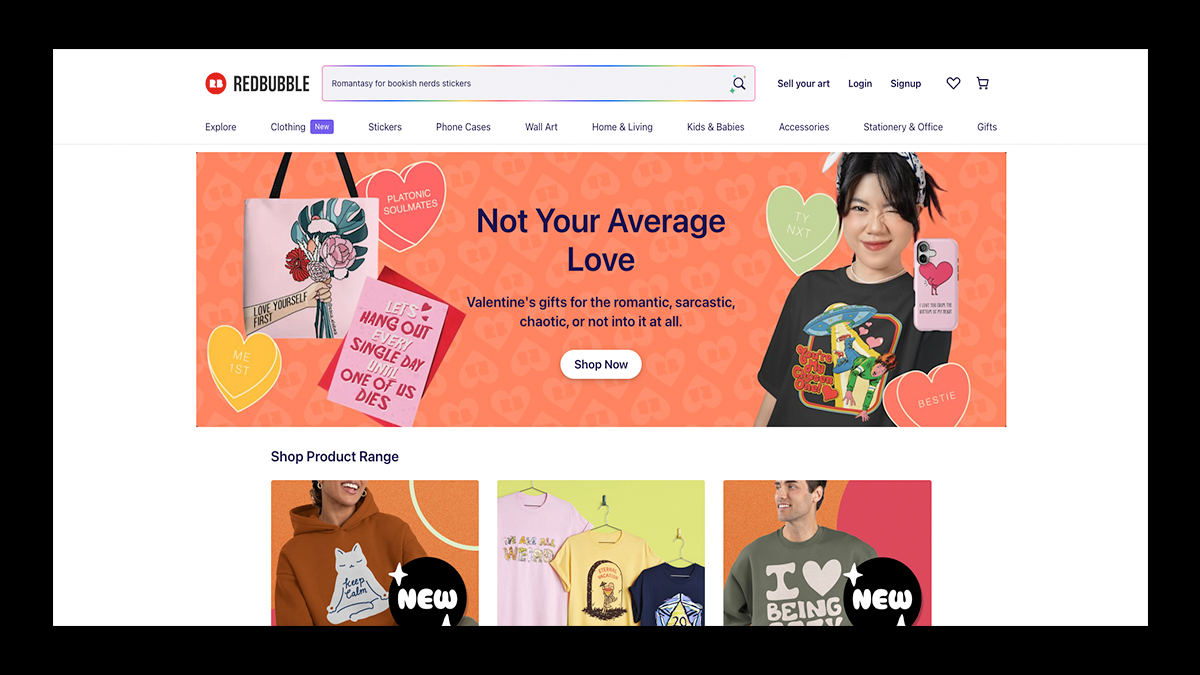
Redbubble is one of the closest Society6 alternatives in terms of scale, visibility, and ease of use, but with more flexibility baked into how artists earn.
It’s a massive print-on-demand marketplace where artists upload designs once and have them automatically applied across a broad catalog that includes stickers, apparel, wall art, home decor, tech accessories, and stationery.
Like Society6, Redbubble handles production, printing, shipping, and customer service end to end, making it a low-risk option for artists who want passive income without managing logistics.
Where Redbubble pulls ahead is pricing control. Artists can set their own markup percentages on top of Redbubble’s base prices, which opens the door to higher earnings per sale compared to Society6’s fixed royalty model.
The tradeoff is competition. Redbubble’s sheer size makes discoverability challenging, and platform fees vary depending on your seller tier and sales volume.
Still, for artists who want access to a massive global audience and the ability to control margins, Redbubble remains a compelling alternative.
💰 Pricing
- Free to Join: $0/month — Redbubble sets base prices; artists add markup and earn the difference.
- Standard Tier: ~50% platform fee.
- Premium Tier: ~20% platform fee.
- Excess Markup Fees: Apply when royalties exceed certain thresholds.
✅ Pros
- Huge built-in marketplace with strong organic traffic
- Wide product catalog beyond wall art and apparel
- Artists can set their own markup and pricing strategy
- No inventory, fulfillment, or customer support required
- Artists retain full ownership of their designs
❌ Cons
- Extremely competitive and saturated marketplace
- Limited control over branding and storefront experience
- Fees and margins can fluctuate by region and volume
- Product quality may vary depending on the fulfillment location
3. TeePublic
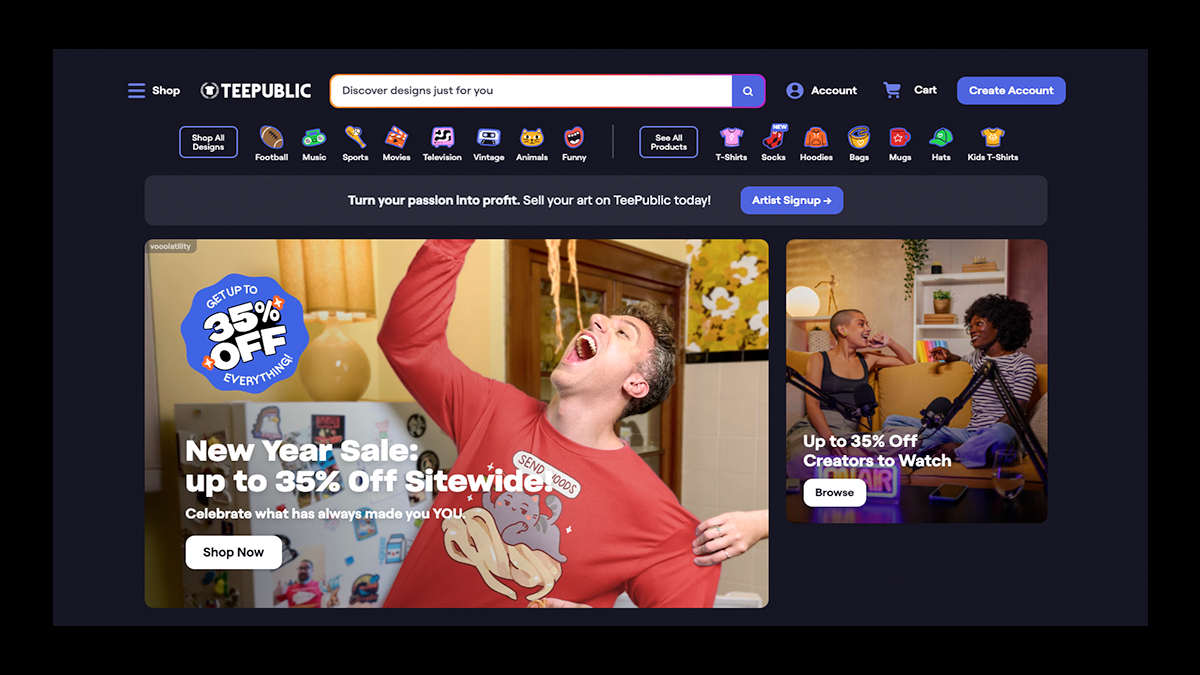
For artists who want exposure and sales without thinking about storefronts, branding, or backend setup, TeePublic is an easy, marketplace-first way to get designs in front of a massive audience fast.
It’s a print-on-demand platform where creators upload designs, select which products they appear on, and let TeePublic handle everything else, from printing and shipping to returns and customer support.
The catalog focuses on high-volume staples such as t-shirts, hoodies, stickers, mugs, phone cases, and accessories, all produced with consistent DTG printing methods.
What really makes TeePublic appealing is its built-in demand engine.
The platform drives traffic through strong SEO, pop-culture discovery, and frequent site-wide sales that automatically push volume.
This makes TeePublic especially attractive to illustrators, meme artists, and pop-culture designers who want fast visibility and steady sales without having to market their own store.
💰 Pricing
- Free to Join: $0/month — Earnings are based on fixed per-product commissions set by TeePublic.
✅ Pros
- Completely hands-off fulfillment, shipping, and customer service
- Built-in marketplace traffic powered by SEO and promotions
- Extremely fast setup with bulk design uploads
- No subscriptions, inventory, or upfront costs
- Great for graphic-driven and trend-based designs
❌ Cons
- Low, fixed profit margins
- Limited product variety compared to larger POD platforms
- No pricing control or storefront customization
- No customer data or tools for brand building
4. Threadless
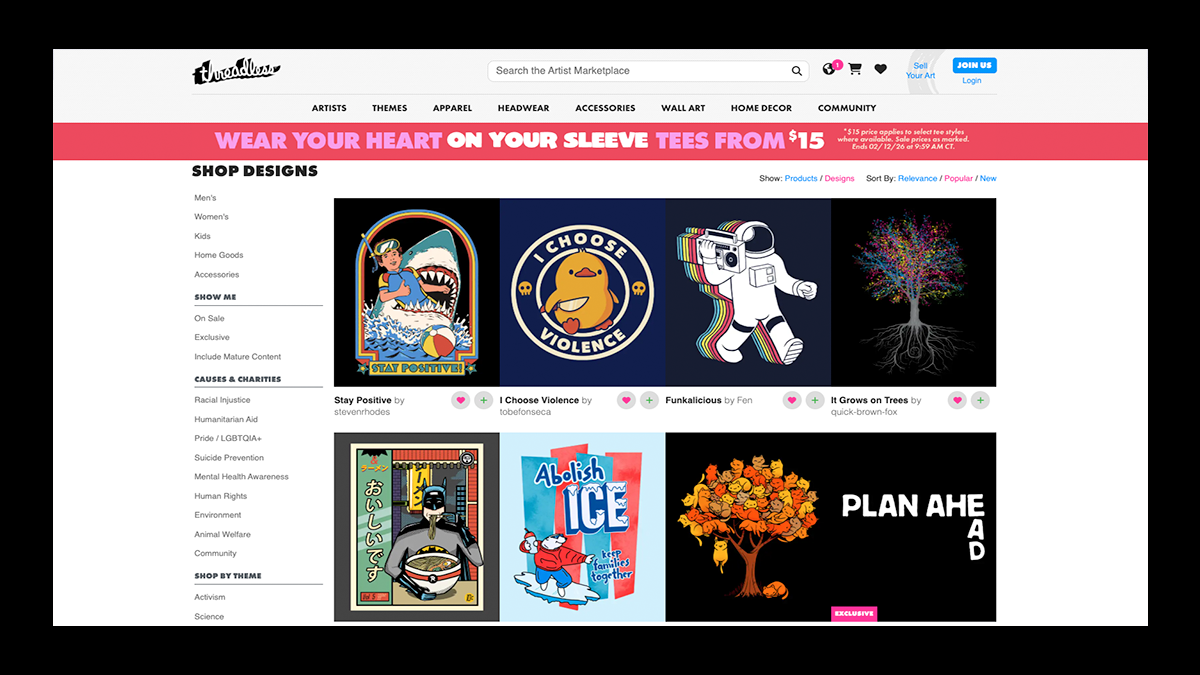
Threadless sits right between a traditional marketplace and a full-fledged artist storefront, making it a compelling Society6 alternative for artists who want both exposure and control.
It started as a community-driven T-shirt platform and has evolved into a global artist ecosystem where creators can sell apparel, wall art, home decor, and accessories either through the main marketplace or their own customizable Artist Shop.
Unlike Society6, Threadless gives artists the option to set their own prices, control product selection, and build a shop that reflects their brand while still benefiting from marketplace discovery if they choose.
What truly sets Threadless apart is its creative community. Design challenges, artist voting, and curated features give creators real opportunities to stand out, learn, and gain visibility without relying solely on external marketing.
The platform also handles production, fulfillment, shipping, and customer service, keeping operations simple while offering more flexibility than most art marketplaces.
💰 Pricing
- Marketplace: Free to join and sell.
- Artist Shops: Free to use with optional paid upgrades for additional customization and features.
✅ Pros
- Strong, community-driven platform with built-in audience
- Option to sell via marketplace and run a branded Artist Shop
- Artists can set their own prices or let Threadless manage promotions
- Wide range of apparel, wall art, home decor, and accessories
- Fully handled fulfillment, shipping, and customer support
- Emphasis on creativity, sustainability, and ethical production
❌ Cons
- Smaller overall audience than massive marketplaces like Redbubble
- Brand control is stronger than Society6, but still limited compared to standalone storefront platforms
- Competitive design challenges can be discouraging for new artists
5. Fine Art America
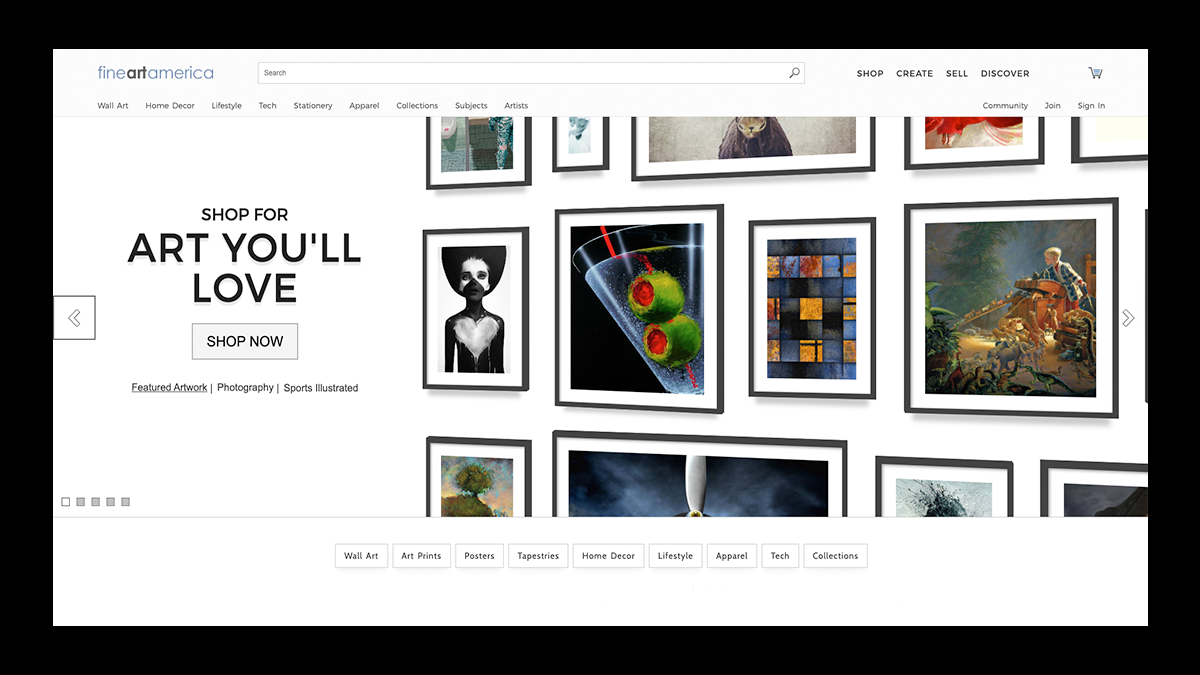
Fine Art America is basically the “big box store” version of online wall art in the best and worst ways.
It’s a massive print-on-demand marketplace (often described as one of the largest in the space) where artists, photographers, and illustrators can upload work and sell it as prints, framed pieces, canvases, and a surprisingly wide range of extras like phone cases, mugs, and even yoga mats.
Unlike Society6’s fixed royalty setup, Fine Art America lets artists set their own markup, which is huge if you’re trying to price your work like it actually has value (because it does).
The platform also runs fulfillment through a global production network (often cited as 16 facilities), so orders can be produced closer to buyers, which can help with shipping efficiency—though quality can still vary depending on the product and location.
The big catch: with hundreds of thousands of creators on the platform, competition is brutal, and unless you bring your own audience (or really learn the platform’s marketing tools), most sellers end up earning “nice side money” instead of “quit your job” money.
💰 Pricing
- Free Plan: $0/month — List and sell with limited features.
- Paid Plans: Available — Unlock additional marketing and storefront tools (varies by plan).
✅ Pros
- Built for wall art, photography, and print sales (strong fit for traditional/fine art styles)
- Artists can set their own profit margins (more control than fixed-royalty marketplaces)
- Fulfillment and shipping are handled through a large production network
- Huge catalog of printable formats (prints, framed art, canvas, plus lifestyle items)
- Extra tools available for artists who want more marketing support
❌ Cons
- Extremely crowded marketplace—visibility can be a grind
- Interface and seller experience can feel dated compared to newer platforms
- Product quality can be inconsistent depending on what’s ordered and where it’s fulfilled
- Not ideal if you want premium brand positioning and direct customer relationships
6. INPRNT
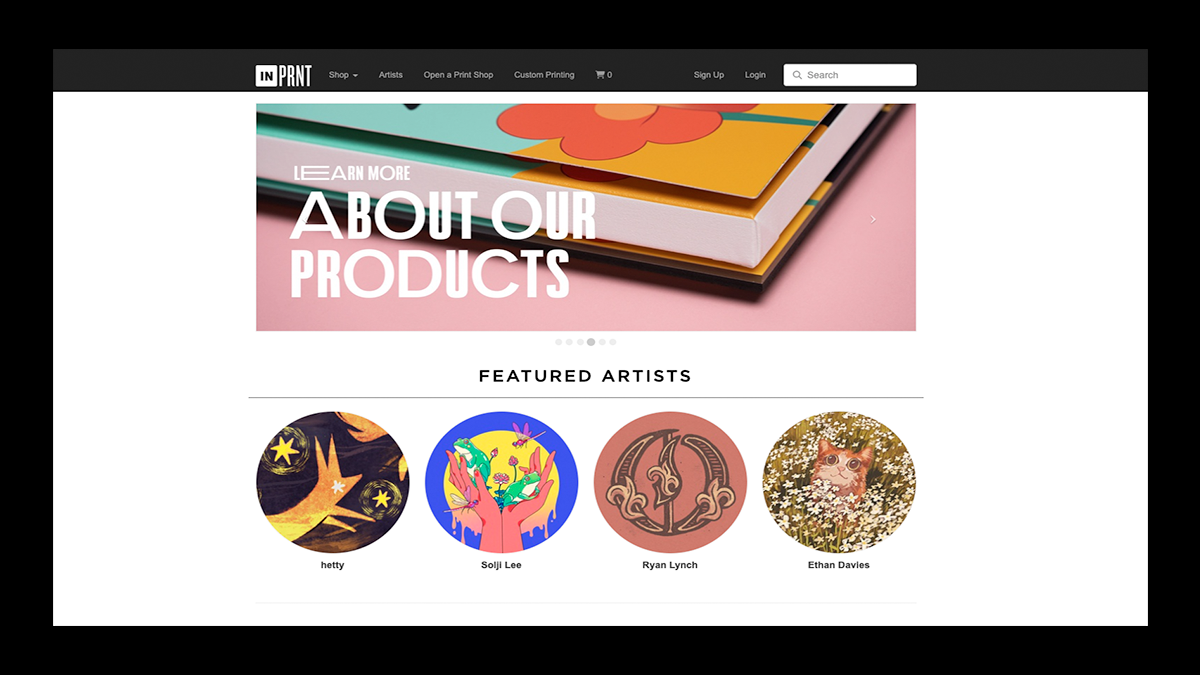
INPRNT is the antithesis of mass-market print-on-demand: a tightly curated, artist-run platform built entirely around gallery-quality art prints.
Founded in 2006 and operated by artists, INPRNT produces all prints in-house using archival, museum-grade materials, including 100% cotton rag paper and a high-end 10-color printing system that delivers exceptional depth, color accuracy, and longevity.
Every artist on the platform is accepted through a community voting process, which keeps the catalog selective and reinforces INPRNT’s premium reputation.
While the product range is intentionally smaller than Society6, focused mainly on fine art prints, frames, canvases, and a few complementary items, the upside is significantly higher artist earnings and stronger brand prestige.
INPRNT also offers a Custom Print Shop for bulk orders, making it a solid option for artists who sell prints at conventions, galleries, or through their own sites.
💰 Pricing
- Free to Join: $0/month — Artists must be accepted via community vote.
- Artist Earnings: Artists earn 50% of the sales price on fine art prints and 30% on most other products, such as canvas, metal, acrylic, posters, cases, and cards.
✅ Pros
- Exceptional, gallery-quality print production using archival materials
- One of the highest artist profit shares in the POD space
- Strong brand prestige and a collector-focused audience
- Curated, artist-first platform run by creatives
- Bulk printing options for shows, shops, and events
❌ Cons
- Invite-only access with community voting
- Smaller product catalog compared to Society6-style marketplaces
- Limited appeal for artists focused on lifestyle merch or apparel
7. Displate
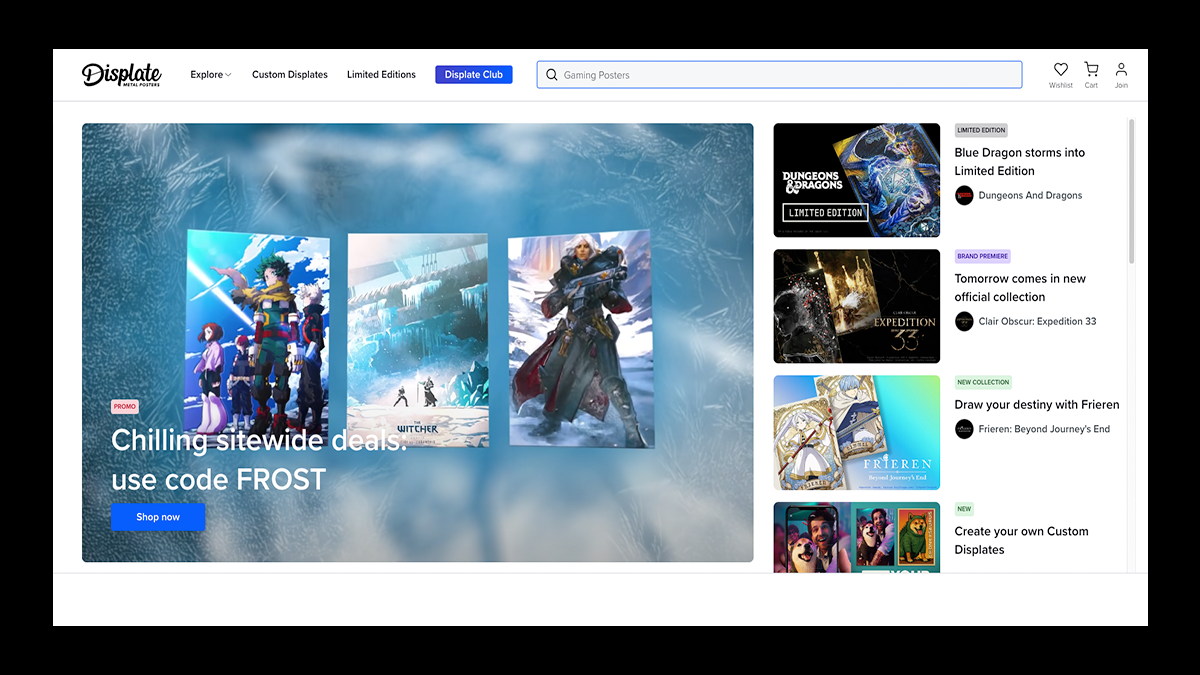
If your art deserves more punch than paper and canvas can give it, Displate is basically the glow-up option.
Your work is printed on durable metal posters with bold colors and a slick, modern finish that looks insanely good in offices, studios, and game rooms.
Instead of trying to be “homey,” Displate leans hard into a collector vibe, especially for pop culture- and fandom-heavy art (think Star Wars, Marvel, DC, Bethesda, NASA, and The Witcher-style categories) and artwork that aims to feel premium and “display-worthy.”
The standout feature is the magnet mounting system, which makes the “I don’t own a drill” crowd very happy because it lets you hang without tools or cause wall damage.
On the artist side, you upload designs, Displate promotes them to its audience, and you earn commission per sale—plus there are premium product types like Limited Edition, Lumino, and Textra that give certain designs a more collectible edge.
Compared to Society6, it’s less “soft home décor” and more “statement piece,” which is perfect if your brand lives in bold lines, high contrast, and fan-fueled aesthetics.
💰 Pricing
- Free to Join: $0/month — Earn commissions per sale.
- Payouts: PayPal only; $50 minimum threshold; payouts are processed after you request payment.
✅ Pros
- A genuinely different product format (metal posters) that instantly feels more premium than standard paper prints
- Built-in marketplace exposure, with shipping to dozens of countries and a big collector audience
- The magnet mounting system is a real “wow” factor that helps conversions (people love easy display)
- Strong fit for pop culture, gaming, fantasy, and graphic-heavy styles that thrive in bold presentation
❌ Cons
- No pricing control on regular listings (commissions are fixed by size), so scaling revenue can feel capped
- The product catalog is more specialized than a home décor marketplace
- You’re still building inside a marketplace (limited customer ownership compared to running your own storefront)
8. Zazzle
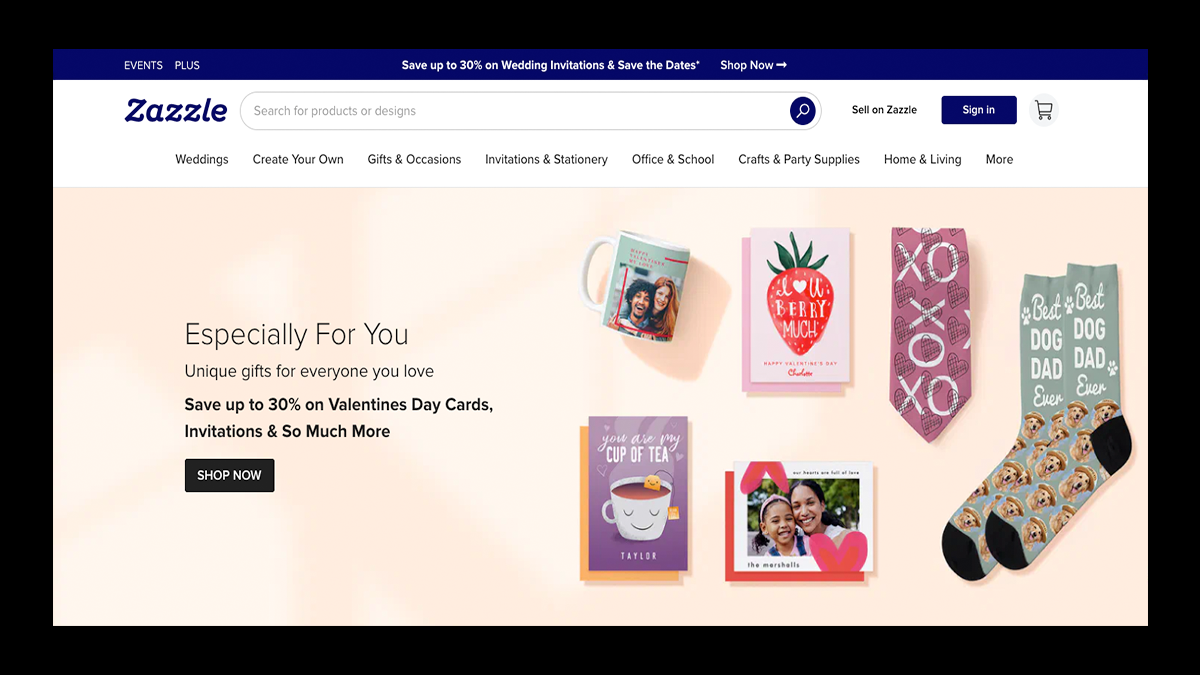
With Zazzle, artists can turn their designs into full-on templates customers can edit, so your art becomes the foundation for all sorts of special occasions like wedding invites, baby showers, birthdays, grad parties, holiday cards, and other “I need this by Friday” moments.
Features like live personalization, text and image editing, and element locking make it especially powerful for template-style creators who want their designs to scale across countless variations without redoing the artwork from scratch.
The trade-off is that Zazzle’s backend can feel like a time capsule. Uploads are manual, product setup takes patience, and scaling a big catalog is more grind than glam.
You also don’t really get to “build a brand” here (no customer list, no real storefront ownership), so it’s best viewed as a marketplace channel (not your entire business), but as a passive revenue layer for evergreen, event-driven designs, it can quietly perform while you focus on more brand-forward platforms.
Bottom line: Zazzle is incredible for artists who love making customizable templates and want passive-ish sales from marketplace traffic, but it’s not the move if you need full control and premium positioning.
💰 Pricing / Earnings
- Free to Join: ($0/month) — No subscription or sign-up fees.
- Royalty-based earnings: you set your royalty rate per product (higher royalties usually raise the retail price, which can hurt conversions).
✅ Pros
- Massive product variety (1,000+ customizable items) so you can go way beyond prints
- Personalization tools are a huge advantage for stationery, invites, and giftable products
- Hands-off ops: Zazzle handles printing, fulfillment, shipping, and customer service
- Solid marketplace/SEO potential for evergreen event niches (weddings, holidays, milestones)
❌ Cons
- Clunky interface and slow, manual setup (especially if you’re listing lots of designs)
- Discoverability is inconsistent, and competition is heavy in popular categories
- Royalty model can punish high margins (price goes up, shoppers bounce)
- No real branding or customer ownership; you’re building inside Zazzle’s ecosystem
9. Etsy
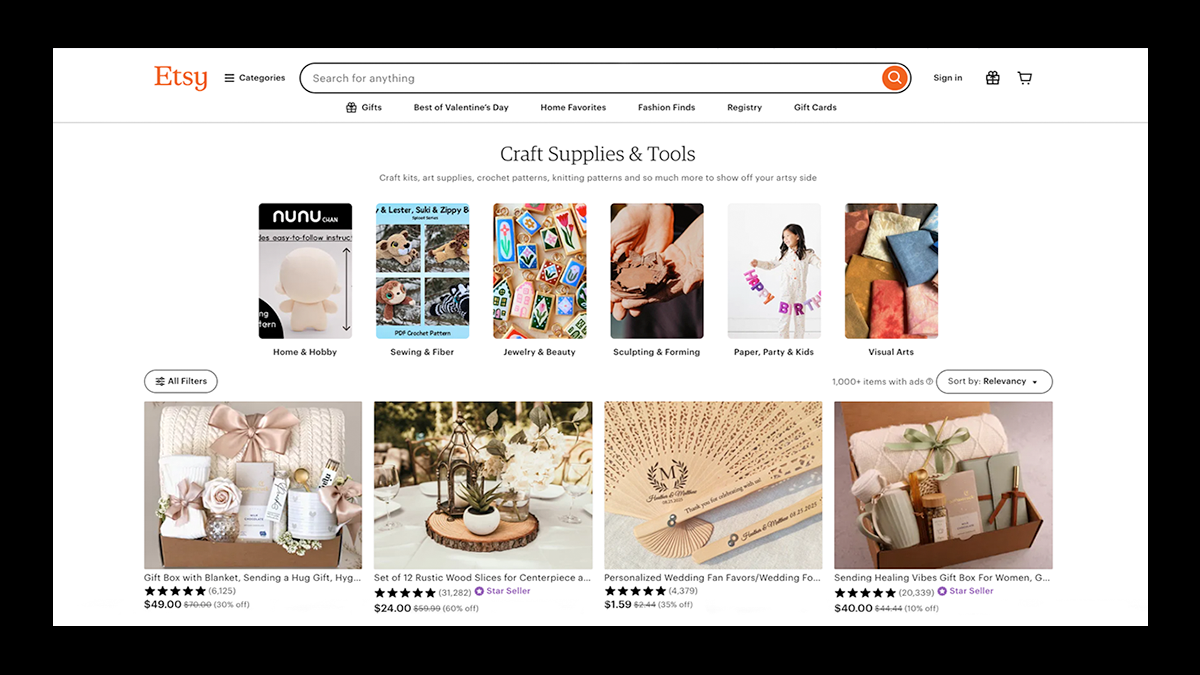
While Etsy isn’t a print-on-demand platform by default, many artists pair it with POD partners to sell art prints, wall decor, apparel, stickers, and digital downloads under their own shop identity.
What sets Etsy apart is the buyer mindset: people come ready to purchase, especially for art, gifts, home decor, and event-based products.
You control your pricing, product presentation, and branding, and you can customize listings, photos, and shop pages to tell a story Society6 simply doesn’t allow.
The trade-off is that Etsy is more hands-on. Between SEO, fulfillment coordination, and customer messaging, it feels more like running a small business than uploading art and walking away.
Overall, it's great if you want to turn your art into a real, customer-facing brand and don’t mind rolling up your sleeves to manage the day-to-day work that comes with selling seriously.
💰 Pricing
- $0.20 per listing (active for 4 months).
- ~5% transaction fee per sale.
- ~3% + $0.25 payment processing fee.
- Optional 15% offsite ads fee (required for high-volume sellers).
✅ Pros
- Massive built-in audience with strong purchase intent
- Full control over branding, pricing, and product presentation
- Works with multiple POD partners or self-fulfillment
- Ideal for art prints, custom decor, digital downloads, and gifts
- Better long-term brand equity than pure POD marketplaces
❌ Cons
- Fees add up quickly at scale
- Requires SEO optimization, customer service, and order management
- Highly competitive in popular art categories
- Platform rules and enforcement can feel unpredictable
10. Big Cartel
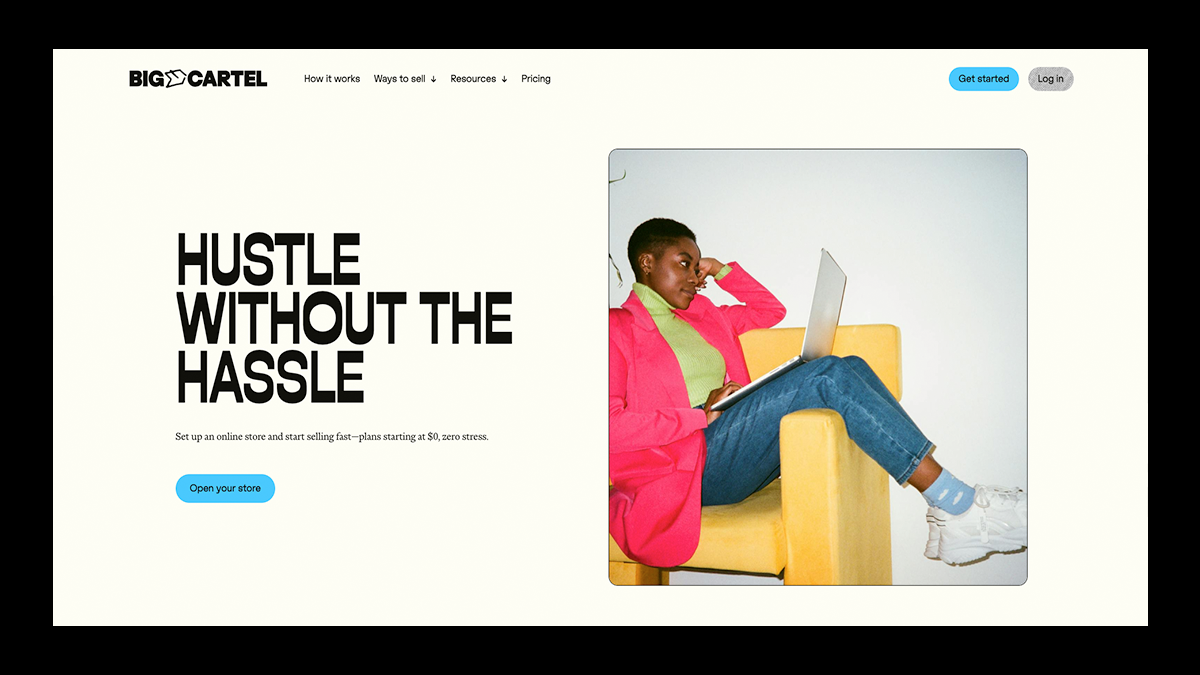
Big Cartel is a refreshingly no-frills alternative to Society6 for artists who don't want to fight algorithms or compete inside a crowded marketplace.
Built specifically for creatives, it lets you launch a clean, minimal storefront and connect directly with print-on-demand partners like Printful and Printify to sell art prints, apparel, and merch without holding inventory.
The setup is fast, the learning curve is gentle, and the platform stays out of your way, which makes it ideal for artists who want independence without the bloat of enterprise ecommerce tools.
Unlike Society6, you own your storefront, pricing, and customer experience, but you’re also responsible for driving traffic, since Big Cartel doesn’t come with a built-in audience.
It’s best viewed as a lightweight home base for your art rather than an all-in-one growth engine.
💰 Pricing
- Free Plan: $0/month (up to 5 products) — No platform transaction fees (only standard Stripe/PayPal processing fees).
- Paid Plans: Starting at around $15/month (with higher product limits and features).
✅ Pros
- Artist-first platform with simple, distraction-free storefronts
- Free plan makes it easy to test ideas with zero risk
- Seamless integration with Printful and Printify for POD
- Full brand ownership and direct-to-fan selling
- No marketplace competition or algorithm pressure
❌ Cons
- No built-in traffic or discovery
- Limited native features compared to Shopify
- Product limits on all plans
- Lacks advanced tools like upsells, subscriptions, or abandoned cart recovery
Ready to Build Something Bigger?
Society6 can still work as a low-effort outlet, but if your goal is to actually grow as an artist by owning your audience, controlling your pricing, and turning your work into a real business, it quickly hits a ceiling.
That’s where Fourthwall comes in.
Fourthwall gives you a branded storefront, premium print-on-demand tools, and the freedom to sell art, digital products, and memberships all in one place, without marketplace restrictions.
If you’re ready to stop renting space and start building something that’s truly yours, Fourthwall is the move.
Join today and get your art out there!
FAQ: Society6 Alternatives
Is Society6 still worth using in 2026?
Society6 can still make sense for artists who want a completely hands-off way to sell wall art and home decor without managing logistics.
However, its fixed royalties, limited analytics, and lack of brand ownership make it less appealing for artists focused on growth or long-term income. Many creators now use it as a secondary channel rather than their main platform.
What is the best alternative to Society6 for artists?
The best Society6 alternative depends on your goals, but Fourthwall stands out for artists who want full pricing control, brand ownership, and multiple revenue streams.
Unlike marketplaces, it lets you run your own storefront while still handling print-on-demand fulfillment. Other strong options include Redbubble, Etsy (with POD partners), and INPRNT for fine art.
Which Society6 alternative lets artists set their own prices?
Platforms like Fourthwall, Redbubble, Etsy, Fine Art America, and INPRNT allow artists to control pricing or markups.
This gives creators flexibility to position their work as premium, run promotions, or increase margins. Society6 only allows pricing control on art prints, not most other products.
Can you make more money on Fourthwall than on Society6?
Yes, many artists earn more on Fourthwall because they control pricing instead of being locked into a flat royalty.
Fourthwall also lets artists sell digital downloads, memberships, commissions, and exclusive content alongside physical products. This diversification makes it easier to scale income beyond single-product sales.
Matt Keyser is a writer at Fourthwall who lives at the intersection of social media and Creator culture. With 4+ years of experience covering industry trends, his work focuses on helping Creators and brands understand how to turn their passion into a thriving business while maintaining a constant pulse on the latest eCommerce and social media trends.


You might also like

8 Best TeePublic Alternatives for Artists in 2026

9 Best Printify Alternatives for Print-on-Demand in 2026

8 Best Spring (Teespring) Alternatives for Creators After Its Shutdown

30 Best Print on Demand Products for Creators in 2026 (From Tees to Plushies)

9 Best Kajabi Alternatives for Course Creators in 2026

What to Sell Online: How to Find a Product People Want

8 Best Spreadshirt Alternatives for Print-on-Demand in 2026

7 Best Sellfy Alternatives for Creators and Brands in 2026

27 Best Digital Products to Sell as a Creator

Keep up with the latest from Fourthwall
New features, product updates, trend breakdowns, and creator stories — straight to your inbox.