
8 Inkthreadable Alternatives for Eco-Conscious Print-on-Demand Brands (2026)
Where Ethical Merch Meets Smarter Fulfillment Choices
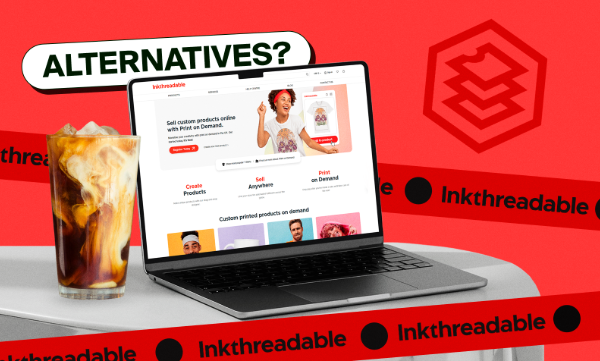


Inkthreadable has quietly become one of the most respected names in eco-conscious print-on-demand, especially for brands selling to the UK and EU.
Since launching in 2013, the platform has built a reputation around ethical production, plastic-free packaging, and reliable fulfillment without locking sellers into monthly fees.
In this guide, we’ll break down what Inkthreadable does best, where it falls short, and which alternatives you should consider if you want more flexibility, global reach, or advanced selling tools.
What Is Inkthreadable?
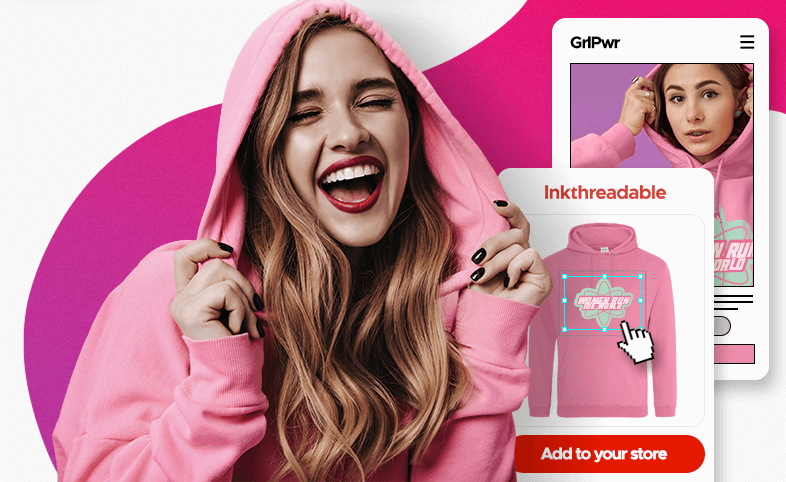
Inkthreadable is a UK-based print-on-demand fulfillment platform that allows creators to design, sell, and ship custom merchandise without holding inventory.
The company focuses heavily on sustainability, using water-based inks, organic cotton garments, recycled materials, and eco-friendly packaging by default.
Inkthreadable supports multiple print methods like DTG, embroidery, sublimation, and DTF, giving artists room to experiment with different product types.
It stands out most for sellers targeting the UK and EU who want a low-risk, ethical way to launch a merch brand.
What Makes Inkthreadable Stand Out?
Some POD platforms feel like a chaotic warehouse with a checkout button. Inkthreadable feels more like a clean, purpose-built production line where everything is set up to run smoothly.
If you care about how your products are made and you don’t want your backend to become your full-time job, these are the features that make Inkthreadable genuinely worth knowing.
Eco-Friendly Production by Default
Inkthreadable doesn’t treat ethical production like a premium upgrade—it’s the baseline.
Their use of water-based inks and plastic-free packaging helps your brand look more intentional right out of the gate, without you having to duct-tape a “sustainable” workflow together.
Add in options for organic cotton and recycled materials, and you’ve got products that match the values a lot of modern customers actually shop for.
No Monthly Fees or Minimum Orders
This is one of those “finally” features.
You can create products, connect your store, and start selling without paying a subscription or committing to minimum order quantities, which is perfect if you’re still experimenting, launching small drops, or building momentum from scratch.
It’s also a safer setup for artists who don’t want their profit eaten up by tools before they’ve even made a sale.
Multiple Printing Methods
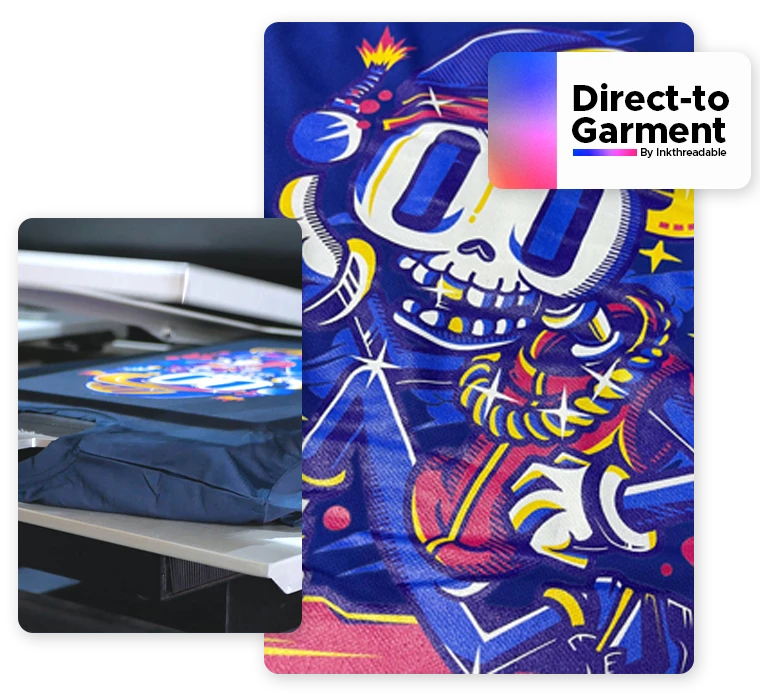
Inkthreadable gives you multiple ways to bring designs to life, depending on what you’re selling and how premium you want it to feel.
DTG is great for full-color artwork and small batches; embroidery adds that elevated “real brand” vibe; sublimation covers items like mugs and certain hard goods; and DTF opens the door for vibrant prints with solid durability.
The variety matters because it lets you build a product line that doesn’t look like it came from one template.
UK-Based Fulfillment
If your customers are in the UK or Europe, this is a big deal—and it’s where Inkthreadable can straight-up outperform bigger US-based POD companies.
Local production usually means faster delivery, fewer shipping headaches, and more predictable fulfillment timelines (especially compared to international routes that can drag).
For sellers trying to compete on speed without sacrificing quality, UK fulfillment gives you a real edge.
Flexible Integrations That Keep Fulfillment Hands-Off
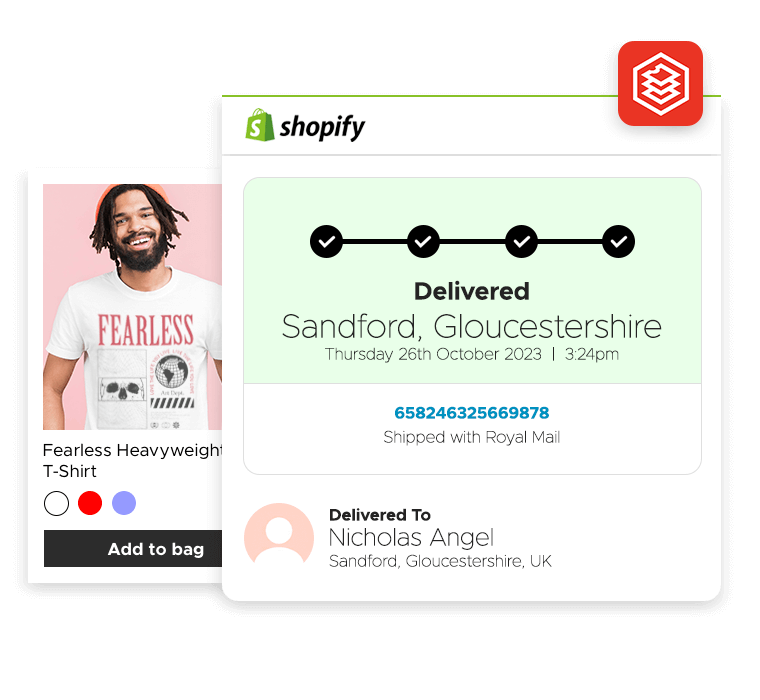
Inkthreadable integrates with all the major platforms creators actually use, including Shopify, Etsy, WooCommerce, Squarespace, Wix, Big Cartel, and TikTok Shop.
Once connected, orders sync automatically, fulfillment runs in the background, and tracking updates are pushed back to customers without manual input.
Shopify and Etsy offer the most seamless, fully automated experience, while other platforms require light setup before becoming largely hands-off.
The end result is a workflow that removes fulfillment from your daily to-do list and makes scaling feel manageable rather than overwhelming.
Pricing
Inkthreadable is pay-per-order, which keeps your overhead low and your risk even lower.
You’re essentially paying for production and shipping per sale. There's no “platform tax” on top just for existing.
For UK-based fulfillment, the pricing is competitive enough to leave room for solid margins, especially if you’re pairing higher-quality garments with branding that lets you price like a real label.
Why You Might Want an Inkthreadable Alternative
When it comes to eco-friendly printing, Inkthreadable does a lot right. But it’s very deliberate about what it doesn't try to be.
That focus is great if your business fits neatly into its lane. However, the same simplicity that makes it appealing at first can feel restrictive as your store grows, your audience expands, or your workflow becomes more complex.
Here's why Inkthreadable might fall short for some users and brands:
🌐 Limited Global Reach
Inkthreadable is built with UK and EU sellers in mind, and it shows.
Once you start shipping consistently to the US, Canada, or Asia, delivery times lengthen, and costs rise, which can chip away at customer satisfaction and margins.
If your brand has an international audience or relies on fast worldwide shipping, a more globally distributed fulfillment network may better serve your needs.
👕 Basic Mockup Generator
The mockup tool gets the job done, but just barely.
You’ll mostly see flat, front-facing product images with limited customization, which is fine for internal previews but not ideal for conversion-focused storefronts.
Most sellers end up leaning on third-party tools to create lifestyle shots, angled views, or branded visuals that actually sell.
🔌 Few Native Integrations
Inkthreadable works well if your entire operation lives on Shopify or Etsy.
Step outside that ecosystem, though, and things get manual fast.
Platforms like WooCommerce, Wix, Amazon, and BigCommerce aren’t natively supported, so you'll need to rely on CSV uploads or custom API integrations.
This is something that can slow you down if you’re trying to scale across multiple channels.
🛍️ Smaller Product Catalog
Inkthreadable’s catalog is curated and reliable, but it’s not expensive.
If your strategy involves testing dozens of product types, launching frequent collections, or branching into niche items, you may hit creative limits sooner than expected.
Larger POD platforms tend to offer broader catalogs, making rapid experimentation easier.
🛒 No Built-In Storefront or Monetization Tools
Inkthreadable is a fulfillment engine; nothing more, nothing less.
It doesn’t help you build a storefront, grow a community, or layer in recurring revenue through memberships or digital products.
If you’re thinking beyond merch and want a platform that supports multiple income streams under one roof, you’ll need to pair Inkthreadable with additional tools or look elsewhere entirely.
Overall Thoughts
Inkthreadable is a platform that rewards clarity of intent.
If your goal is to run a lean, environmentally responsible print-on-demand operation (without subscriptions, bloated dashboards, or unnecessary upsells), it delivers exactly what it promises.
Its strengths are most visible when you’re selling to UK or EU customers and want dependable fulfillment that aligns with ethical branding rather than scale-at-all-costs growth.
Where it starts to show limitations is when your business model demands global reach, advanced presentation tools, or multiple revenue streams beyond physical products.
Inkthreadable isn’t trying to be an all-in-one commerce engine, and that restraint is either its biggest advantage or its main constraint, depending on your ambitions.
For focused merch lines and sustainability-driven brands, it’s a smart, trustworthy choice. But for creators building larger ecosystems, it may be a stepping stone rather than a final destination.
Top Inkthreadable Alternatives for Eco-Conscious Brands
1. Fourthwall
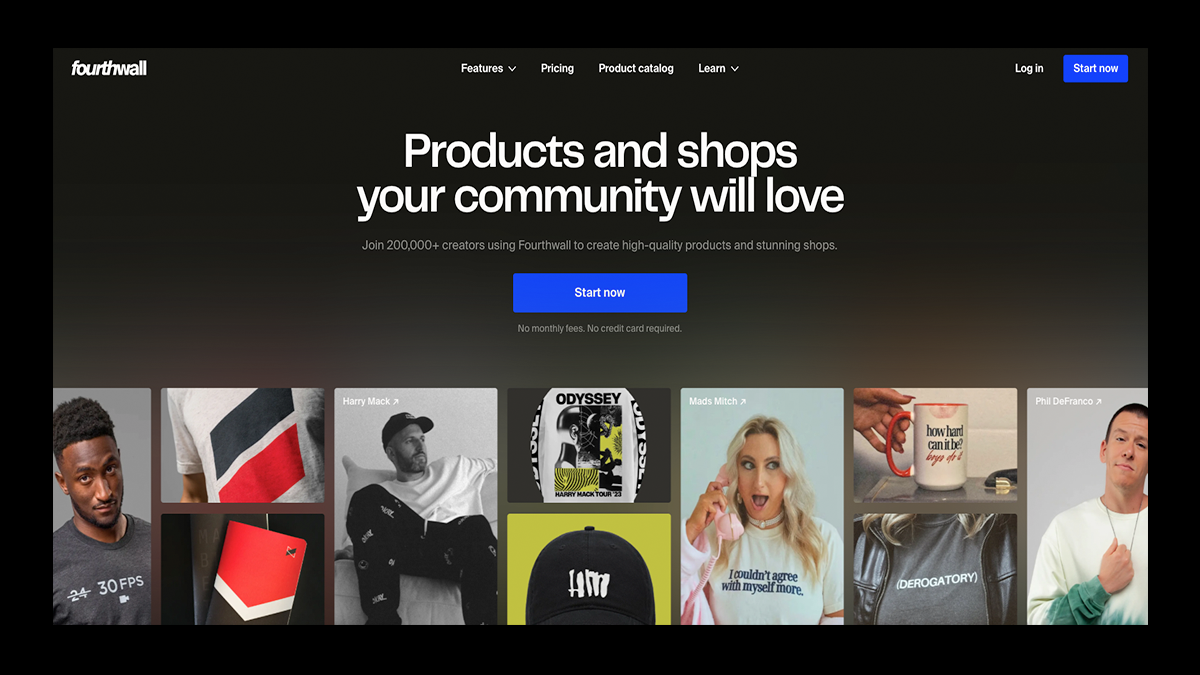
Fourthwall is a strong alternative to Inkthreadable for creators who want print-on-demand to be part of a bigger, more sustainable business and not just a fulfillment pipeline.
It offers a deep product catalog spanning apparel, accessories, and home goods, including eco-conscious options like organic cotton tees, recycled beanies, and sustainable totes, paired with professional-grade printing methods such as DTG, DTF, screen printing, sublimation, and embroidery.
The platform’s design experience is noticeably more modern, with polished product editors and high-quality mockups that help products look retail-ready from day one.
On the fulfillment side, Fourthwall supports fast global shipping across the US, UK, EU, and Australia, making it far more scalable for international audiences.
What truly separates Fourthwall, though, is its ability to sell print-on-demand products alongside digital downloads, memberships, donations, and exclusive content, making it more than just a POD platform but an all-in-one hub for brands of all sizes.
💰Pricing
- Free Plan: $0/month — No platform fee on physical products, 5% fee on digital products and memberships.
- Pro Plan: $19/month or $180/year — 0% digital fees, free .store domain, $10 monthly sample credit, advanced analytics, unlimited team members, priority support.
✅ Pros
- All-in-one storefront with hosted checkout
- Sell physical products, digital downloads, memberships, and accept fan donations
- Large product catalog with eco-friendly options
- Premium printing with high-quality finishes
- 3D rendering mockups and creator-friendly design tools
- Global fulfillment across multiple regions
- Native integrations with YouTube Merch Shelf, TikTok Shop, and Twitch Gifting
❌ Cons
- Sustainability focus varies by product rather than being platform-wide
- No built-in marketplace for organic discovery
- Lacks ultra-niche print methods like engraving or embossing
2. TwoFifteen
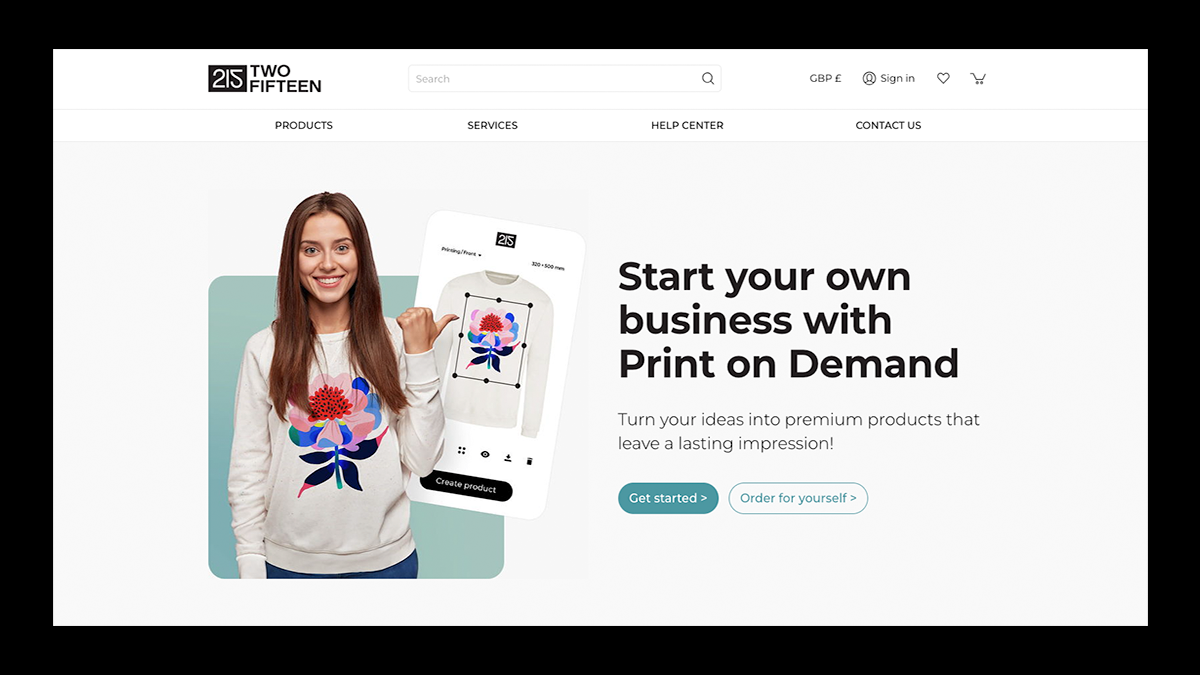
Similar to Inkthreadable, TwoFifteen is another UK-based fulfillment platform that places greater emphasis on ethical production and brand customization.
The platform offers a surprisingly broad catalog (over 250 products) spanning apparel, accessories, homeware, drinkware, and gift items, with dedicated organic, vegan, recycled, and fair-share collections baked in.
On the production side, TwoFifteen supports DTG, DTF, embroidery, dye sublimation, and even giclée printing, giving creators flexibility across both apparel and decor-focused products.
What really elevates TwoFifteen is its branding and integration depth: features like printed neck labels, custom packing slips, and native integrations with Shopify, WooCommerce, Etsy, TikTok, Wix, and Squarespace make it easier to run a polished, multi-channel store.
Combined with fast UK fulfillment and plastic-free packaging, it’s a solid choice for brands that want sustainability without sacrificing operational control.
💰Pricing
- Pay-Per-Order: $0/month — Sellers pay only for the base product cost plus shipping when an order is placed.
✅ Pros
- UK-based production and fulfillment for fast domestic delivery
- Strong eco-conscious practices, including plastic-free packaging and vegan inks
- Large product catalog with organic, recycled, and ethical collections
- Advanced custom branding options (neck labels, packing slips)
- Wide range of native integrations beyond just Shopify and Etsy
❌ Cons
- International shipping can be slower compared to regional providers
- Product range, while broad, may still lack ultra-niche items
- Printing methods are more apparel-focused than experimental
3. PrintKK
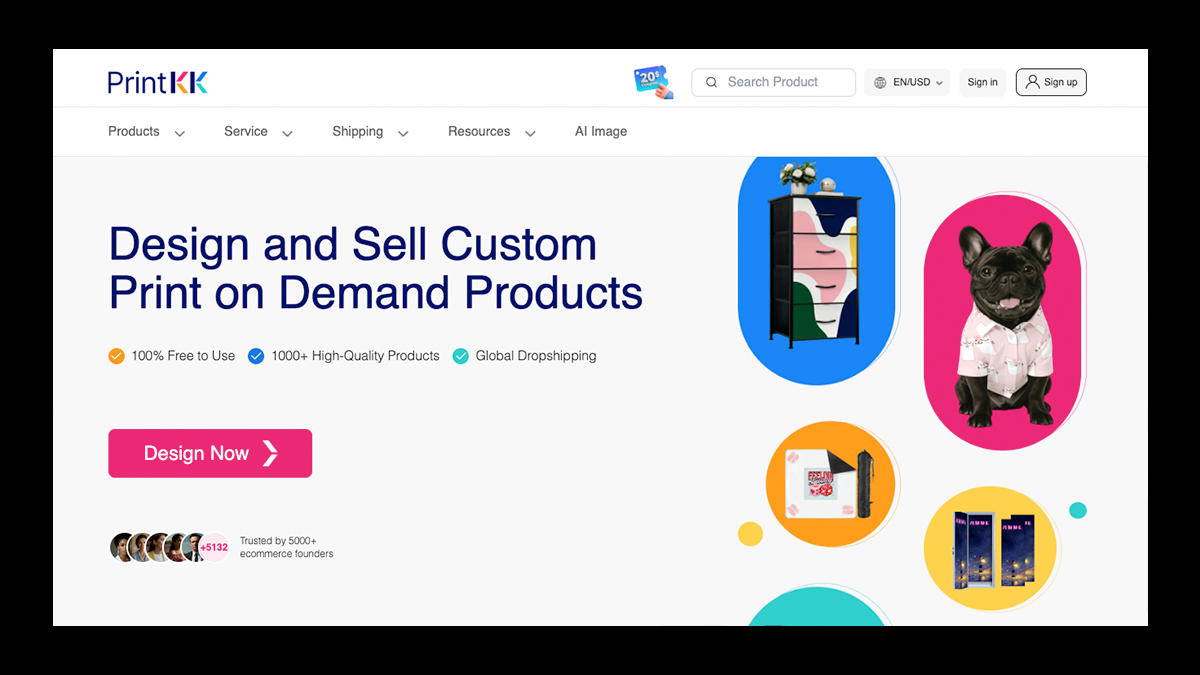
PrintKK is an eco-friendly POD service that focuses on sustainable practices through waste reduction and carbon-conscious operations.
The platform's defining strengths are its ability to prevent overproduction, the use of water-based inks, and offering products made from organic or recycled materials
PrintKK also has an enormous catalog of 1,000+ customizable items that span apparel, home décor, lifestyle goods, accessories, and novelty products, many of which are rarely available on traditional POD platforms.
Its product creator is designed for speed, pairing straightforward design tools with AI-powered features like background removal and pattern extraction to accelerate setup.
Combined with broad integrations across major eCommerce platforms and marketplaces, PrintKK functions as a high-volume experimentation engine for sellers who learn by launching, not waiting.
💰Pricing
- Free to Start: Pay-per-order with no minimums.
- Basic Plan: $9.90/month — Includes AI tokens and select discounts.
- Pro Plan: $19.90/month — Higher AI usage limits and additional product discounts.
✅ Pros
- Massive product catalog with frequent new additions
- No minimum order requirements, ideal for testing and micro-drops
- Strong integrations with Shopify, Etsy, WooCommerce, Wix, eBay, and Walmart
- Built-in design tools with AI-assisted features
- Custom branding options like labels and packaging
❌ Cons
- Limited focus on eco-friendly materials or sustainability
- Shipping costs and delivery times can significantly impact margins
- Fulfillment consistency may vary across products
- No built-in email marketing, memberships, or creator monetization tools
4. Gelato
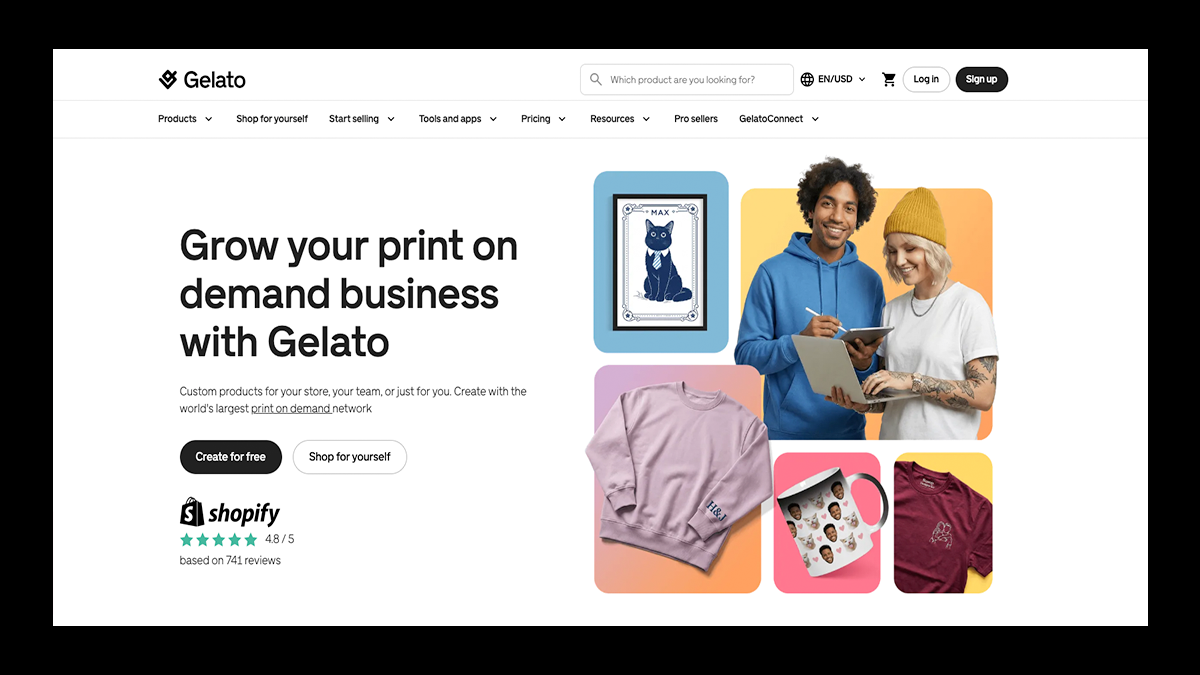
Gelato is built around one core idea: print products closer to your customers so everything moves faster, costs less, and leaves a smaller environmental footprint.
This platform works with a global network of local print partners across 30+ countries, enabling creators to sell apparel, wall art, stationery, and home décor with impressively fast delivery—especially across Europe.
Gelato's product lineup shines most in art and paper goods, with premium wall art options like wood, aluminum, and foam prints, paired with clean, intuitive design tools that help ensure print-ready quality.
It also stands out for its advanced sales features, including the Personalization Studio, which lets customers customize products themselves, and CreateAI tools that speed up launches with automated mockups and migrations.
For brands that want eco-conscious fulfillment without sacrificing scalability, Gelato offers a rare balance of sustainability, performance, and polish.
💰Pricing
- Free Plan: $0/month — Sell hundreds of products with full catalog access and integrations with top platforms like Shopify, Etsy, and more.
- Gelato+ (Monthly): $23.99/month — Includes everything in the Free plan, plus free access to the Personalization Studio, up to 25% off products, unlimited stores per account, Magic Mockups, Instant Collections, and more.
- Gelato+ (Annual): $19.99/month (billed annually, save 17%) — Includes all Gelato+ features, plus free shipping during promotional periods (e.g., Jan 1–Feb 5), making it the best value for sellers planning to scale.
- Platinum: Custom pricing — Designed for high-volume businesses, with bespoke discounts, a Platinum rewards program, concierge support, and dedicated implementation services.
✅ Pros
- Global fulfillment network with fast local production
- Strong sustainability focus through localized printing and delivery
- Excellent wall art, paper, and decor product selection
- Powerful design and personalization tools
- Reliable print quality and competitive margins after recent price reductions
❌ Cons
- Fewer product categories than some large POD competitors
- Some advanced features require additional fees
5. TPOP
TPOP positions itself less as a fulfillment-only POD provider and more as a complete, sustainability-first eCommerce platform built for simplicity.
It lets you launch a fully functional online store in minutes (no technical skills required) using customizable templates, built-in product creation tools, and a free storefront that supports international sales and multi-currency checkout.
On the production side, TPOP takes an uncompromising stance on eco-responsibility, offering a catalog dominated by organic cotton and recycled textiles, printed with certified water-based vegan inks, and shipped in 100% plastic-free, recyclable packaging.
The entire operation, from the product creator to store hosting, runs on environmentally efficient infrastructure, reinforcing that sustainability isn’t just a feature, but the platform’s core operating principle.
Paired with its app marketplace, learning resources through TPOP Academy, and hands-off fulfillment workflow, TPOP is designed for creators who want ethical commerce without complexity.
💰Pricing
- Free Plan: €0/month — Basic online store, access to TPOP POD products, no hidden fees.
- Unlimited Plan: €19.99/month (VAT included) — Custom domain, premium themes, multilingual support, priority support, external products, advanced features.
✅ Pros
- Strong platform-wide commitment to sustainability and ethical production
- All-in-one POD + storefront solution with white-label branding
- Eco-friendly packaging and materials by default
- Easy integrations with major eCommerce platforms
- Transparent pricing with VAT included
❌ Cons
- Smaller product catalog compared to large global POD platforms
- Advanced features are locked behind the paid plan
- Less flexibility for niche or experimental product types
6. Printful
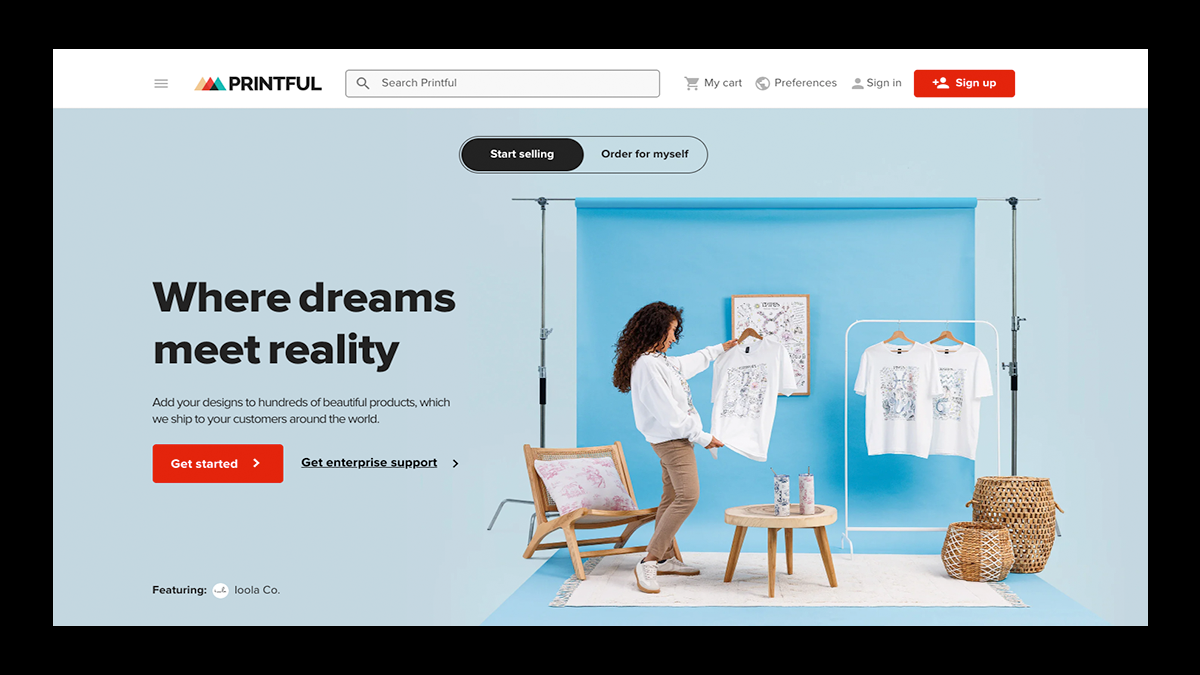
Printful is for brands that want scale, consistency, and polish baked into their print-on-demand workflow.
Its product catalog is one of the most expansive in the industry, covering apparel, home décor, tech accessories, stationery, and bags, with a growing selection of eco-conscious options like organic cotton garments and recycled materials.
Printful supports multiple professional printing methods, including DTG, sublimation, embroidery, and heat transfer, paired with robust design tools that make it easy to create, preview, and optimize products before launch.
Fulfillment is handled through Printful’s global network of facilities, enabling reliable shipping across the US, UK, EU, and beyond with consistent quality control.
Add in deep integrations with Shopify, WooCommerce, Etsy, Amazon, and more, and Printful becomes a dependable engine for brands focused on long-term growth rather than quick experiments.
💰Pricing
- Free Plan: $0/month — Pay only for products and shipping. Optional paid add-ons for branding, warehousing, and advanced services.
✅ Pros
- Massive product catalog across multiple categories
- High print and material quality with consistent results
- Global fulfillment network with strong reliability
- Powerful customization and branding tools
- Wide range of native integrations with major eCommerce platforms
❌ Cons
- Higher base product costs can limit profit margins
- Eco-friendly options are available, but not platform-wide
- Production times can be longer during peak seasons
7. Snuggle
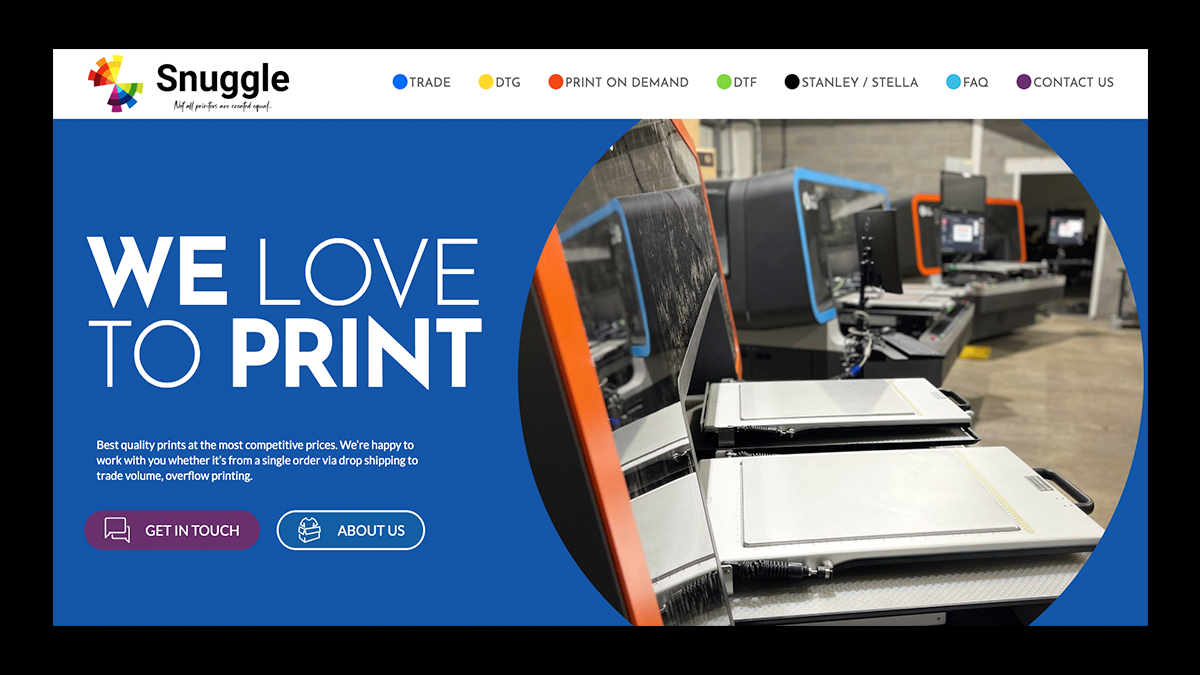
Snuggle is designed for UK-based sellers who care about product quality, ethical production, and dependable local fulfillment without unnecessary complexity.
Its catalog spans 250+ customizable products across apparel, accessories, homeware, and gift items, with sustainable options made from organic and recycled materials printed using vegan-friendly inks.
Snuggle supports modern printing methods across apparel and hard goods, paired with straightforward design workflows that make launching products quick, even for smaller teams.
Fulfillment is handled entirely in the UK, which keeps delivery times fast and predictable for domestic customers while maintaining plastic-free packaging and carbon offsetting by default.
With broad integrations across major eCommerce platforms and reward-based pricing as you scale, Snuggle feels purpose-built for brands focused on long-term customer trust rather than rapid global expansion.
💰Pricing
- Pay-per-order: No monthly subscription
- Reward Pricing: Up to 10% discounts unlocked as order volume grows
✅ Pros
- Fast, reliable UK-based production and shipping
- Strong eco-friendly practices (plastic-free packaging, vegan inks, carbon offsetting)
- Large product catalog with sustainable material options
- Custom branding features like neck labels and packing slips
- Integrations with Shopify, Etsy, WooCommerce, TikTok Shop, Wix, and Squarespace
❌ Cons
- International shipping is slower compared to regional providers
- Some platforms may require partial manual workflows
- Limited selection of ultra-niche or experimental product types
8. Prodigi
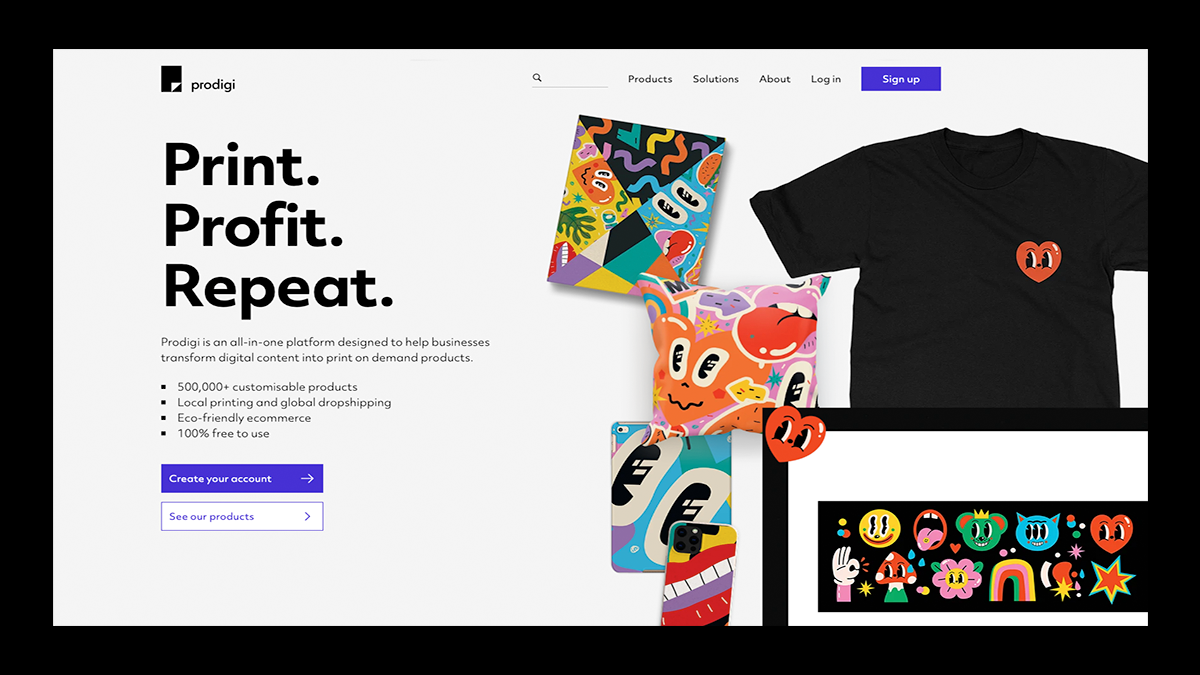
Prodigi focuses heavily on eco-conscious production, using sustainable materials and non-toxic inks, and working with geographically distributed fulfillment partners to reduce shipping distance and environmental impact.
Its catalog is broad on paper, spanning apparel, phone cases, wall art, mugs, and framed prints—with a particular strength in art and decor products that ship quickly and consistently.
While its design tools are intentionally lightweight, Prodigi prioritizes speed and reliability, making it easy to launch products and fulfill orders across multiple regions without micromanaging logistics.
For brands that want a clean, beginner-friendly POD backend with worldwide delivery and competitive base costs, Prodigi offers a practical, no-frills setup.
💰Pricing
- Free to Use: $0/month — Pay only for products and shipping costs. Volume discounts available on select products (such as framed prints).
✅ Pros
- Strong sustainability focus with eco-friendly inks and materials
- Global fulfillment network that reduces shipping distance
- Low base product costs, supporting healthier margins
- White-label packaging included
- Easy setup and beginner-friendly dashboard
❌ Cons
- Design and mockup tools are very basic
- Product quality and print clarity can vary by item
- Fewer native integrations than larger POD platforms
- Limited branding customization beyond white-label shipping
Which Platform Should You Choose?
Inkthreadable is a solid choice if your priorities are clear-cut: UK-based fulfillment, sustainability, and a simple setup that just works.
But as many creators grow, they start needing more than a reliable printer—they want better branding control, more ways to earn, and a platform that supports long-term expansion.
That’s where Fourthwall comes into play.
It goes beyond print-on-demand by giving you a fully owned storefront, premium merch options, digital products, memberships, and built-in social integrations that help turn fans into customers.
If your goal is to build a brand (not just ship products), Fourthwall gives you the tools to grow on your own terms.
Sign up today!
FAQ: Inkthreadable Alternatives
Is Inkthreadable environmentally friendly?
Yes, sustainability is one of Inkthreadable’s strongest selling points.
Inkthreadable uses water-based inks, plastic-free packaging, and offers a wide selection of organic and recycled garments as standard.
What’s the best Inkthreadable alternative for global selling?
If international reach is your priority, Gelato and Printful are stronger options.
Both operate large global print networks that shorten delivery times and reduce shipping friction across the US, EU, and other regions.
They’re better suited for creators with audiences spread across multiple countries.
Why choose Fourthwall over Inkthreadable?
Alongside print-on-demand, Fourthwall lets you run a branded storefront, sell digital products, offer memberships, and connect directly to platforms like YouTube, TikTok, and Twitch.
If you want to turn merch into a broader business rather than a single revenue stream, Fourthwall offers far more room to grow.
Matt Keyser is a writer at Fourthwall who lives at the intersection of social media and Creator culture. With 4+ years of experience covering industry trends, his work focuses on helping Creators and brands understand how to turn their passion into a thriving business while maintaining a constant pulse on the latest eCommerce and social media trends.


You might also like

What to Sell Online: How to Find a Product People Want

8 Best Spreadshirt Alternatives for Print-on-Demand in 2026

7 Best Sellfy Alternatives for Creators and Brands in 2026

27 Best Digital Products to Sell as a Creator
.webp)
Top 8 Wix Alternatives for Creators Building an Online Store in 2026

How to Create and Sell Print on Demand Journals and Notebooks

9 Gumroad Alternatives for Digital Creators in 2026

10 Best Stan Store Alternatives for Creators in 2026

9 Best Patreon Alternatives for Creators in 2026

Keep up with the latest from Fourthwall
New features, product updates, trend breakdowns, and creator stories — straight to your inbox.