
8 Spreadshop Alternatives for Selling Custom Merch Online (2026)
Launch Your Merch Store In Minutes With These Creator-Friendly Platforms


If you want to start selling custom merchandise but are unsure where to begin, don't worry, you're not alone.
Lots of creators feel intimidated when they start thinking of branching off and starting their own merch line.
And who can blame them? Between choosing products, designing merch, setting up a store, and figuring out fulfillment, the whole process can feel overwhelming before you’ve even made your first sale.
Fortunately, platforms like Spreadshop simplify the process.
Spreadshop is a user-friendly eCommerce platform that handles product creation, fulfillment, and shipping, so you can focus on designing merchandise and engaging with your audience.
Below, we outline why Spreadshop is an excellent choice for beginners seeking to sell branded merchandise without the complexity of setup and inventory management.
We also highlight eight alternatives to Spreadshop that offer enhanced tools and greater flexibility for those looking to scale their online store beyond basic merchandise.
What Makes Spreadshop Stand Out?

For creators entering the merch world for the first time, Spreadshop strips the process down to its essentials.
You upload your design, apply it to products from the catalog, set your price, and publish to your store.
Spreadshop then manages printing, shipping, and fulfillment for each order, eliminating the need for you to handle logistics or estimate demand.
This is why its is such a popular starting point for creators dipping their toes into eCommerce. It reduces the risk and complexity of launching a merchandise store, allowing you to experiment with products and generate revenue with ease.
If you still need more convincing, the features below explain exactly why selling merch on Spreadshop can feel so effortless for sellers.
Free, Fast Store Setup

Spreadshop lets you launch and design a fully functional merchandise store at no cost, with no technical expertise required.
You can choose from a range of free shop themes, customize fonts, colors, layouts, and homepage sections, and easily tailor your storefront to your brand.
The editor is designed for simplicity, allowing you to upload designs, apply them to products, and publish your shop within minutes, all without coding.
If you want to create a polished store without the cost of a website builder or the need to learn coding, Spreadshop provides a straightforward solution.
Bulk Product Creation That Saves Serious Time
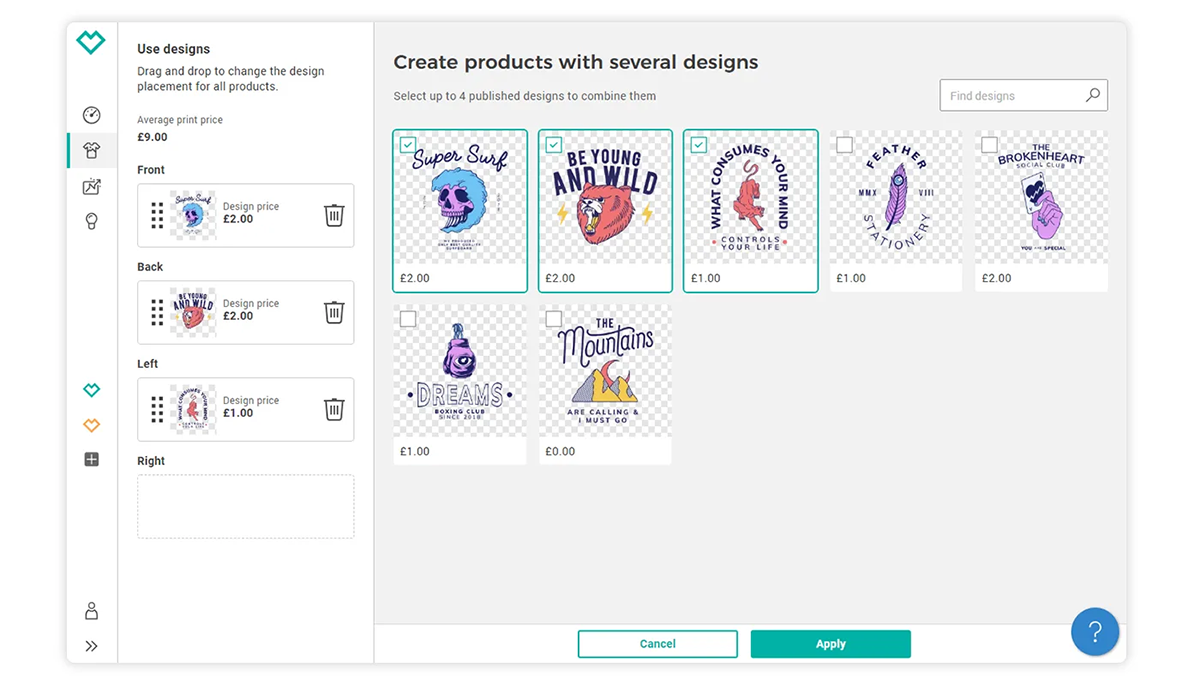
Unlike many print-on-demand platforms that require repetitive, single-product workflows, Spreadshop streamlines product creation.
You can upload multiple designs simultaneously and apply each to various products, such as t-shirts, hoodies, and mugs, without repeating steps.
Built-in filters for colors, product categories, and print areas help you efficiently select the best options, reducing time spent on design adjustments.
For sellers with large catalogs or those responding to trends, this bulk workflow streamlines what would otherwise be a time-consuming process.
Built-In Social Promotion Tools

Spreadshop simplifies marketing by integrating social media promotion directly into the platform.
You can quickly create high-quality mockups featuring real models, automatically formatted for Instagram, Facebook, X, Pinterest, and other major platforms.
Whether you download assets in bulk or share them instantly via QR codes, Spreadshop enables you to promote new products efficiently without disrupting your creative process.
Performance-Based Pricing That Improves Margins
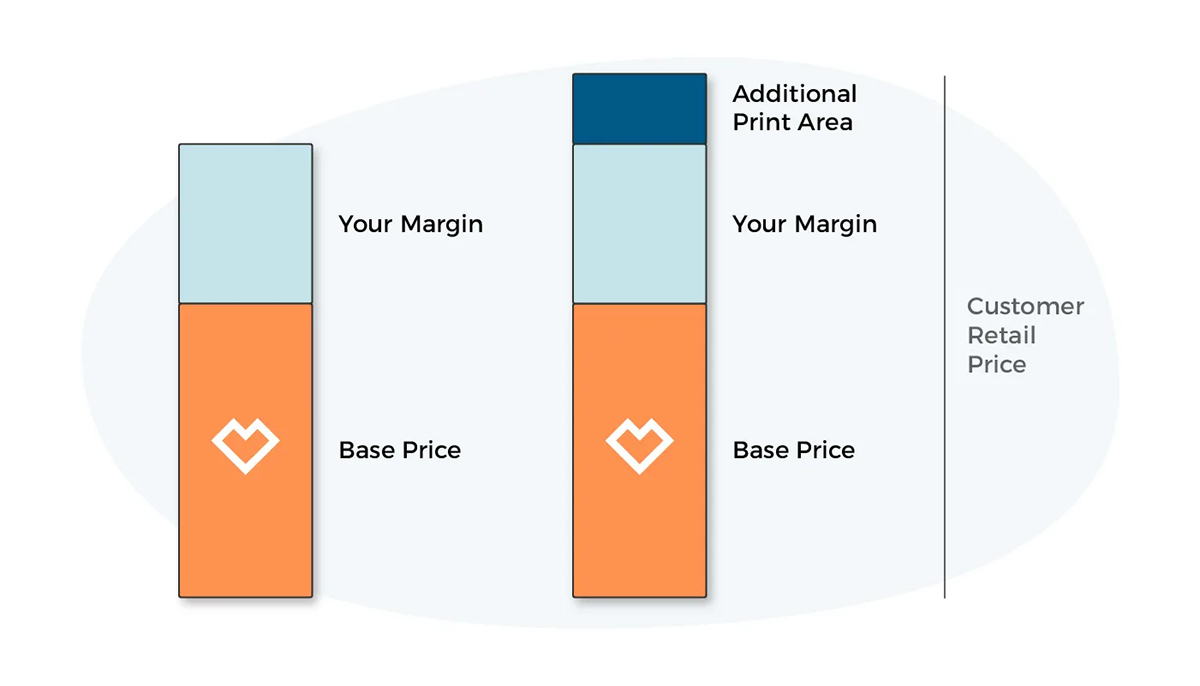
Spreadshop’s pricing model rewards consistent sales and growth by reducing product costs as your sales volume increases.
You retain control over retail pricing and profit per item, while higher order volumes unlock improved margins without the need for supplier changes or plan upgrades.
For growing creators, this structure increases profits and supports sustainable, long-term merchandise sales.
Optional Design Help for Non-Designers

Spreadshop recognizes that not all creators have the time or expertise to design merchandise from scratch, so it offers optional design assistance.
Sellers can access affordable services for design adjustments or complete visual builds, as well as utilize the built-in design tool and free design gallery to create products independently.
This support lowers the initial creative barrier, making it easier for first-time sellers to launch professional-looking merchandise.
Why You Should Consider a Spreadshop Alternative
There's no doubt that Spreadshop provides creators with the tools to launch their merch line right away, but speed alone does not guarantee long-term success.
As your store expands, you may seek platforms that offer greater audience ownership, enhanced data, and increased flexibility over products and eCommerce channels.
Below are a few reasons why Spreadshop may become limiting as your brand grows, and why you might want to consider looking at alternative platforms:
No Customer Email Database
One of Spreadshop’s biggest limitations is the lack of a built-in customer email database.
You do not have access to buyer emails, which prevents email marketing, abandoned-cart follow-ups, and direct relationship-building with your audience.
This is a significant drawback for creators aiming to build repeat customers rather than relying solely on one-time sales.
Alternative platforms such as Fourthwall and Shopify prioritize audience ownership, which becomes increasingly important as your brand expands.
Limited Analytics and Reporting
Spreadshop’s analytics are straightforward but limited. You can track sales, payouts, and printed orders, but deeper insights are not available.
There is no native visibility into customer behavior, conversion paths, product performance over time, or retention metrics.
For creators seeking to refine their storefront and customer experience, relying on external tools such as Google Analytics is often a workaround rather than a comprehensive solution.
Light Integrations Compared to Competitors
While Spreadshop covers basic integrations such as YouTube Merch Shelf, website embeds, and some social selling, it lacks a robust integration ecosystem.
It does not offer the same level of app integrations, email marketing integrations, or automation tools as larger eCommerce platforms.
This limitation can hinder Spreadshop’s integration into a broader commerce stack, particularly for creators managing multiple sales channels.
If you plan to scale across marketplaces, CRMs, and marketing tools, alternative platforms generally offer greater flexibility.
Not Built for Multi-Product Businesses
Spreadshop specializes in physical merchandise.
However, it is not designed for creators who wish to sell digital downloads, memberships, courses, or subscriptions alongside custom products.
This limitation makes it more difficult to diversify revenue or develop a comprehensive monetization strategy.
For creators transitioning into full-scale businesses, an all-in-one platform is often more effective than managing multiple separate tools.
Top Spreadshop Alternatives for Building a Merch Store
1. Fourthwall
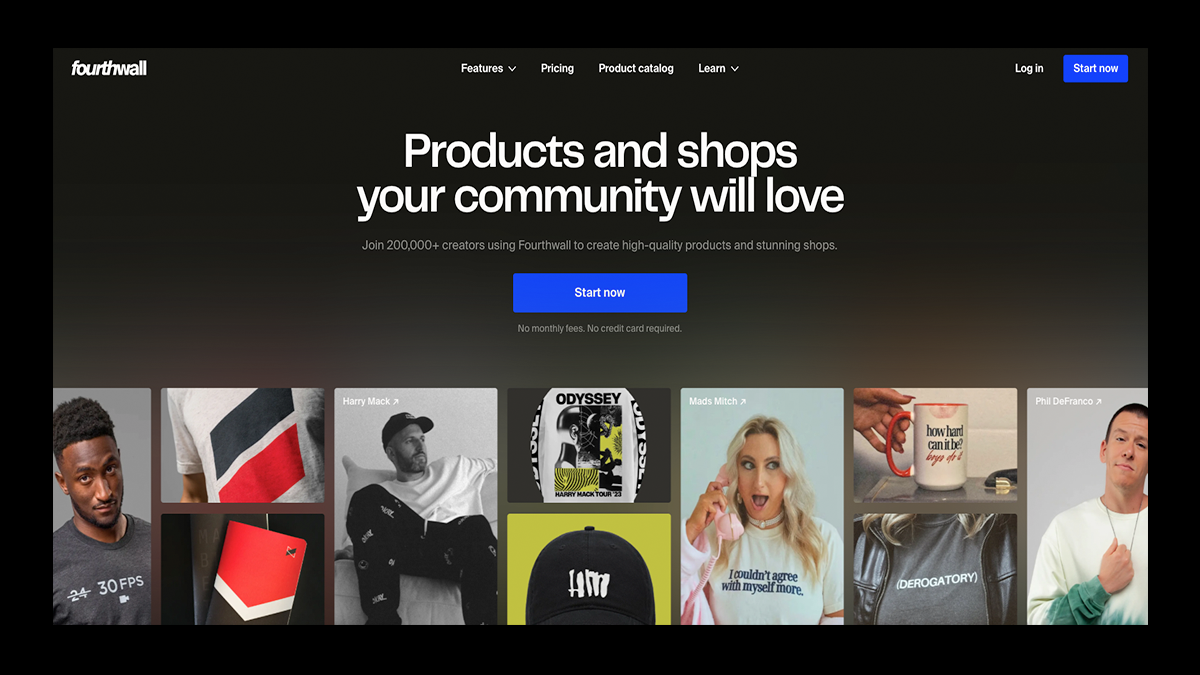
Fourthwall is an all-in-one eCommerce platform designed for sellers who want full control over their online business, enabling them to build more than just a basic merch page.
Create a fully branded storefront that lets you sell premium print-on-demand merch to your customer base, along with digital products and membership subscriptions that unlock recurring revenue.
Tack on built-in fulfillment, payments, analytics, and native social integrations, and Fourthwall makes it easy for anyone to launch an online store that's dedicated to their brand.
Tools & Features
- Storefront & Brand Control: Fourthwall gives you a fully branded, no-code storefront with flexible layouts and comprehensive design tools that rival Spreadshop. The platform's design editor allows you to create 3D renderings of your product mockups, which you can publish on your store or social media channels.
- Products & Monetization Options: You can sell from a catalog of 370+ print-on-demand products, along with digital downloads, memberships, and fan donations, all from one dashboard. This makes it easy to stack multiple revenue streams without running separate tools or storefronts.
- Production, Fulfillment & Operations: Fourthwall offers high-quality printing (DTG, DTF, sublimation, UV printing, embroidery), global fulfillment, shipping, payments, and sales tax as the merchant of record. That means no inventory, no logistics headaches, and no tax compliance stress.
- Marketing, Analytics & Customer Data: Built-in analytics show you what’s selling, who’s buying, and how your audience behaves, while promo codes, giveaways, and discounts help drive conversions. Moreover, you retain access to your customer data, allowing you to build real, long-term relationships rather than relying on platform algorithms.
- Integrations & Distribution Channels: Fourthwall connects directly with the YouTube Product Shelf, TikTok Shop, Meta Shopping, Twitch Gifting, and email tools such as Klaviyo and Kit. These native integrations let you sell where your audience already spends time, without forcing them to leave the platforms they love.
Pricing
Fourthwall offers a free plan with no monthly fees and 0% platform fees on physical products (5% on digital and memberships), while its $19/month Pro plan removes digital fees and adds a free domain, monthly sample credits, unlimited team members, and priority support.
Pros
- Full ownership of your storefront and customer data
- Sell physical products, digital downloads, and memberships in one place
- Global fulfillment, payments, and sales tax handled for you
- 3D rendering design tools & mockups
- Custom inserts for branding & packaging
- Strong native integrations with major social platforms
- No monthly fee required to start selling
- Built-in promo tools like discounts, giveaways, and drops
Cons
- Slightly more setup than basic merch platforms
- No built-in marketplace discovery traffic
2. Shopify
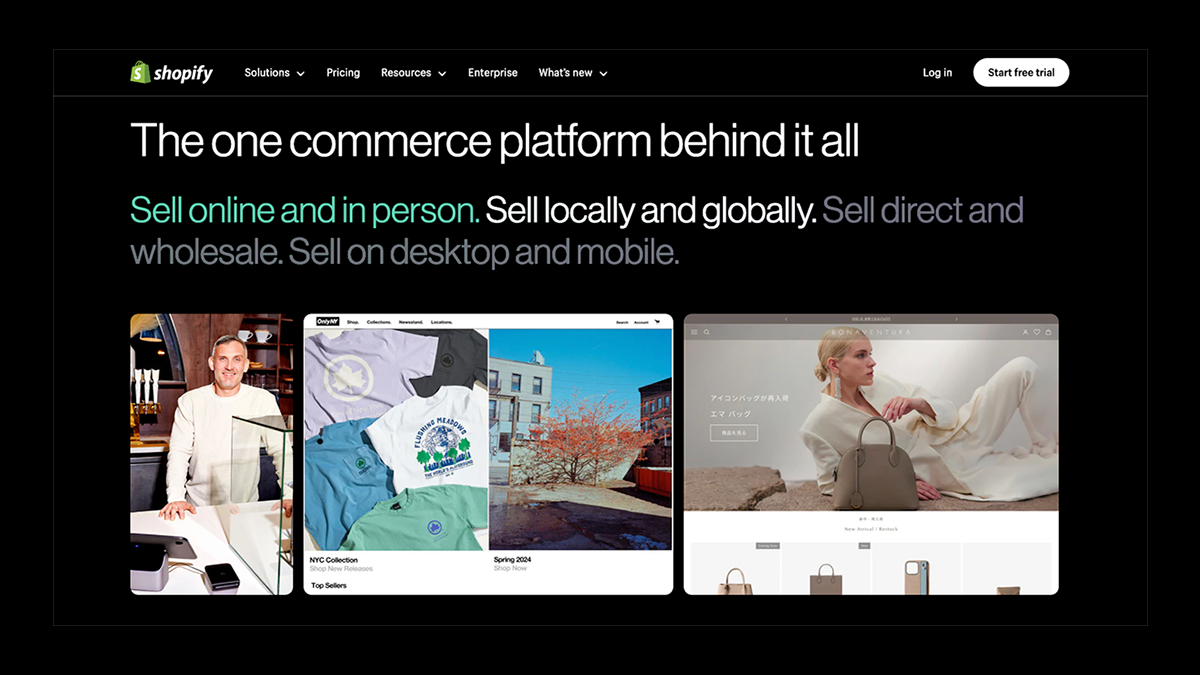
Shopify is probably the most well-known eCommerce platform out there today, and that’s because it’s built to help shops scale quickly.
From simple product launches to high-volume stores, the platform provides sellers with full control over their storefronts, backed by polished themes, powerful SEO tools, and access to a massive app ecosystem that helps stores look and operate like real brands.
And though it may take more time to set up than some creator-first merch platforms, Shopify rewards that effort with flexibility and long-term stability.
Tools & Features
- Storefront & Design: Shopify offers a polished theme library with a drag-and-drop editor, plus optional HTML/CSS access for brands that want precise design control.
- Products, Inventory & POS: You can sell unlimited physical and digital products, manage inventory across channels, and sync online and in-person sales with Shopify POS.
- Checkout & Payments: Shopify provides a fast, secure checkout with support for Shopify Payments, PayPal, Apple Pay, Google Pay, and dozens of third-party gateways.
- Marketing, SEO & Growth: Built-in tools cover SEO settings, blogging, discount codes, abandoned cart recovery, and email campaigns to help drive traffic and conversions.
- Apps & Integrations: The Shopify App Store unlocks thousands of integrations for print-on-demand, subscriptions, fulfillment, CRM, loyalty programs, and automation.
Pricing
Shopify pricing starts at $29/month for a full online store with unlimited products, scales to $79/month with advanced reporting and abandoned cart recovery, and tops out at $299/month for brands that need automated shipping rates and deeper operational controls.
Pros
- Highly customizable storefronts
- Unlimited products and bandwidth
- Full ownership of customer data
- Massive app ecosystem
- Supports online, social, and in-person sales
- 24/7 customer support
Cons
- No free plan
- Monthly costs rise with apps
- Steeper learning curve for beginners
- POD requires third-party tools
3. Merchize
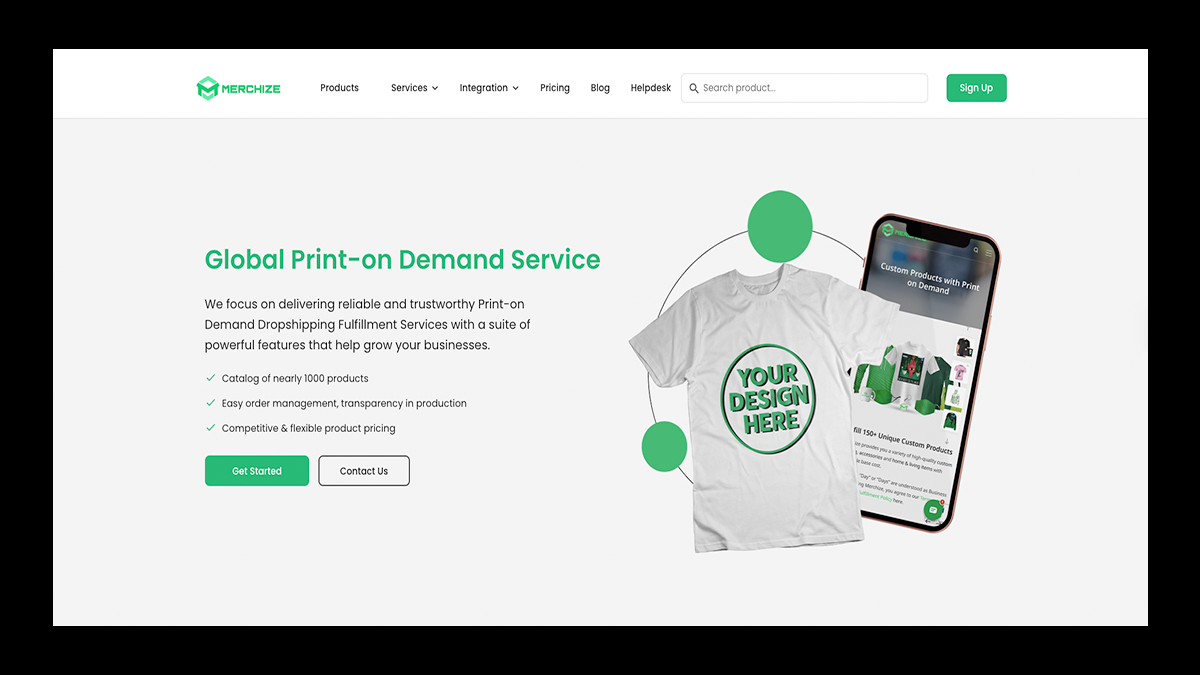
Merchize is a performance-focused eCommerce platform built specifically for sellers who treat print-on-demand like a real operation, not a side project.
It combines a mobile-friendly storefront builder with POD-native tooling and a deeply integrated fulfillment system, which allows you to design, sell, and ship products without relying on a ton of third-party services.
Tools & Features
- Storefront & Infrastructure: Merchize provides a fast, SEO-optimized storefront backed by first-class servers, 99.99% uptime, SSL security, and unlimited bandwidth and storage.
- Products & POD Capabilities: You can sell from a catalog of nearly 1,000 custom products spanning apparel, accessories, home décor, ornaments, all-over-print items, and embroidery.
- Production & Fulfillment: With in-house manufacturing in Vietnam and facilities across the US, EU, UK, AU, and China, Merchize controls production quality, turnaround times, and base costs end-to-end.
- Growth, Analytics & Conversion Tools: Built-in features include abandoned cart recovery, store analytics, one-page checkout, upsells, cross-sells, Google Shopping integration, and bulk product importing.
- Marketplace & Channel Expansion: Merchize is built for multi-channel selling, with native support for TikTok Shop, Walmart Fulfillment Services, and Amazon FBA-style POD workflows.
Pricing
Merchize offers a free Fulfillment Plan with unlimited users, multichannel integrations, mockup tools, API access, and more, then scales to a $79/month Platinum Storefront plan and a $299/month Diamond plan, which comes with full storefront features and priority support.
Pros
- POD-optimized storefront with fulfillment built in
- Nearly 1,000 customizable products across multiple categories
- In-house manufacturing for quality control and lower base costs
- Strong performance and security
- Built-in tools for conversion, analytics, and scaling
- Best for TikTok Shop, Walmart, and Amazon-style selling
Cons
- Higher monthly cost than creator-first platforms
- Feature depth may feel heavy for casual sellers
- Best suited for volume-driven businesses, not small merch drops
4. Printify
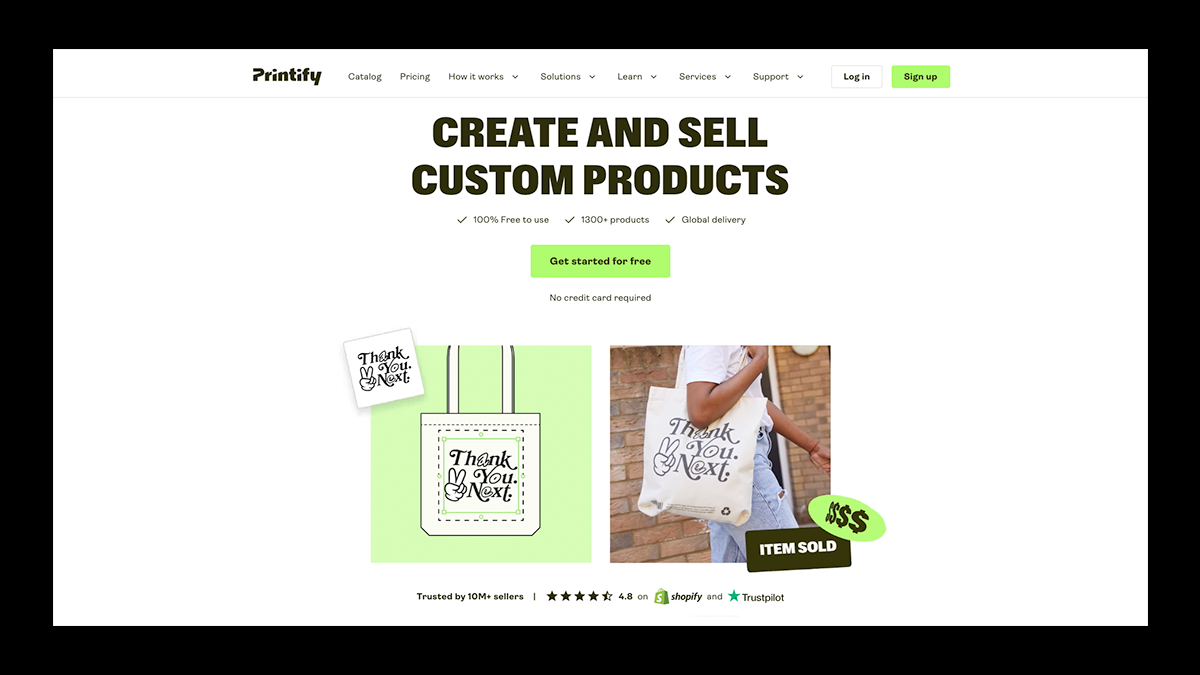
Printify is a flexible, creator-friendly print-on-demand platform built for sellers who want maximum product choice and supplier control without holding inventory.
Rather than owning its own factories, Printify acts as a smart middle layer between you and a global network of print providers, giving you the freedom to choose products based on price, location, shipping speed, and quality ratings.
At its core, Printify is less about running a storefront and more about powering production and fulfillment for sellers who already have (or plan to build) their own sales channels.
Tools & Features
- Product Catalog & POD Network: Printify offers 1,000+ customizable products, including apparel, drinkware, home décor, pet products, accessories, and niche items like car accessories and luggage, sourced from 80+ print partners worldwide.
- Print Provider Selection & Pricing Transparency: For every product, you can compare base costs, shipping rates, production times, and provider ratings upfront, with real-time profit margin calculations and suggested retail pricing baked in.
- Integrations & Sales Channels: Printify integrates perfectly with Shopify, WooCommerce, Etsy, Wix, Squarespace, BigCommerce, TikTok Shop (US), Amazon (US), eBay, and more, plus a lightweight Printify Pop-Up Store for simple launches.
- Order Routing & Fulfillment Tools: Features like automatic order routing and Printify Choice help reduce delays by rerouting orders to faster or in-stock providers, while Printify Connect (Premium+) handles reprints and refunds for standalone stores.
- Design, Mockups & Store Management: The platform includes a beginner-friendly product creator, mockup generator, bulk product creation, manual order tools, and support for up to five stores on the free plan.
Pricing
Printify offers a free plan with unlimited product designs, up to five connected stores, and core integrations, then scales to a $29/month Premium plan that supports up to 10 connected stores and unlocks up to 20% off product costs.
Pros
- Massive product catalog with niche-friendly options
- Transparent pricing and profit margin visibility
- Strong free plan for beginners and testers
- Wide range of integrations across marketplaces and platforms
- Flexible global fulfillment without inventory risk
Cons
- No fully owned fulfillment network (quality can vary by provider)
- Shipping speed and costs depend heavily on print partner choice
- Limited branding options for packaging and unboxing
- Best results require testing samples and providers
5. Gelato
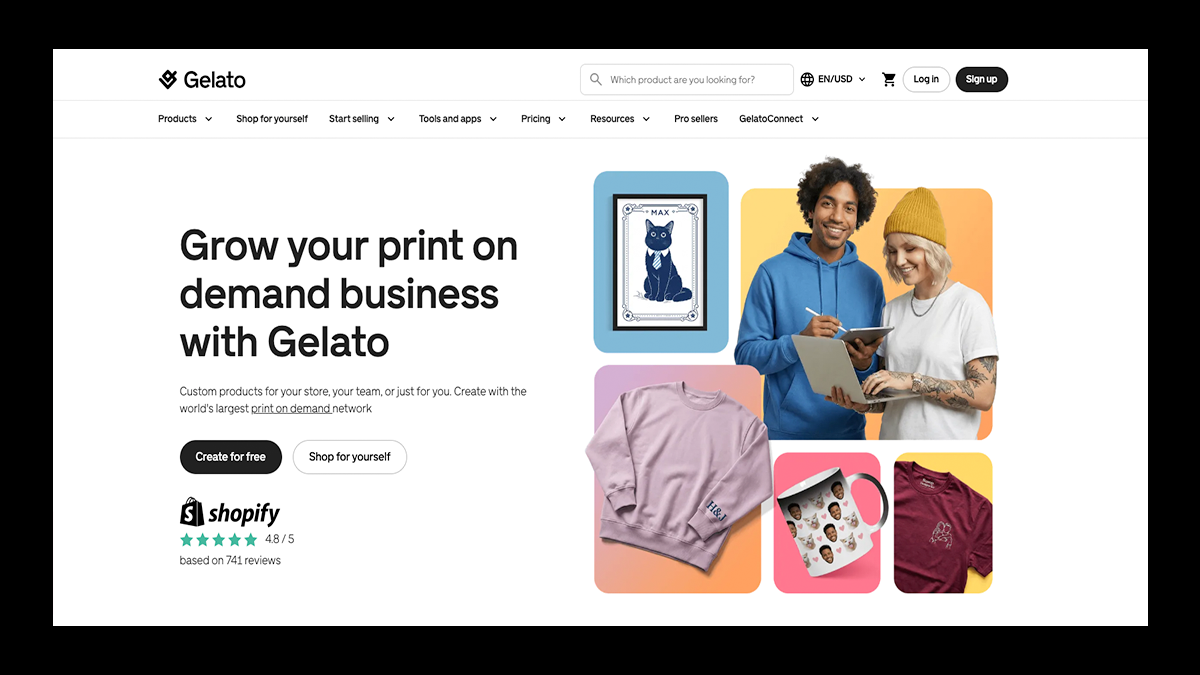
Gelato is a globally distributed print-on-demand company designed to be faster and more eco-friendly than most of its competitors.
Instead of routing orders through a single fulfillment hub, Gelato produces items locally through a massive network of print partners, which dramatically reduces shipping times, carbon emissions, and cross-border headaches.
The result is a POD system that feels less like dropshipping and more like modern, localized manufacturing, which might appeal to brands selling internationally or across Europe.
Tools & Features
- Local Production & Global Fulfillment: Gelato works with 140+ print partners across 32 countries, enabling fast local production and delivery to over 200 countries while significantly cutting shipping times and environmental impact.
- Product Catalog & Print Quality: You can sell high-quality apparel, wall art, stationery, phone cases, home décor, and accessories, with Gelato particularly thriving in premium paper goods and wall art across materials like wood, aluminum, and foam.
- Design Tools & Creative Apps: Gelato includes an accessible design studio with templates, free fonts, Shutterstock assets, image-quality checks, DTG and embroidery options, plus CreateAI tools for mockups, quick launches, and store migrations.
- Personalization Studio: One of Gelato’s prized features, the Personalization Studio lets customers customize products themselves by adding text, images, or photos directly at checkout.
- Integrations & Automation: Gelato integrates smoothly with Shopify, Etsy, WooCommerce, Wix, Squarespace, Amazon, TikTok (US/UK), and custom workflows via APIs, alongside tools such as Price Navigator, analytics, file sync, and a mobile management app.
Pricing
Gelato offers a free plan with global fulfillment and core design tools, then scales with Gelato+ ($25/month) for up to 20% product discounts and branding options, Gold ($129/month) for deeper discounts and profit optimization tools, and Platinum (custom pricing) for high-volume brands.
Pros
- Extremely fast global shipping via local production
- Strong eco-friendly and sustainability focus
- Excellent print quality and consistency
- Best-in-class personalization tools
- Powerful integrations with Shopify and Etsy
- Reduced base product costs for better margins
Cons
- Requires an external storefront to sell
- Smaller product catalog than some competitors
- Personalization Studio adds extra cost
- No warehousing or inventory storage
6. Sellfy
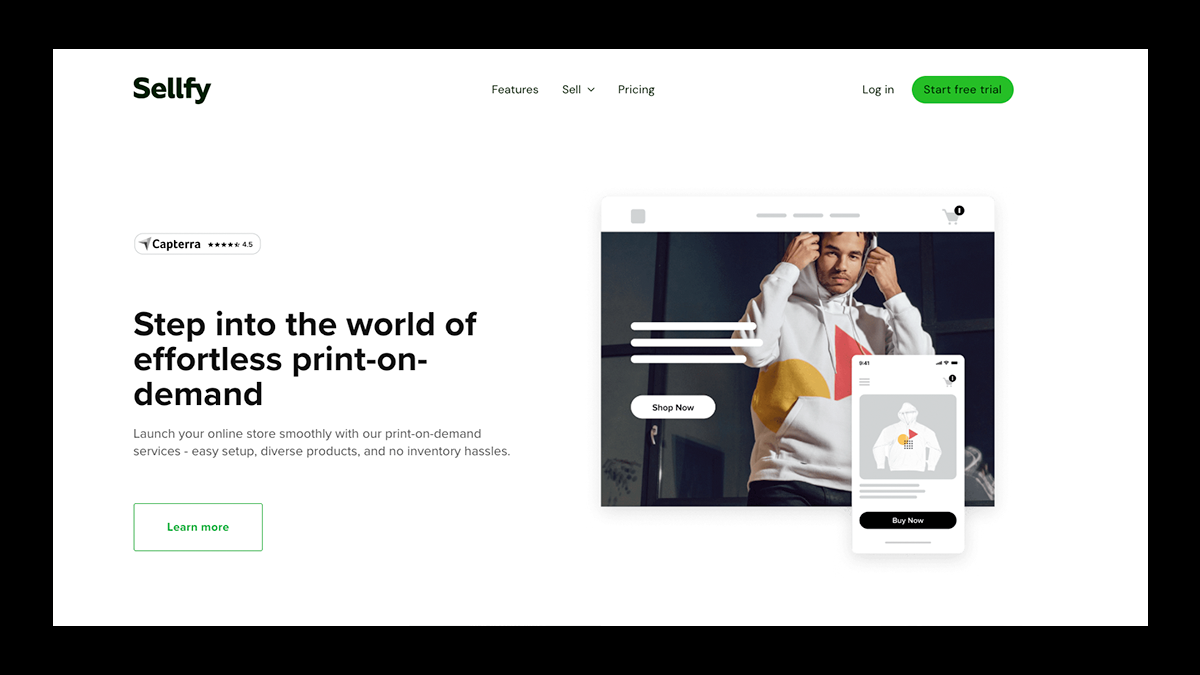
Sellfy removes complications from selling online by keeping setup, design, and product management intentionally simple.
It lets you sell digital files, subscriptions, and print-on-demand merchandise from a clean storefront, with built-in payments, basic marketing tools, and analytics.
If your priority is launching fast and managing everything from one dashboard, without getting buried in settings, Sellfy delivers exactly that.
Tools & Features
- Products, Subscriptions & POD Sales: Sellfy lets you sell digital downloads, physical products, subscriptions, video content, and built-in print-on-demand merch from a single store, covering both one-time purchases and recurring revenue without extra tools.
- Print-on-Demand & Fulfillment: The platform includes native print-on-demand for items like t-shirts, hoodies, mugs, and hats, automatically handling production and shipping so orders are fulfilled in the background as sales come in.
- Storefront Design & Customization: Sellfy’s editor keeps things intentionally simple, giving you control over logos, brand colors, page layouts, domains, and mobile use, minus the complexity of a full website builder.
- Marketing, Distribution & Integrations: Built-in tools like email campaigns, discount codes, upsells, cart recovery, affiliate programs, and ad pixels pair with flexible distribution options, including “Buy Now” buttons, embeds, product links, and YouTube end screens, to help you sell anywhere.
- Payments, Security & Analytics: Sellfy supports global payments via Stripe and PayPal, secure checkout with file protection features such as PDF stamping and download limits, and clear analytics that track traffic, conversions, revenue, and top-performing products.
Pricing
Sellfy pricing starts at $22/month for the Starter plan (up to $10K in annual sales), scales to $59/month for Business with added growth tools like upsells and cart recovery, and reaches $119/month for Premium with higher revenue limits, priority support, and advanced features.
Pros
- Fast setup and beginner-friendly
- Strong support for digital products and subscriptions
- Built-in print-on-demand without third-party tools
- No transaction fees
- Simple marketing tools included
Cons
- Limited design flexibility
- Basic inventory and variant management
- Physical product selling is less robust than enterprise platforms
7. WooCommerce
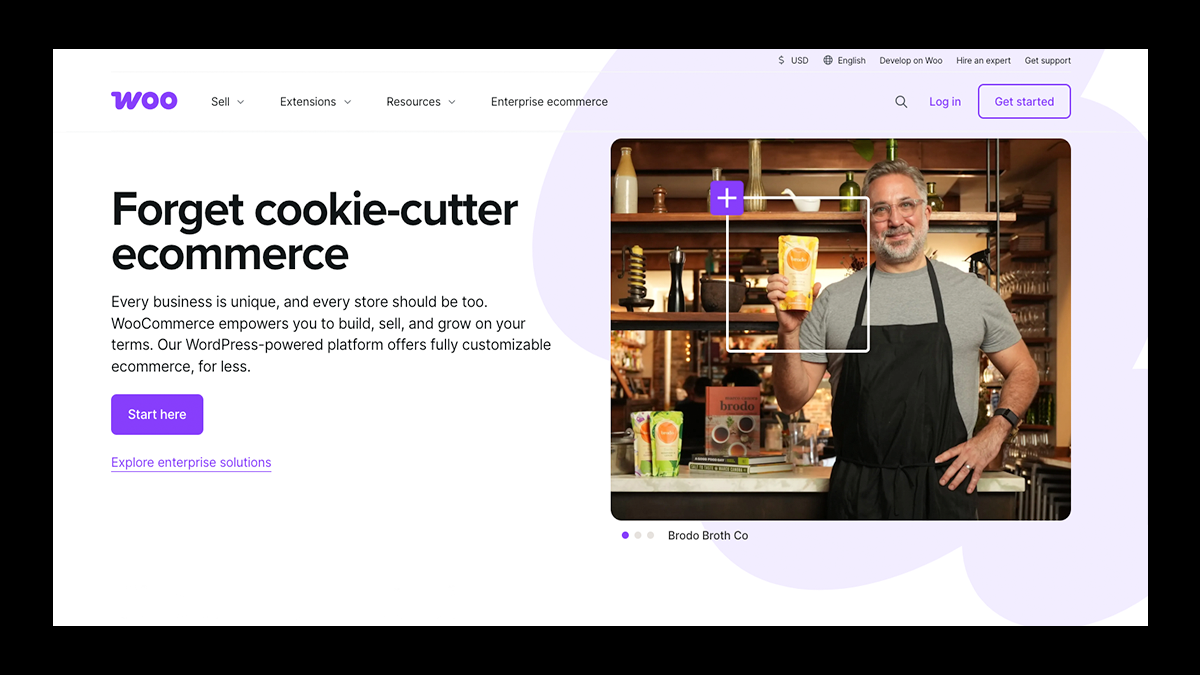
WooCommerce turns a WordPress site into a fully functional store without locking you into a single vendor’s rules.
Because it’s open-source, you get near-unlimited control over design, checkout flow, and functionality, especially once you start layering in themes and extensions.
However, since WooCommerce isn't always plug-and-play, your final setup depends heavily on your hosting, plugins, and your proficiency with managing updates.
Tools & Features
- Store Building & Customization: WooCommerce lets you design and customize every part of your storefront using WordPress themes and layouts, giving you near-total control over the visual and structural design.
- Plugins, Extensions & Flexibility: With hundreds of WooCommerce extensions and tens of thousands of WordPress plugins, you can add almost any feature imaginable—just be mindful of plugin quality and stack bloat.
- Products & Inventory Management: You can create unlimited products and variations, track stock, and generate inventory reports, making it ideal for both small shops and massive catalogs.
- Payments, Shipping & Taxes: WooCommerce supports built-in payments, dozens of third-party gateways, flexible shipping rules, and configurable tax tools that scale to meet compliance needs.
- Analytics, SEO & Content: Built-in analytics cover sales and performance basics, while WordPress-native SEO and blogging tools help drive organic traffic and long-term growth.
- Multichannel & POS Integrations: The platform connects with marketplaces, POS systems, and multi-store setups, making it adaptable for omnichannel selling and international operations.
Pricing
WooCommerce doesn’t charge a monthly fee for the core plugin, but your real cost depends on hosting, themes, extensions, and maintenance. This gives you full control yet plenty of opportunities for expenses to pile up as your store expands.
Pros
- Extremely customizable (open-source control)
- Low cost to start (free core plugin)
- Massive theme + plugin ecosystem
- Strong SEO + content potential via WordPress
- Flexible payments, tax, and multichannel options
Cons
- Steep learning curve for beginners
- Updates can cause plugin/theme conflicts
- Quality varies across third-party extensions
- Support is mostly docs + community, not hands-on
- Total cost can creep up as you add features
8. Spring by Amaze
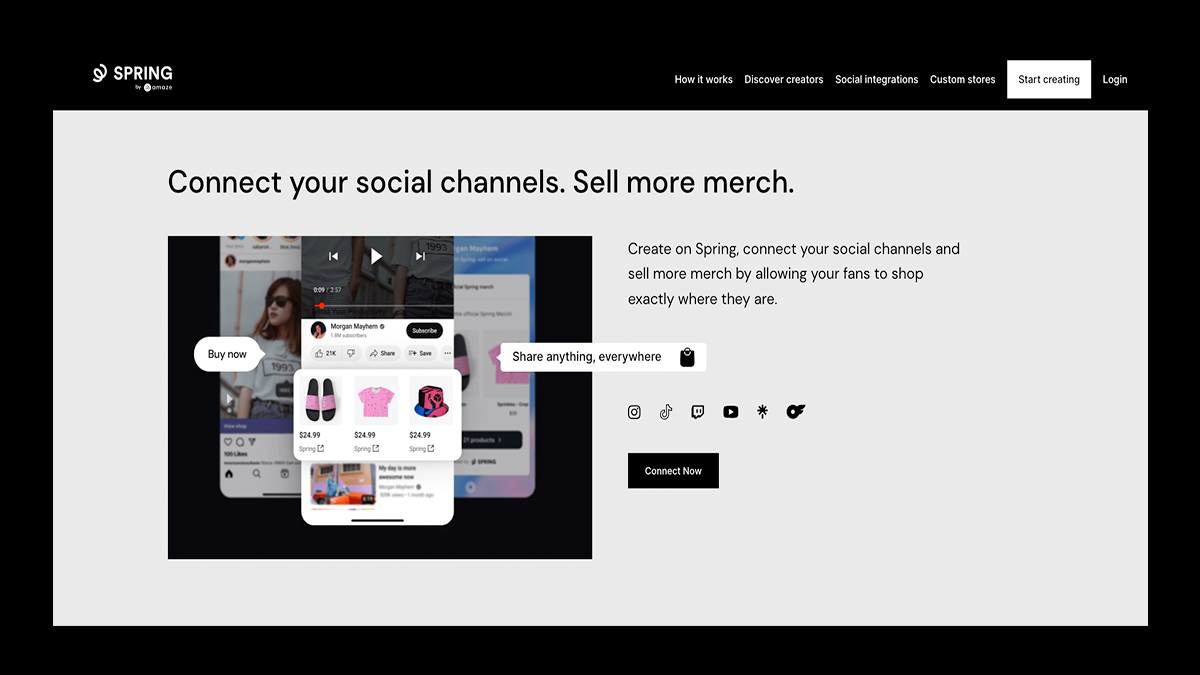
Originally known as Teespring, Spring has evolved from a crowdfunding model into a full print-on-demand system that emphasizes speed, reach, and built-in promotion.
With millions of monthly fan visits flowing through the ecosystem, Spring leans hard into distribution rather than deep store customization.
It removes the usual hurdles of inventory, fulfillment, and customer support, letting you design products, launch a storefront, and start selling in minutes.
Tools & Features
- Product Creation & POD Fulfillment: Spring offers 180+ ready-to-ship products across apparel, accessories, home decor, and novelty items, all made to order using DTG and screen printing. You upload a design, set your margin, and Spring handles printing, packing, shipping, and returns.
- Storefront Setup & Branding: You can launch a standalone storefront in under 15 minutes, customize basic brand elements like colors, banners, logos, and domains, and organize products into simple collections. That said, storefronts feel more like a merch hub than a fully customizable online shop.
- Social Commerce & Distribution: This is where Spring shines. Native integrations with YouTube Merch Shelf, TikTok Shop, Twitch, Instagram, Discord, Linktree, Beacons, and more let you sell directly where fans already spend time—often without sending them off-platform.
- Marketing, Retargeting & Promotions: Spring includes promo codes, discount tiers, retargeting ads, email blasts to past buyers, tracking pixels, and limited-time drops. The platform even promotes select products across its own network and third-party marketplaces when performance criteria are met.
- Operations, Payments & Support: Payments, customer service, tax handling, and logistics are fully managed for you, with payouts via PayPal or Payoneer. Advanced options like Spring Go also let sellers expand into warehoused inventory, custom sourcing, and non-POD products for a flat service fee.
Pricing
Spring is free to start with no monthly subscription. It uses a fixed product base cost, where you set your retail price and keep the profit, with optional paid add-ons such as custom domains and Spring Go services.
Pros
- Extremely fast setup with no upfront costs
- 180+ POD products plus access to unique items
- Best-in-class social platform integrations
- Fulfillment, shipping, payments, and customer support handled
- Built-in promotion and marketplace distribution potential
Cons
- Very limited storefront customization
- Higher base product costs than many POD competitors
- Weak branding and CMS tools
- Less control over production and quality specifics
How to Choose the Best Spreadshop Alternative?
To select the best Spreadshop alternative, consider the following key factors before committing to a new print-on-demand platform:
- Product catalog and customization: Choose services that offer a broad range of customizable merchandise, from apparel to accessories, to avoid limiting your brand’s offerings.
- Printing quality and fulfillment: Platforms with consistent print quality and reliable fulfillment typically result in fewer customer issues as order volume grows.
- Pricing and margins: Compare base costs, retail price flexibility, and the availability of volume discounts or performance-based pricing as you scale.
- eCommerce and platform integrations: Ensure the platform integrates seamlessly with tools such as Shopify or provides built-in storefronts, rather than requiring complex workarounds.
- Shipping speed and reach: For international sales, prioritize platforms with global shipping, fast delivery, and localized production options.
- Brand control and growth tools: Features such as branded packaging, customer data access, and product page customization are important for long-term growth beyond a basic merchandise shop.
In the End, Fourthwall Is Your Best Bet!
If you are committed to building a merchandise business with full ownership and control over your customer data, Fourthwall is the clear choice.
It combines premium print-on-demand, digital products, memberships, and creator-focused integrations in one platform, enabling you to launch quickly and scale efficiently.
If you are ready to turn your audience into a sustainable business, now is the ideal time to build it on Fourthwall.
FAQ: Spreadshop
Is Spreadshop free to use?
Yes, Spreadshop is free to use, and you can launch a fully functional merch store without paying any upfront fees or monthly subscriptions.
You only cover the base production cost when an order is placed, while keeping full control over your retail pricing and profit margins.
Who is Spreadshop best for?
Spreadshop works best for designers, influencers, and creators who want a fast, low-effort way to sell merchandise without managing fulfillment.
Can I migrate from Spreadshop to another platform later?
Yes, you can move your designs to another platform later, but Spreadshop does not allow you to export customer data or order history.
Because of this limitation, many sellers eventually switch to platforms that offer full data ownership and better customer insights as their businesses grow.
Is Fourthwall better than Spreadshop?
It really comes down to what you want in the long term.
Spreadshop is great if you’re focused on launching merch fast with minimal setup, but Fourthwall is the stronger choice if you want full ownership of your storefront and the ability to monetize merch, digital products, memberships, and drops all in one place.
Matt Keyser is a writer at Fourthwall who lives at the intersection of social media and Creator culture. With 4+ years of experience covering industry trends, his work focuses on helping Creators and brands understand how to turn their passion into a thriving business while maintaining a constant pulse on the latest eCommerce and social media trends.


You might also like

9 Best Kajabi Alternatives for Course Creators in 2026

What to Sell Online: How to Find a Product People Want

8 Best Spreadshirt Alternatives for Print-on-Demand in 2026

7 Best Sellfy Alternatives for Creators and Brands in 2026

27 Best Digital Products to Sell as a Creator
.webp)
Top 8 Wix Alternatives for Creators Building an Online Store in 2026

How to Create and Sell Print on Demand Journals and Notebooks

9 Gumroad Alternatives for Digital Creators in 2026

10 Best Stan Store Alternatives for Creators in 2026

Keep up with the latest from Fourthwall
New features, product updates, trend breakdowns, and creator stories — straight to your inbox.