
10 Best SEO Tools to Optimize Your Online Store in 2026


The difference between stores that struggle and those that scale often lies in how well they understand search.
It doesn't matter if you're a big-time clothing brand or a creator with an online merch store; if you're not implementing the best SEO practices into your business, chances are you're not ranking very high on Google.
And if you're not ranking on Google, you're just another store lost in the weeds.
Luckily, that's where SEO tools come in handy.
They're tools that show you what your customers are typing into Google, which products are gaining traction, and where your competitors are getting their traffic.
So, instead of guessing which keywords to target or which pages to fix, you get real data that guides smarter decisions.
Below, we highlight 10 need-to-know SEO tools that are helping eCommerce sellers improve their rankings and turn search visibility into consistent sales.
1. Google Analytics
Let's start off with one you might already be familiar with.
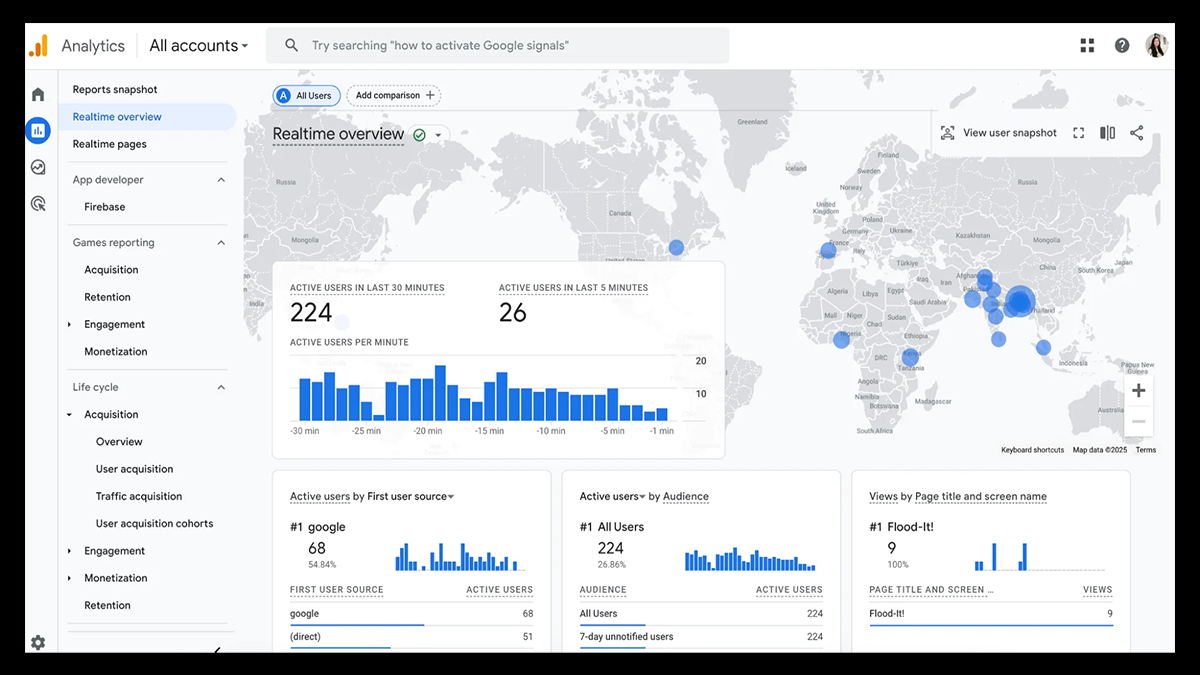
Google Analytics is a free and powerful tool that gives online store owners a clear view of how customers find and interact with their website.
It essentially serves as an SEO audit, helping you understand whether your technical SEO improvements are increasing traffic and how well your ranking pages contribute to overall sales.
You can also see which keywords and channels bring in qualified visitors, how long they stay, which URLs they engage with, and where they drop off before completing a purchase.
For store owners (especially Fourthwall users) focused on optimization, Google Analytics acts as the foundation for any serious SEO performance analysis.
SEO Features
- Tracks organic traffic performance and search-driven sessions
- Shows search queries and traffic data through Google Search Console integration
- Monitors conversions, checkout behavior, and shopping activity
- Breaks down audience demographics and on-site behavior
- Provides cross-device customer journey tracking
- Offers AI-powered insights to predict trends and growth opportunities
- Integrates with Google Ads to connect SEO and paid campaign performance
2. LLMrefs
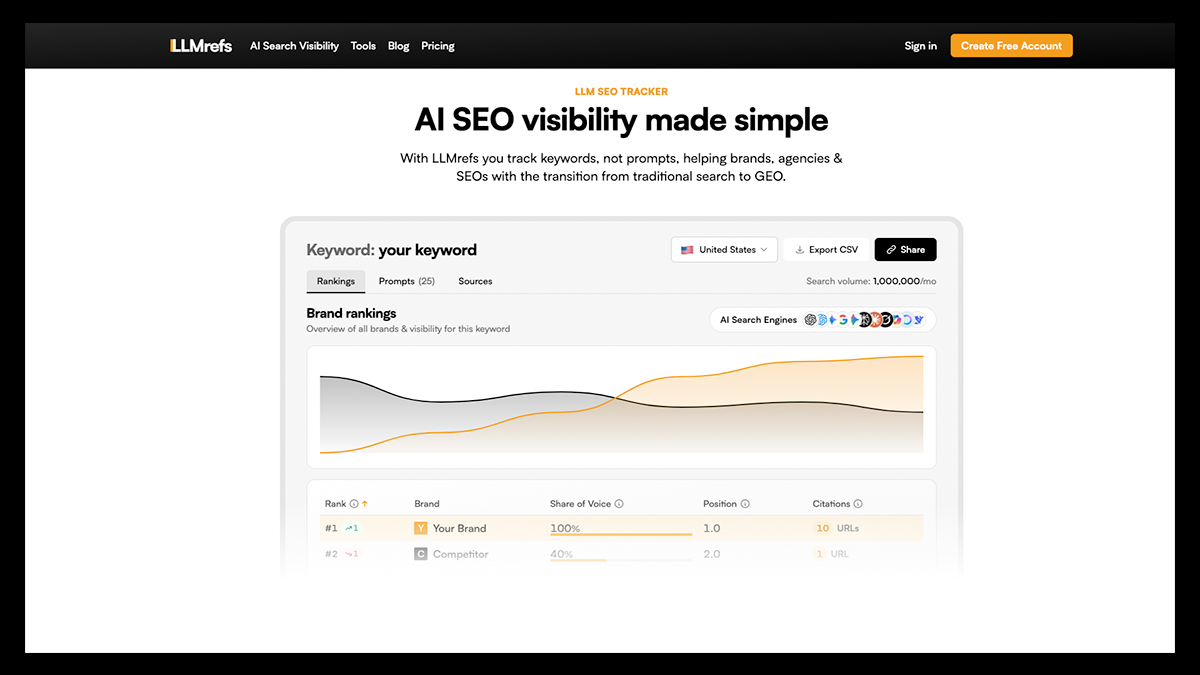
Unlike standard SEO platforms that only track rankings in Google, LLMrefs measures how often your brand, products, and content are cited inside AI-generated answers across platforms like ChatGPT, Gemini, and Google AI Overviews.
It works from a keyword-first approach, automatically generating real-world conversational prompts and analyzing which sources AI systems trust when responding.
For online stores, this insight is a competitive edge. You can see when competitors are being cited for high-intent product queries and identify exactly what content you need to create or improve to earn those AI mentions.
And instead of guessing how to influence generative search, LLMrefs provides you with clear share-of-voice metrics and citation data that guide smarter content strategy.
When it comes to your product's discovery online, LLMrefs is a tool worth knowing.
SEO Features
- Keyword-to-prompt tracking across major AI platforms
- Share-of-voice and citation monitoring in generative search
- Geo-targeted AI visibility tracking in 20+ countries
- Content gap insights based on cited competitor sources
- AI crawlability checker for optimization readiness
- Reddit thread discovery for conversational trend analysis
- CSV and API exports for reporting and integration
3. SEMRush
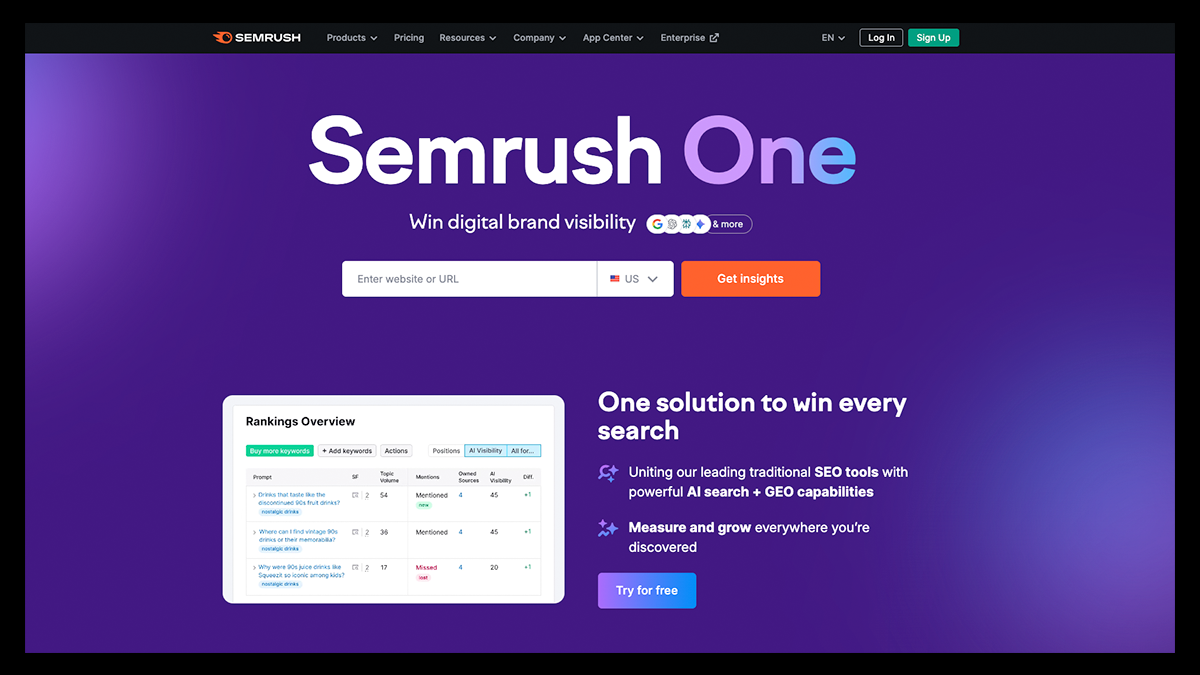
SEMRush is one of the most complete SEO tools available for eCommerce sellers who want more than just surface-level keyword data.
It gives online stores a full view of their search performance, from keyword rankings and backlinks to paid traffic and competitor strategies.
Not to mention, its real-time rank tracking and technical site audit tools make it easier to fix issues that hurt visibility and to improve product and category page performance.
With access to billions of keywords and one of the largest marketing databases in the industry, SEMRush helps you uncover high-intent search terms, spot gaps in your content, and identify where competitors are winning.
SEO Features
- Advanced keyword research with search volume and intent data
- Real-time rank tracking for product and category keywords
- Technical SEO site audit to uncover errors and optimization issues
- Backlink analysis and link-building tools
- Competitor analysis for organic and paid search strategies
- Content optimization tools powered by AI insights
- Traffic and market analysis to benchmark against competitors
- Local SEO tracking and Google Business Profile optimization
4. Ahrefs
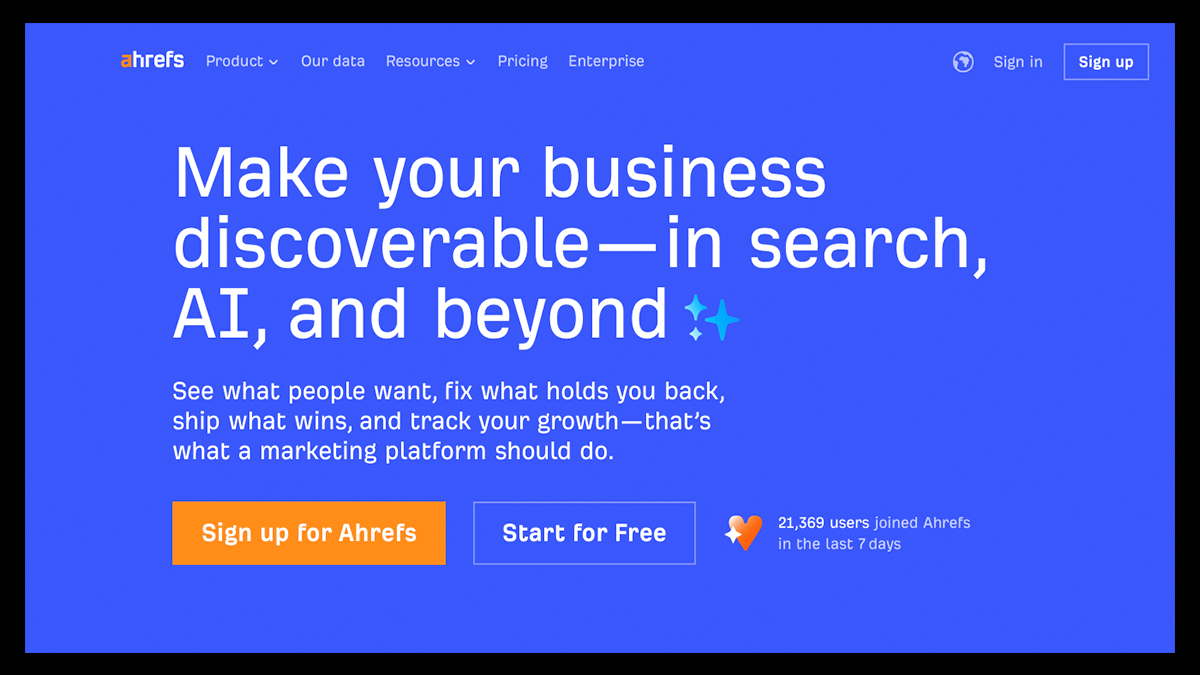
While it's widely known for its backlink database, Ahrefs goes far beyond link building by providing eCommerce sellers with deep insights into keyword rankings, competitor performance, and search traffic potential.
You can uncover content gaps between your store and competing sites, analyze SERP history to see how rankings shift over time, and identify which pages actually drive clicks instead of just impressions.
Its data helps you understand where your authority stands in the market and where high-value growth opportunities exist.
If your goal is to improve your store's long-term visibility, Ahrefs provides the competitive intelligence you need to drive more organic growth.
SEO Features
- Industry-leading backlink analysis and link-building tools
- Keyword research with click data and traffic potential estimates
- Competitor analysis across traffic, rankings, and top-performing pages
- SERP history and ranking comparison over time
- Content gap analysis to uncover missed keyword opportunities
- Site Audit tool that scans for 170+ technical SEO issues
- Brand monitoring and AI search visibility tracking
- Customizable SEO reporting for performance tracking
5. SurferSEO
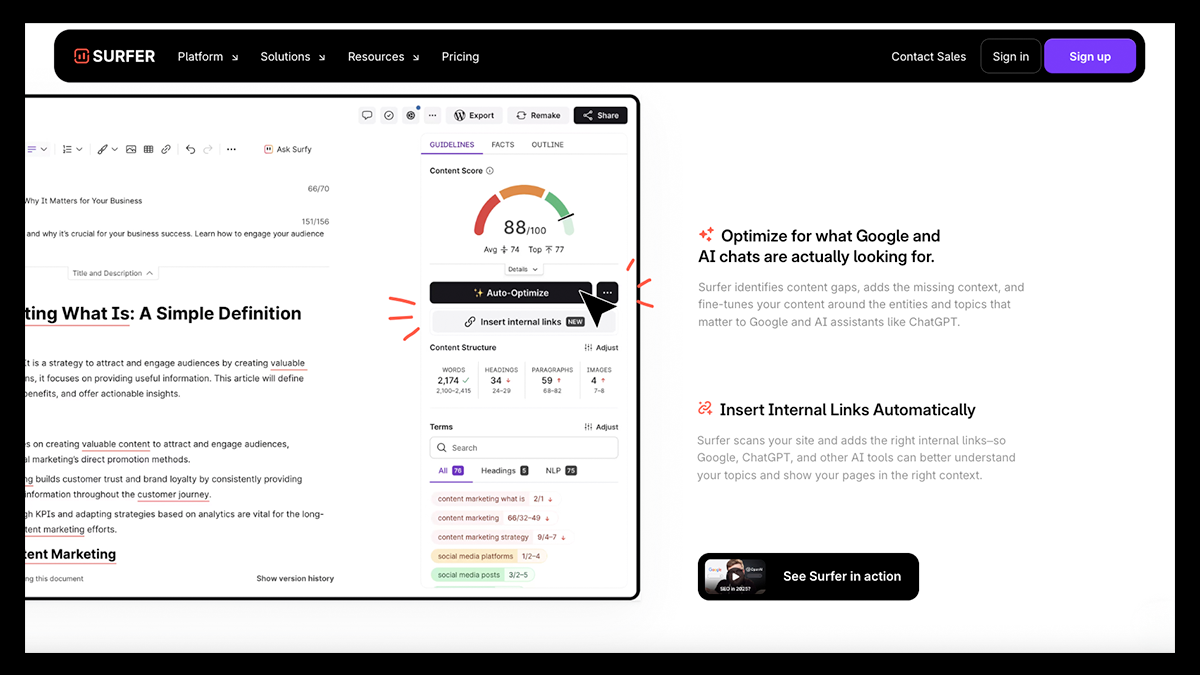
SurferSEO is an on-page optimization platform designed to help your content rank higher on Google, ChatGPT, and other AI chatbots.
It analyzes what is currently performing on the SERPs and gives you clear, data-backed guidance on how to structure and improve your pages.
For eCommerce sellers, that means transforming product descriptions, collection pages, and blog content into assets built around real search demand.
Surfer's content scoring system and audit tools highlight gaps that may be holding your store back, while smart internal linking helps strengthen your site's overall authority.
Overall, it's a great tool to have if you want to stop guessing what will rank and start building pages that are optimized to drive sales.
SEO Features
- Real-time Content Score for on-page optimization guidance
- Content Audit to identify gaps and ranking opportunities
- SERP-based recommendations aligned with current ranking factors
- Automatic internal linking suggestions
- AI-powered content generation and refinement tools
- Performance tracking with position, traffic, and CTR insights
- AI search visibility monitoring for platforms like ChatGPT
6. Jasper AI
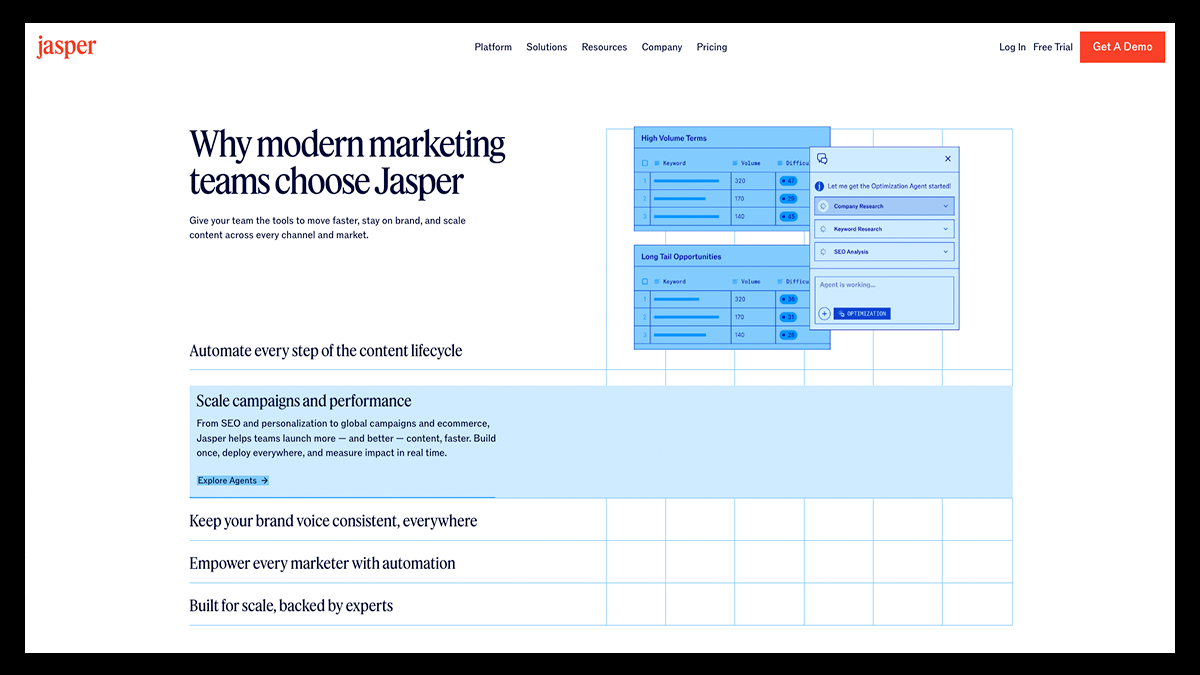
Jasper AI is a marketing-focused AI platform built to help brands create high-performing, search-optimized content at scale.
For eCommerce sellers, it speeds up everything from product descriptions to blog campaigns while keeping messaging aligned with your brand's voice.
But Jasper goes beyond basic content generation. It supports SEO, Generative Engine Optimization, and Answer Engine Optimization, which helps your store stay visible across Google, AI Overviews, and tools like ChatGPT.
It even has built-in agents to work with you and improve your optimization strategy by connecting with platforms like SEMrush to turn keyword and competitor research into structured, ready-to-publish assets.
When it comes to AI-powered tools, Jasper is a hard contender to beat.
SEO Features
- AI-powered SEO content generation and optimization
- Integration with SEMrush for automated SEO analysis
- Support for GEO to improve visibility in AI-driven search tools
- AEO optimization for featured snippets and answer boxes
- Bulk content creation with Jasper Grid for large product catalogs
- On-brand content scoring and quality control tools
- Structured FAQ and schema generation for improved search visibility
7. Moz Pro
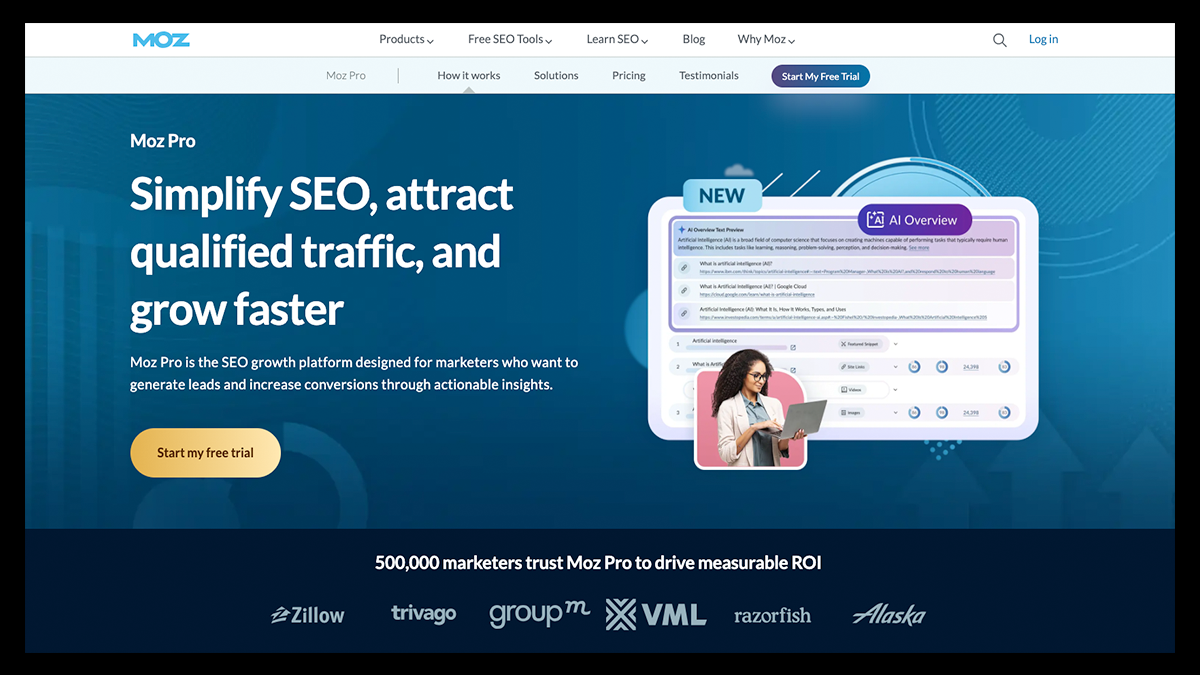
Moz Pro has helped shape modern SEO thanks primarily to proprietary metrics like Domain Authority, a search engine ranking score still trusted across the industry.
It combines keyword research, rank tracking, competitive analysis, and site crawling into one clean dashboard, giving online stores a clear picture of what is driving traffic and what is holding rankings back.
Moz's AI-powered Content Briefs turn raw search data into structured plans that help you create pages built around real search intent instead of assumptions.
And with a generous free trial and tools designed for both beginners and advanced teams, Moz Pro offers tailor-made content that aligns with search intent and helps drive traffic straight to your site.
SEO Features
- Keyword Explorer with difficulty scores, search volume, and SERP analysis
- Rank Tracking across 170+ search engines
- Competitive Research to uncover keyword gaps and link opportunities
- Link Explorer with Domain Authority and backlink insights
- Site Crawl to identify and fix technical SEO issues
- AI-powered Content Briefs for search-intent-driven content
- Domain Overview dashboard for performance snapshots
8. UberSuggest
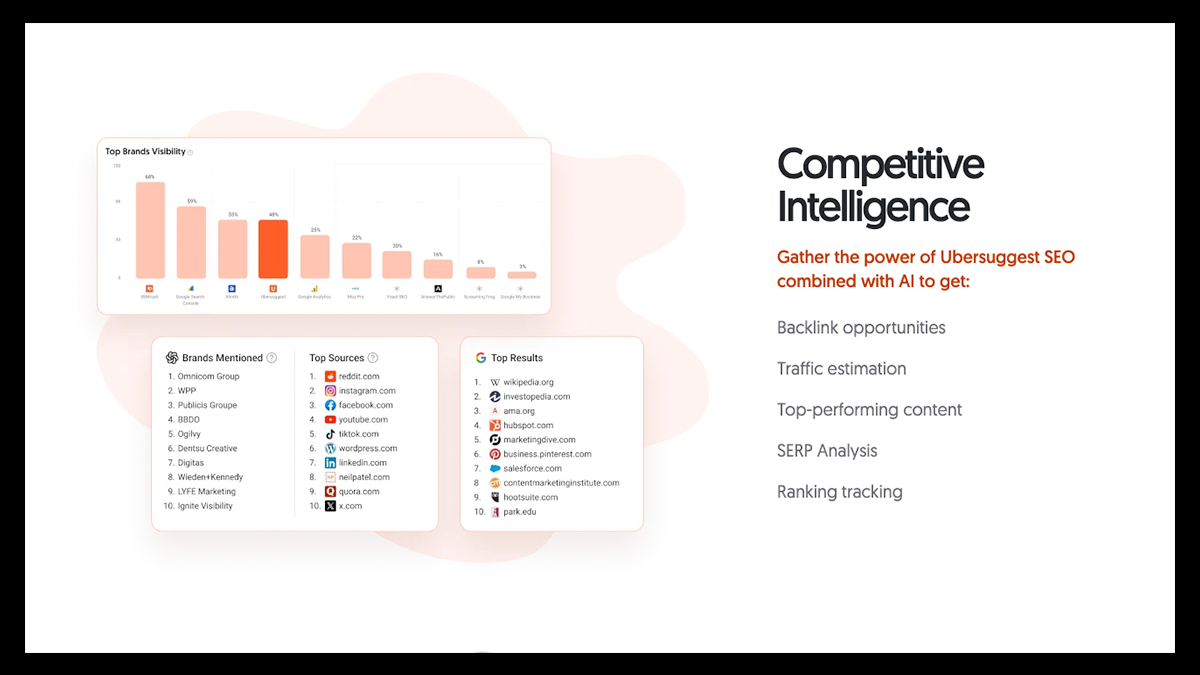
Created by YouTuber and digital marketer Neil Patel, UberSuggest is a free SEO tool that helps online stores uncover what customers are searching for on Google and AI platforms.
Rather than spending hours on manual keyword research or guessing what competitors are doing, UberSuggest allows you to quickly analyze traffic trends, identify profitable long-tail keywords, and spot content gaps worth targeting.
Its predictive analytics and competitor intelligence features give store owners a clearer idea of which opportunities are likely to drive traffic before they fully commit resources.
For growing brands that want clarity without the complexity of enterprise-level tools, Ubersuggest offers an affordable way to bring in customers who are already searching.
SEO Features
- AI-powered keyword research with search volume, intent, and difficulty data
- Competitor analysis with traffic estimates and top-performing content insights
- Site Audit tool to uncover technical and on-page SEO issues
- Content Gap analysis to find new ranking opportunities
- Rank tracking to monitor keyword performance over time
- Backlink data and link opportunity discovery
- SERP analysis to evaluate ranking competition
9. Helium 10
Helium 10 is a marketplace-focused SEO suite built specifically for sellers on Amazon and Walmart, not traditional search engines like Google.
Its Cerebro tool allows you to reverse-engineer competitor listings through ASIN lookups, revealing the exact organic and sponsored keywords fueling their sales.
From there, Listing Analyzer evaluates your product pages against marketplace best practices so you can improve titles, bullet points, and descriptions for both discoverability and conversions.
For brands whose revenue depends on winning inside Amazon or Walmart search results, Helium 10 provides the data and optimization tools needed to increase product visibility, improve sales velocity, and compete strategically where buyers are already searching.
SEO Features
- Reverse ASIN keyword research with Cerebro
- Marketplace-specific keyword volume and ranking data
- Lists optimization scoring and provides improvement suggestions
- Competitor analysis for organic and sponsored placements
- High-volume, low-competition keyword discovery
- Product ranking and performance tracking within marketplaces
10. Screaming Frog
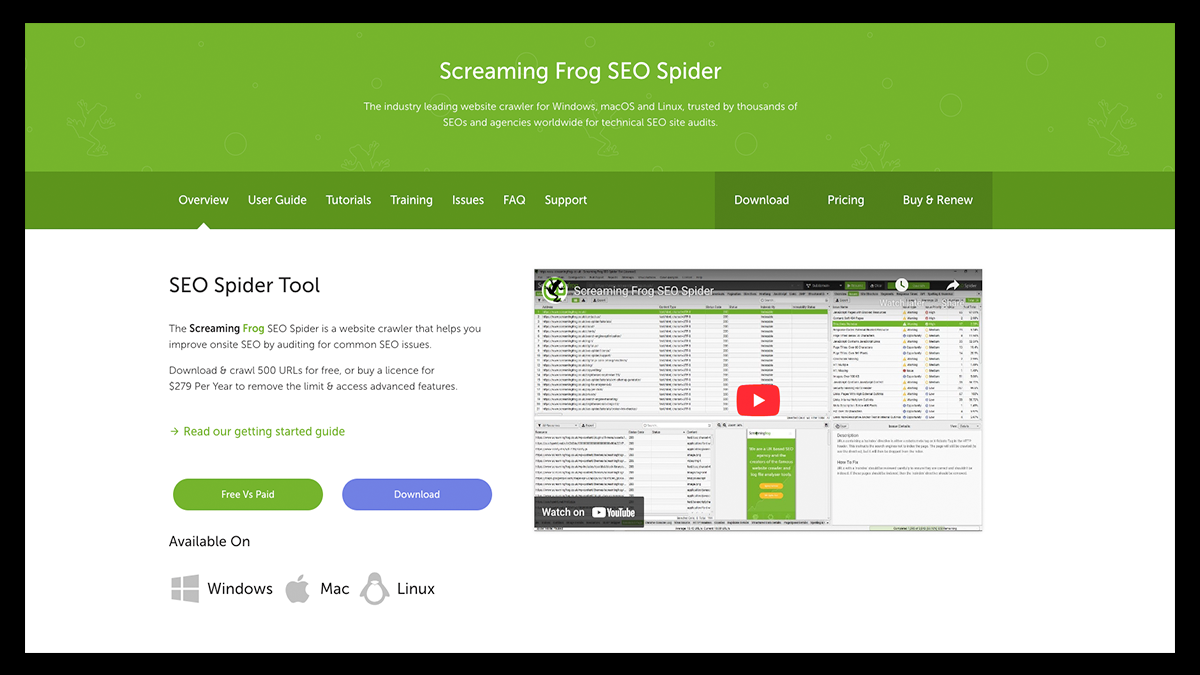
Screaming Frog differs from most SEO tools on this list because it is not a keyword research platform or a content optimizer. It's actually a desktop crawler designed for auditing common SEO issues.
Instead of telling you what to write next, it scans your entire website and shows you what might be quietly hurting your rankings, whether it's broken links, missing metadata, or redirecting chains to duplicate content.
For stores with hundreds or thousands of product pages, Screaming Frog can become a critical tool for maintaining a clean site, strong indexability, and a technical foundation that supports long-term traffic growth.
SEO Features
- Full-site crawling to identify 300+ technical SEO issues
- Broken link and redirect chain detection
- Duplicate content and thin page analysis
- JavaScript rendering for dynamic eCommerce sites
- XML sitemap generation and analysis
- Internal linking and site architecture visualization
- Google Analytics and Search Console integration
- Crawl comparison to track technical SEO improvements over time
5 Key Strategies for Selecting Your SEO Tools
Now that we've broken down some of the strongest SEO tools on the market, the real question is "Which one actually makes sense for your store?"
Remember, not every platform is built for every business model, and stacking random tools together without a plan can drain both your budget and your time.
Ultimately, choosing the right SEO tool is less about hype and more about alignment with your goals, your team, and where your revenue actually comes from.
Below are five key strategies every eCommerce seller should consider before committing to a tool.
⭐️ Start With a Clear Diagnosis
Before paying for anything, understand what is actually holding your store back.
Are your rankings suffering because of technical issues, thin product descriptions, weak backlinks, or poor internal linking?
Start by running a technical crawl or reviewing your analytics data to identify any bottlenecks before investing in new software.
Remember, the right tool should solve a specific problem, not just add another dashboard to your workflow.
A store struggling with crawl errors may need a platform like Screaming Frog, while a brand lacking keyword visibility might benefit more from a research-driven tool like SEMrush or Ahrefs.
When you diagnose first and purchase second, every tool in your stack has a clear purpose tied directly to growth.
⭐️ Match the Tool to Where You Sell
Your SEO strategy should reflect where your customers are actually searching.
If most of your traffic comes from Google, then you most likely need strong keyword research, content optimization, and backlink tracking.
For those that sell primarily on Amazon or Walmart, marketplace-focused tools are non-negotiable.
Or if AI-driven discovery is growing in your niche, tracking your store's visibility on generative platforms like LLMrefs or Jasper can really improve your site's search performance.
⭐️ Balance Depth With Usability
Some SEO platforms are incredibly powerful, but power means nothing if your team cannot realistically use them.
A technical crawler like Screaming Frog delivers deep site audits and granular data, yet it can feel overwhelming for beginners who just want quick wins.
On the other hand, tools like Ubersuggest or Moz Pro offer cleaner dashboards and guided insights that make it easier for smaller teams to take action without extensive training.
If you are running a lean eCommerce operation, a platform your team logs into weekly will outperform a complex enterprise tool that only gets opened once a quarter.
The goal is not to own the most advanced software. The goal is to consistently use a tool that helps you improve rankings, traffic, and revenue without slowing your workflow down.
⭐️ Think About Integration and Workflow
Your SEO tools should function as a connected system, not as isolated tabs competing for attention.
For example, Screaming Frog integrates with Google Analytics and Google Search Console, which allows you to combine technical crawl insights with real traffic and conversion data in one place.
SurferSEO connects directly with Google Docs and WordPress, so you can optimize content in real time instead of fixing it after it's already published.
When your tools share data and fit naturally into your existing workflow, you reduce manual tasks and make faster decisions that actually impact rankings and revenue.
⭐️ Evaluate ROI, Not Just Features
It's easy to get distracted by a platform with a long list of features, but features do not equal growth.
The real question is whether the tool is helping you increase rankings for revenue-driving keywords or convert more visitors into customers.
Help yourself by tracking your site's performance consistently and connecting improvements to actual sales rather than vanity metrics.
Then, review your SEO stack every few months and ask whether the software is actually generating more value than it costs.
In the end, the right SEO tool should pay for itself by driving measurable growth, not just give you more data to scroll through.
Want SEO That's Already Built Into Your Store? Fourthwall's Got You Covered!
You can spend hours learning technical SEO. Or you can use a platform that already has it built in.
Fourthwall automatically handles the behind-the-scenes SEO essentials that most store owners overlook, so your shop is structured to rank properly without you needing to become an expert.
Here's how Fourthwall takes care of SEO for you:
- Automatic Indexing: Your shop and product pages are structured to be discoverable by search engines like Google without manual setup.
- Built-In Structured Data (JSON-LD): Hidden schema markup helps Google clearly understand your product details, including name, price, and availability.
- Optimized Meta Tags: Core SEO tags are automatically generated to support visibility in search results.
- Google Merchant Center Compatibility: Product pages are formatted to work seamlessly with Google's shopping ecosystem.
- Custom Meta Descriptions: You can override default descriptions on custom pages to control how your store appears in search results.
- Advanced Code Access: For sellers who want deeper customization, you can edit the head code inside the site designer.
From there, your focus shifts to what actually drives conversions: writing clear, keyword-rich product titles and descriptions that match what your audience is searching for.
Looking to build a branded storefront that's optimized by default? Launch with Fourthwall today and get the tools you need to set you up for long-term growth.
FAQ: Understanding SEO Tools
What are the best SEO tools for eCommerce stores?
The best SEO tools for eCommerce stores depend on your specific goals.
Platforms like SEMrush and Ahrefs are strong all-in-one SEO platforms for keyword research, competitor analysis, and rank tracking.
However, if your focus is technical SEO, tools like Screaming Frog help identify crawling issues and site errors that impact search results.
Why do online stores need SEO tools?
SEO tools help online stores identify opportunities to increase visibility in search engine results.
They provide insights into keywords, competitors, technical SEO issues, and ranking pages so you can optimize your site strategically.
Without data from a reliable SEO platform, it becomes difficult to consistently scale traffic to your store.
How does keyword research improve search rankings?
Keyword research helps you understand what your audience is actually searching for.
By targeting the right keywords with strong search volume and purchase intent, you can create product pages and blog content that align with demand.
A good keyword research tool also reveals competition levels and SERP trends to guide smarter decisions.
What is rank tracking, and why is it important?
Rank tracking monitors how your tracked keywords perform in search engine results over time.
This allows you to see whether optimization efforts are improving visibility or if competitors are overtaking your rankings.
Ultimately, consistent tracking helps you measure progress and adjust your SEO strategy before traffic drops.
What is the difference between technical SEO and on-page SEO?
Technical SEO focuses on the backend structure of your website, including crawling, indexability, site speed, and broken links, while on-page SEO focuses on optimizing page content such as titles, headings, meta descriptions, and internal linking.
Both areas work together to help your store rank higher in search results.
Matt Keyser is a writer at Fourthwall who lives at the intersection of social media and Creator culture. With 4+ years of experience covering industry trends, his work focuses on helping Creators and brands understand how to turn their passion into a thriving business while maintaining a constant pulse on the latest eCommerce and social media trends.


.png)


