
12 Best PrintKK Alternatives for POD Creators and Entrepreneurs in 2026
Is PrintKK Enough? A Creator’s Guide to Smarter POD Alternatives


For most creator-brands, finding the right print-on-demand platform isn’t just about base prices anymore—it’s about variety.
Having a deep product catalog of customizable products is what makes it possible to move beyond the same hoodies, mugs, and wall art everyone else is selling.
This is where PrintKK stands out.
This Asia-based POD company has been gaining traction on platforms like Shopify and Etsy by offering a wide range of custom products and handling fulfillment through multiple global fulfillment centers.
In this guide, we’ll break down what PrintKK does well, where it struggles, and the best PrintKK alternatives to consider based on shipping costs, fulfillment reliability, profit margins, and overall brand control.
What is PrintKK?
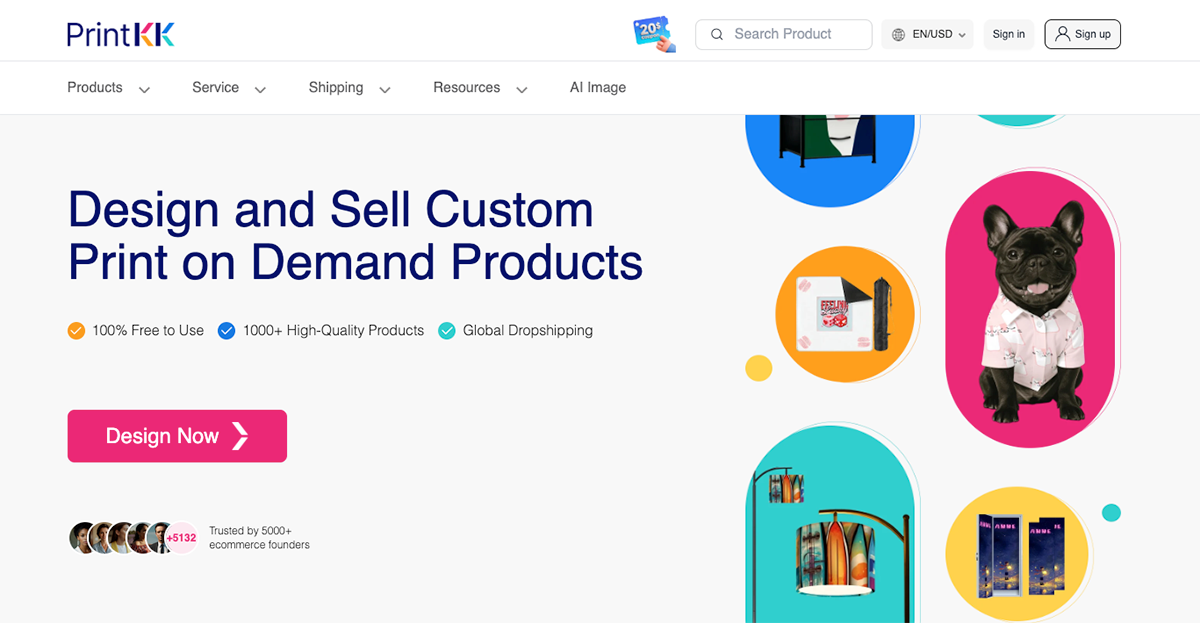
PrintKK is a global print-on-demand and dropshipping platform designed to help creators and entrepreneurs sell custom products without handling inventory or managing fulfillment.
The company originally started in the dropshipping and eCommerce support space, then expanded into POD with a clear mission: to lower the barrier to entry so more people can launch and grow online businesses.
Today, PrintKK is best known for its massive product catalog of 1,000+ customizable items that extends far beyond standard apparel, with categories such as home decor, lifestyle goods, accessories, and novelty products.
It integrates directly with popular eCommerce platforms and marketplaces, allowing orders to sync automatically for production and shipping.
For sellers who want variety, flexibility, and a hands-off fulfillment workflow, PrintKK positions itself as a one-stop POD solution designed for fast experimentation and global reach.
What Makes PrintKK Stand Out?
Product Selection That Actually Feels Fresh
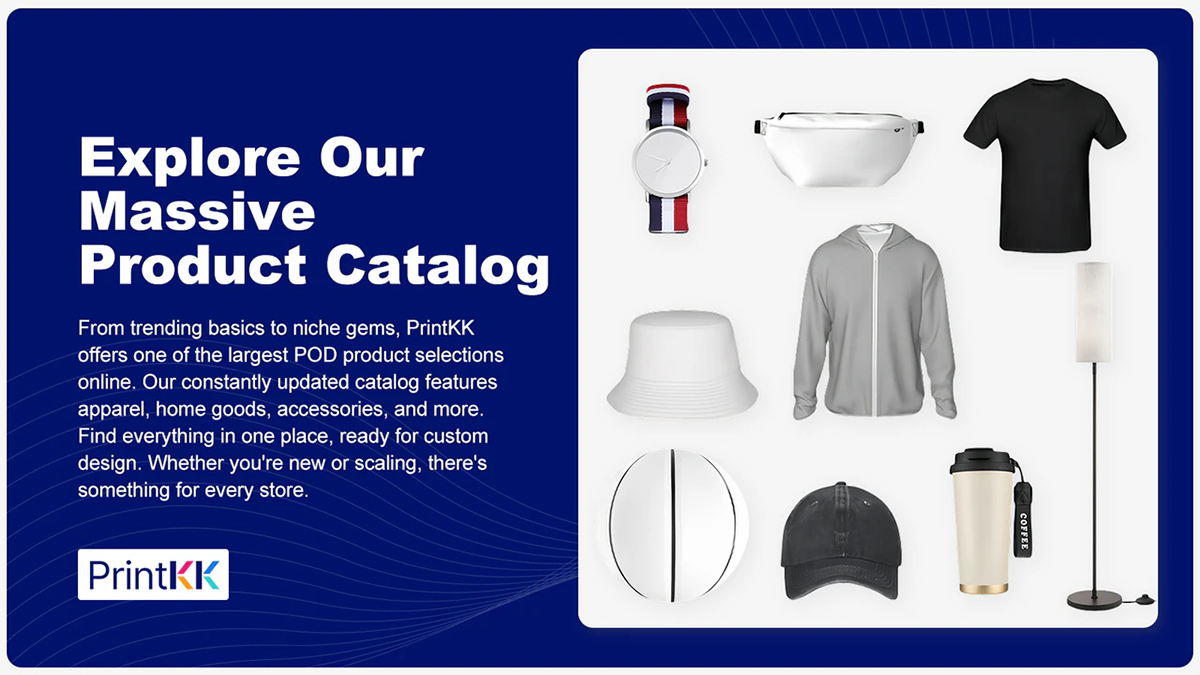
PrintKK leans hard into variety, and it shows in a catalog that goes way beyond the usual POD basics.
Alongside staples like apparel and drinkware, you’ll find lamps, skateboards, rugs, swimwear, wall décor, and other lifestyle-heavy products that most POD platforms simply don’t touch.
With 1,000+ customizable items and regular product drops, PrintKK makes it easier to sell things your competitors aren’t already flooding the market with.
No Order Minimums
The platform has no minimum order requirements, allowing sellers to test new designs without committing to bulk inventory or upfront risk.
This is especially useful for micro-drops, seasonal launches, or niche products where demand is hard to predict. Instead of guessing what will sell, you can let real customer data guide your next move.
Strong Integrations
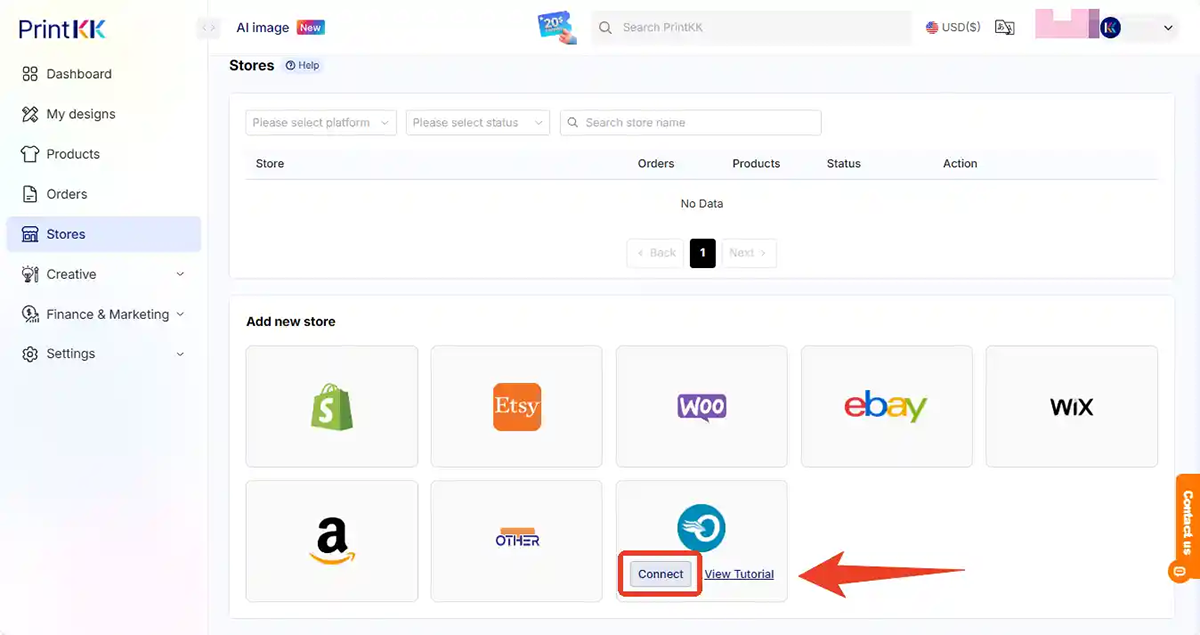
PrintKK integrates with major eCommerce platforms and marketplaces, including Shopify, Etsy, WooCommerce, Wix, eBay, and Walmart, so orders sync automatically from your store.
That means less manual work, fewer mistakes, and a smoother fulfillment process as you scale.
Once your store is connected, PrintKK quietly handles the production side while you focus on traffic and sales.
Built-in Design Tools + AI features
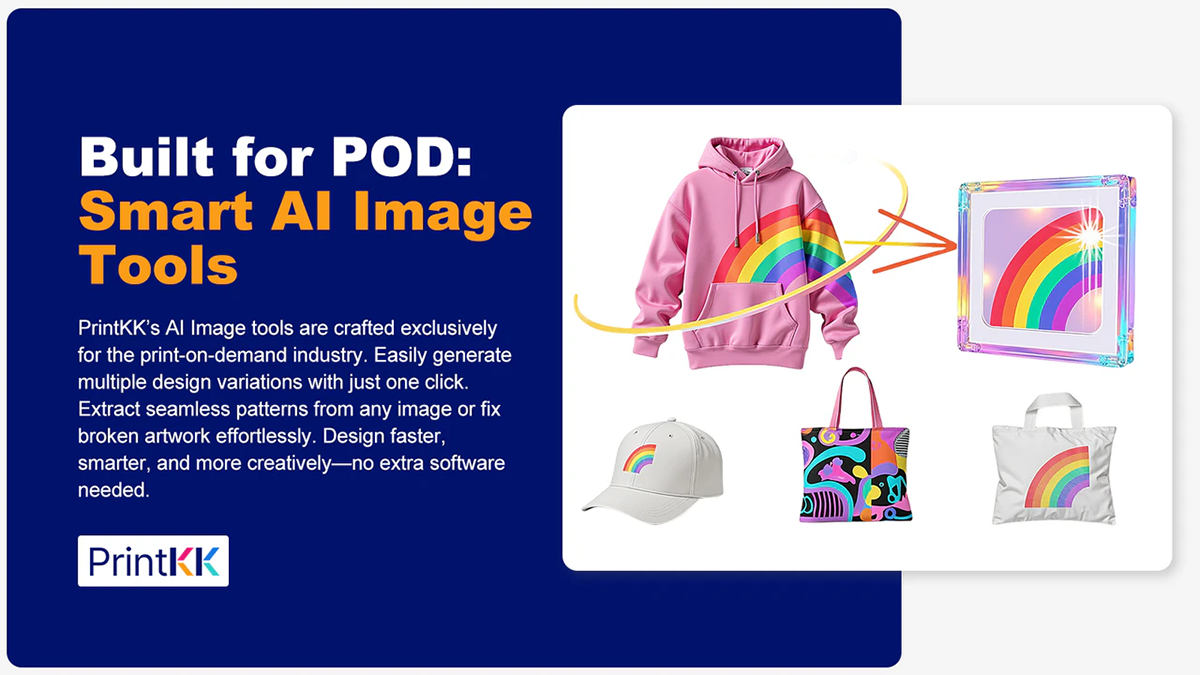
Its product creator is designed to be approachable, even if you’re not a design expert.
In addition to basic customization tools, it includes AI-powered features such as background removal and pattern extraction to speed up design prep.
These tools help you turn rough ideas into print-ready files faster, which is a big win if you’re launching frequently or testing multiple concepts.
Custom Branding Options
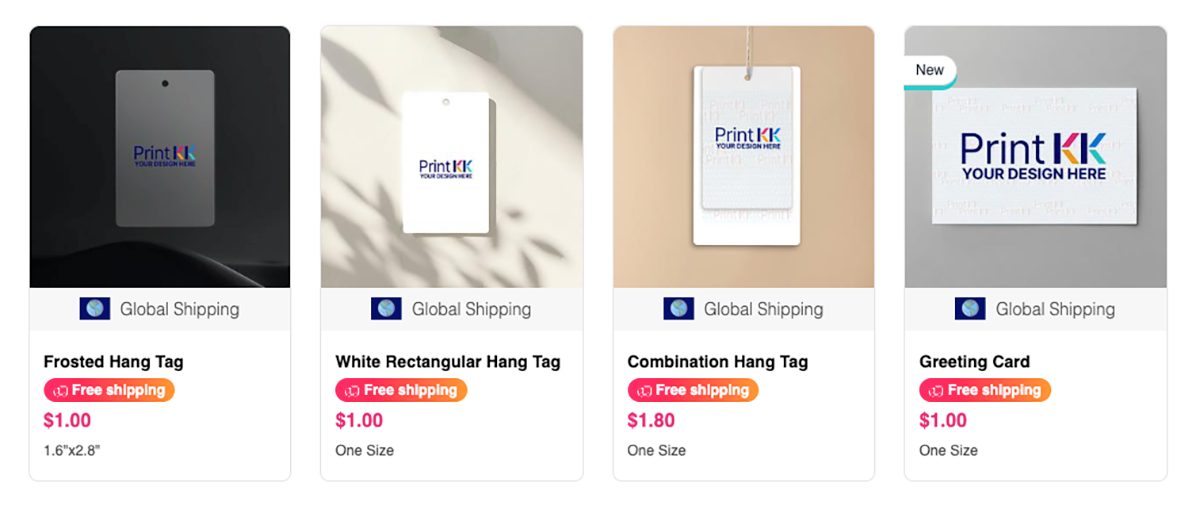
PrintKK offers branding upgrades such as custom labels and packaging, helping your products feel more like they’re coming from a real brand—not a generic POD warehouse.
This added layer of branding can enhance customer trust and increase the likelihood of repeat purchases.
For sellers focused on long-term brand building, those small details can have an outsized impact.
Pricing: Free to Start, Optional Subscription Plans
PrintKK allows you to start selling print-on-demand products for free, paying only for production and fulfillment as orders come in.
For sellers who want extra benefits, paid plans unlock perks like AI tokens and product discounts, with the Basic plan at $9.90/month and the Pro plan at $19.90/month.
This tiered approach lets you scale into paid features only when it actually makes sense for your business.
Why You Might Want a PrintKK Alternative
PrintKK checks a lot of boxes on the surface, especially if you’re focused on product variety and quick setup.
But once you start running real orders and doing the math, a few recurring issues tend to show up—ones that can directly impact your margins, customer experience, and long-term growth.
💸 Shipping Prices Can Absolutely Nuke Your Margins
This is the biggest red flag.
Shipping costs can be brutal; we’re talking ~$16 USD to ship a single item with delivery timelines stretching 15–20 business days.
At that point, there’s barely any room left to profit. You’re basically clearing $2–$3 per product if the customer doesn’t bounce at checkout.
And let’s be honest: no self-respecting customer wants to wait nearly a month for a product that isn’t custom luxury.
🛍️ Reports of Inconsistent Fulfillment and Misleading Listings
This is where things get risky. Some sellers report that products received didn’t match the specs shown on the listing—different finishes, altered materials, or unexpected variations.
Worse, support allegedly acknowledged the discrepancies but made refunds a long, paperwork-heavy process.
When multiple orders (30+ in some cases) go wrong, that’s not a “small hiccup”—that’s time lost, money burned, and your store’s reputation on the line.
If what’s advertised isn’t consistently what shows up, trust erodes fast. For serious sellers, that’s a hard stop.
📧 No Built-in Email Marketing or Creator Monetization Tools
PrintKK does offer basic order tracking and sales analytics, which is fine—but that’s where it ends.
There’s no native email marketing, no way to collect and nurture customer relationships, and no monetization layers like tips/donations, memberships, or subscriptions.
You also won’t find creator-friendly integrations like YouTube Product Shelf, TikTok Shop, or Twitch Gifting built in.
If you’re a creator or brand trying to turn buyers into long-term supporters (not just one-off customers), you’ll need to bolt on other tools to make that happen.
Overall Thoughts

PrintKK is a classic case of a POD platform that looks incredible on paper.
The product variety is legitimately impressive, the no-minimum model makes testing easy, and the catalog includes items you simply won’t find on more mainstream platforms.
If your main goal is experimenting with unique products or running short-term drops where differentiation matters more than speed or margins, PrintKK can absolutely serve a purpose.
That said, for long-term, brand-focused sellers, the cracks start to show.
High shipping costs make scaling difficult, fulfillment inconsistencies introduce risk, and the lack of built-in marketing or monetization tools means you’re relying heavily on external platforms just to grow.
Add in long delivery times, and it becomes harder to justify for sellers who care about repeat customers, strong reviews, and sustainable profit margins.
Bottom line: PrintKK works best as a testing or niche-expansion tool, not necessarily as your core POD partner. If you’re early-stage and curious, it’s worth exploring.
However, if you’re serious about building a polished brand, optimizing margins, and owning your customer relationships, you’ll likely be better off pairing your POD needs with a more creator-first or growth-focused platform.
Top PrintKK Alternatives for Creators and Entrepreneurs
Below are 12 strong PrintKK alternatives. Each has a different “best for” depending on whether you care most about branding, catalog depth, eco-friendly fulfillment, marketplaces, or creator monetization.
1. Fourthwall
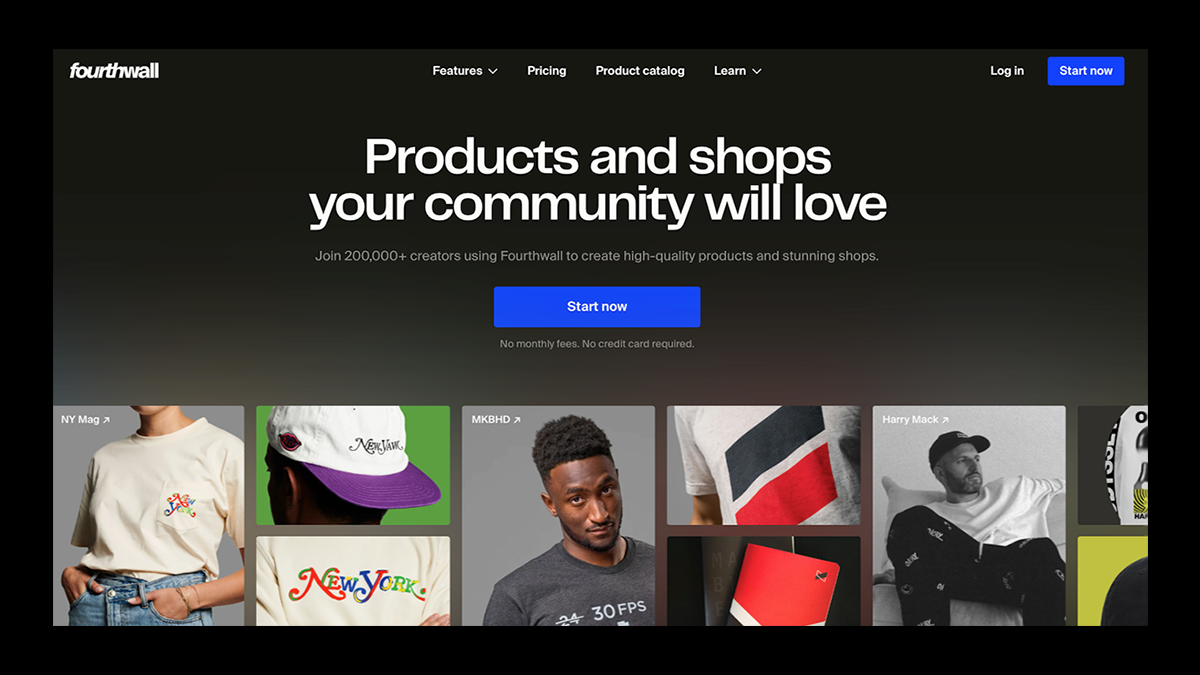
Fourthwall is best described as a creator-first platform rather than a basic print-on-demand supplier.
Instead of overwhelming you with thousands of random SKUs, Fourthwall offers a curated catalog of 370+ high-quality products across apparel, accessories, and home goods, paired with premium printing methods such as DTG, screen printing, embroidery, and sublimation.
Every product comes with realistic 3D mockups and an intuitive design editor, making it easy to launch polished merch without design or technical headaches.
What really separates Fourthwall from PrintKK is what happens after the sale: built-in email marketing, memberships, digital products, tips, and native shoppable integrations with YouTube, TikTok, Twitch, Shopify, and Etsy let you monetize your audience from one place.
Add fast global fulfillment across the US, UK, EU, and Australia, and Fourthwall feels less like a POD tool and more like a brand ecosystem.
💰Pricing
- Free Plan: $0/month — No platform fees on physical products, 5% fee on memberships and digital product sales.
- Pro Plan: $19/month or $180/year — 0% fees on digital product sales, free .store domain, $10/month in sample credits, unlimited team members, and priority customer support.
✅ Pros
- All-in-one platform combining merch, memberships, digital products, and email marketing
- No platform fees on physical products, which protects margins as you scale
- High-quality catalog (370+ items) with trusted blanks and multiple print methods
- Built-in design editor + realistic 3D mockups for a professional storefront
- Native integrations with YouTube Product Shelf, TikTok Shop, Twitch Gifting, and Spotify
- Fast, reliable global fulfillment from multiple regions
- Clean, brand-forward experience designed for long-term creator growth
❌ Cons
- Smaller, more curated catalog compared to PrintKK’s novelty-heavy product range
- No open marketplace for organic discovery (traffic is audience-driven, not platform-driven)
- May feel like “more platform than needed” if you only want a barebones fulfillment backend
2. Sellfy
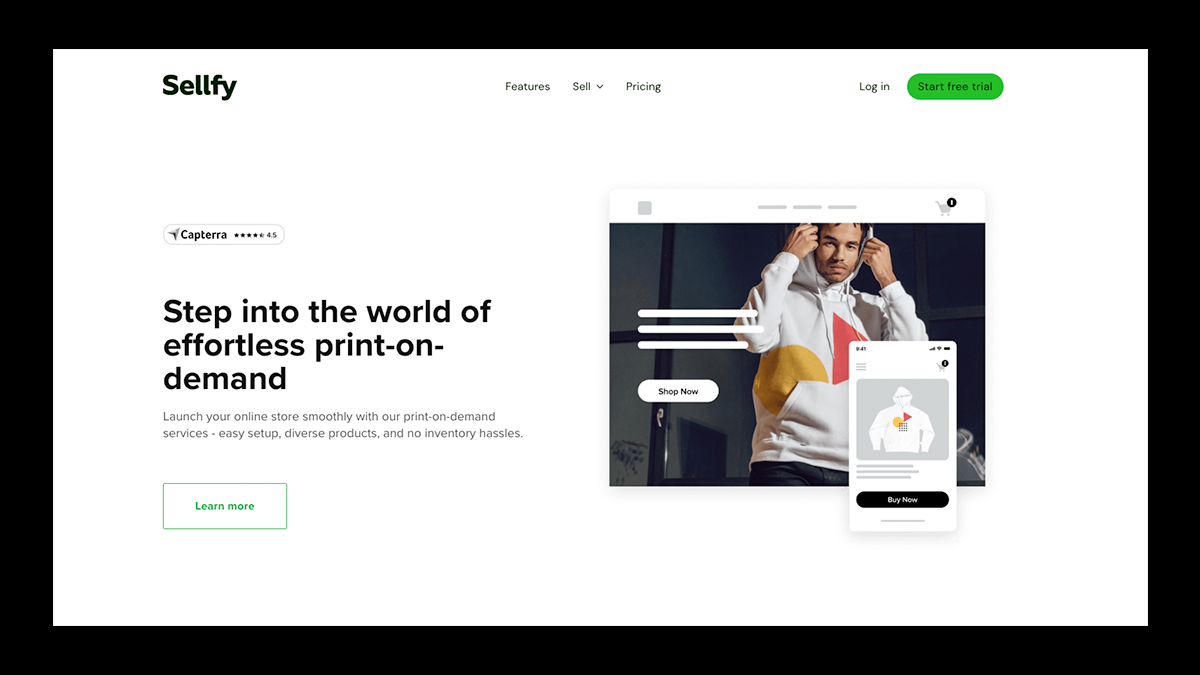
Where most platforms throw feature overload at you, Sellfy trims the fat and focuses on one thing: helping you start selling immediately without breaking your brain.
It’s designed for creators who monetize ideas (digital downloads, memberships, video access, and lightweight merch) rather than managing massive product catalogs.
Everything from payments to email campaigns, discounts, and upsells lives in one clean dashboard, so you’re not duct-taping tools together just to run a launch.
What really sets Sellfy apart is how well it plays with your existing presence. Instead of forcing you to build an entire standalone store, you can drop Buy buttons, product cards, or full collections directly into your website, blog, or link-in-bio.
It’s not trying to compete with PrintKK on fulfillment depth or novelty products—it’s built for creators who want a reliable storefront that stays out of the way and lets the content do the selling.
💰Pricing
- Starter Plan: $22/month – Up to $10K annual sales, unlimited products (digital, POD, subscriptions), built-in email marketing.
- Business Plan: $59/month – Up to $50K annual sales, including upselling, affiliate marketing, cart abandonment recovery, removal of Sellfy branding, and addition of custom fields.
- Premium Plan: $119/month – Up to $200K annual sales, advanced customization, priority support, and product migration assistance.
✅ Pros
- Extremely creator-friendly setup for digital products and subscriptions
- Built-in email, discounts, upsells, and affiliate tools reduce tech stack sprawl
- Flexible embeds for selling directly from existing platforms
- Optimized for mobile shopping with automatic language translation for buyers
- Global fulfillment handled automatically, no inventory or shipping required
❌ Cons
- Limited POD catalog compared to PrintKK’s expansive product range
- Monthly subscription required regardless of sales volume
- Not ideal for sellers who need advanced fulfillment or marketplace integrations
3. Printful
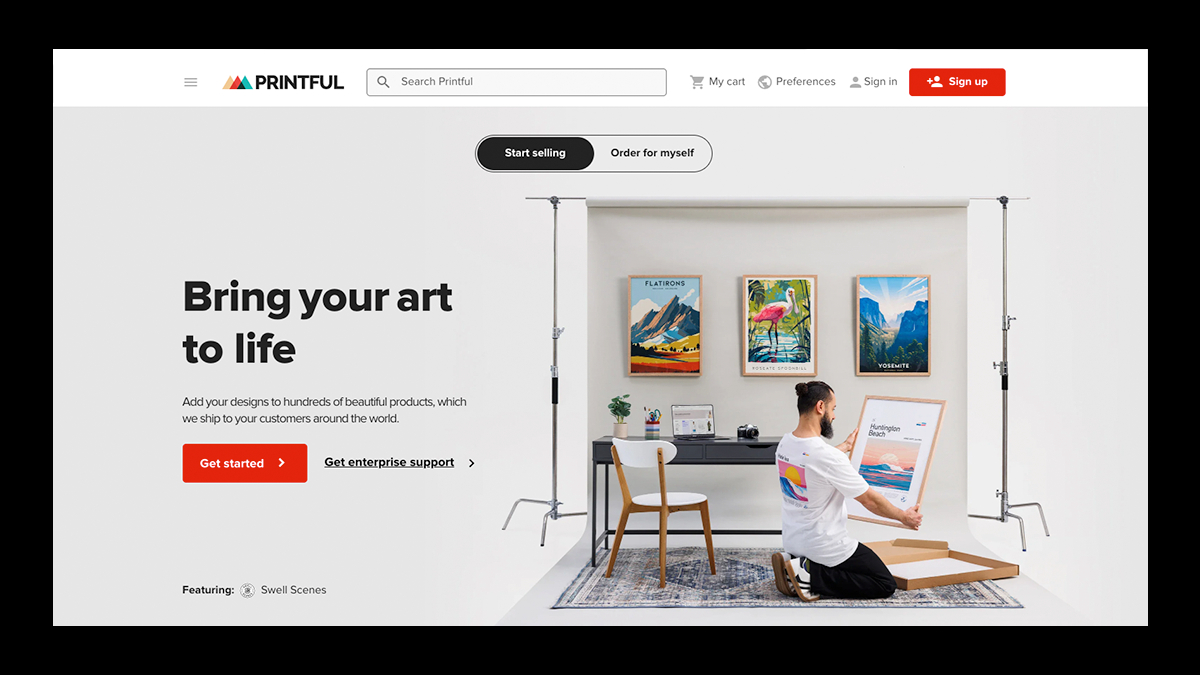
Printful’s catalog spans hundreds of premium products across apparel, accessories, and lifestyle goods, and supports multiple professional printing methods, including DTG, embroidery, and sublimation.
Beyond printing, it offers real brand-building tools, such as custom labels, branded packing slips, packaging inserts, and warehousing for non-POD inventory, making it easier to run a polished operation.
Its Design Maker and mockup generator help you create listings fast, while 20+ integrations, including Shopify, Etsy, Amazon, and TikTok, keep your store synced across sales channels.
While base prices run higher, Printful’s Growth Plan unlocks meaningful discounts that make premium fulfillment far more sustainable as you scale.
💰Pricing
- Free Plan: $0/month — Full product catalog access, unlimited stores and designs, free design and mockup tools, and 24/7 chat and email support.
- Growth Plan: $24.99/month (waived after $12K/year in sales) — Up to 33% off product pricing, 9% off branding options, 25% off sample orders, access to custom packaging and pack-ins.
- Enterprise Plan: Custom pricing — Dedicated success manager, advanced operational support and warehousing, priority access to trend and sales data.
✅ Pros
- Excellent print and embroidery quality with strict in-house QC
- Strong branding options for labels, pack-ins, and packaging
- Reliable global fulfillment network across key markets
- Deep integrations with major eCommerce platforms and social channels
- High-quality mockups and easy-to-use design tools
- Warehousing available for third-party inventory
❌ Cons
- Higher base prices unless you qualify for Growth discounts
- No native storefront or marketplace
- No built-in support for digital products or memberships
- Customer support is limited to chat and email
4. Merchize

Merchize is a full print-on-demand and fulfillment system that lets sellers design products, push listings to multiple sales channels, and handle production and shipping from a single dashboard.
The platform is built for sellers who want to move volume, experiment across marketplaces, and rely on infrastructure that can actually keep up.
Where Merchize really shines is production flexibility and global scale. It has an impressive 600+ item catalog that supports a wide range of printing techniques, including DTG, embroidery, sublimation, UV printing, and DTF, giving you more control over how products look and feel.
Orders are fulfilled through a global network spanning Vietnam, the US, UK, EU, China, and Australia, with the capacity to handle up to 100,000 shipments per day across 180+ countries.
Add in built-in mockup generation, Amazon FBA support, multichannel integrations (Shopify, Etsy, WooCommerce, Amazon, TikTok Shop, Walmart), and optional storefront hosting, and Merchize starts to look less like a POD tool and more like a full eCommerce operations platform.
💰Pricing
- Fulfillment Plan (Lite): $0/month — Unlimited users, product mockup generator, multichannel integrations (Shopify, Etsy, WooCommerce, Amazon, TikTok Shop, Walmart), and order tracking + API access.
- Storefront Plan (Platinum): $79/month per store — Up to 50,000 products, SEO tools, upsells/cross-sells, abandoned cart recovery, and advanced analytics.
- Storefront Plan (Diamond): $299/month per store — Up to 150,000 products, lower transaction fees (0.5%), with premium features + priority support.
✅ Pros
- Some of the lowest base product prices available (strong margins at scale)
- Multiple printing methods for better product variety and quality control
- Global fulfillment network built for high-volume sellers
- Custom branding options (labels, tags, packaging, inserts)
- Free fulfillment plan with powerful API and marketplace integrations
- Built-in storefront option for sellers who want everything under one roof
❌ Cons
- Backend tools can feel overwhelming for beginners
- Shipping times may vary when products are fulfilled from Vietnam
- Storefront features require paid plans
- Not designed for creator monetization (no memberships, tips, or digital products)
5. Gelato
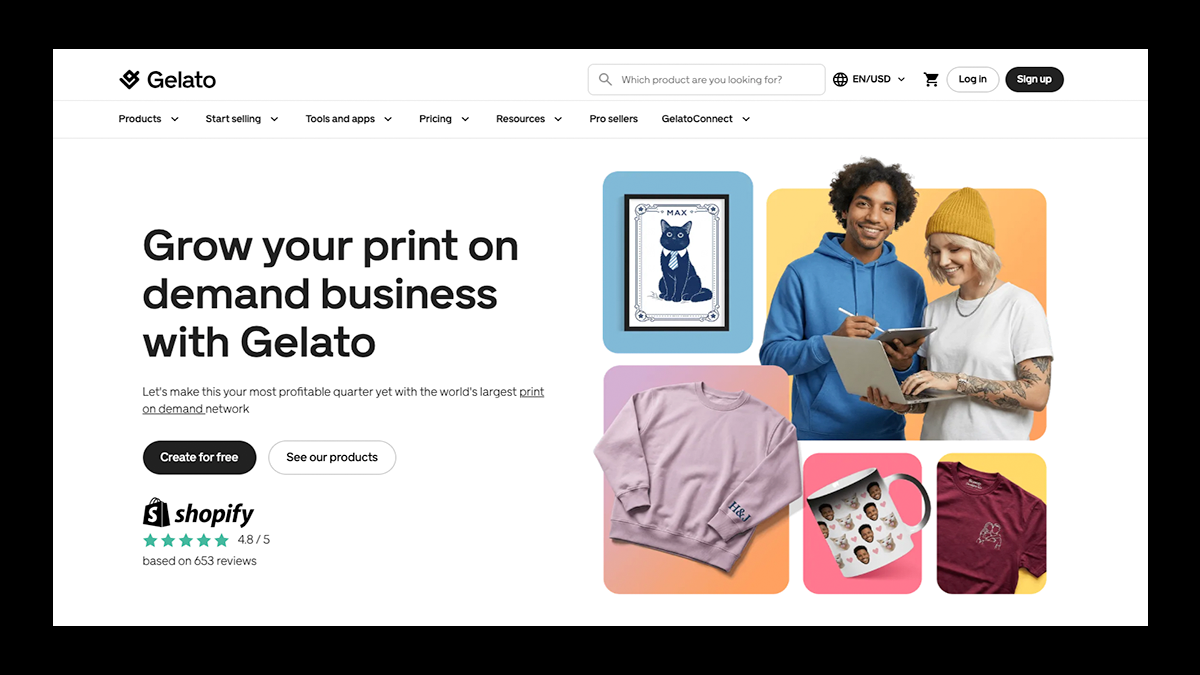
Gelato is built for sellers who want their POD operation to feel global, fast, and intentional.
Instead of routing orders across borders and hoping for the best, Gelato’s entire model is centered on local production, using a network of 140+ print partners across 32 countries to fulfill orders as close to the customer as possible.
The result is shorter shipping times, lower shipping costs, and a noticeably smaller carbon footprint, which makes a real difference if you’re selling outside the US or trying to appeal to eco-conscious buyers.
But what really elevates Gelato is its focus on conversion and optimization, not just fulfillment.
Tools like the Personalization Studio let customers customize products in real time, thereby increasing engagement and average order value.
On the backend, features like premium mockups, branded labels and inserts, and Price Navigator help sellers fine-tune margins rather than guess.
While the product catalog is more curated than PrintKK’s, it’s intentionally focused on high-margin staples like apparel, wall art, home goods, and stationery rather than experimental novelty items.
💰Pricing
- Free Plan: $0/ 0/month — Access to global fulfillment network, core integrations, and basic design tools, with standard mockups.
- Gelato+: $25/month or $249/year — Up to 20% off product pricing, premium mockups and branded labels, and access to large design asset libraries.
- Gold: $129/month or $1,285/year — Up to 25% off products, 30% off branding options, and advanced pricing and profit optimization tools.
- Platinum: Custom pricing — Dedicated onboarding and account management with enterprise-level support and perks.
✅ Pros
- Local fulfillment in 32 countries for faster, more reliable delivery
- Strong emphasis on sustainability and reduced emissions
- High, consistent print quality across regions
- Built-in personalization tools that boost conversion rates
- Smart pricing and margin optimization features
- Clean, modern dashboard that’s easy to manage
❌ Cons
- Smaller catalog with less niche or novelty product variety than PrintKK
- Some advanced tools require paid plans
- No warehousing for non-POD inventory
- Fewer integrations compared to some larger POD ecosystems
6. Printify
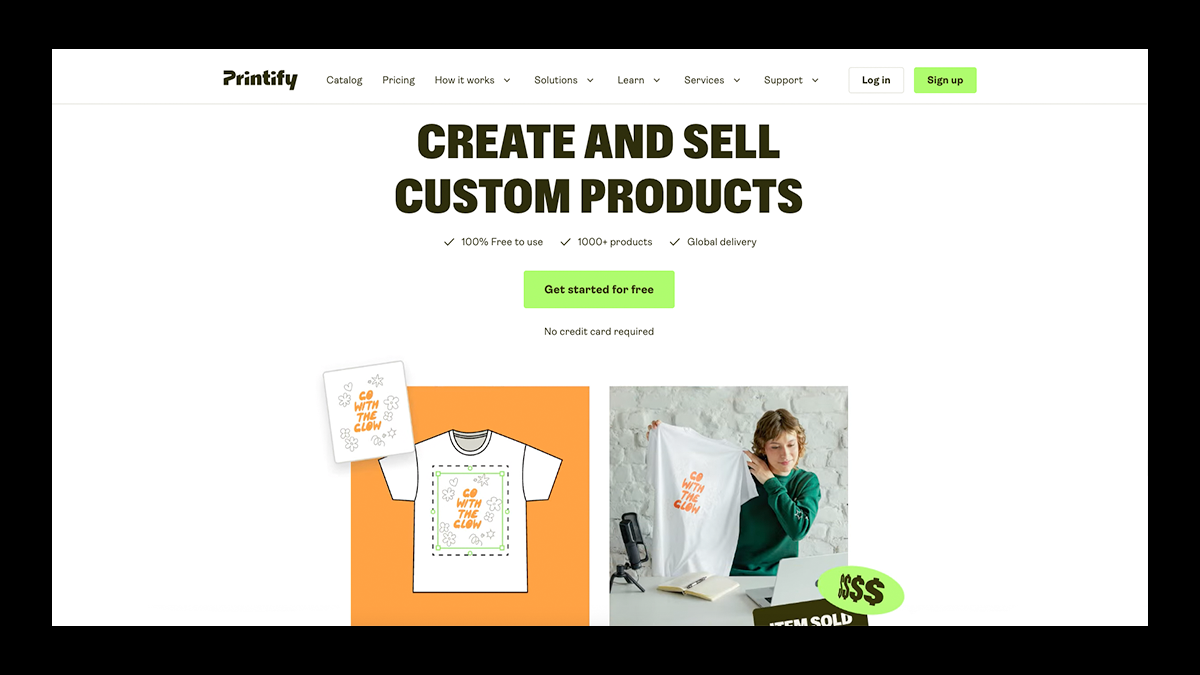
Printify is the definition of scale-first POD. Where PrintKK leans into novelty, Printify leans into choice, reach, and flexibility, giving sellers access to 1,300+ products backed by a massive network of 100+ global print providers.
The catalog spans everything from embroidered apparel and drinkware to phone cases, AirPods cases, candles, pet accessories, biodegradable tech gear, and even custom supplements—making it one of the most expansive POD ecosystems on the market.
If your strategy is to test niches quickly, optimize margins, and sell across multiple platforms at once, Printify is built for exactly that.
What really sets Printify apart is its marketplace-style backend. Instead of being locked into a single fulfillment provider, you choose who prints each product based on price, location, shipping speed, and quality ratings.
Its Product Creator and AI-powered mockup tools even make launching designs fast, while deep integrations with Shopify, Etsy, Amazon, TikTok Shop, Walmart, Wix, and WooCommerce make it ideal for sellers running multi-channel operations.
💰Pricing
- Free Plan: $0/month — Access to 1,300+ products, unlimited designs, and manage up to 5 stores.
- Premium Plan: $29/month or $299/year — Up to 20% off all products, manage up to 10 stores, with higher margins and smarter fulfillment.
- Enterprise Plan: Custom pricing — Unlimited stores and designs, dedicated account manager, with API access, and SLA fulfillment guarantees.
✅ Pros
- One of the largest POD catalogs available (1,300+ products)
- Freedom to choose print providers based on cost, speed, or quality
- Strong global fulfillment network for faster local delivery
- AI-powered mockups and product creation tools
- Free pop-up store for quick product and niche testing
- Transparent provider ratings help reduce quality risks
❌ Cons
- Product quality can vary between providers (samples are essential)
- Branding options are limited unless you’re on Enterprise
- No built-in digital products, memberships, or tipping
- Support response times can slow down during peak seasons
7. Spreadshop
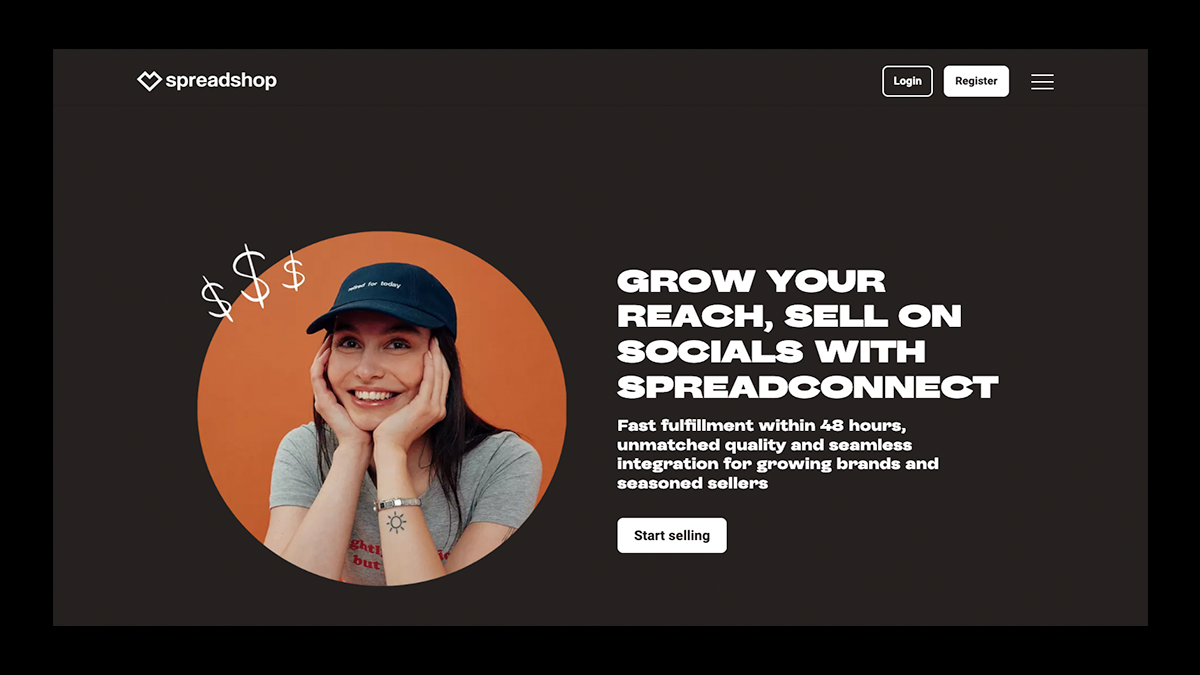
Spreadshop is the definition of lean, fast, and margin-friendly POD.
It’s especially popular among Shopify and WooCommerce sellers who prioritize speed and profitability over flashy features or experimental products.
Spreadshop’s biggest flex is fulfillment speed. Around 95% of orders ship within 48 hours, which is wildly fast by POD standards and a huge upgrade from platforms with longer production queues.
Base prices are also some of the lowest in the space, making it easier to run ads or scale volume without margins collapsing.
It includes a built-in customer customization tool for personalized products, and keeps shipping costs transparent with no surprise fees popping up after checkout.
That said, Spreadshop isn’t trying to be a brand-building powerhouse. Branding options are minimal, the design interface feels dated, and there’s no direct Etsy or Amazon integration without third-party tools.
💰Pricing
- Free to Use: $0/month — Pay per product with shipping, with base apparel prices starting as low as $6.39.
✅ Pros
- Extremely fast fulfillment (most orders ship within 48 hours)
- Lower base product costs than Printful and Printify
- Strong margins for volume-focused sellers
- Simple, predictable pricing with no hidden fees
- Easy Shopify and WooCommerce integrations
- Built-in customer personalization tool (great for gifts)
❌ Cons
- Limited product catalog compared to PrintKK or Printify
- Very basic branding (no custom packaging or inserts)
- Outdated design and mockup interface
- No native Etsy, Amazon, or marketplace integrations
- Product quality is solid but not premium-tier
8. Gooten
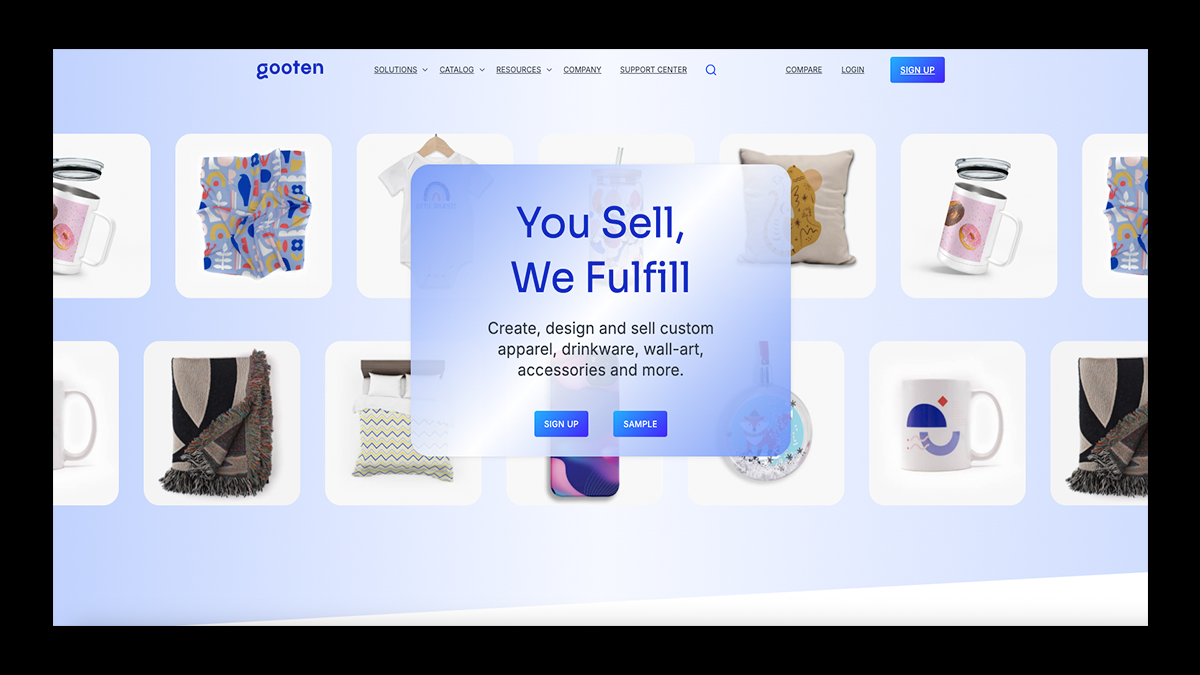
Gooten is built for sellers who already have momentum and want fulfillment to just work without stealing attention from the rest of the business.
Instead of locking you into a single printer, Gooten intelligently routes each order to the best production partner in its global network, optimizing for speed, reliability, and cost.
This makes it a strong alternative to PrintKK for brands that prioritize operational consistency over flashy product catalogs.
With 150+ customizable products and heavy automation under the hood, Gooten treats POD like infrastructure—not a side hustle.
It’s especially appealing if you already run a Shopify or WooCommerce store and want a dependable backend partner, not another platform to manage.
💰Pricing
- Free to Use: $0/month — Pay per product and shipping.
- VIM Program: Volume-based discounts available at Silver, Gold, and Platinum tiers.
✅ Pros
- No monthly fees or surprise platform costs
- Smart order routing improves fulfillment speed and reliability
- Automation keeps fulfillment largely hands-off
- Strong integrations with Shopify, Etsy, WooCommerce, BigCommerce, and APIs
- Good margins on core apparel products
❌ Cons
- Not designed for creators or audience monetization
- Dashboard has a learning curve and minimal onboarding
- Limited branding options beyond packing slips
- Mockup tools are basic compared to creator-focused platforms
9. Zazzle
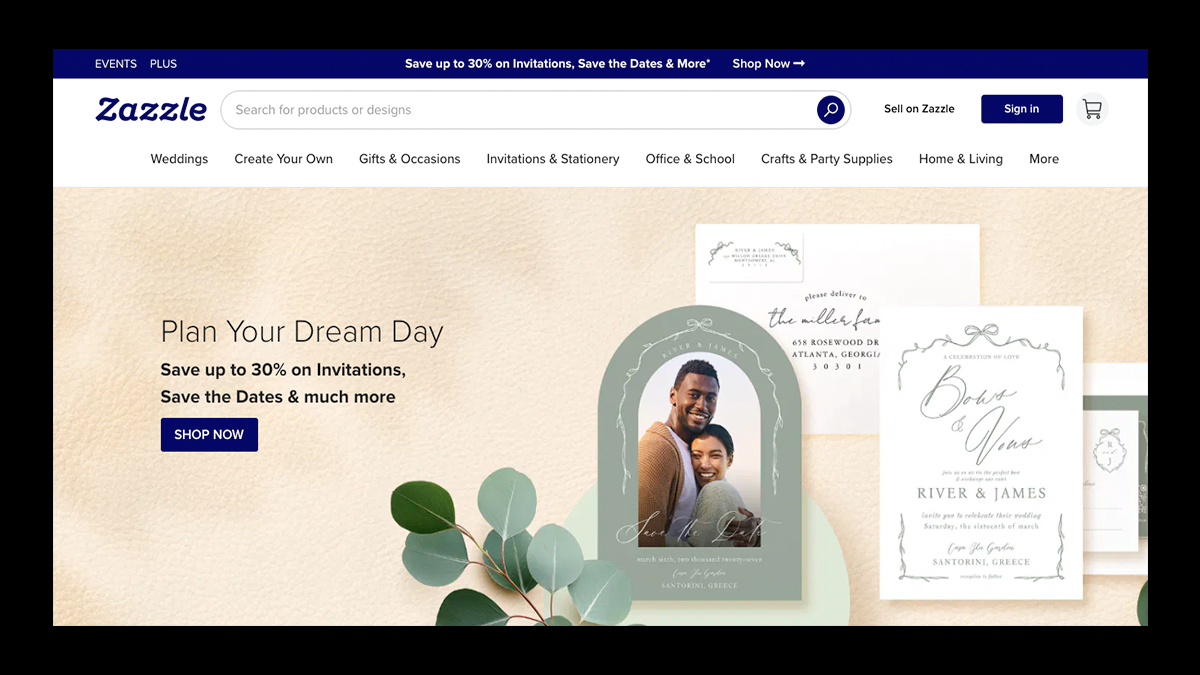
Zazzle is best known for personalization and specialty printing, which makes it a go-to for event-driven products like wedding invitations, birthday merch, baby showers, and corporate gifts.
On the production side, Zazzle supports multiple DTG processes (classic, vivid, and dark apparel) to keep prints sharp across different fabrics, and even offers foil printing for premium stationery and cards.
What really sets Zazzle apart, though, is its marketplace of 30+ million shoppers, giving creators instant exposure without needing to build, host, or market their own storefront.
Add in a drag-and-drop editor that lets customers customize products themselves, and Zazzle becomes a powerful option for passive, personalization-led selling.
💰Pricing
- Free to Use: $0/month — No subscription fees and earn a minimum 5% on royalty sales.
✅ Pros
- Access to a massive built-in marketplace with millions of buyers
- Strong demand for apparel, especially T-shirts
- Excellent personalization tools with real-time customer editing
- Over 1,000 customizable products for easy cross-selling
- Great for passive income and evergreen designs
❌ Cons
- No real branding control (no custom domains, storefront design, or packaging)
- Highly competitive marketplace with limited organic visibility
- Lower margins compared to running your own store (often 10–15%)
- Their seller dashboard feels dated and less intuitive
10. Teelaunch
Teelaunch is an Etsy, Shopify, and WooCommerce-first POD platform built for sellers who want reliability, not bells and whistles.
It’s best known for its apparel production—especially t-shirts—which is powered by District Photo, a large-scale manufacturer trusted to print billions of products globally.
Everything lives directly inside your shop's dashboard, so adding products, managing orders, and tracking shipments feels like a native part of your store rather than a bolted-on tool.
While Teelaunch doesn’t try to be an all-in-one creator ecosystem, it quietly excels at one thing: delivering consistent, professional-quality products without operational friction.
Beyond apparel, its catalog includes items like cutting boards, Bluetooth speakers, and home goods, giving sellers room to expand without losing focus.
💰Pricing
- Free to Use: $0/month — Pay only for product-based cost and shipping. Storefront platform fees (Shopify) apply separately.
✅ Pros
- High-quality shirt printing backed by District Photo’s massive production scale
- Branded packing slips included for a more professional unboxing experience
- Mix of core apparel staples and select unique products for diversification
- No subscription fees—costs scale only when you make sales
❌ Cons
- International shipping is slower compared to global-first POD platforms
- Limited built-in monetization tools beyond what Shopify, Etsy, and WooCommerce already provide
11. Redbubble
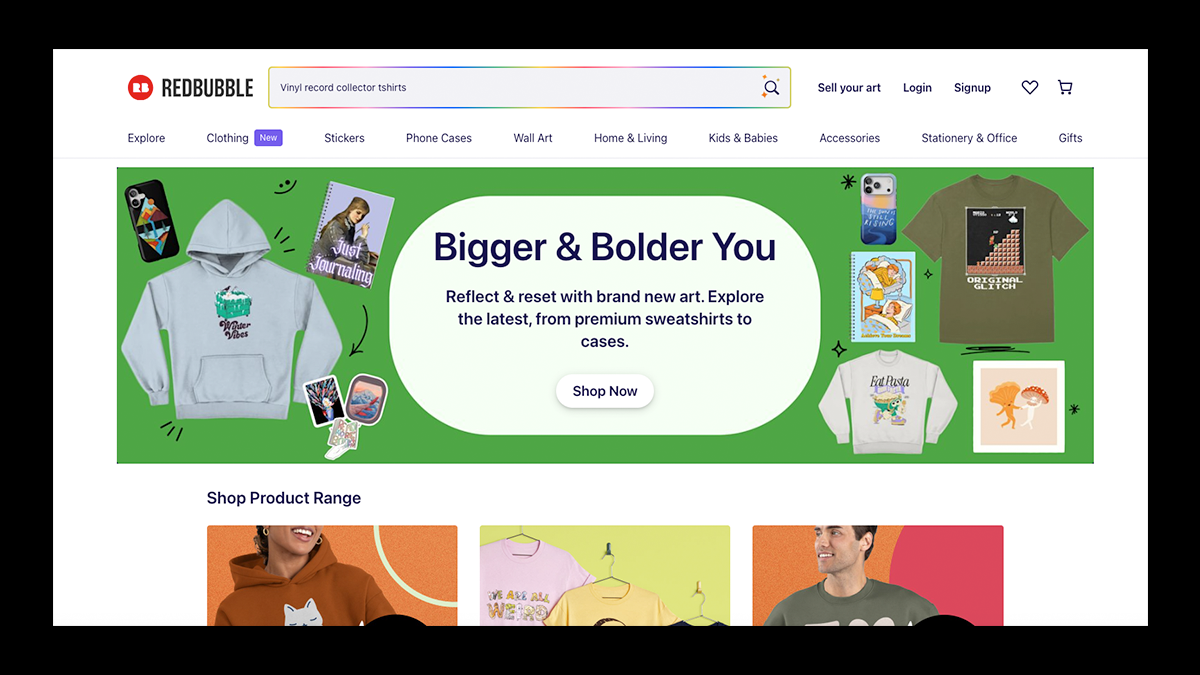
Since launching in 2006, Redbubble has grown into one of the largest artist-driven POD marketplaces in the world, connecting 700,000+ independent designers with millions of global shoppers.
The model is dead simple: upload a design, apply it to 70+ products (shirts, stickers, wall art, home décor, accessories), and Redbubble handles printing, fulfillment, shipping, and customer support.
Where PrintKK focuses on catalog depth and backend control, Redbubble shines by putting your work in front of an audience that’s already browsing and buying—especially in fandoms, memes, pop culture, and niche art communities.
For creators who want passive income, idea validation, or distribution without logistics, Redbubble remains a relevant option.
💰Pricing
- Free to Join: $0/month — Redbubble sets base prices; creators add markup and earn the difference
- Standard Tier: ~50% platform fee
- Premium Tier: ~20% platform fee
- Excess Markup Fees: Apply if royalties exceed certain thresholds
✅ Pros
- Massive built-in marketplace with millions of global shoppers
- Completely hands-off fulfillment (printing, shipping, returns, support handled for you)
- No upfront costs, subscriptions, or inventory risk
- Strong demand for apparel, stickers, and fandom-driven merch
- Easy way to test designs or earn passive income
❌ Cons
- High platform fees can seriously cut into profits
- Limited brand control (Redbubble branding, no custom domains or packaging)
- Crowded marketplace makes visibility competitive
- Print quality can vary depending on the fulfillment partner
- Few tools for customer retention, upsells, or long-term brand building
12. Spring by Amaze
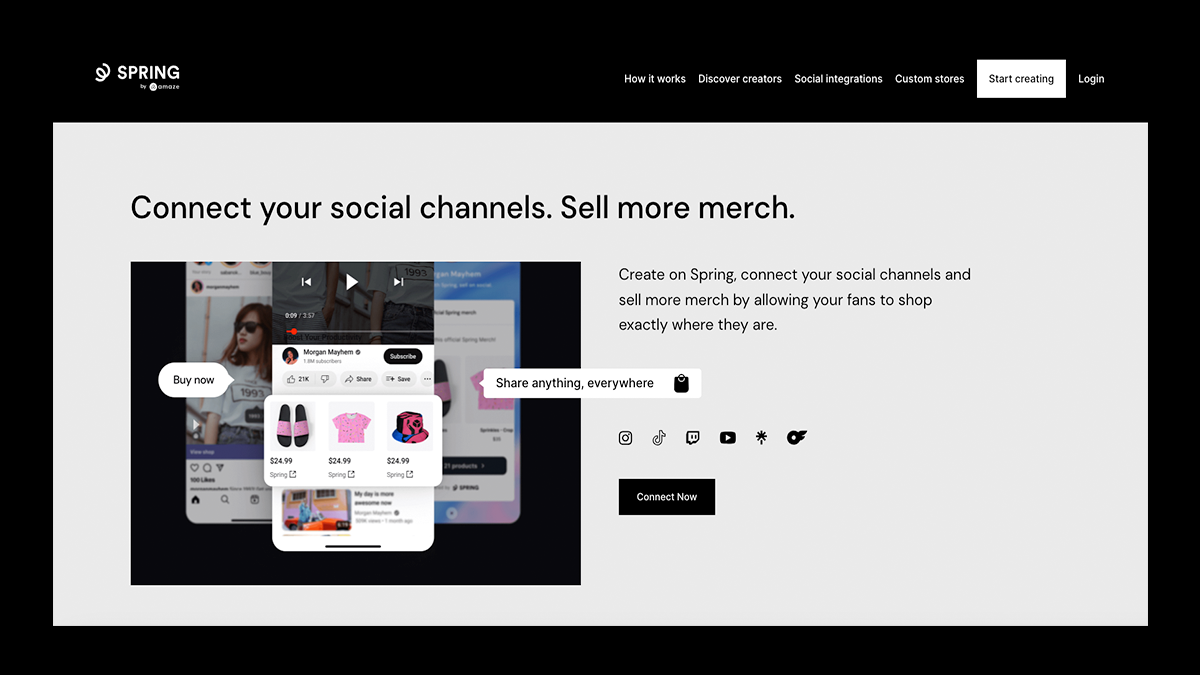
Formerly known as Teespring, Spring has fully stepped into its creator-monetization era thanks to its integration with Amaze.
Creators can choose from 180+ ready-to-ship items, apply designs directly inside the platform, and even tap into Adobe Express for faster creation and iteration. From there, Spring lets you build a branded storefront, so your merch doesn’t feel like a random product page.
With Store Drop, you can embed your Spring store directly into an existing website, turning any page into a shoppable experience.
Where the Amaze integration really shines is in distribution. Spring by Amaze integrates with every major social platform, making it easy to put products front and center wherever your audience already lives.
For creators who want to focus on promotion and storytelling while Spring handles production and fulfillment, this setup turns merch into a true revenue engine rather than a side project.
💰Pricing
- Free to Use: $0/month — Pay only the base cost of each product. Set your own retail price and keep 100% of the margin you choose.
✅ Pros
- Native integrations with YouTube Merch Shelf, TikTok Shop, Instagram, Twitch, and Linktree
- No upfront costs, subscriptions, or inventory risk
- Simple profit model (base cost + your markup)
- Supports both physical merch and digital downloads
- Fully handled fulfillment, shipping, and customer service
- Built-in analytics and basic marketing tools for creators
❌ Cons
- Higher base costs can compress margins compared to supplier-first platforms
- Limited storefront customization and brand control
- You don’t own customer data (no emails, pixels, or retargeting)
- Product quality and consistency can vary by item
- Not designed for deep eCommerce workflows or long-term brand building
Build Something You Actually Own with Fourthwall
At the end of the day, the best print-on-demand platform isn’t just about who has the biggest catalog or the cheapest base price—it’s about who helps you build a brand that lasts.
That’s where Fourthwall separates itself from the pack.
Instead of treating merch as a one-off product play, Fourthwall gives you a true creator HQ where merch, memberships, digital products, email marketing, and social integrations all live under one roof.
If you’re ready to stop duct-taping platforms together and start owning your brand, Fourthwall is the smartest place to build next.
FAQ: PrintKK Alternatives
Is PrintKK a good print-on-demand company for beginners?
PrintKK can work for beginners who want access to unique custom products and a large product catalog, but it’s not always the easiest starting point.
Shipping times, shipping costs, and inconsistent fulfillment reports mean new sellers need to test carefully.
Beginners looking for simplicity often start with platforms like Printify, Printful, or SPOD before moving into more complex POD setups.
How does PrintKK compare to Printify and Printful?
PrintKK focuses on variety and novelty items, while Printify and Printful prioritize reliability and scalable print-on-demand infrastructure.
Printify offers unmatched flexibility by letting sellers choose fulfillment partners, while Printful handles in-house production for consistent product quality.
If profit margins and predictable shipping times matter more than experimental products, Printify or Printful is usually a stronger choice.
What should I look for when choosing a print-on-demand platform?
Focus on product catalog depth, shipping times, fulfillment reliability, and profit margins first. Then evaluate design tools, customization options, and whether the platform supports your preferred eCommerce platforms.
The right print-on-demand setup should match your growth goals—not just your first product launch.
Matt Keyser is a writer at Fourthwall who lives at the intersection of social media and Creator culture. With 4+ years of experience covering industry trends, his work focuses on helping Creators and brands understand how to turn their passion into a thriving business while maintaining a constant pulse on the latest eCommerce and social media trends.


You might also like

8 Best TeePublic Alternatives for Artists in 2026

9 Best Printify Alternatives for Print-on-Demand in 2026

8 Best Spring (Teespring) Alternatives for Creators After Its Shutdown

30 Best Print on Demand Products for Creators in 2026 (From Tees to Plushies)

9 Best Kajabi Alternatives for Course Creators in 2026

What to Sell Online: How to Find a Product People Want

8 Best Spreadshirt Alternatives for Print-on-Demand in 2026

7 Best Sellfy Alternatives for Creators and Brands in 2026

27 Best Digital Products to Sell as a Creator

Keep up with the latest from Fourthwall
New features, product updates, trend breakdowns, and creator stories — straight to your inbox.