
10 Best Contrado Alternatives for Designing & Selling Premium Printed Products in 2026
Craftsmanship vs. Scale: Choosing the Right High-Quality POD Partner


In a print-on-demand market flooded with rushed fulfillment, thin fabrics, and forgettable merch, quality has quietly become the differentiator.
As creators and brands mature, niche demand is shifting away from cheap shirts and mugs toward high-quality printing and products that actually justify the price tag.
That’s exactly where Contrado fits in.
As one of the more premium POD companies on the market, Contrado positions itself as the anti–mass production option, focusing on handmade manufacturing, advanced AOP and fabric printing, and deep customization that most printing companies and fulfillment centers simply don’t offer.
In this article, we’ll break down everything you need to know about Contrado and determine whether or not its premium approach makes sense for your brand’s goals.
We’ll also compare other high-end print-on-demand platforms to see which ones offer greater flexibility, better pricing, or more creator-first tools than Contrado.
What Is Contrado?

Founded in London in 2002, Contrado was built with a very specific vision: give designers direct access to manufacturing without cutting corners or handing control to third-party factories.
While most print-on-demand companies outsource production across multiple fulfillment centers, Contrado keeps everything under one roof—from fabric printing and cut-and-sew construction to quality checks, packaging, and global shipping.
The result is a platform that feels more like a boutique manufacturing studio than a mass-market POD service.
Contrado specializes in premium fashion, accessories, home décor, and art prints, all made to order with no minimums and minimal waste.
It’s designed for artists, designers, and brands that prioritize craftsmanship, sustainability, and complete creative control over speed or volume, and that philosophy shapes every feature the platform offers.
What Makes Contrado Stand Out?
Contrado’s premium reputation comes from how the platform is built, not how it is marketed.
While many POD companies focus on speed and volume through large fulfillment centers, Contrado takes a more hands-on approach, prioritizing consistency, quality control, and high-end results over mass production.
Here’s why it stands out:
Handmade Production With Premium Materials
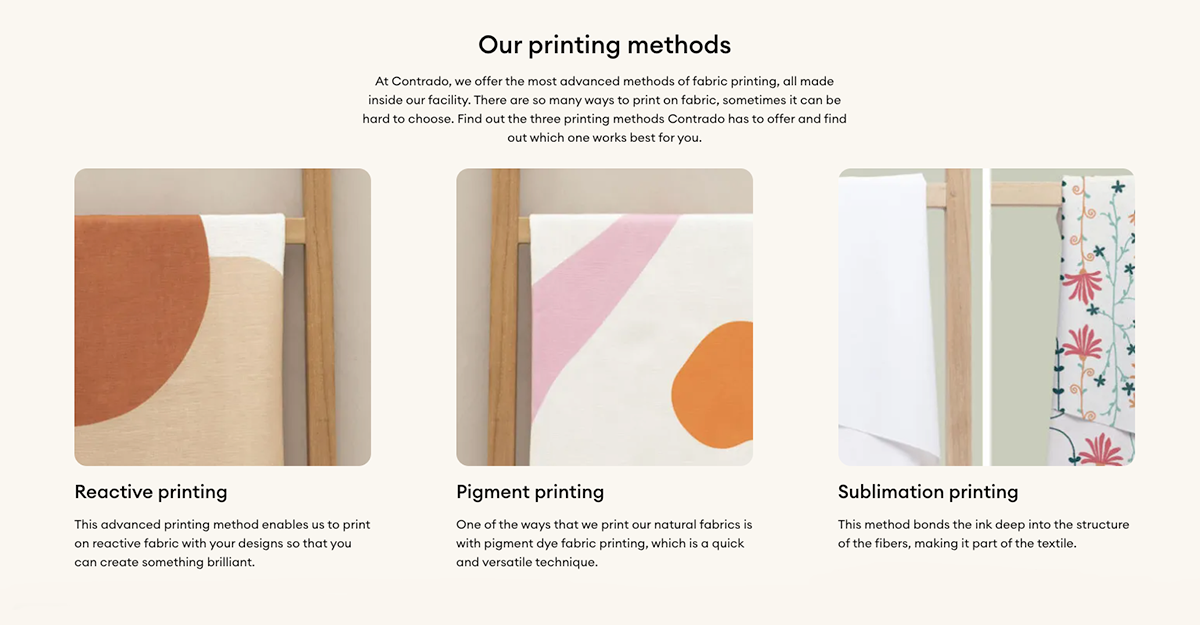
Unlike most print-on-demand platforms that rely on scattered third-party fulfillment centers, Contrado keeps its entire production process in-house, from printing and cut-and-sew to quality control, packing, and order shipping.
As a true cut-and-sew manufacturer, designs are printed directly onto high-quality fabric using reactive, pigment, or dye-sublimation printing, then cut and stitched by hand with in-house patterns, resulting in clean edge-to-edge prints and a noticeably more refined finish.
Contrado pairs this process with premium materials like silk, cotton, satin, velvet, and leather rather than default blanks, helping preserve texture, color depth, and long-term durability.
With no minimum order requirements, brands can experiment with new designs or build full-custom clothing lines without upfront inventory risk, while maintaining complete control over quality and presentation.
Massive Custom Product Range
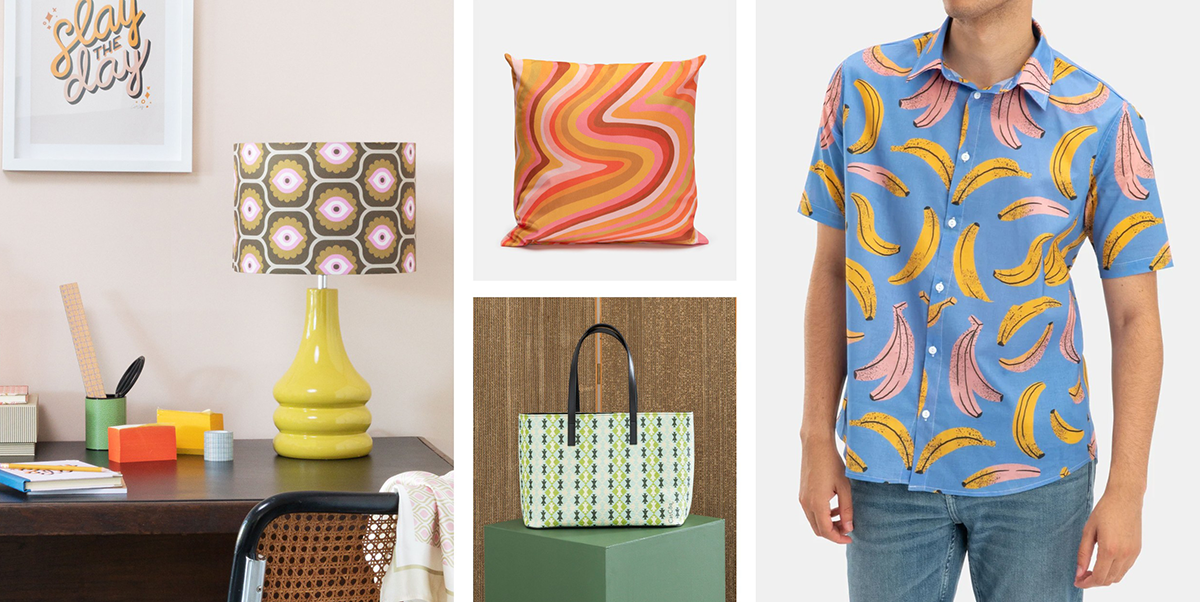
With over 450 customizable items, Contrado goes far beyond the standard shirt, hoodie, or mug lineup that most POD platforms hit a wall with.
The catalog spans premium fashion, lifestyle accessories, and an extensive homeware selection, including bedding, rugs, lampshades, curtains, furniture pieces, wall art, and even custom décor such as wallpaper and room dividers.
You can build entire collections across categories such as living room, bedroom, kitchen, office, outdoor, kids, and pets, all designed to work together visually rather than feel like disconnected merch.
This variety makes Contrado especially appealing for brands that want to tell a cohesive story through products, whether that’s a fashion label expanding into home décor or an artist turning designs into full interior collections.
White-Label & Custom Branding Options
Branding is one of the areas where Contrado genuinely pulls ahead of platforms with limited branding options.
Instead of slapping your logo on a product and calling it a day, Contrado lets you build an end-to-end brand experience where your name is the only one customers ever see.
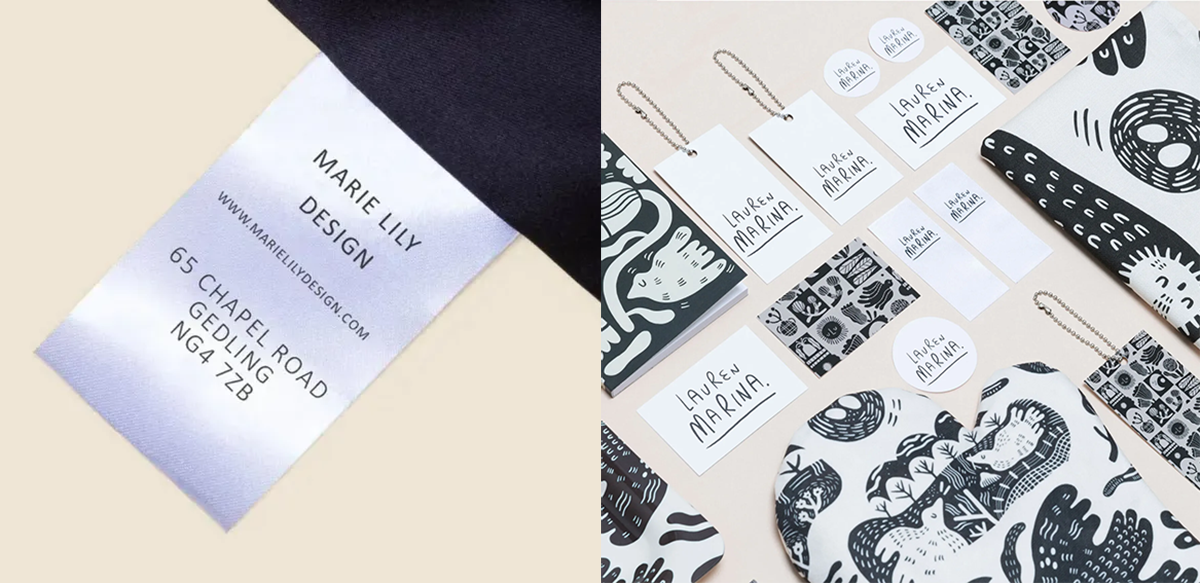
You can remove Contrado labeling entirely and replace it with custom fabric labels, private branding tags, and branded care labels that reinforce your identity at every touchpoint.
The branding control goes beyond the product itself. Contrado lets you customize dispatch notes with your logo and include branded packing slips, business cards, stickers, swing tags, and even certificates of authenticity for limited-edition products.
This turns every order into a deliberate unboxing moment rather than a generic shipment, which is especially important for premium brands selling high-value custom products.
Sustainability & Responsible Production
Every product is made to order, meaning items are produced only once a purchase is placed.
This approach helps reduce overproduction, limits landfill waste, and avoids the need to destroy unsold inventory.
All manufacturing takes place in a single facility, allowing Contrado to keep shipping distances shorter while maintaining direct oversight of labor conditions and production standards.
The company uses low-water manufacturing processes and works with local water authorities to ensure ink waste is handled responsibly.
In addition, Contrado continues to expand its selection of vegan, organic, biodegradable, recycled, and FSC-certified products, while repurposing fabric offcuts for creative reuse.
Together, these practices reflect a genuine commitment to ethical production and environmental responsibility.
Affiliate Program & Earning Opportunities

Contrado runs a free, in-house affiliate program that offers a generous 15 percent commission on every sale you refer, making it one of the higher-paying options in the POD space.
Affiliates are paid bi-weekly via PayPal, benefit from a 90-day tracking cookie, and can earn recurring commissions for up to 12 months after a referral signs up.
With high-ticket products, global shipping, and built-in creative resources to help you promote effectively, the program is especially attractive for creators who produce evergreen content around design, merch, or eCommerce.
No Monthly Fees
Despite its premium focus, Contrado doesn’t charge a monthly subscription.
You pay per product, plus any optional custom branding, printing, and shipping costs.
For brands that want access to high-end fulfillment without committing to recurring fees, Contrado is surprisingly accessible (especially if you’re testing higher-margin products rather than chasing fast shipping or mass volume).
Why You Might Want a Contrado Alternative
Contrado is undeniably strong when it comes to craftsmanship and product quality; however, that same premium positioning can introduce friction depending on how you want to run your business.
For creators and brands focused on scalability, simplicity, or multi-channel selling, some of Contrado’s limitations become more noticeable once you move past the surface-level appeal.
💸 Higher Base Costs
Contrado’s in-house manufacturing, premium fabrics, and cut-and-sew process result in higher base product costs than many POD platforms.
While this supports a high-end brand image, it also makes it harder to compete in price-sensitive niches or run frequent promotions without squeezing your profit margins.
If your audience expects accessible pricing or impulse-friendly merch, these costs can quickly become a bottleneck.
🛒 Shopify-Only Integration
One of Contrado’s biggest functional limitations is that it only integrates with Shopify for dropshipping and automated fulfillment.
If you sell through Etsy, WooCommerce, Wix, marketplaces, or creator platforms, you’ll need manual workflows or a completely separate setup.
This lack of flexibility can be a dealbreaker for creators who want to diversify their sales channels or avoid locking their entire operation into a single eCommerce platform.
💳 More Manual Profit Management
Contrado’s payment flow requires you to collect customer payments first, then manually pay Contrado to initiate production, unless you set up automated PayPal payments.
While this isn’t inherently bad, it adds an extra step compared to platforms that automatically deduct production costs.
For higher-order volume, this workflow can feel less streamlined and more operationally demanding.
👩🏻💻 Not Beginner-Friendly
The same customization tools that give Contrado its edge can overwhelm newer sellers.
Designing panel-by-panel products, managing branding elements, and setting pricing strategically requires time and experience.
If you want a plug-and-play POD setup that prioritizes speed over precision, Contrado may feel like more effort than necessary.
💎 Limited Built-In Monetization
Contrado is a manufacturing-first platform, not a creator monetization ecosystem.
There are no native tools for memberships, digital products, gated content, or fan support built into the platform.
If your business relies on community-driven revenue or bundled digital offerings alongside merch, you may find yourself stitching together multiple tools elsewhere.
Overall Thoughts
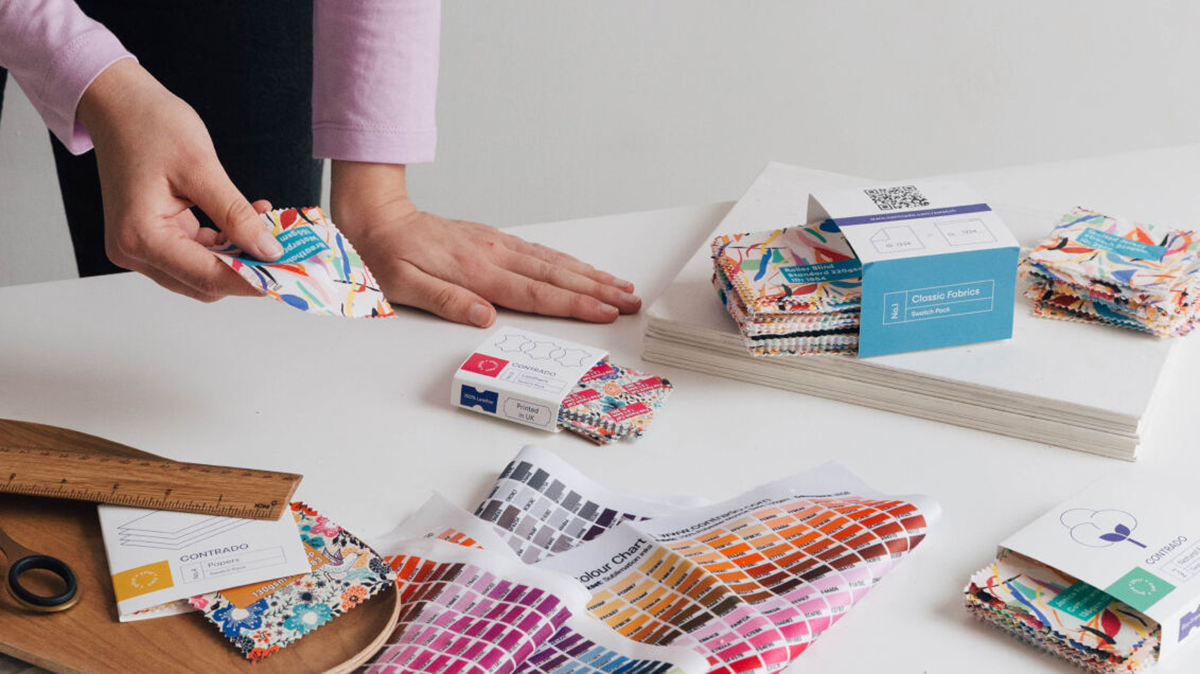
Contrado is perfect for those who want their print-on-demand platform to feel like real manufacturing.
It shines at producing premium, retail-ready products through in-house cut-and-sew production, elevated materials, and deep customization that most POD platforms simply cannot match.
This makes it a strong option for designers and boutique brands that want to charge higher prices and deliver a refined brand experience.
The downside is that higher base costs, a more involved design process, and Shopify-only integration can limit flexibility and slow down scaling.
Contrado also stays firmly in the manufacturing lane, with no built-in tools for memberships, digital products, or broader audience monetization.
If quality and presentation are your top priorities, Contrado delivers, but if speed, margins, or creator-first tools matter more, the alternatives below may suit you better.
Top Contrado Alternatives for Premium Print-on-Demand
1. Fourthwall
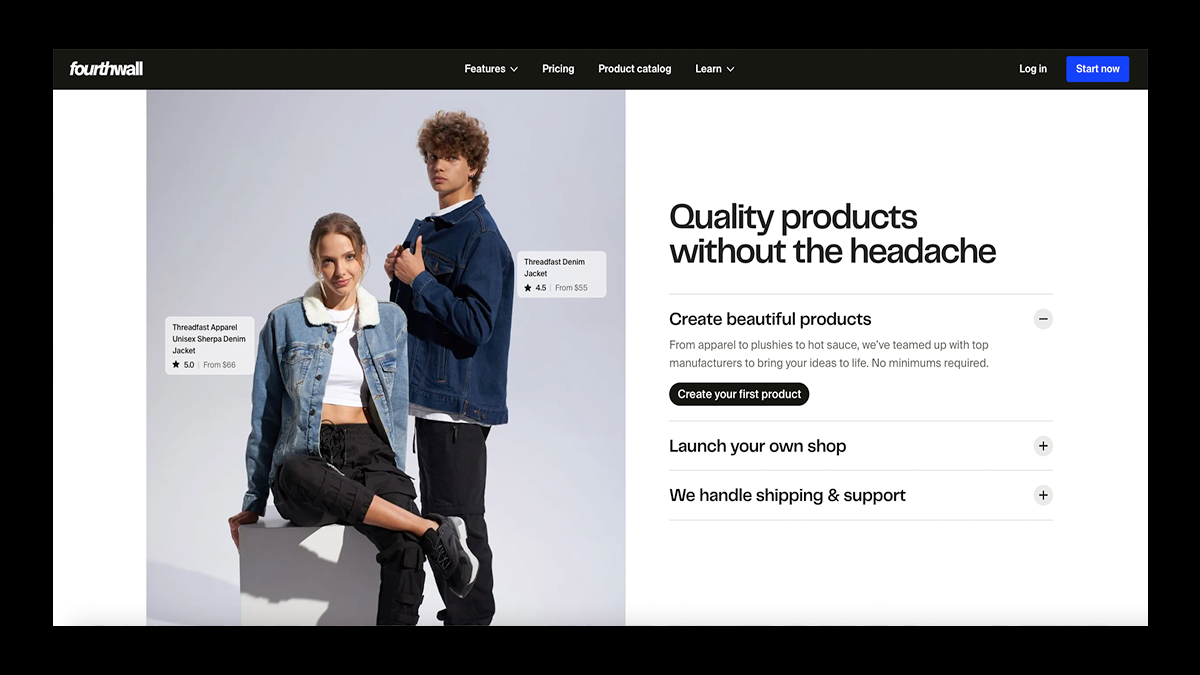
Fourthwall blends premium print-on-demand with modern monetization tools, letting you sell high-quality physical products alongside digital downloads, memberships, and fan-supported content from one fully branded storefront.
It’s designed for brands that want control over their products and their audience relationship, without stitching together five different platforms.
While the catalog isn’t as ultra-luxury as Contrado’s cut-and-sew offering, Fourthwall makes up for it with flexibility, speed, and tools that help you scale beyond merch alone.
On the product side, it offers a strong lineup of apparel, accessories, home goods, and art prints, many of which are made to order to reduce waste. And on the business side, you get drops, preorders, giveaways, email marketing, tipping, and gated content baked in.
Add native integrations with platforms like TikTok Shop, YouTube, Spotify, and Twitch, and Fourthwall becomes less of a POD supplier and more of an all-in-one engine for creators who want to sell where their audience already lives.
💰Pricing
- Free Plan: $0/month — 0% fees on physical products, 5% fee on digital products and memberships.
- Pro Plan: $19/month or $180/year — 0% fees on digital sales, free .store domain, monthly sample credit, advanced analytics, unlimited team members, and priority support.
✅ Pros
- Creator-first platform with full storefront customization
- Sell physical products, digital downloads, memberships, tips, and gated content
- No upfront costs and no platform fees on physical products
- Tools for drops, preorders, promos, giveaways, and email marketing
- Native integrations with TikTok Shop, YouTube Merch Shelf, Spotify, and Twitch
- Global fulfillment options keep shipping competitive
❌ Cons
- Smaller ultra-luxury product range compared to Contrado’s cut-and-sew catalog
- No built-in marketplace, so traffic generation is up to you
2. Prodigi
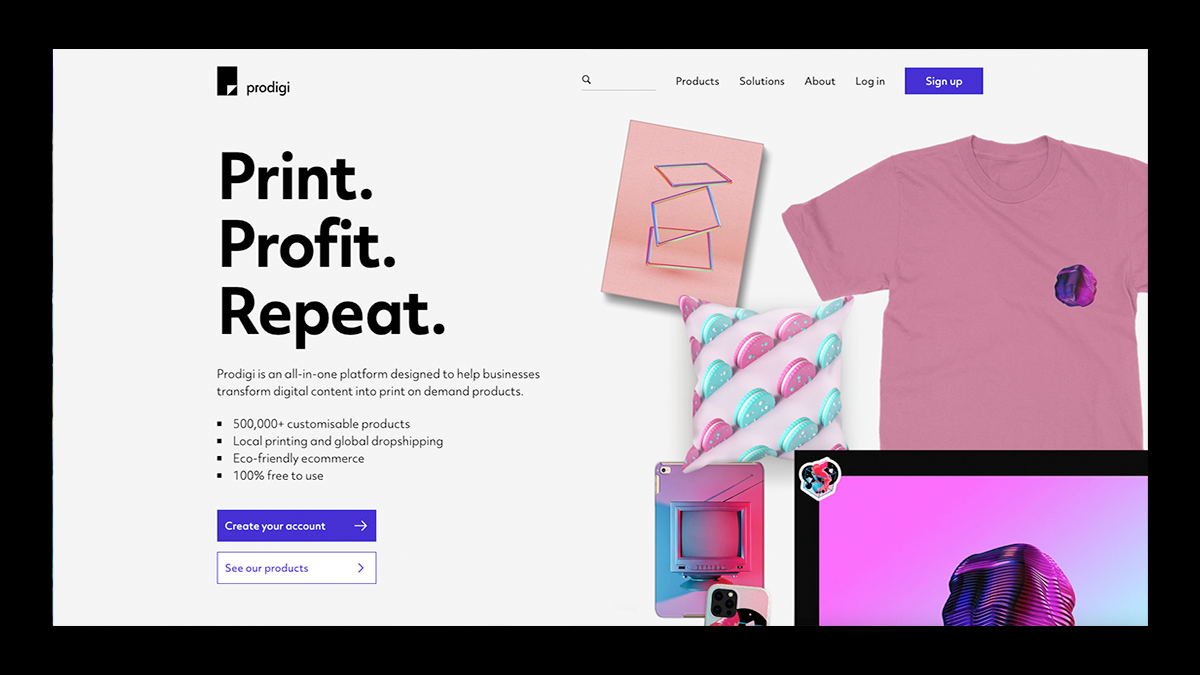
Prodigi flips the traditional print-on-demand model on its head by turning the world into your fulfillment center.
With a global network of over 70 print labs, Prodigy delivers faster, lower-cost shipping and a reduced environmental footprint without sacrificing print quality.
With access to over 500,000 customizable products, the platform offers one of the largest selections in the entire POD space, spanning art prints, wall décor, photo books, home goods, tech accessories, apparel, and more.
It supports high-end production methods such as giclée fine art printing, DTG apparel printing, and sublimation photo products, making it especially attractive to photographers, illustrators, and premium merch brands.
Integrations with Shopify, Etsy, WooCommerce, and custom APIs make it easy to plug Prodigi into an existing eCommerce workflow without rebuilding your stack.
That said, Prodigi is more fulfillment-focused than brand-building focused. While the quality is consistently strong, some variation between partner labs can occur, and advanced branding features are locked behind a paid plan.
💰Pricing
- Free Account: $0/month — No subscription fees; pay only for product and fulfillment.
- Prodigi Pro: $47/month — 10–25% product discounts, branded inserts, premium mockups, and dedicated support.
✅ Pros
- Massive 500,000+ product catalog with art-grade offerings
- Global local-routing fulfillment for faster delivery and lower emissions
- High-end print methods, including giclée, DTG, and sublimation
- Eco-friendly materials, water-based inks, and FSC-certified papers
- Strong fit for artists, photographers, and premium merch brands
❌ Cons
- Print quality can vary slightly across partner labs
- Full branding tools require a Prodigi Pro subscription
- Setup is more complex than beginner-friendly POD platforms
- Limited native integrations beyond major eCommerce platforms
3. Apliiq
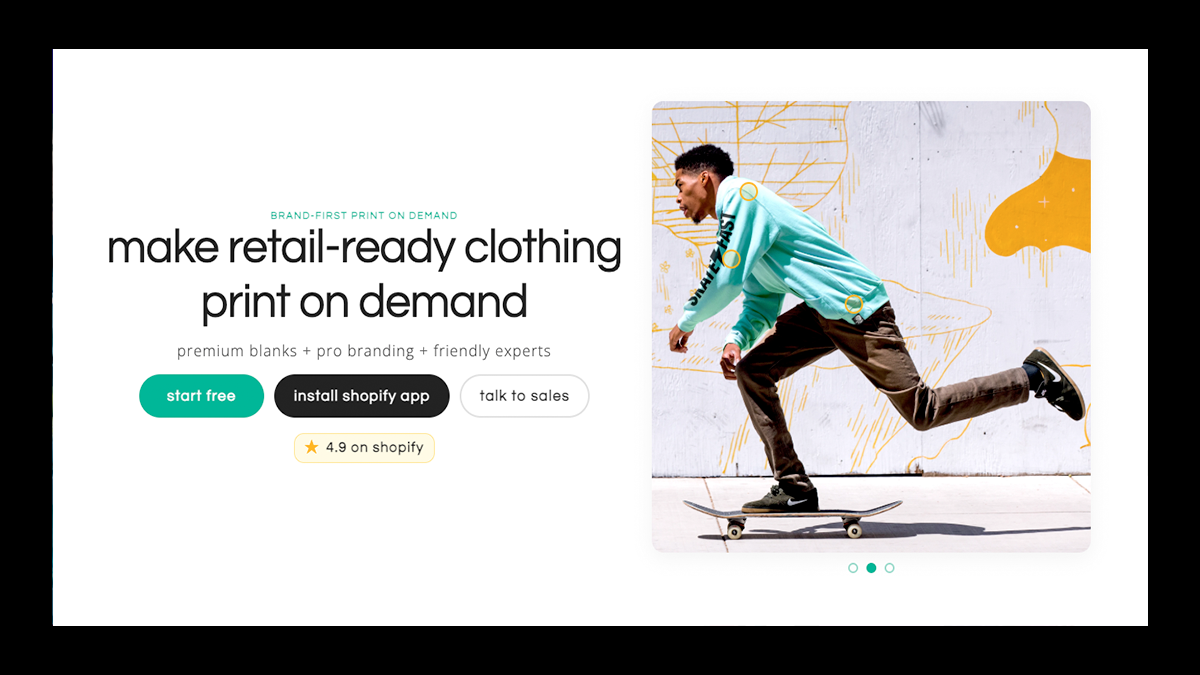
Apliiq is built for brands that want their apparel to feel genuinely designed, not just printed.
Instead of focusing on massive product catalogs, this POD platform doubles down on garment-level customization, giving you control over the details that actually define a brand.
Their catalog leans heavily into premium streetwear blanks from brands like AS Colour, Bella+Canvas, and Yupoong, making it ideal for fashion-forward collections rather than general merch.
However, what really sets Apliiq apart is its depth in private-label. You can customize woven labels, embroidered patches, appliqués, hood liners, pockets, and packaging, creating retail-ready garments without committing to full-scale cut-and-sew manufacturing.
It also supports both on-demand fulfillment and bulk production, so you can start lean and scale into larger runs as demand grows.
💰Pricing
- Free to Use: No monthly fees; pay per garment and customization.
✅ Pros
- Advanced private-label customization, including woven labels, patches, pockets, and appliqués
- Retail-ready packaging options for a premium brand presentation
- US-based production with sustainable inks and responsible practices
- Premium streetwear blanks from AS Colour, Bella+Canvas, Yupoong, and more
- Supports both on-demand and bulk manufacturing
- Strong fit for long-term brand building and fashion labels
❌ Cons
- Slower fulfillment for heavily customized garments
- Limited integrations compared to larger POD platforms
- Smaller product range outside of apparel
- Higher base costs due to premium materials and hands-on labor
4. Tapstitch
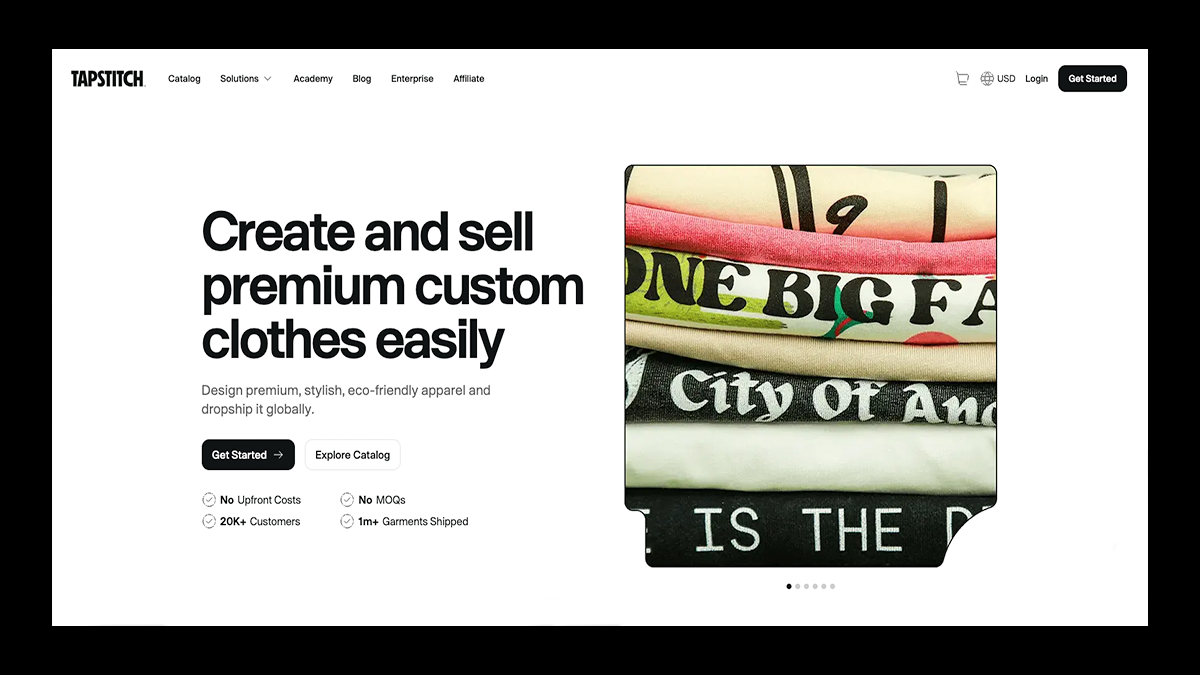
Tapstitch offers over 300 premium garments, including oversized hoodies, heavyweight tees, vintage-wash sweats, and technical apparel, many with fabric weights exceeding 430 GSM.
These pieces are designed with clean lines, on-trend colorways, and print-ready surfaces that make artwork feel integrated rather than stamped on.
The platform supports both DTG and DTF printing, giving creators flexibility between soft, detailed prints and highly durable, vibrant transfers. You can place designs across multiple areas, add neck prints, and even run bulk drops without holding inventory upfront.
Fulfillment is handled globally, with US-based production available to reduce shipping costs and speed up delivery for domestic customers.
While Tapstitch doesn’t offer the massive product breadth or homeware options that Contrado does, it excels in one lane: making print-on-demand apparel feel like real retail streetwear.
For fashion-first creators who care about texture, weight, and cut more than mugs or wall art, Tapstitch is one of the strongest premium apparel alternatives on the market.
💰Pricing
- Free to Use: $0/month — No upfront costs; base pricing varies by garment style, fabric weight, print method, and fulfillment region.
✅ Pros
- Streetwear-focused catalog with premium, heavyweight garments
- Supports DTG and DTF printing for retail-quality results
- Modern silhouettes, oversized fits, and elevated fabric textures
- No monthly subscription required
- Global shipping with US-based fulfillment options
- Bulk wholesale drops without inventory risk
- Creators retain full ownership of their designs
❌ Cons
- No woven labels or sewn-in branding options like Apliiq
- Apparel-only platform with no general merch or home goods
- Shipping costs and speeds vary by fulfillment center
- Advanced customizations may require manual coordination with support
5. Jungle Culture
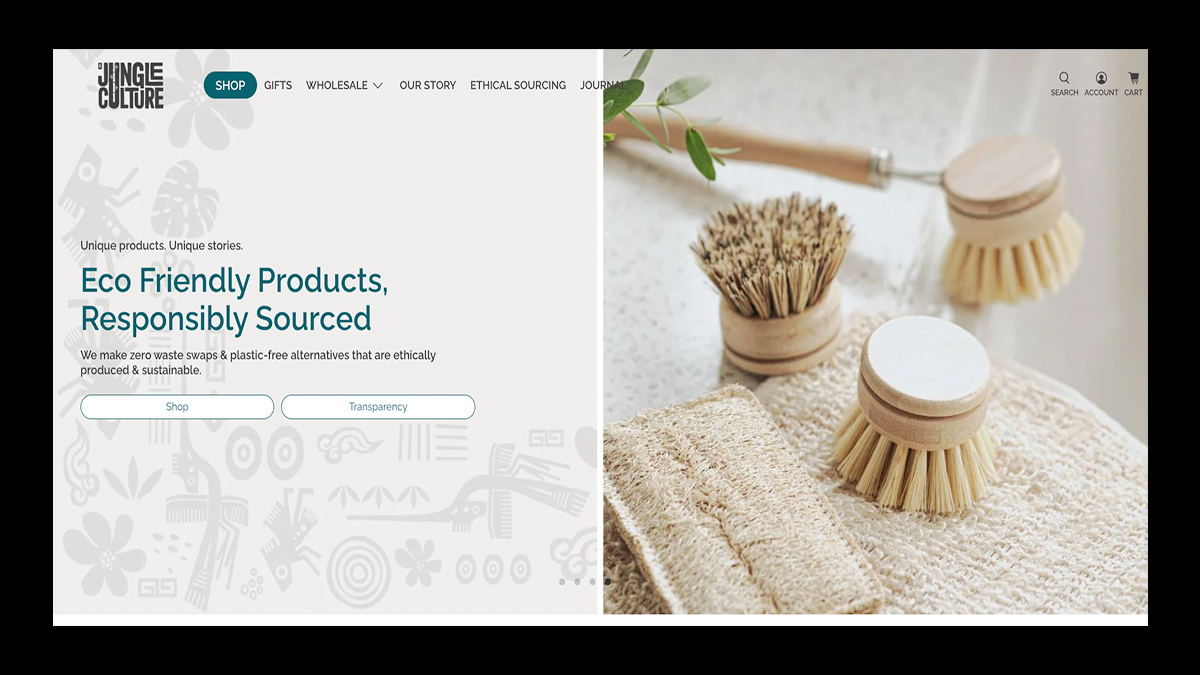
Jungle Culture is a sustainability-first brand and wholesale supplier focused on ethically made, eco-friendly products rather than on-demand printing.
The company was born out of a very specific mission to reduce environmental harm, starting with reusable bamboo straws handmade on family-run farms in Northern Vietnam, and has since grown into a globally recognized zero-waste brand.
Instead of printing designs on apparel or merch after an order is placed, Jungle Culture produces thoughtfully designed lifestyle products made from bamboo, coconut, wood, and other low-impact materials.
Products can be custom-branded through engraving rather than ink-based printing, making them ideal for eco-conscious businesses, shops, and gifting brands that want sustainable fulfillment or wholesale inventory.
You can order in bulk, access custom engraving, and rely on plastic-free packaging and carbon-conscious shipping. This makes Jungle Culture a strong alternative to Contrado only if your goal is ethical sourcing, sustainability storytelling, and physical product fulfillment, not print-on-demand apparel or fast merch drops.
💰Pricing
- Free to Use: Pay-per-product pricing. Wholesale-style pricing available for bulk orders.
✅ Pros
- Unique catalog centered on bamboo, organic cotton, and recycled materials
- Non-toxic, water-based printing and plastic-free packaging
- Ethically sourced, handmade products with fair-trade standards
- Carbon-offset delivery and low-impact shipping
- Strong fit for eco-conscious brands and sustainable gifting
❌ Cons
- Limited print and customization options
- Not suited for apparel-heavy or fashion-focused stores
- Smaller catalog compared to mainstream POD platforms
6. Printify
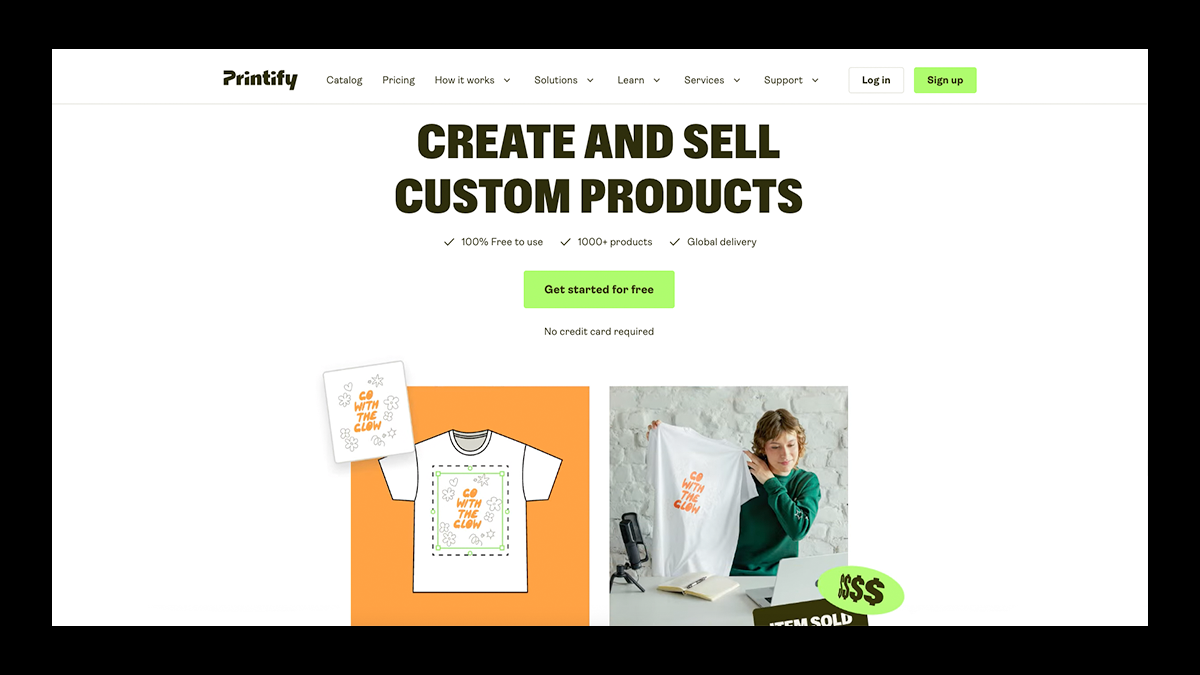
Printify connects you to a massive global network of print providers, giving you the freedom to choose who fulfills your orders based on price, location, speed, or quality.
It may not offer the same handmade quality as Contrado, but it does open the door to better margins, faster shipping options, and far more product variety.
Printify supports over 1,300 products across apparel, accessories, candles, pet items, home décor, tech gear, and even biodegradable phone cases.
You also get access to multiple print methods, including DTG, sublimation, embroidery, UV printing, and cut-and-sew, which makes it easier to experiment with niche products or expand into new categories.
While it doesn’t offer a built-in storefront or creator monetization tools, its fulfillment infrastructure and supplier flexibility make it one of the strongest POD platforms for scaling a serious eCommerce brand.
💰Pricing
- Free Plan: $0/month — Access to 1,300+ products, unlimited designs, full integrations, and up to 5 stores.
- Premium Plan: $29/month or $299/year — Up to 20% off product costs and up to 10 connected stores.
- Enterprise Plan: Custom pricing — API access, dedicated support, SLA-backed fulfillment, and unlimited stores.
✅ Pros
- Massive catalog with 1,300+ products
- 100+ global print partners for localized fulfillment
- Supports DTG, embroidery, UV printing, sublimation, and cut-and-sew
- Integrates with Shopify, Etsy, Amazon, TikTok Shop, Walmart, and WooCommerce
- AI-powered mockups and automated order routing with Printify Choice
- Flexible supplier selection for better margins and shipping control
❌ Cons
- Quality varies by provider, so sampling is essential
- Branding options are limited unless you’re on Enterprise
- No hosted storefront or digital product support
- Customer support can slow down during peak seasons
7. Printed Mint
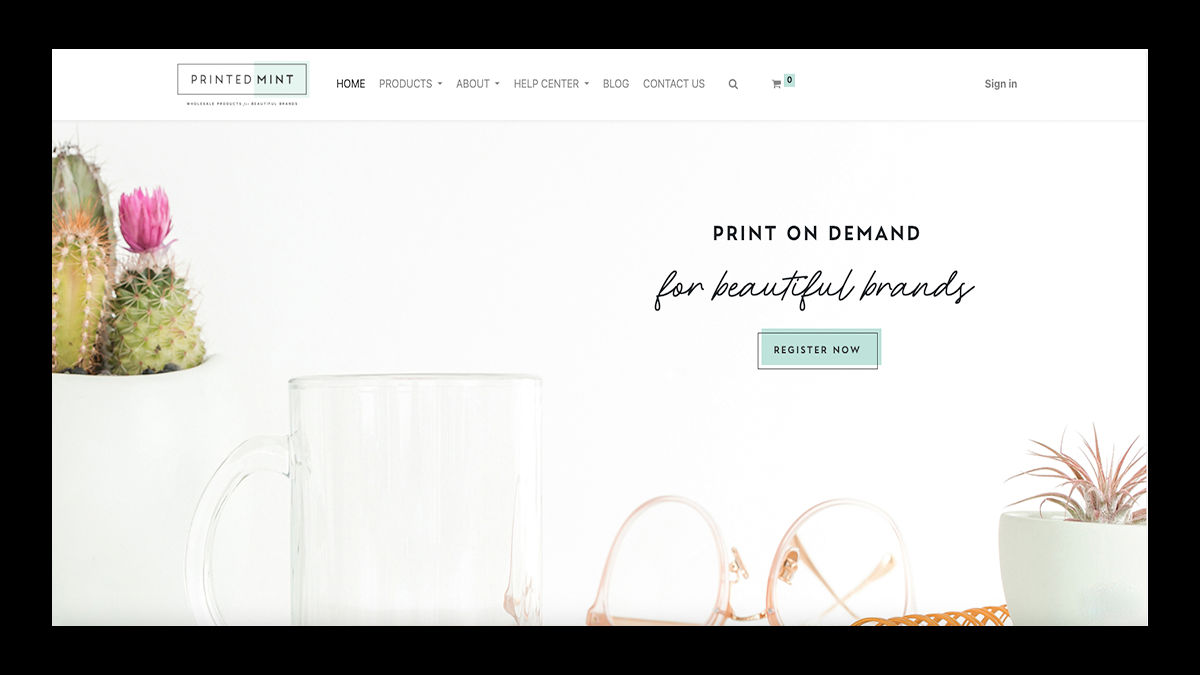
Printed Mint excels at treating fulfillment as part of the brand experience, not just the last step in an order.
The platform specializes in white-label production with boutique-level presentation, including branded tissue, custom inserts, and retail-ready packaging that makes every delivery feel intentional.
Its curated catalog leans into lifestyle staples, such as mugs, apparel, stationery, art decor, and home goods—making it ideal for gift-forward brands and Etsy storefronts.
Designers work with precise templates and pro-grade printing (DTG, sublimation, latex, and durable transfers), while U.S.-based fulfillment delivers consistent quality and predictable shipping.
If you're looking for a platform that offers premium products with custom packaging unique to your branding, Printed Mint offers a solution without the chaos of mass-market POD.
💰Pricing
- Free to Register: $0/month — Pay-per-item pricing; branding and packaging included at no extra cost
✅ Pros
- True white-label unboxing with branded tissue, inserts, and kraft packaging
- Premium print quality across apparel, drinkware, candles, and home goods
- U.S.-based fulfillment with reliable 2–4 business-day production
- Clean workflows using templates for accurate, repeatable results
- Strong fit for brands that focus on lifestyle, fitness, and gifting
❌ Cons
- Higher per-item costs than the budget POD networks
- Smaller, curated catalog compared to mega platforms
- Limited integrations beyond Shopify and Etsy
8. AOP+

Based in the UK, AOP+ handles all printing, packing, and shipping from its own London facility, enabling tighter quality control than most POD networks that rely on third-party fulfillment centers.
The platform balances reliability and craftsmanship, offering both classic apparel staples and eye-catching cut-and-sew all-over-print products that work well as higher-margin hero items.
It’s built less like a flashy tech platform and more like a dependable production partner, as evidenced by its consistency, support, and attention to detail.
However, their print quality is their core focus, with modern Epson DTG printers, vibrant sublimation for cut-and-sew items, and a formal quality-control step before shipping.
This emphasis on controlled, in-house production helps ensure colors stay accurate, garments feel consistent from order to order, and customers receive products that match the original design rather than mass-produced approximations.
For eCommerce brands that want premium results without Contrado’s complexity or price ceiling, AOP+ sits in a very practical middle ground.
💰Pricing
- Free to Use: $0/month — Pay only when customers place an order.
✅ Pros
- Fully in-house production for consistent quality and fewer surprises
- Strong DTG and all-over-print sublimation capabilities
- Solid branding options, including neck labels and package inserts
- Clean integrations with Shopify, Etsy, Amazon, and BigCommerce
- Organic and eco-friendly product options
- 24/7 support and worldwide shipping
❌ Cons
- Smaller product catalog (120 items)
- Fulfillment is primarily based in the UK, slower for US-heavy audiences
- Not the cheapest option for price-sensitive niches
- Some premium branding features require paid memberships
9. CustomCat
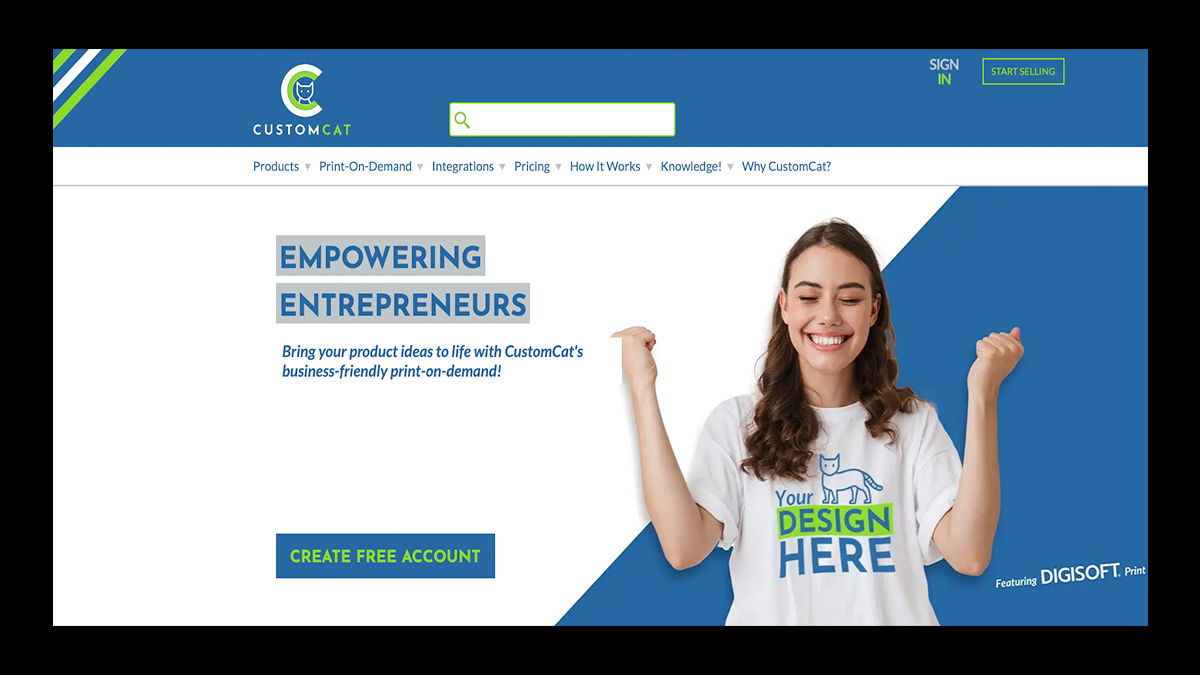
CustomCat’s catalog centers on high-demand staples like t-shirts, hoodies, sweatshirts, hats, mugs, and blankets, paired with a handful of modern decoration methods.
Its proprietary DIGISOFT® printing delivers durable, soft-hand prints across a wide range of fabrics, while dye sublimation supports vibrant all-over designs on select apparel and hard goods.
Unique options like vegan leather patch hats give sellers a way to add premium-looking branding without the cost or complexity of embroidery.
CustomCat also integrates cleanly with Shopify, Etsy, WooCommerce, and BigCommerce, plus CSV uploads and API access for custom setups. This makes it flexible for multi-channel sellers who want centralized fulfillment without juggling multiple POD providers.
However, the trade-off for speed and cost efficiency is depth. Branding options are basic, packaging is utilitarian, and the overall experience feels more like a fulfillment engine than a brand-building partner.
💰Pricing
- Free Plan: $0/month — Direct fulfillment, unlimited product creation, private seller group access, and customer support.
- PRO Plan: $30/month — Everything in the free plan plus 20–40% off product-based costs and core product pricing.
- Enterprise: Custom pricing — Everything in the Pro Plan plus better volume discounts and priority support.
✅ Pros
- Very fast U.S. production and shipping
- Competitive base costs, especially at scale
- Strong margins for high-volume apparel sales
- Reliable integrations with major eCommerce platforms
- Solid print durability with DIGISOFT® and sublimation
❌ Cons
- Limited premium fabrics and luxury materials
- Basic branding and packaging options
- Smaller product variety compared to large POD networks
- Less polished design and mockup tools
- Better suited for volume than high-end lifestyle brands
10. NeatoPOD
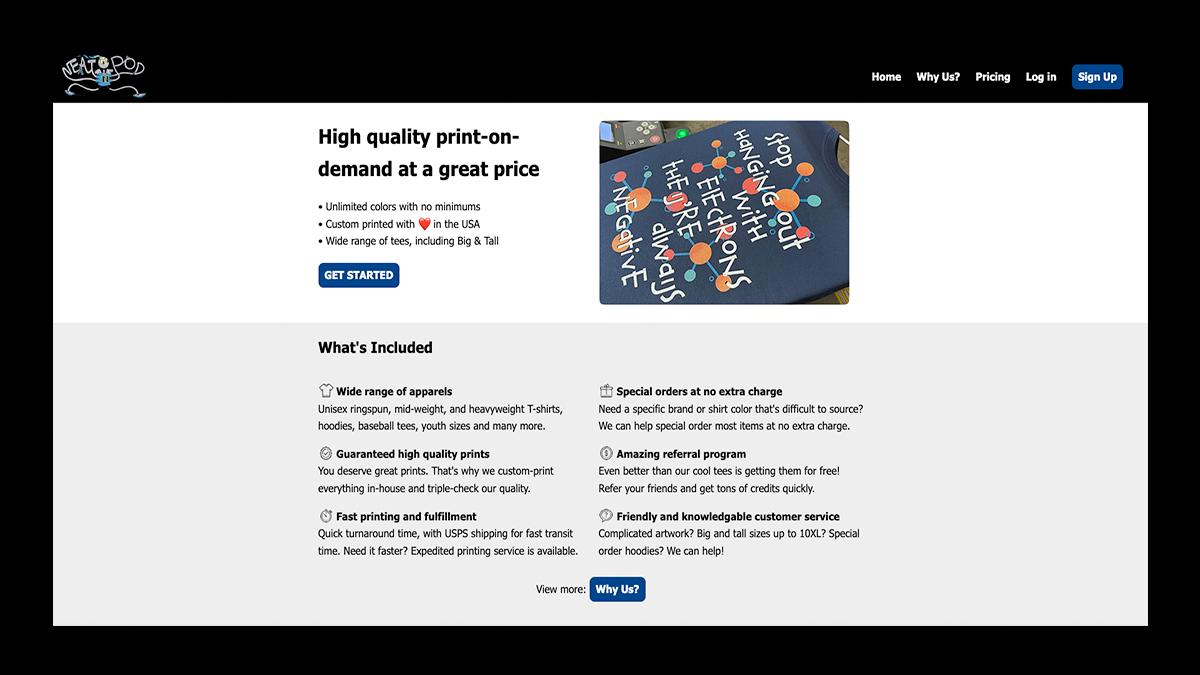
NeatoPOD is a family-owned, U.S.-based print-on-demand provider that focuses on print quality, consistency, and hands-on production rather than massive scale.
Everything is printed in-house, which allows for tighter quality control and the kind of “hi-def” results the platform is known for across apparel and headwear.
What sets NeatoPOD apart is its flexibility with print placement, offering options like sleeve prints, inner neck labels, over-seam designs, and even retro 3D puff printing that many larger POD companies don’t support.
The catalog leans heavily toward premium basics such as t-shirts, hoodies, tanks, hats, and accessories, with standout support for extended sizing up to 10XL.
While it’s not built for high fashion or a wide product variety, NeatoPOD is a strong option for brands that want reliable, high-quality apparel with greater creative control than typical POD platforms.
💰Pricing
- Free to Use: $0/month — Pay-per-product model with no monthly subscription, giving you access to U.S.-based, in-house printing, flexible customization options, and multiple shipping speeds while only paying when an order is produced.
✅ Pros
- Consistently high print quality with in-house production
- Advanced print placement options and specialty techniques like 3D puff
- US-based fulfillment with fast, reliable shipping
- Inclusive sizing up to 10XL and support for special orders
- Strong customer focus and transparent quality standards
❌ Cons
- Platform's UX/UI looks outdated and lacks basic integrations
- Smaller catalog compared to large POD networks
- Limited lifestyle and non-apparel products
- Advanced customizations may increase costs
Build a Premium Brand Without Compromise
If this guide makes one thing clear, it’s that premium print-on-demand isn’t just about how something looks—it’s about how it sells, ships, and scales.
Platforms like Contrado shine when it comes to craftsmanship, speed, and presentation. However, if you’re a creator who wants high-quality merch and real ownership over your business, you need more than a fulfillment partner. You need infrastructure.
That’s where Fourthwall pulls ahead.
Fourthwall combines retail-quality print-on-demand with the tools creators actually need to grow: memberships, digital products, gated content, drops, giveaways, email marketing, and native integrations with platforms like YouTube, TikTok, Spotify, and Twitch.
There’s no monthly fee to get started, no platform cut on physical products, and no pressure to sacrifice quality for scale.
So, if you’re serious about turning your audience into a sustainable business without duct-taping five tools together, Fourthwall is the smartest place to start.
FAQ: Contrado Alternatives
Is Contrado good for beginners?
Contrado can feel overwhelming if you’re brand new to print-on-demand.
The platform’s deep customization, cut-and-sew workflows, and higher base costs are better suited to experienced designers or brands that already understand premium pricing and positioning.
Beginners may find simpler, more creator-friendly platforms easier to start with.
Why is Contrado more expensive than other POD platforms?
Contrado handles everything in-house, using premium fabrics, handmade production methods, and advanced printing techniques.
You’re paying for craftsmanship, consistency, and material quality rather than mass-produced blanks and outsourced fulfillment. That cost makes sense for luxury brands, but not for every business model.
What’s the best Contrado alternative for creators?
For creators who want more than just merch, Fourthwall stands out as the most well-rounded alternative.
It combines high-quality print-on-demand with built-in tools for memberships, digital products, fan support, and platform integrations, making it easier to turn an audience into a sustainable business rather than just a product catalog.
Matt Keyser is a writer at Fourthwall who lives at the intersection of social media and Creator culture. With 4+ years of experience covering industry trends, his work focuses on helping Creators and brands understand how to turn their passion into a thriving business while maintaining a constant pulse on the latest eCommerce and social media trends.


You might also like

10 Print Natural Alternatives for Sustainable Printed Goods in 2026
10 Best Printed Mint Alternatives for 2026
10 Best Teelaunch Alternatives for Print-on-Demand in 2026
10 Best Tapstitch Alternatives for Streetwear On-Demand in 2026
13 Best Prodigi Alternatives for Print-on-Demand in 2026
10 Merchize Alternatives for Fulfillment and Branding in 2026

Printful vs. Printify for Creators in 2026 (and When Fourthwall Fits Better)
How to Find Quality Clothing Manufacturers for Your Startup
White Label vs Private Label Products: How to Choose the Best for Your Brand
Keep up with the latest from Fourthwall
New features, product updates, trend breakdowns, and creator stories — straight to your inbox.