
13 Best YouTube Alternatives to Stream in 2026


YouTube may still dominate the video-sharing landscape as the second-largest search engine and go-to platform for online videos, but it’s not without its challenges.
With increasing ad saturation, algorithmic interference, and strict content rules that enforce censorship, many creators are rethinking their reliance on the platform and looking at alternatives.
In this article, we explore the best YouTube alternatives available today—platforms that offer unique features like decentralized hosting, niche-focused communities, and tailored monetization options.
Whether you’re a business owner, content creator, or educator, these platforms might just provide you with the tools and freedom you’ve been searching for.
YouTube's Popularity with Content Creators
Since its launch in 2005, YouTube has become the world’s largest video-sharing platform, attracting billions of monthly viewers and offering content creators unparalleled reach.
Its user-friendly interface and extensive suite of tools make it attractive to creators across genres.
YouTube offers diverse monetization opportunities, including AdSense revenue sharing, super chats, channel memberships, and merch shelf integration, enabling creators to turn their content into a sustainable income stream.
The platform’s detailed analytics allow creators to track performance, understand audience behavior, and optimize content for growth.
These features, combined with its massive global audience, make YouTube synonymous with online video creation.
However, as competition intensifies and challenges such as content saturation and algorithmic bias grow, many creators are exploring alternatives that better meet their unique goals and creative needs.
Why Are People Looking for a YouTube Alternative?
While YouTube remains dominant in video hosting, many creators are looking to alternatives for various reasons.
Here are some key reasons why video creators are signing up with different platforms:
📈 High Competition
YouTube is brutally crowded.
Millions of creators upload content every single day, which means newer or smaller channels are competing not just on quality, but on scale, upload frequency, and algorithm favor.
Without an existing audience, paid promotion, or viral momentum, it can take years just to get noticed—if it happens at all.
⛔️ Content Restrictions and Demonetization
YouTube’s rules are strict, constantly evolving, and often inconsistently enforced.
Videos can be demonetized or removed with little warning, even when they fall into gray areas like commentary, education, satire, or mature topics.
For creators working in niche, edgy, or controversial spaces, this uncertainty makes YouTube feel less like a creative platform and more like a liability.
👩🏻💻 Algorithm Bias
YouTube’s recommendation system tends to reward what already performs well.
Established creators, trending formats, and advertiser-friendly content get pushed harder, while niche or experimental videos struggle to surface.
This creates a feedback loop in which big channels keep growing while smaller creators fight for scraps of visibility.
🎨 Limited Customization
Every YouTube channel looks and functions almost the same.
Creators have very little control over layout, branding, navigation, or how viewers experience their content.
For creators who want their channel to feel like a destination (not just another profile page) YouTube’s one-size-fits-all design is limiting.
💸 Unpredictable Monetization
Ad revenue on YouTube is inconsistent and often underwhelming, especially for smaller channels.
CPMs fluctuate, demonetization can wipe out earnings overnight, and creators have little control over how ads appear.
That’s why many creators are gravitating toward platforms that support subscriptions, direct fan payments, gated content, or merch-first monetization models that reward community loyalty instead of pure scale.
Ultimately, the ideal YouTube alternative is one that addresses these challenges, providing tailored tools and opportunities for creators to showcase their unique styles, diversify income, and connect deeply with their audiences.
13 Video Platform Alternatives to YouTube
Below is a list of 13 top YouTube alternatives in 2026, categorized based on features, audience size, monetization options, and compatibility with various content styles.
1. TikTok
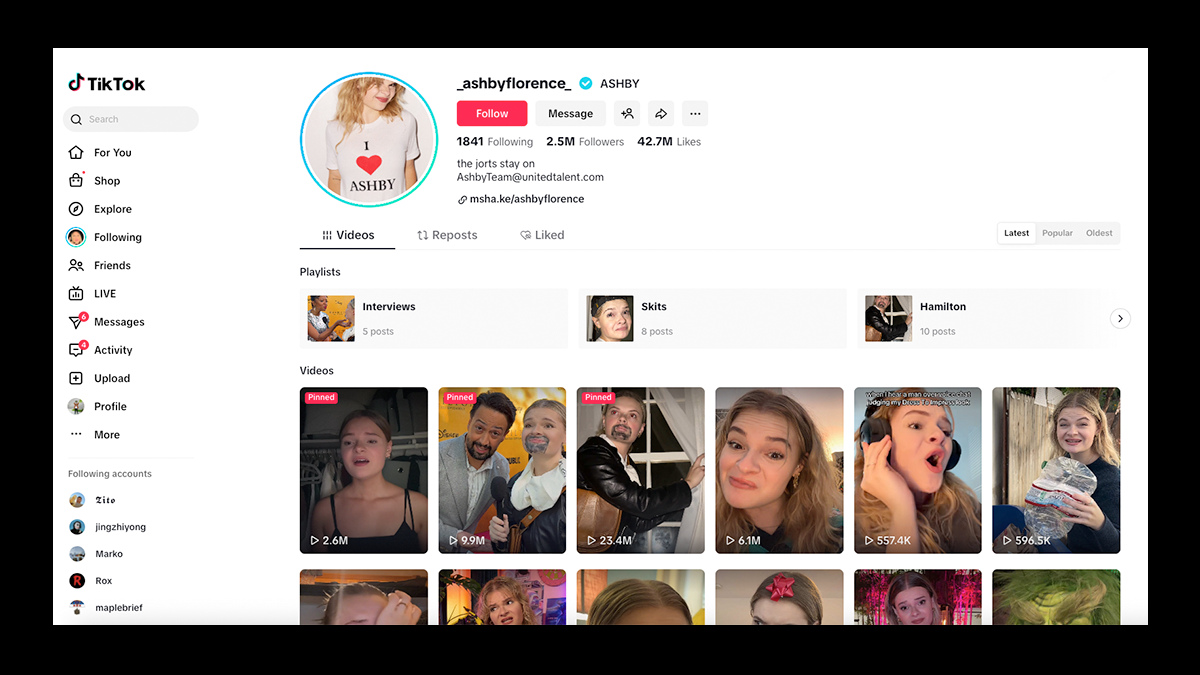
TikTok has revolutionized short-form video content and has become one of YouTube's top competitors, offering creators a platform with immense potential for rapid audience growth thanks to its algorithm-driven discovery system.
Designed for mobile, TikTok’s vertical video format is ideal for dynamic storytelling, challenges, and entertainment in under 10 minutes.
TikTok emphasizes creativity and engagement with tools like built-in editing, special effects, and filters, making it simple to produce visually compelling videos. The platform’s “For You” page curates content tailored to user preferences, allowing even new creators to achieve viral reach quickly.
Monetization options include the TikTok Creator Rewards Program, in-app gifts, and brand partnerships, while TikTok Shop lets creators and businesses sell products directly on the app.
Mostly popular with Gen Z and young millennials, TikTok offers an interactive, fast-paced environment perfect for creators seeking to captivate a highly engaged audience.
✅ Pros
- Its algorithm enables rapid audience growth and the potential for viral content
- Excellent tools for creating dynamic, short-form video content
- Access to a young and active audience, especially Gen Z
- Interactive features like duets, stitches, and comments enhance engagement
- Monetization options like Creator Fund, in-app gifts, and TikTok Shop integration
❌ Cons
- Limited to short-form videos, making it less suitable for long-form content creators
- Monetization options are still developing and can be inconsistent
- High competition for visibility due to the platform’s vast user base
- Privacy concerns, including the collection of biometric data, may deter some users
💡 Side Note: If you're a creator or small business, TikTok Shop also integrates seamlessly with eCommerce platforms like Fourthwall, allowing you to promote and sell your products directly through content.
2. Dailymotion
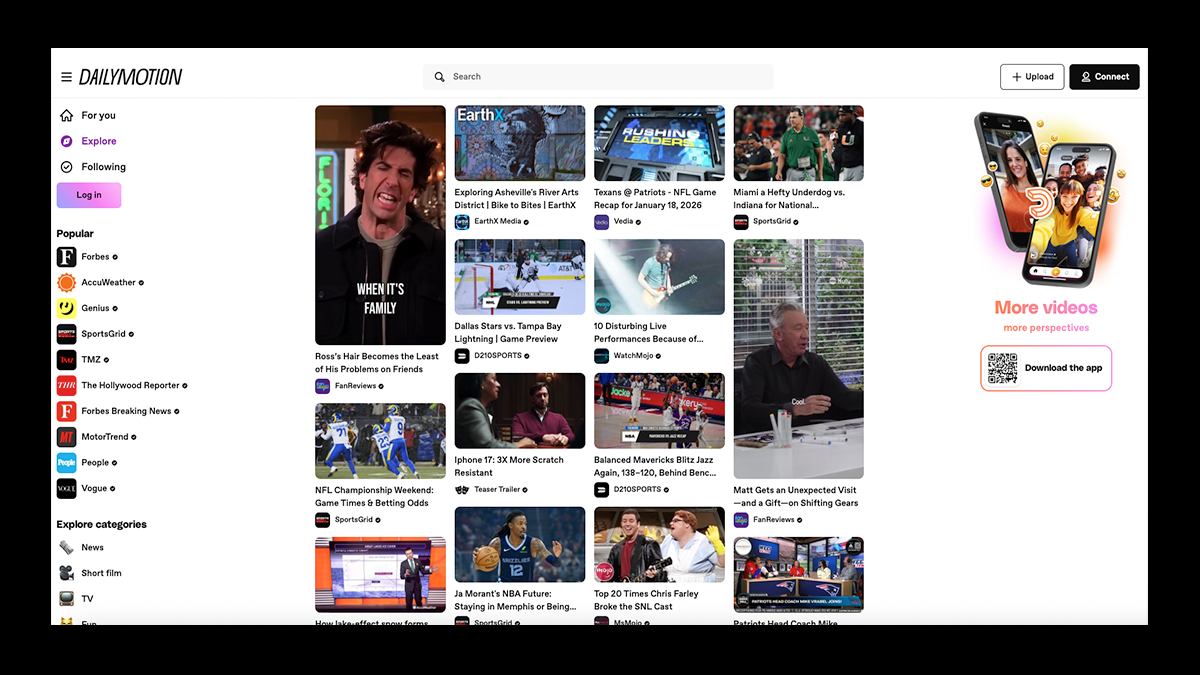
Launched in 2005, Dailymotion has built a massive international audience, attracting roughly 300 million unique monthly viewers across dozens of countries.
Its interface is very familiar to YouTube’s, though their content rules are noticeably more flexible, and videos have a better chance of being surfaced rather than disappearing into algorithm limbo.
Dailymotion also supports HD and 4K uploads, live streaming, and long-form content, making it viable for everything from commentary and entertainment to news and branded video.
Its embedded player is clean and customizable, making it especially appealing to publishers and brands embedding videos on their own sites.
Discoverability is also more forgiving. Videos that gain traction quickly can land on trending pages without needing a massive subscriber base.
It’s not YouTube-scale famous, but that’s exactly why some creators are finally getting noticed here.
✅ Pros
- Global reach with strong international and multilingual audiences
- More lenient content and copyright policies than YouTube
- Supports long-form video, HD, and 4K uploads
- Cleaner embedded player for websites and external platforms
- Faster discoverability for newer or smaller creators
- Offers privacy controls, including public, private, and password-protected videos
❌ Cons
- Ad-supported viewing experience
- High-resolution playback (1080p+) may require paid access
- Monetization options are more limited than YouTube
- Lower overall engagement compared to YouTube’s ecosystem
- Daily upload limits may be restrictive for high-volume creators
3. Vimeo
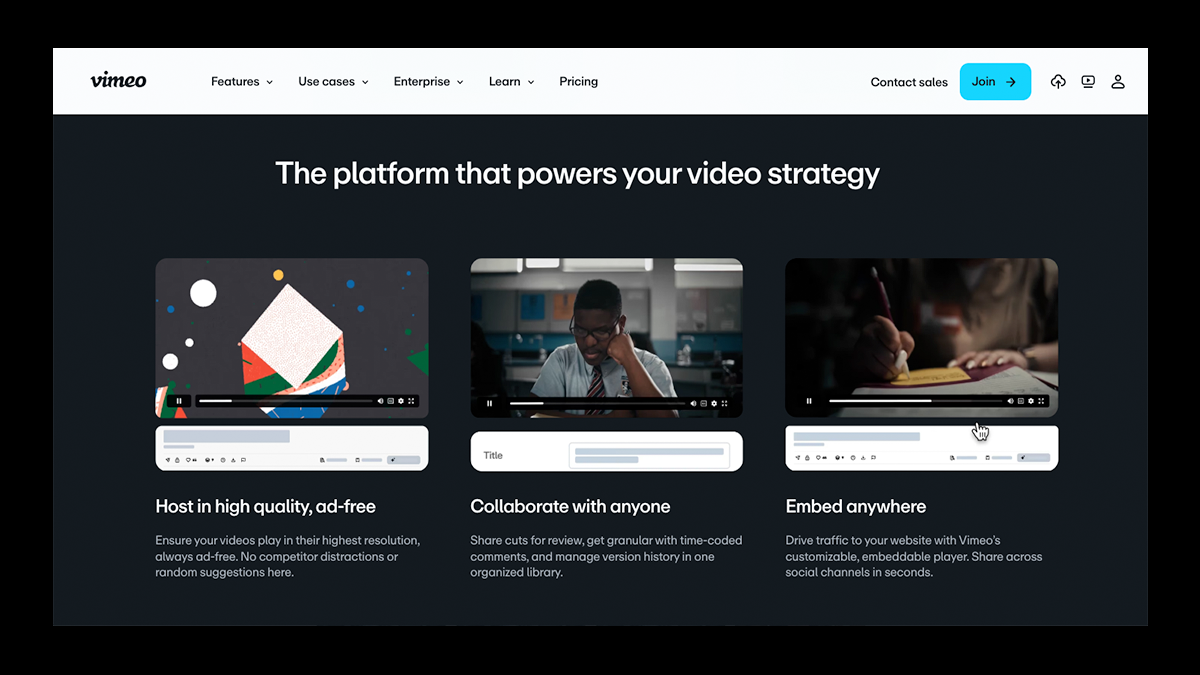
Vimeo plays a completely different game than YouTube—and that’s the point.
While YouTube is built for mass reach, algorithms, and ads everywhere you look, Vimeo is designed for creators and businesses who care about control, polish, and professionalism.
It’s an ad-free, quality-first platform where your videos don’t get buried under reaction clips or interrupted by pre-roll ads.
If YouTube feels like shouting into the void, Vimeo feels like presenting your work in a clean, curated gallery where the content actually gets respected.
It’s a platform that’s less about “going viral” and more about “looking legit.”
✅ Pros
- Ad-free, high-quality streaming with 4K Ultra HD support
- Customizable video players and embedding options tailored to brand aesthetics
- Extensive privacy controls, including password protection and domain restrictions
- Tools for collaboration, review, and audience engagement
- Advanced analytics for tracking viewer behavior and video performance
- Monetization options like pay-per-view and subscription-based models
❌ Cons
- Smaller audience reach compared to YouTube’s global user base
- Requires a paid subscription to access many advanced features
- Limited discoverability for general content compared to YouTube’s algorithm-driven suggestions
- Not ideal for creators seeking a broader, less niche-oriented audience
4. Twitch
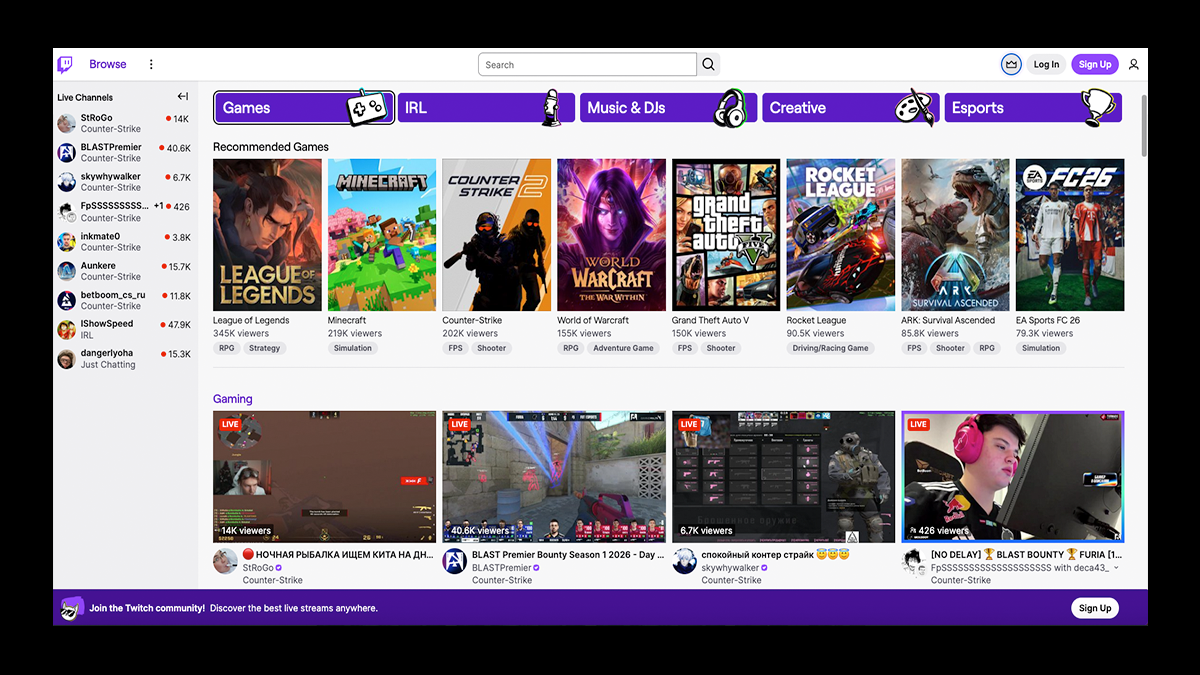
Twitch began as a hub for gamers and Esports enthusiasts but has since grown into a versatile platform hosting diverse content, including music, talk shows, art, and creative streams.
Twitch is designed to support long-form content, making it ideal for creators looking to build loyal communities and expand engagement.
The platform provides a highly interactive experience, enabling audiences to engage with streamers in real time through chat, donations, and "Bits" (virtual currency).
It also has plenty of branding and moderation tools, such as customizable channel pages, a Clips tool for sharing highlights, and Twitch Prime, which provides additional value for creators and viewers alike.
In addition, Twitch provides many monetization opportunities for streamers, such as ads, tiered subscriptions, and Affiliate and Partner programs, helping creators sustain income through direct fan engagement and performance-based payouts tied to viewership and community growth.
✅ Pros
- Real-time engagement through chat, donations, and interactive features like Twitch Gifting
- Multiple revenue streams, including ads, subscriptions, and "Bits" virtual currency
- Integration of Twitch Gifting with Fourthwall stores for enhanced fan support and monetization
- Customizable channel pages with branding and moderation tools
- Clips feature for creating and sharing memorable stream highlights
- Affiliate and Partner programs offer financial incentives and ad revenue sharing
❌ Cons
- Primarily focused on live streaming, which may not suit creators of pre-recorded content
- High-time investment required to grow and maintain an active audience
- Competitive algorithms and platform saturation can limit discoverability for new streamers
- Reliance on real-time engagement may be challenging for creators with inconsistent schedules
💡 Bonus: Creators can connect Twitch Gifting with eCommerce platforms like Fourthwall, allowing fans to support their favorite streamers not just with subs, but also by purchasing exclusive merch or digital content.
5. KICK
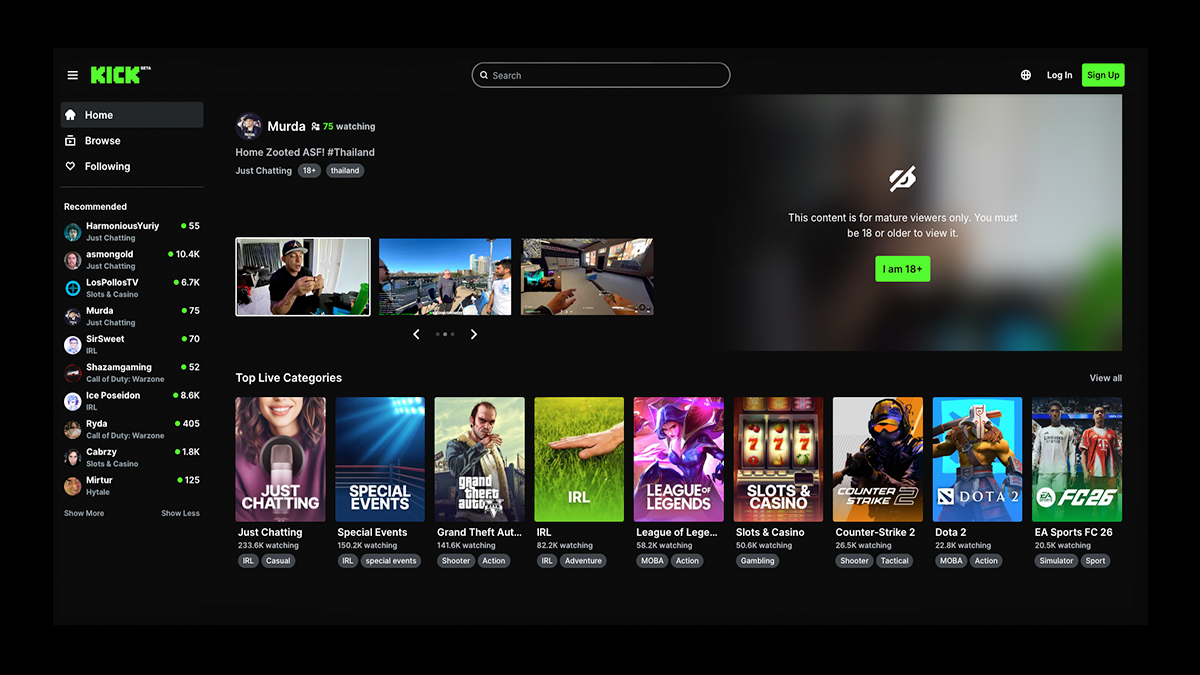
Launched in 2022, Kick positions itself as the anti-status-quo to YouTube and Twitch, putting creators first with fewer restrictions, clearer rules, and way better payouts.
It’s unapologetically live-first, heavily community-driven, and far less algorithm-obsessed than YouTube.
Instead of chasing ad impressions, Kick bets on creators who actually make money and keep control. Its 95/5 subscription revenue split lets creators keep 95% of their sub income, blowing YouTube Live’s 70/30 and Twitch’s 50/50 out of the water.
It also offers easier entry into monetization through a lower-barrier Affiliate program and a Creator Incentive Program that pays eligible streamers a flat hourly rate.
Add in looser content restrictions (including gambling content that Twitch has largely banned), permissive simulcasting rules, and rapid platform growth fueled by high-profile streamer migrations, and Kick becomes a serious contender for live creators who already have their own audience.
✅ Pros
- Extremely creator-friendly 95/5 subscription revenue split
- Lower requirements to join the Affiliate program compared to Twitch
- Allows content categories banned or restricted elsewhere (including gambling)
- Transparent and more consistently enforced community guidelines
- Simulcasting is allowed
- Rapid growth driven by major creators and rising viewer interest
❌ Cons
- Smaller overall audience than YouTube or Twitch
- Limited VOD and long-term content discovery compared to YouTube
- No native console streaming apps yet
- Heavy association with gambling raises ethical concerns for some creators
- Fewer built-in monetization tools beyond subscriptions and incentives
6. DTube
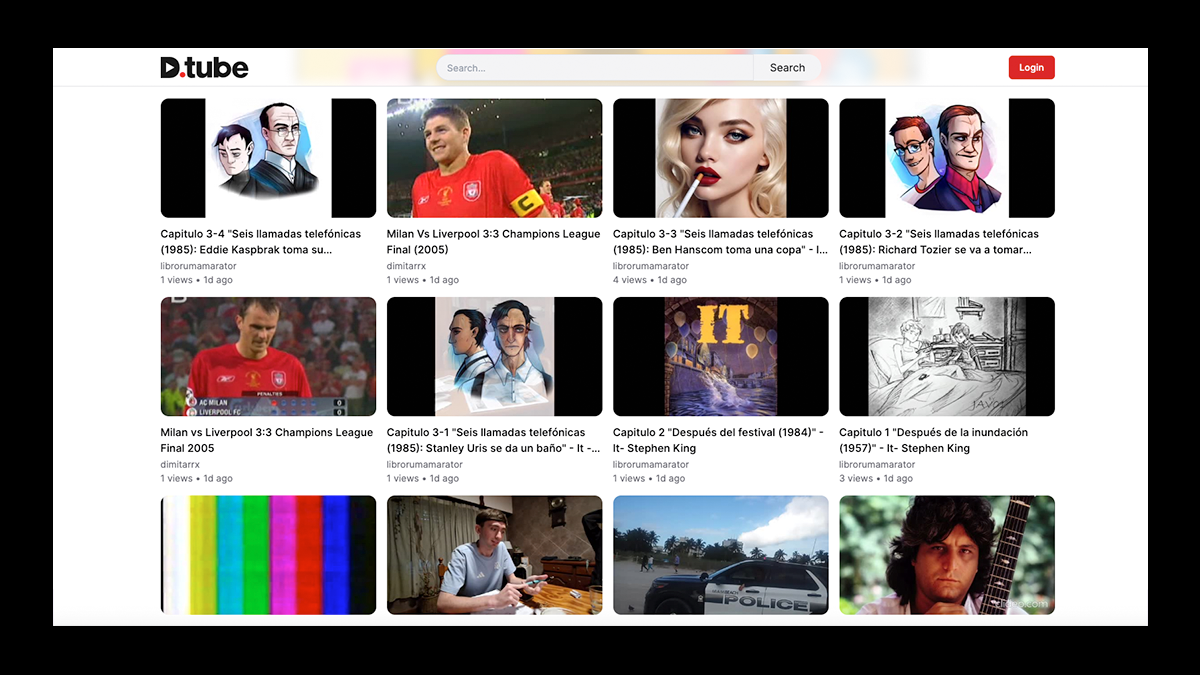
Unlike traditional platforms, DTube operates without centralized servers, reducing the risk of outages and ensuring user data remains secure.
What makes DTube so popular is its interface, which closely resembles YouTube. This makes it easy for new users to transition, while its community-driven model ensures active engagement and support.
The platform also opposes AI-based censorship, providing a haven for free speech and content autonomy.
But what really sets DTube apart is its cryptocurrency feature, which lets users earn rewards, or "DTube coins," based on engagement. These rewards can then be converted into USD or other currencies, making it a practical and unique monetization option for creators.
✅ Pros
- Decentralized hosting ensures privacy, security, and resistance to server outages
- Creators and viewers earn cryptocurrency rewards for participation and engagement
- Ad-free platform focuses on content without distractions or competing promotions
- Supports free speech with minimal content restrictions or censorship
- Familiar YouTube-like interface simplifies adoption for new users
❌ Cons
- Smaller audience compared to mainstream platforms limits reach and visibility
- Cryptocurrency rewards may be unfamiliar or complex for some users
- Requires earning DTube coins through engagement to post videos, adding a learning curve
- Limited monetization options beyond cryptocurrency rewards
- Community-driven censorship may lead to inconsistencies in content moderation
7. Rumble
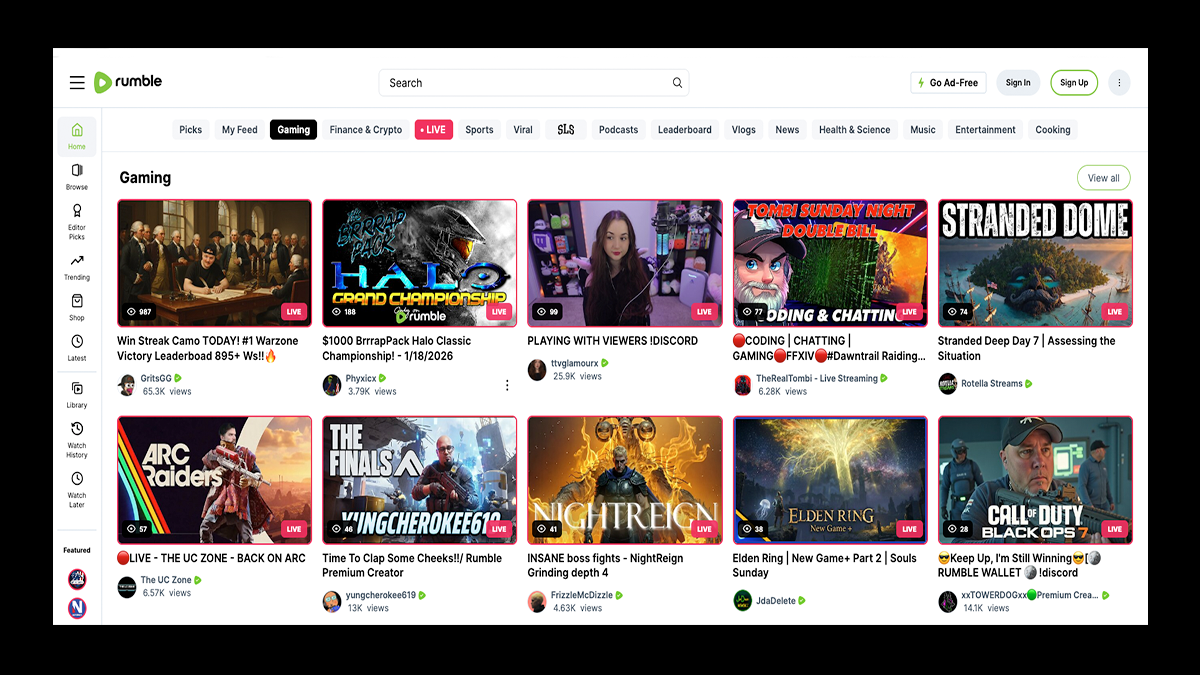
Rumble is a Canadian video-sharing platform that offers a compelling alternative to YouTube with its relaxed content policies and emphasis on free speech.
Known for its straightforward algorithm and minimal content restrictions, Rumble attracts independent creators seeking a platform free from shadow banning or stringent moderation.
Creators retain full ownership of their content and have access to diverse monetization options, including ad revenue sharing, licensing, and syndication opportunities.
With a built-in audience and focus on creator empowerment, Rumble is particularly appealing for those who value flexibility and diverse revenue opportunities.
✅ Pros
- Flexible monetization options, including ad revenue, licensing, and syndication
- Relaxed content guidelines and emphasis on free speech
- Creators retain ownership of their content, offering greater flexibility
- Partnerships with major media networks for increased distribution and visibility
- Minimal restrictions on content, making it attractive for independent creators
❌ Cons
- Smaller audience and community compared to YouTube
- Limited customization and branding options for video embeds
- Fewer content discovery features than larger platforms like YouTube
- Simplistic design may lack the advanced tools sought by some creators
8. Gudsho
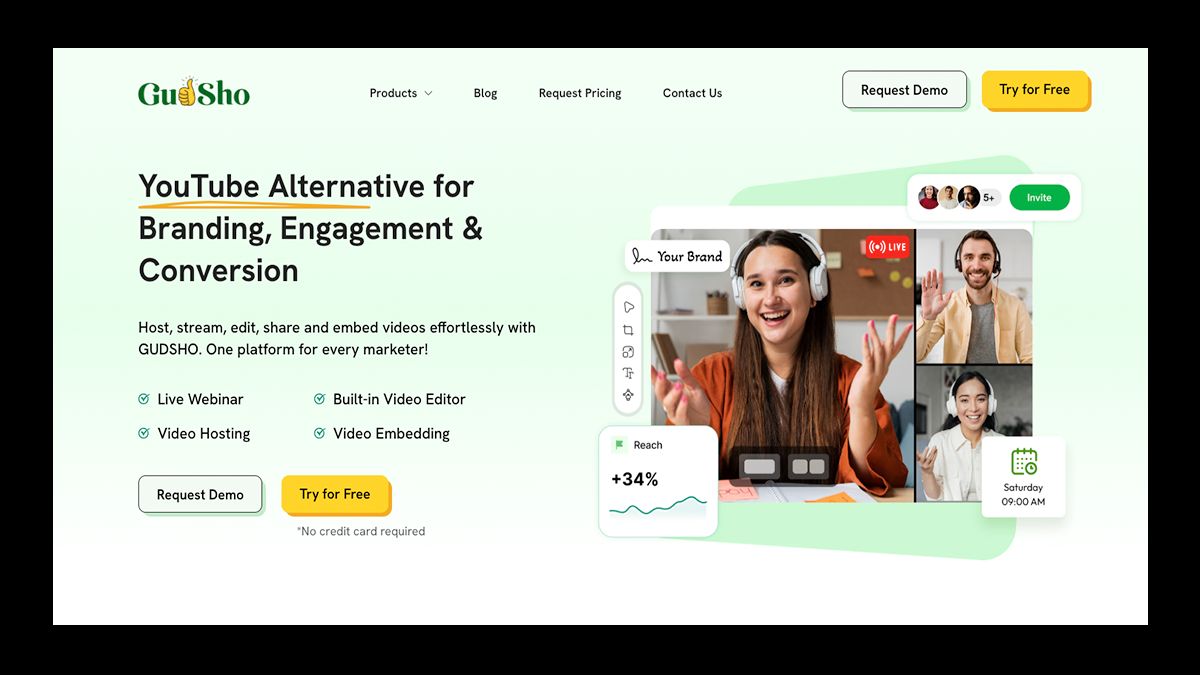
Gudsho is for teams that want to turn video into an actual growth channel, not just a place to rack up views.
It combines secure, ad-free video hosting with live and on-demand webinars, a customizable HTML5 embed player, and built-in video editing, all inside one unified dashboard.
You can upload and stream HD or 4K videos, lock them down with access controls, and brand every player with your logos, colors, CTAs, and lead-capture forms.
Gudsho also includes social media scheduling and publishing, letting you distribute videos across platforms like LinkedIn, Instagram, Facebook, and YouTube without switching tools.
On the analytics side, it delivers real-time insights into views, engagement, conversions, and performance, making it easier to optimize campaigns as they run.
With flexible custom pricing and a no-credit-card 14-day free trial, Gudsho is especially appealing for marketers, startups, and growing teams that want power without platform chaos.
✅ Pros
- Secure, ad-free HD and 4K video hosting with access controls
- Fully customizable HTML5 embed player with branding and CTAs
- Built-in webinar tools for live and on-demand events
- Cloud-based video editor for quick edits and social resizing
- Social media scheduling and publishing from one dashboard
- Real-time analytics with actionable performance insights
❌ Cons
- Video editing tools are solid but not as advanced as dedicated editors
- Analytics could go deeper with features like heatmaps and replay tracking
- Not built for public discovery or viral content growth like YouTube
- Best suited for marketers and businesses rather than casual creators
9. Odysee
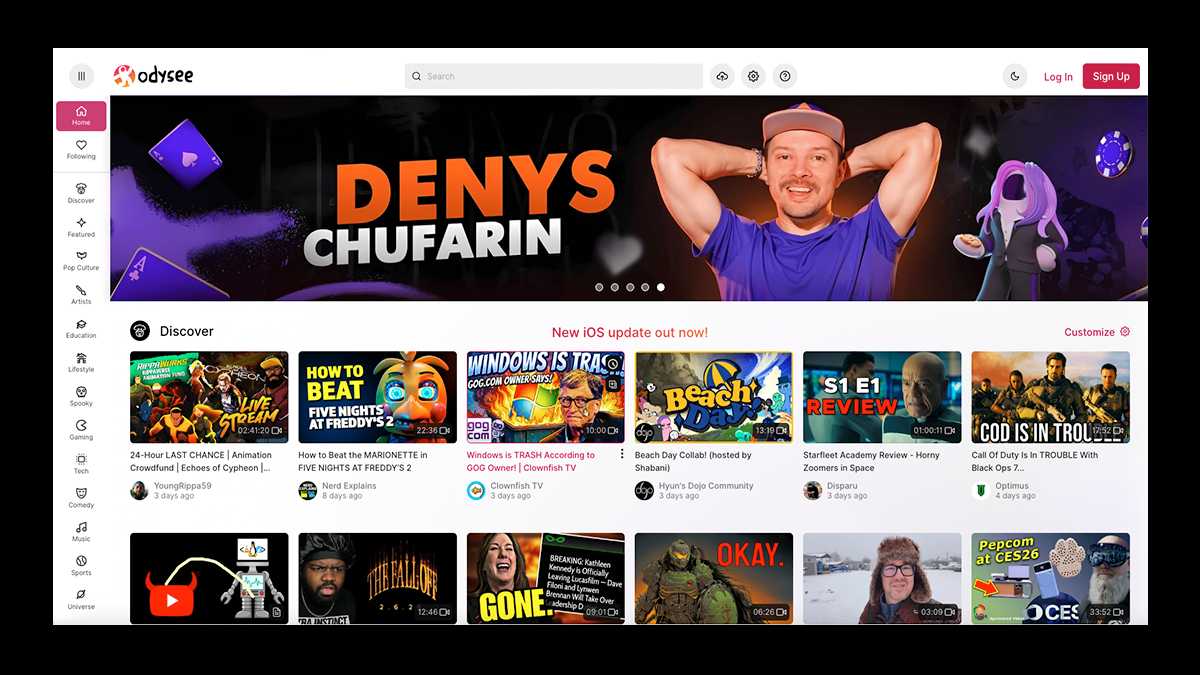
Odysee is a relatively new platform designed to host video content free from censorship and without the risk of removal.
Built by the co-founders of the LBRY blockchain protocol, Odysee offers creators a decentralized haven where their videos remain permanent and their revenue streams transparent.
Ad-free and community-driven, this platform emphasizes freedom of expression and provides tools such as comments, subscriptions, and an intuitive interface to drive engagement.
Odysee's innovative cryptocurrency rewards system allows creators to earn LBRY Credits (LBC) based on content engagement, while viewers can support them directly through tips and memberships, with creators keeping up to 100% of earnings.
With its focus on decentralization, transparency, and creator empowerment, Odysee is carving out a unique space as a platform where content creators can thrive without compromise.
✅ Pros
- Permanent content hosting prevents removal or censorship
- Transparent revenue streams with creators keeping up to 100% of earnings
- Ad-free platform prioritizes content without distractions
- Decentralized structure enhances privacy and reduces reliance on centralized servers
- Strong tools for direct viewer engagement and support
❌ Cons
- Its smaller user base limits reach and discoverability
- Cryptocurrency rewards may deter users unfamiliar with blockchain technology
- Minimal moderation can lead to associations with controversial content
- Fewer monetization options outside of cryptocurrency and viewer contributions
- User experience may feel less polished compared to mainstream platforms
10. SproutVideo
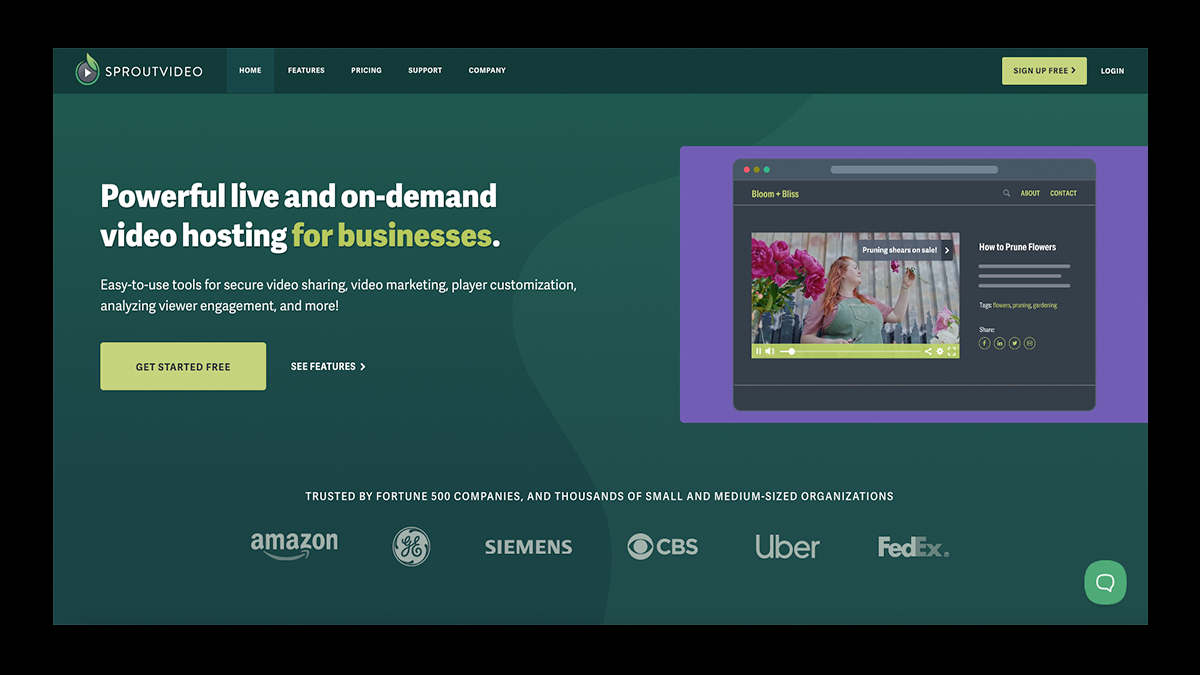
SproutVideo is another great alternative to YouTube that's designed for businesses that want complete control over their video content and how it integrates with their marketing efforts.
The platform allows users to create and customize video players tailored to their website’s design, ensuring a seamless aesthetic that enhances rather than disrupts the user experience.
Beyond hosting, SproutVideo provides valuable marketing tools, including in-video lead-capture forms, enabling creators to collect viewer information directly and sync it with popular CRM platforms such as HubSpot, MailChimp, and Zapier.
With 4K UltraHD playback, geotracking, advanced analytics, and custom post-video CTAs, SproutVideo helps businesses optimize engagement and track performance effectively.
For those with a strong focus on data-driven marketing, SproutVideo offers a robust and flexible platform that makes video a cornerstone of their digital strategy.
✅ Pros
- 4K UltraHD playback for exceptional video quality
- Customizable video players tailored to fit your website’s design
- In-video lead capture forms are integrated with popular CRMs
- Geotracking and advanced analytics for detailed performance insights
- Custom CTAs after videos to drive viewer actions
❌ Cons
- Complexity may require a learning curve for new users
- Additional costs for bandwidth usage beyond 500 GB per month
- Best suited for businesses with a strong marketing focus and technical know-how
11. PeerTube
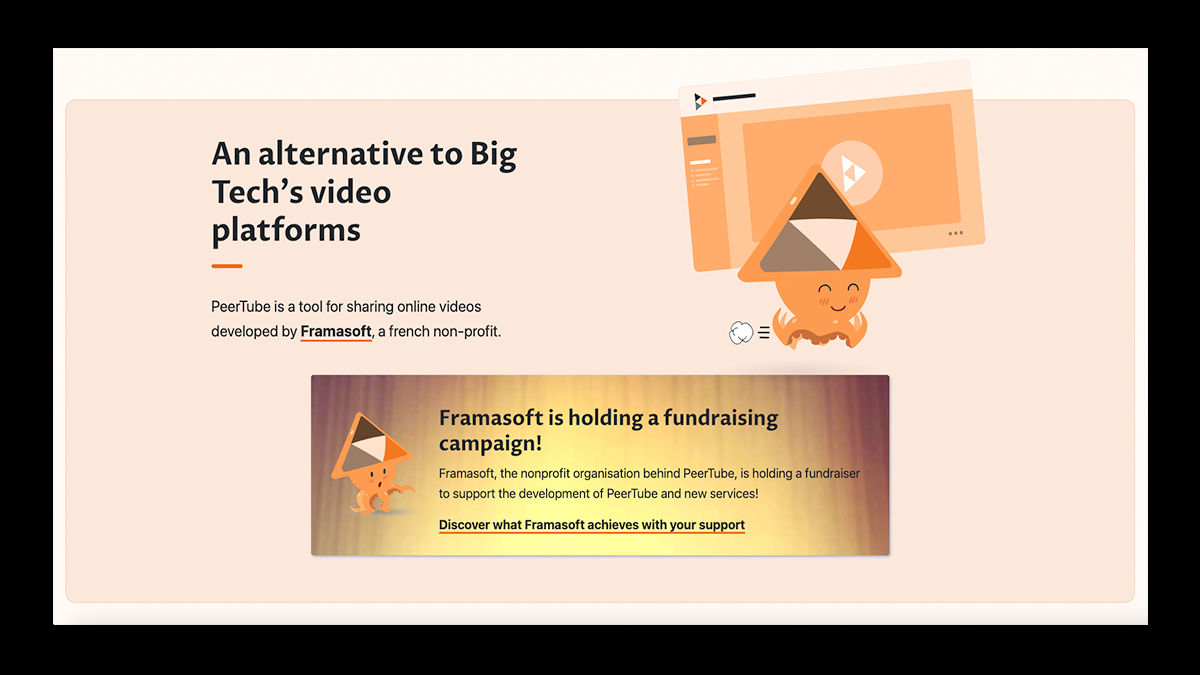
Founded in 2018 by the non-profit Framasoft, PeerTube is decentralized, meaning it operates through a network of independently managed servers, or "instances," rather than a single centralized system.
This structure allows users to create and host their own video-sharing platforms with custom guidelines, moderation policies, and community focus.
PeerTube leverages peer-to-peer (P2P) technology to distribute bandwidth, reducing hosting costs and enhancing scalability. This makes it especially appealing for non-commercial use.
As an open-source platform, it provides complete transparency and allows developers to adapt the software to their needs.
PeerTube is also ad-free, privacy-conscious, and offers robust customization options, making it a great alternative for those seeking to bypass the opaque algorithms and restrictive policies of traditional platforms.
✅ Pros
- Strong focus on user autonomy, enabling creators to build their own video platforms
- Decentralized architecture reduces costs and enhances scalability
- Completely ad-free, ensuring a clean, uninterrupted viewing experience
- Open-source software promotes transparency and adaptability
- Customizable for niche communities, fostering unique and diverse content ecosystems
- Promotes free speech with minimal restrictions
❌ Cons
- Smaller audience and discoverability compared to mainstream platforms like YouTube
- Requires technical expertise to set up and manage a personal instance
- Limited monetization options compared to commercial platforms
- A fragmented ecosystem may lead to inconsistent user experiences across instances
12. BitChute
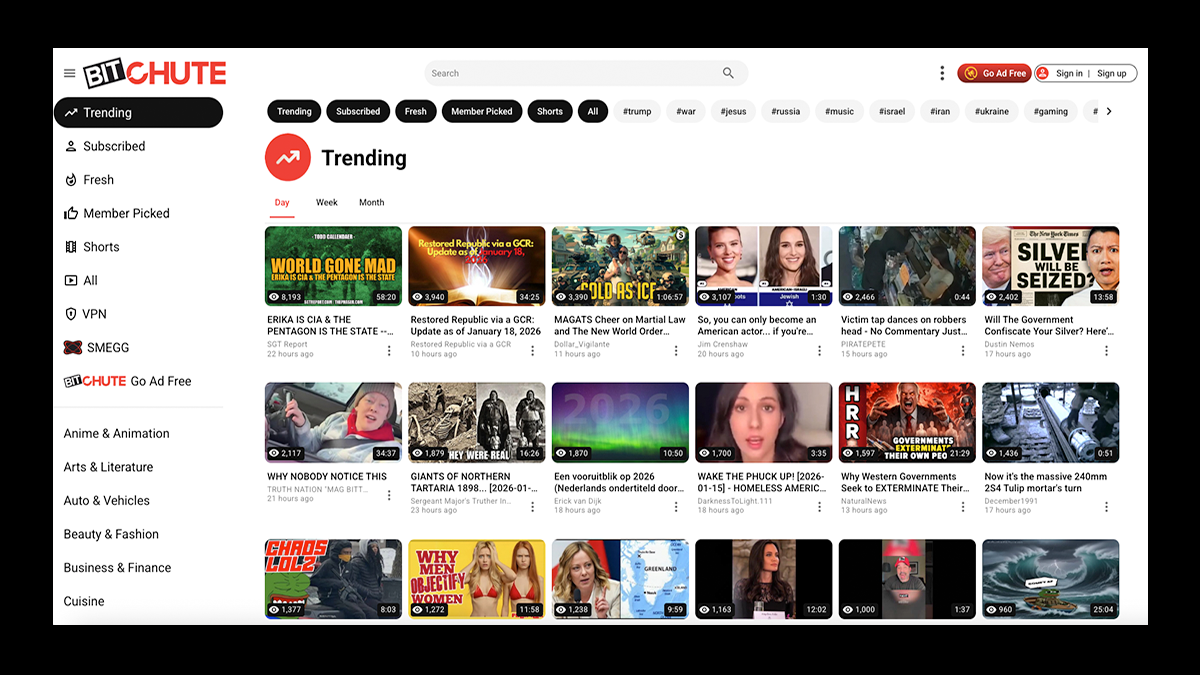
Similar to PeerTube, BitChute is an independent video-sharing platform known for its emphasis on free speech and minimal content restrictions.
The platform uses peer-to-peer (P2P) technology to host and share videos, giving creators greater control over their content. This has made it a popular alternative for those seeking fewer restrictions that are typically imposed by mainstream platforms.
With an ad-free model and a focus on user autonomy, BitChute provides an open space for content that may not align with the policies of other platforms.
However, it is worth noting that BitChute has a smaller, more politically focused audience compared to other platforms, so if you're trying to attract a broader audience, this might not be the right platform for you.
✅ Pros
- Strong emphasis on content freedom and minimal censorship
- Its Ad-free viewing experience enhances content focus
- Peer-to-peer hosting reduces dependence on centralized servers
- Flexible monetization options for creators
- Content can be viewed anonymously, enhancing privacy
❌ Cons
- Smaller user base limits reach and visibility compared to platforms like YouTube
- Basic recommendation tools make content discovery challenging
- Association with controversial and fringe content may deter some creators and viewers
- Lacks advanced analytics and promotional tools for content creators
13. Wistia
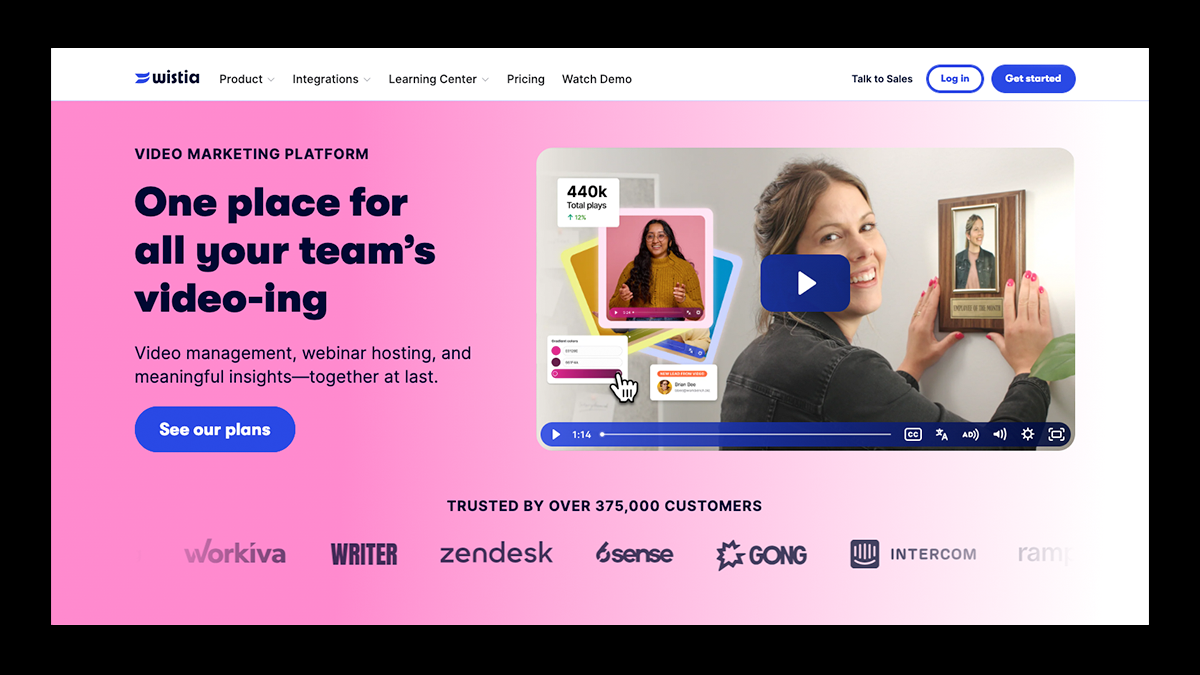
Wistia is a video hosting platform tailored specifically for businesses and marketers looking to leverage video for lead generation, customer education, and brand building.
Unlike more public platforms, Wistia focuses on high-quality, customizable video experiences designed to be embedded on company websites or landing pages.
With its advanced analytics, Wistia can track viewer behavior, including engagement metrics and retention, enabling data-driven decision-making.
The platform also offers in-video lead-capture forms that sync with marketing tools such as HubSpot and Salesforce, ensuring a seamless workflow from video to CRM.
✅ Pros
- Ad-free, professional hosting tailored for branding
- Powerful analytics to refine marketing strategies
- Customizable embeds enhance website integration
- Strong CRM and marketing tool integrations streamline workflows
- Supports high-quality 4K video and large file sizes
❌ Cons
- Pricing starts at $99/month, with additional costs for extra videos
- No built-in audience, requiring businesses to generate their own traffic
- Focused primarily on business use, limiting versatility for other creators
Turn Your Merch Into Shoppable Content With Fourthwall!
Fourthwall is the ultimate platform for video creators looking to host, monetize, and elevate their video content.
Designed with YouTube, Twitch, and TikTok creators in mind, Fourthwall offers seamless integration, allowing you to share your videos and content directly on your Fourthwall site.
With shoppable integration features like YouTube Merch Shelf, Twitch Gifting, and TikTok Shop, you can easily turn your content into a revenue-generating hub, offering your audience a seamless way to purchase merchandise and support your brand directly within their favorite platforms.
Whether you’re sharing videos, hosting live streams, or posting viral short-form content, Fourthwall empowers you to sell digital and physical merchandise, offer exclusive memberships, and deliver fan experiences, all while maintaining complete control of your brand.
So, if you're ready to take your content to the next level, then sign up with Fourthwall today!
FAQ: YouTube Alternatives
Which App Is Best Instead of YouTube?
The best YouTube alternative varies depending on your specific goals and audience.
Vimeo is an excellent choice for creators focused on high-quality, polished videos, often used by professionals and businesses for its advanced customization and privacy features.
Twitch, on the other hand, is ideal for live streaming and real-time audience engagement, making it a favorite among gamers and event hosts.
For short, viral content, TikTok offers unparalleled reach with its algorithm-driven discovery, while Dailymotion provides a more relaxed platform for hosting a mix of user-generated and professional content.
However, creators seeking greater control and less censorship might prefer Odysee or PeerTube, which focus on decentralization and user autonomy.
Ultimately, the right platform depends on the type of content you create and how you want to connect with your audience.
What Is YouTube's Biggest Competitor?
TikTok has emerged as YouTube's biggest competitor, particularly appealing to younger audiences like Gen Z and millennials, who gravitate toward short, engaging, and easily consumable content.
The platform’s emphasis on creativity, quick editing tools, and trends has shifted how people engage with video content, favoring dynamic, short-form storytelling over traditional long-form videos.
In addition, TikTok’s integration of shopping features like TikTok Shop and monetization options such as the Creator Rewards Program provides creators with new ways to earn revenue, making it an exceptional rival in the ever-evolving video content landscape.
What Is the Largest Video Sharing Site?
YouTube is the world’s largest video-sharing platform, boasting over 3 billion monthly active users and hosting billions of hours of content across virtually every genre imaginable.
The platform's reach spans more than 100 countries and supports over 80 languages, making it truly global.
Moreover, YouTube's vast library caters to diverse audiences, offering everything from educational tutorials and entertainment to news and live streaming.
With powerful monetization tools like AdSense, memberships, and merch integrations, YouTube remains the go-to platform for creators and businesses seeking to reach and engage massive audiences.
Is There a YouTube Alternative With Less Censorship?
Yes, several YouTube alternative platforms are known for lighter moderation and fewer content restrictions.
Platforms like Odysee and Rumble are popular among content creators who want more freedom when uploading and sharing videos without the constant threat of demonetization.
These video platforms are especially appealing for political commentary, long-form discussions, and niche content that may struggle on more tightly controlled platforms like YouTube.
What Is the Best Video Hosting Platform for Businesses and Brands?
For businesses focused on hosting quality videos rather than chasing views, platforms like Vimeo and Wistia are top-tier alternatives.
Both are built for professional video hosting, offering advanced analytics, customizable players, and brand-friendly tools that make it easy to upload and distribute polished content.
Unlike platforms like YouTube, these alternatives prioritize control, data ownership, and a clean viewing experience over algorithm-driven video streaming.
Matt Keyser is a writer at Fourthwall who lives at the intersection of social media and Creator culture. With 4+ years of experience covering industry trends, his work focuses on helping Creators and brands understand how to turn their passion into a thriving business while maintaining a constant pulse on the latest eCommerce and social media trends.


You might also like

How to Create and Sell Print on Demand Journals and Notebooks

9 Gumroad Alternatives for Digital Creators in 2026

10 Best Stan Store Alternatives for Creators in 2026

9 Best Patreon Alternatives for Creators in 2026

20 Sustainable Swag Ideas for Events and Giveaways

8 Best Gelato Alternatives for Print-on-Demand in 2026

TikTok Affiliate Marketing: How It Works and How to Make Money

9 Best Redbubble Alternatives for Print-on-Demand Creators in 2026

The Top Celebrity Clothing Brands and Why They Succeeded

Keep up with the latest from Fourthwall
New features, product updates, trend breakdowns, and creator stories — straight to your inbox.