10 Etsy Alternatives for Building an Online Store in 2026


This roundup breaks down 10 Etsy alternatives for 2026, with Fourthwall highlighted for sellers wanting a fully-branded storefront combining print-on-demand, digital products, and memberships, alongside marketplace options like Amazon Handmade, eBay, and Society6, plus indie-friendly picks like Storenvy and iCraftGifts. Each platform is compared on fees, product restrictions, and brand control to help sellers escape Etsy's rising costs, market saturation, and limited customization.
Over the past two decades, Etsy has provided artists and small business owners with a global marketplace to sell handmade goods, vintage finds, and creative products you won’t typically see in big retail stores.
The platform makes it easy to reach buyers almost anywhere, which is a big reason it became a go-to starting point for so many creators.
At the same time, rising fees, greater competition, and limited control over storefronts have pushed more sellers to look elsewhere for greater flexibility and pricing.
In this guide, we’ll break down what makes Etsy so popular and walk through the top alternatives that stand out for usability, customization, and growth potential.
Etsy Alternatives at a Glance
Why Consider Alternatives to Etsy?
There’s no doubt that Etsy does have some good services, including on-demand printing, shipping options, and, of course, the name recognition factor.
However, it’s important to be aware of the potential downsides or limitations of using Etsy that may affect your business. Here are five reasons why you might want to consider an Etsy alternative:
- High Fees That Add Up Quickly: Etsy charges a 6.5% transaction fee, $0.20 per listing, plus payment processing fees, with optional costs like ads and Etsy Plus layered on top. Individually, these fees seem manageable, but they can significantly cut into your profits over time.
- Strict Product Limitations: Etsy's rules on what can be sold can be pretty strict; this includes restrictions on reselling, certain digital products, and items that don’t meet handmade or vintage standards.
- Marketplace is Highly Saturated: There are a ton of sellers on Etsy, so it’s hard to stand out, especially when you’re just starting out with no reviews. Getting noticed usually comes down to using the right keywords, picking a strong niche, and consistently performing well over time.
- Limited Store Customization: Etsy storefronts follow a standardized layout, which can make it hard to fully express your brand or create a unique shopping experience for your customers.
- Lack of Direct Customer Ownership: CustomerEtsy works as a middleman between you and your customers, which means you don’t have full control over your audience or direct access to their data. This can make it harder to build long-term connections and remarket effectively outside the platform.
10 Etsy Alternatives to Consider in 2026
1. Fourthwall
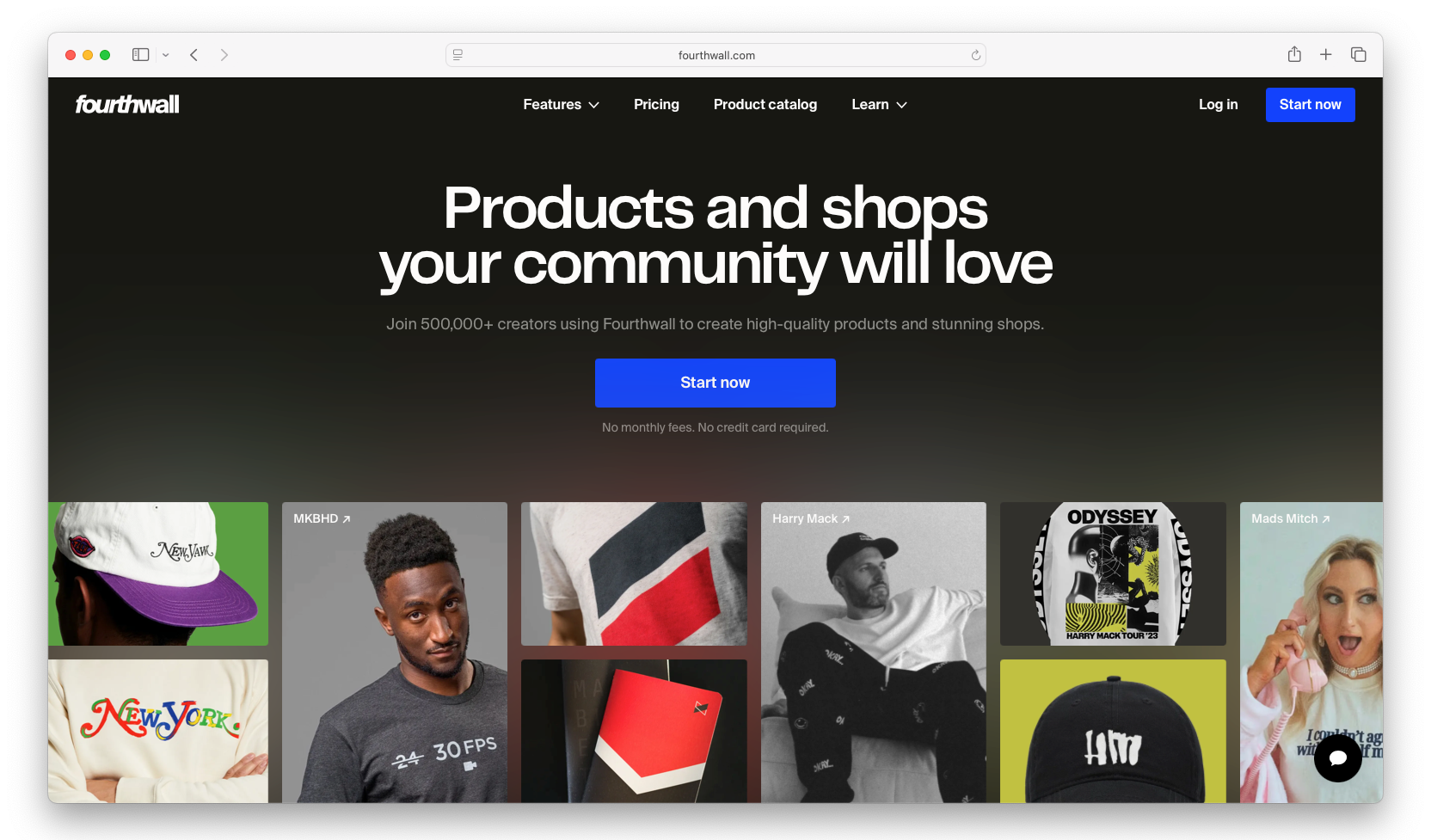
Fourthwall is an all-in-one eCommerce platform for sellers looking to run a fully-branded online store without relying on a shared marketplace.
It combines print-on-demand products, digital downloads, memberships, and even handmade items into a single storefront, giving you multiple ways to monetize your audience.
With built-in tools for email marketing, analytics, and community engagement, Fourthwall helps you avoid juggling multiple services, making everything operational under a single dashboard.
If you're looking to build an online store that lets you control your brand and community, Fourthwall offers a more flexible, scalable solution.
Key Features That Make Fourthwall Stand Out
- Fully-Branded Storefront: Create your own online store where you control how everything looks and works. You’re not stuck competing with other sellers on a marketplace.
- Extensive Print-on-Demand Catalog: Choose from hundreds of products like clothing, accessories, and home items to sell. You’ve got a lot of options to build your brand.
- Multiple Printing Methods: Use different printing styles to get the look and quality you want for your products. It gives you more creative control.
- No Upfront Inventory Costs: Products are only made after someone buys them. You don’t have to spend money up front or worry about leftover stock.
- Memberships and Fan Communities: Set up paid memberships with perks like exclusive content or discounted merch.
- Digital Product Sales: Sell things like videos, courses, music, or eBooks directly from your site. Everything gets delivered automatically.
- Direct Fan Payments and Donations: Let fans send tips or support you directly. It’s an easy way to make money from casual followers.
- Native Social Commerce Integrations: Connect your store to platforms like YouTube, TikTok, Instagram, and Twitch so you can sell right where your audience is.
- Merch Drops and Limited Releases: Launch limited-time products to create hype and urgency. This can help boost sales during launches.
- Advanced Analytics and Insights: Track your sales and see what your audience is buying. Helps you make smarter decisions.
- Built-In Email and Audience Tools: Collect emails and use tools like Klaviyo and Mailchimp to promote your products and keep customers coming back.
- Global Fulfillment Network: Orders are made and shipped worldwide, so you can sell to customers almost anywhere without handling logistics yourself.
Pricing
Free Plan: $0/month
- 0% fee on all physical merch sales
- 5% transaction fee on digital products and membership sales
- Launch your own creator website and storefront
- Product catalog of 390+ items, including apparel, accessories
- Full access to the storefront builder and product customization tools
- Accept fan donations and tips
- Integrations with platforms like YouTube, Twitch, and TikTok
- Fulfillment, shipping, and customer support are handled for you
Pro Plan: $19/month or $180/year
Everything in the Free Plan, plus:
- 5% fee on membership sales
- Free custom .store domain for your website
- $10 monthly product sample credit for testing merch
- Priority24/7 customer support
- Advanced analytics and reporting tools
- Unlimited team members with store access
2. Amazon Handmade
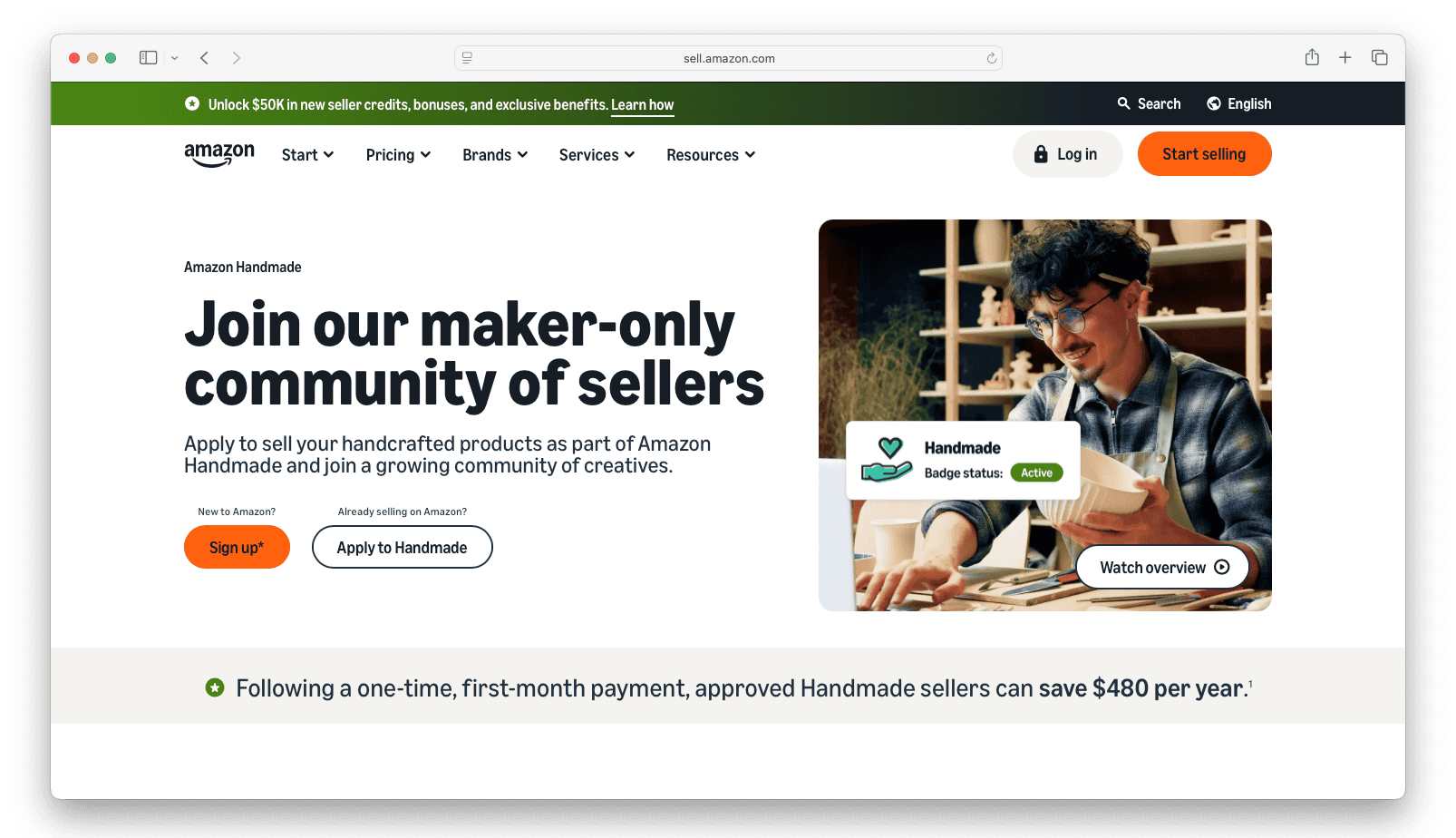
Amazon Handmade is a curated marketplace within Amazon’s platform that’s designed for sellers looking to offer handcrafted products.
The platform provides access to Amazon’s global customer base along with built-in tools for managing listings, orders, and fulfillment.
Approved sellers can also use services like Fulfillment by Amazon to handle storage, shipping, and customer support, helping streamline day-to-day operations.
Key Features That Make Amazon Handmade Stand Out
- Massive Built-In Customer Base: Gain access to millions of Amazon shoppers worldwide, giving your products significantly more visibility than most niche marketplaces.
- No Monthly Fee After Approval: The standard $39.99/month Professional seller fee is waived for Handmade sellers, reducing upfront costs once you’re accepted.
- Fulfillment by Amazon (FBA): Let Amazon handle storing your products, packing orders, shipping them out, and dealing with customers for you.
- Strict Handmade Verification Process: You have to apply and get approved to sell, proving your products are actually handmade. This helps keep the quality of the marketplace high.
- Amazon Seller Central Dashboard: Manage listings, orders, and performance through Amazon’s backend system, which includes analytics and operational tools.
- High Level of Buyer Trust: Amazon’s reputation and customer protection policies can increase buyer confidence and improve conversion rates.
- Maker Profiles for Brand Storytelling: Showcase your creative process and brand story to help customers connect with your products on a deeper level.
- Global Selling Opportunities: Expand into international Amazon marketplaces and reach customers across multiple regions with relative ease.
- Customer Support: Amazon handles customer questions, returns, and issues for you, so you don’t have to deal with support yourself.
- Integrated Search and Discovery System: Your products can show up in Amazon’s search results when people look for related items.
Pricing
Monthly Fee:
- $39.99/month, but it’s waived once you’re approved for Handmade
Referral Fee:
- 15% per sale (with at least $1 taken per item)
Other Possible Costs:
- Extra fees if you use Amazon’s fulfillment service for storage and shipping
- Optional costs for packaging or handling, depending on how you run your setup
3. Shopify
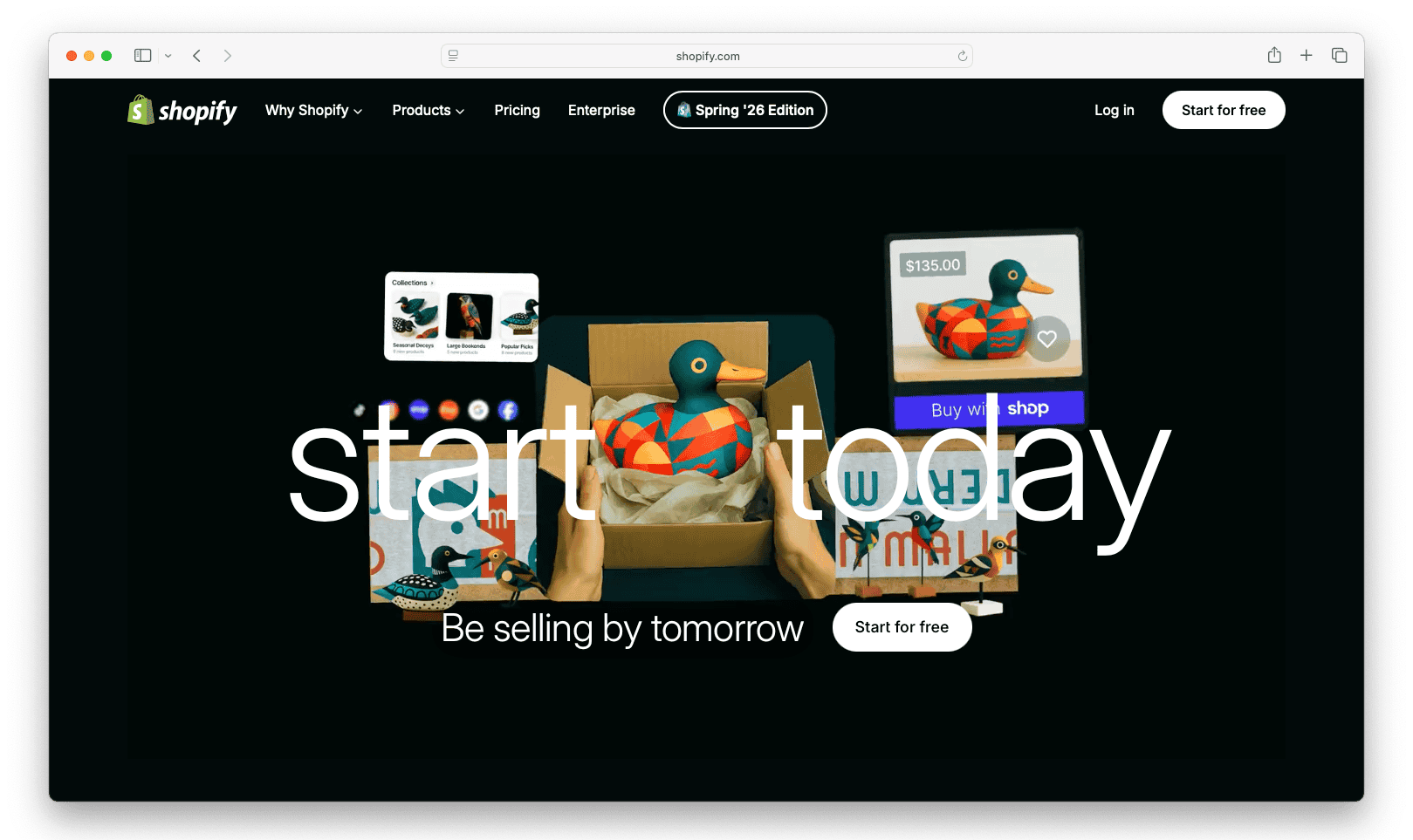
Shopify is a fully-hosted, cloud-based platform that allows sellers to build and run their own online shop.
It has tools for inventory management, analytics, multi-channel selling, and automation, along with customizable themes for designing a professional storefront.
While it doesn’t include built-in marketplace traffic, it offers plenty of flexibility to grow an independent eCommerce business with plenty of tools at your disposal.
Key Features That Make Shopify Stand Out
- Fully Hosted eCommerce Platform: Shopify handles all the technical stuff like hosting, security, and updates, so you can focus on running your store.
- Professional Storefront Themes: Pick from ready-made templates to create a clean, mobile-friendly website that matches your brand.
- Massive App Ecosystem: Add extra features using thousands of apps for things like marketing, shipping, and automation as your store grows.
- Multi-Channel Selling: Sell through your website, social media, or on marketplaces like Amazon and eBay.
- Shopify POS for In-Person Sales: Sell in person and online at the same time, with everything synced so your inventory stays updated.
- Advanced Product and Inventory Management: Manage a large number of products, variations, and collections without things getting messy.
- Global Selling with Shopify Markets: Sell to customers around the world with local pricing, currencies, and checkout experiences.
- Built-In Marketing Automation: Automatically send emails, recover abandoned carts, and organize your customers to boost sales.
- SEO and Blogging Capabilities: Improve your store’s visibility on search engines and run a blog to bring in more traffic.
- AI-Powered Tools (Shopify Magic & Sidekick): Use built-in AI to write product descriptions, track performance, and automate tasks.
Pricing
Basic Plan: ($29/month)
- Run a fully hosted online store with secure checkout
- Use built-in AI to help with product descriptions and store tasks
- Pay around 2.9% + $0.30 per sale in processing fees
- Get access to essential tools and basic analytics
Grow Plan: ($79/month)
Everything in the Basic plan, plus:
- Slightly lower fees at 2.7% + $0.30 per sale
- Add up to 5 team members
- Get major shipping discounts (up to 87%)
- Access extra tools to help grow your business
Advanced Plan: ($299/month)
Everything in the Grow plan, plus:
- Lower fees at 2.5% + $0.30 per sale
- Show real-time shipping rates from carriers
- Add up to 15 team members
- Use advanced reports and tools for selling globally
Shopify Plus: (Starting at $2,300/month)
Everything in the Advanced plan, plus:
- Customize your checkout experience
- Add unlimited team members
- Get powerful tools for wholesale and large-scale businesses
- Access priority 24/7 support and advanced in-person selling features
4. eBay
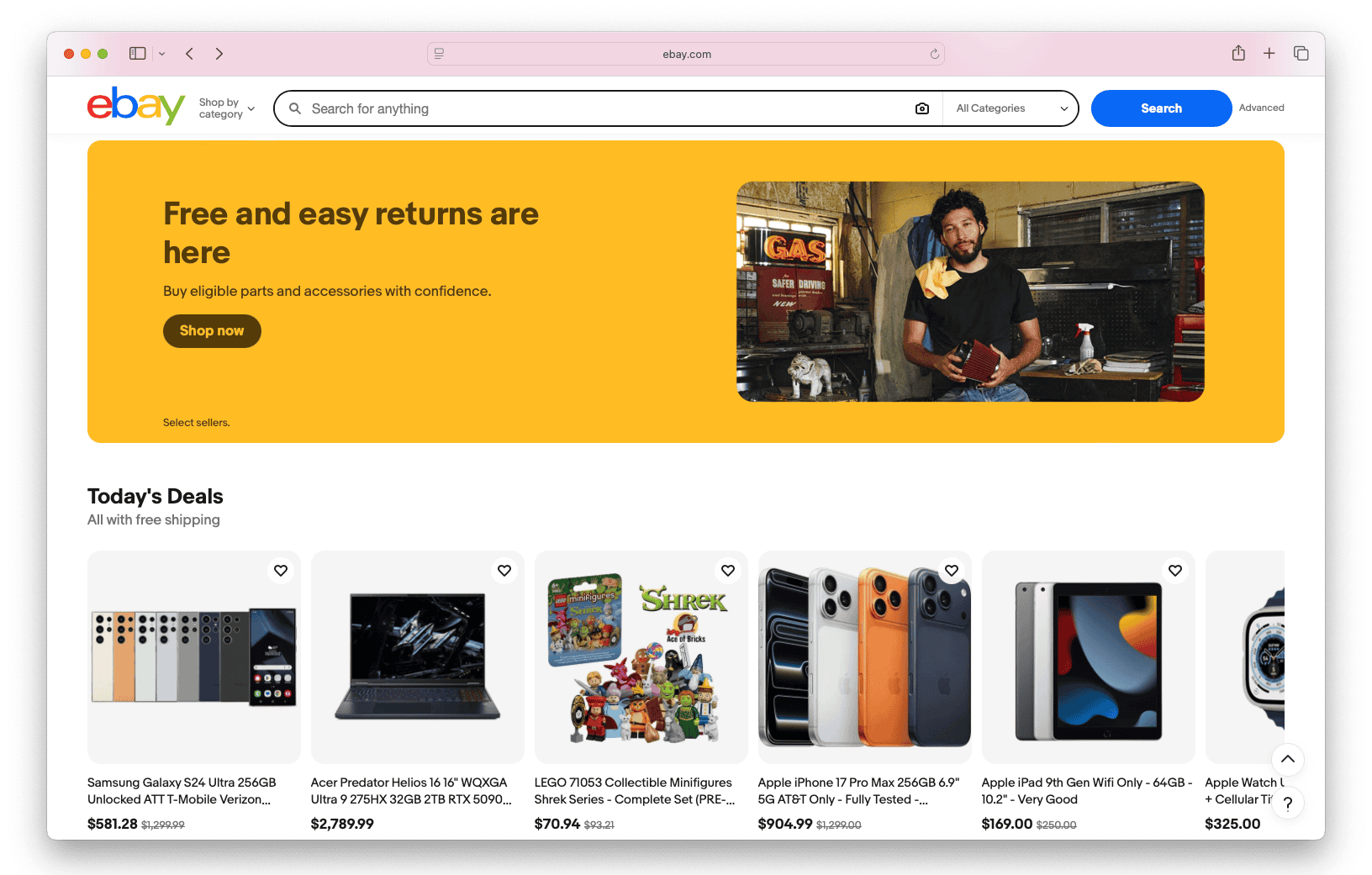
eBay is one of the longest-running online marketplaces to date, providing users with a flexible way to list and sell their products to a global audience without building their own website.
Sellers can choose between auction-style listings or fixed pricing, giving them more control over how items are positioned and sold.
With built-in traffic and a wide range of supported categories, it offers a straightforward path to reach buyers and start generating sales quickly.
Key Features That Make eBay Stand Out
- Global Marketplace: List and sell your products to millions of customers worldwide.
- Multiple Product Categories: You can sell almost anything, from new and used items to collectibles, electronics, and apparel.
- Auction and Fixed-Price Listings: You can either let people bid on your items or set a fixed price. It gives you more control over how you sell.
- Zero Insertion Fee Listings (Up to a Limit): List up to 250 items per month for free in many categories. It helps you get started without upfront costs.
- Optional eBay Store Subscription: Upgrade to a store if you want more branding options and higher listing limits.
- Built-In Traffic and Search Visibility: Your products can show up in eBay search results, making it easier for buyers to find you.
- Seller Tools and Performance Insights: Use built-in tools to track sales, manage inventory, and see what’s working.
- International Selling Capabilities: Sell to customers in different countries using built-in shipping options.
- Seller-Focused Marketplace Model: eBay focuses on helping sellers list and sell products instead of competing with them using its own inventory.
- Variety of Listing Enhancements: You can pay for extra features like promoted listings for better visibility and to boost your chances of making sales.
Pricing
Listing Fees:
- You can list up to 250 items per month for free (some categories excluded)
- After that, it’s about $0.35 per extra listing
Selling Fees:
- When an item sells, eBay takes a percentage of the total price
- There’s also a small fee added per order
Optional eBay Store Subscription:
- Starter plan costs about $4.95/month (annual) or $7.95 month-to-month
- Gives you more listings, basic branding tools, and lower listing costs
5. Big Cartel

Big Cartel is an eCommerce platform made for artists, creators, and small brands who just want to get a store up and running fast.
It skips the complicated features, so you don’t have to deal with a big learning curve. Plus, it connects easily with print-on-demand services like Printful and Printify, making it a solid option if you’re testing products or running a small shop.
Overall, it’s great for getting started with a clean and low-cost setup, but you might outgrow it as your business gets bigger.
Key Features That Make Big Cartel Stand Out
- Free Plan for Small Stores: Start selling for free with up to 5 products. Perfect if you’re just testing ideas.
- Simple and Beginner-Friendly Setup: Set up your store in minutes without needing any tech skills.
- No Platform Fees: Big Cartel doesn’t take a cut of your sales. You only pay standard fees through Stripe or PayPal.
- Print-on-Demand Integrations: Connect with Printful and Printify to automatically handle product creation and shipping.
- Clean, Mobile-Ready Storefronts: Use basic themes that look good on phones and keep the focus on your products.
- Basic Inventory and Product Management: Keep track of your products and stock with an easy-to-use dashboard.
- Custom Domain Support: Use your own website name to make your store look more professional.
- Discount Codes and Promotions: Create simple discounts to help boost sales.
- Essential SEO Features: Adjust things like titles and descriptions so your store can show up in search results.
- Lightweight Analytics: See basic stats like visits, product views, and sales to understand how your store is performing.
Pricing
Free Plan: ($0/month)
- Sell up to 5 products
- No platform fees
- Customize your store and view basic stats
- Use your own domain name
Platinum Plan: ($15/month)
- Sell up to 50 products
- Track inventory and create discount codes
- Connect with Google Analytics
- Edit your store’s theme for more customization
Diamond Plan: ($30/month)
- Sell up to 500 products
- Use bulk editing to manage products faster
- Get more advanced tools to help grow your store
6. Society6

Society6 is a print-on-demand marketplace where artists can upload their designs and sell them on things like prints, home decor, clothing, and accessories.
It provides a super hands-off way to sell physical products by taking care of production and shipping for you, allowing artists to focus on their products and market them wherever they can.
The trade-off is that you don’t have much control over your branding or pricing, and you only earn a percentage of each sale, which can mean lower profits in the long-run.
Key Features That Make Society6 Stand Out
- Free to Start: Upload up to 10 designs at no cost, making it accessible for artists looking to test the waters before committing to a paid plan.
- Print-on-Demand Marketplace Model: Upload your designs and have them automatically applied to a variety of products, with production handled only after a sale is made.
- No Inventory or Fulfillment Management: Society6 takes care of printing, packaging, and shipping, removing the need for storage or logistics management.
- Wide Product Range: Sell your artwork on items like art prints, canvases, home decor, apparel, and accessories, allowing you to diversify your offerings.
- Built-In Audience and Marketplace Traffic: Gain exposure through Society6’s existing customer base, making it easier to get discovered without external marketing.
- Artist Exposure and Community: Connect with other artists, join promotions, and get your work featured on the platform. It’s a good way to get more eyes on your designs.
- Automated Product Listings: Once designs are uploaded, products are automatically created and listed, saving time on manual setup.
- Royalty-Based Earnings Model: Earn a percentage of each sale while Society6 handles production costs and platform operations.
- Global Shipping and Distribution: Reach customers worldwide with built-in international fulfillment and shipping services.
- Simple Store Setup Process: Create an account, upload designs, and start selling quickly without needing technical skills or a separate website.
Pricing
Free Plan: ($0/month)
- Upload up to 10 designs
- Sell through Society6’s marketplace and product options
- No upfront costs to make or ship products
Paid Plans: (After 10 Designs)
- Need a subscription to upload more designs
- You earn a percentage of each sale (royalties)
- Still no need to pay for inventory or shipping upfront
7. Mercari

Mercari is a general resale marketplace where you can quickly buy and sell things like clothes, electronics, collectibles, and home items.
That platform is pretty easy to use, with helpful features like automatic price drops and the option to use your earnings to buy other items on the app.
While it’s not really built for growing a brand, it’s great if you just want to sell stuff fast without a lot of effort.
Key Features That Make Mercari Stand Out
- Simple Item Listing: List your items in just a few steps by uploading your photos, adding product details, and setting your prices without any hassle.
- Wide Product Catalog: Sell just about anything, from clothes and electronics to collectibles, antiques, sports gear, and tools.
- Smart Pricing Tool: Your price can automatically drop over time to help your item get more views and sell faster.
- Mobile-First Selling Experience: The app is built for your phone, so you can manage listings, messages, and sales anytime.
- Built-In Shipping Options: Choose whether you or the buyer pays for shipping, with easy labels and tracking included.
- Use Sales Balance In-App: Spend the money you earn directly in the app without needing to transfer it first.
- Local Buying and Selling Options: Sell to people nearby and meet up in person, which can save on shipping.
- Built-In Buyer Protection System: The platform helps protect both buyers and sellers to keep transactions safe.
- Global and Cross-Border Listings: Browse and sell items internationally, including access to markets like Japan.
- Algorithm-Based Discovery Feed: Your listings show up in a feed based on what people are browsing, helping more buyers find your items.
Pricing
Free to Join: ($0/month)
- 10% flat fee on the item price
- 3.6% Buyer Protection fee (added at checkout)
- Sellers can choose to pay or pass the cost to the buyer
- Discounted labels available through the platform
- Free direct deposit (ACH)
- Instant Pay available for $3
8. eCrater
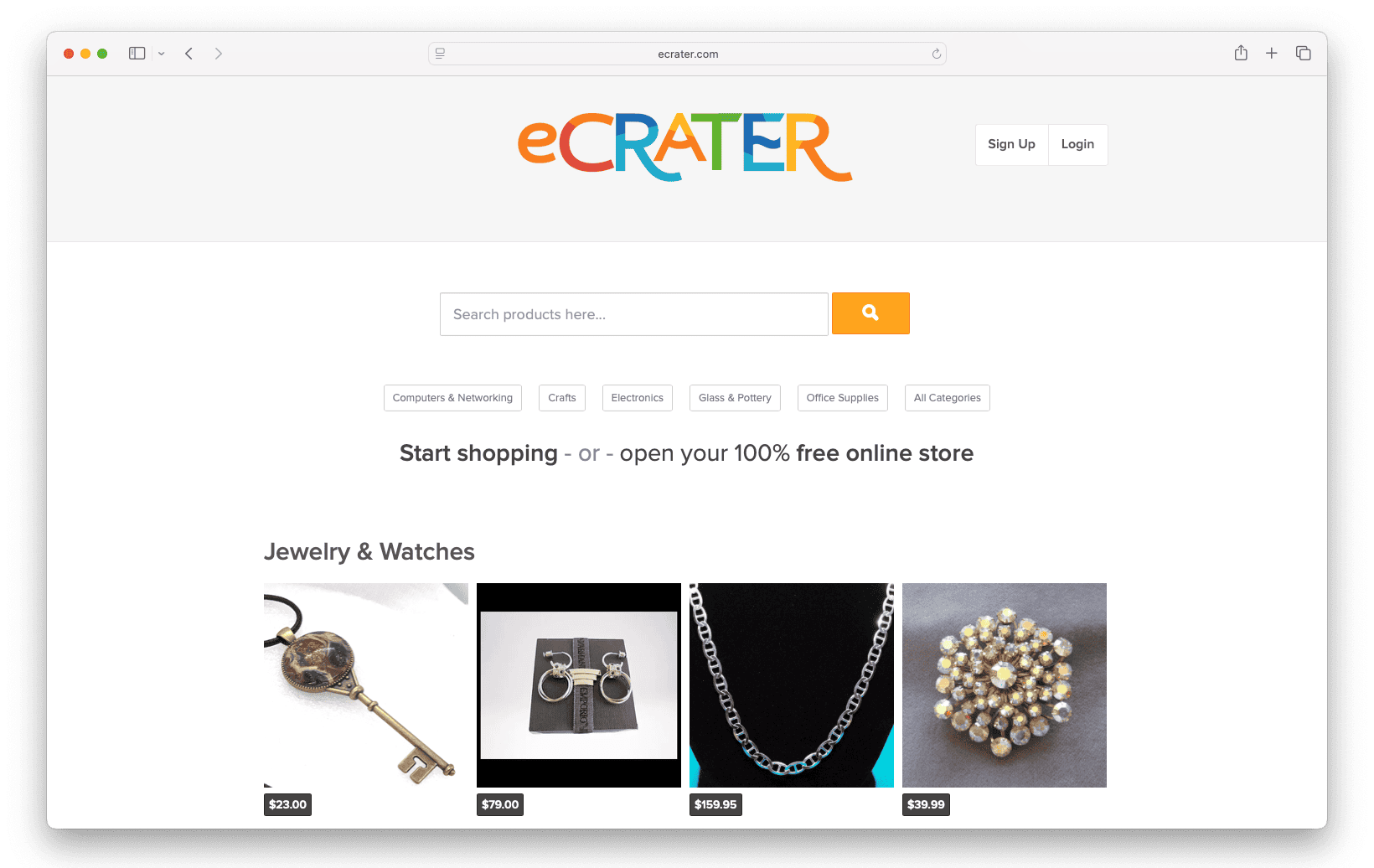
eCrater is a free, web-based platform where you can build your own online store and also list your products in a shared marketplace, giving you extra exposure without extra effort.
It works a bit like eBay or Etsy, but with lower costs, since you don’t pay listing fees and only get charged a small commission (around 2.9%) on marketplace sales.
eCrater also includes basic tools like customizable store templates, inventory management, and even the ability to import listings, with payments usually handled through PayPal.
Key Features That Make eCrater Stand Out
- Free Store Setup and Product Listings: Set up your store and list products without paying anything upfront.
- Dual Storefront + Marketplace Model: Sell through your own store while also showing up in eCrater’s marketplace. You get your own space plus extra exposure.
- Basic Store Customization: Add your logo, banners, and categories to make your store look like your brand.
- Flexible Product Categories: Sell pretty much anything, like clothes, cameras, office supplies, auto accessories, and games.
- PayPal Payment Integration: Payments go through PayPal, so transactions are secure and easy to manage.
- Global Marketplace Access: Sell to customers worldwide, not just locally.
- Product Reviews and Feedback System: Customers can leave reviews, which can build credibility for your store.
- Custom Shipping Options: Set your own shipping prices based on flat rates or an item’s weight.
- Low-Cost Selling Structure: You only pay a small fee when something sells, so you keep more of your profits compared to platforms with higher fees.
Pricing
Store Setup: Free
- No listing fees; $0 per product
- A small commission is applied only when an item sells
- Payments handled through PayPal (standard PayPal fees apply)
9. Storenvy
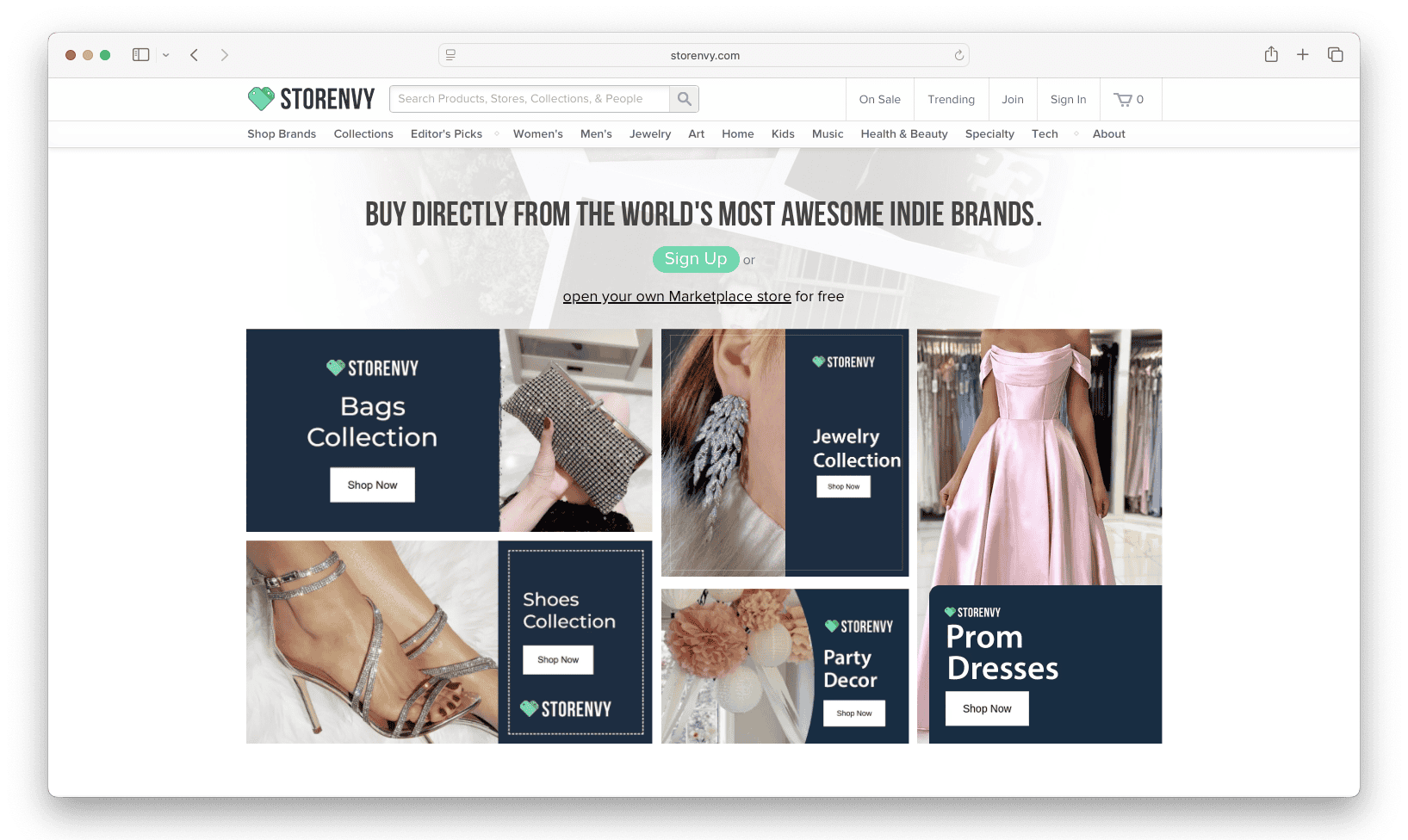
Storenvy is an eCommerce platform made for indie brands, artists, and small creators who want an easy way to start selling online.
You can sell products on your own storefront and, if your items get approved, they can also show up in Storenvy’s marketplace, where more people can find them.
It’s not packed with advanced features, but it’s a solid starting point if you want a low-cost, no-stress way to get into eCommerce.
Key Features That Make Storenvy Stand Out
- Dual Storefront + Marketplace: Sell from your own store and list your products in Storenvy’s marketplace to reach more customers.
- No Commission on Storefront Sales: You keep all the money from sales made on your own store. Fees only apply if you sell through the marketplace.
- Simple Store Setup Process: Set up your shop, add products, and start selling right away.
- Marketplace Discovery Features: Shoppers can follow your store and save products, helping more people find your items over time.
- Support for Indie and Niche Products: Works especially well for handmade items, small brands, and unique products.
- Basic Payment Integrations: Get paid through Stripe and PayPal.
- Optional Paid Plans for More Features: Upgrade if you want extras like a custom domain and more store tools.
- Lightweight Product Management: Easily add and organize products with simple inventory tracking.
- Community-Driven Marketplace Experience: The platform is built around discovery, helping smaller creators connect with people who are actually interested in their products.
Pricing
Free Plan: ($0/month)
- Build a basic online store
- List products in the marketplace
- Pay a 10% fee on marketplace sales
- Keep 100% of sales from your own store
Plus Plan: ($7.99/month)
- Use your own custom domain
- Access to email marketing tools
Pro Plan: ($19.99/month)
- Unlock better inventory management tools
- Access to premium themes
Ultimate Plan: ($39.99/month)
- Detailed analytics
- Advanced branding tools
- Priority customer support
10. iCraftGifts

iCraftGifts is a niche marketplace for those who want to sell real, handcrafted items without competing with mass-produced stuff.
Every seller has to be approved first to make sure their products meet that platform’s quality standards, and once you’re in, you keep all the money you earn.
You also get your own storefront and can take custom orders, making it easier to connect directly with buyers who are specifically looking for handmade goods.
Key Features That Make iCraftGifts Stand Out
- Handmade-Only Marketplace: Everything sold has to be handmade. No mass-produced items or reselling allowed, so quality stays high.
- Dedicated Seller Storefronts: You get your own store with a unique link, making it easier to build your brand.
- No Listing or Transaction Fees: List as many products as you want and keep all your earnings. No extra fees per sale.
- Custom Orders and Commissions: Take personalized requests from customers, so you can create made-to-order items.
- Product Review and Approval Process: Listings are checked before going live to make sure they meet quality standards.
- Built-In Promotion and Marketing: Products can be featured in emails, blog posts, and social media for more exposure.
- Community Features and Forums: Connect with other creators through forums and events, making it easier to learn and collaborate.
Pricing
One-Time Registration Fee: $25 (non-refundable)
- No listing fees
- No transaction or commission fees
- Sellers keep 100% of their revenue
Subscription Plans:
- $15/month (monthly plan)
- $12/month (6-month plan)
- $10/month (12-month plan)
Discover Why Creators Choose Fourthwall
If you’re comparing Etsy alternatives and want a platform built for creators, Fourthwall offers more flexibility and control.
With Fourthwall, you can launch a fully branded website where you’re able to design and sell custom products like apparel, jewelry, bags, wall art, and home decor, alongside digital downloads and print-on-demand items.
You can also offer memberships and exclusive content, bringing your store and community together in one place.
Fourthwall helps you go beyond simple product listings. With built-in marketing tools, detailed analytics, and personal touches like video thank-you messages, it’s easier to build lasting relationships with your supporters.
For creators who want to grow a brand rather than compete in a crowded marketplace, Fourthwall is one of the strongest alternatives to Etsy available today.
FAQ: Etsy Alternatives
What are the best Etsy alternatives?
Fourthwall and Shopify are great if you want full control over your store, branding, and customer experience.
On the other hand, Amazon Handmade and Storenvy focus more on built-in traffic to help people discover your products.
The right choice really depends on whether you want fast exposure or you’re trying to build your own brand long term.
Why are sellers leaving Etsy?
Many sellers are moving away from Etsy due to rising fees, tough competition, and stricter rules than before. On top of that, it’s getting a lot harder to stand out, especially if you’re new and don’t have reviews yet.
For a lot of sellers, switching platforms gives them more control and a better chance to grow.
Is Shopify better than Etsy for selling handmade goods?
If you’re selling handmade products, Etsy is often easier to start with because shoppers are already there specifically looking for handmade items.
Shopify is better if you want to turn your handmade shop into a real brand. You’ll have full control over how your products are presented and priced, but you’ll need to drive your own traffic through social media, content, or ads.
What is the cheapest alternative to Etsy?
Platforms like Storenvy let you start for free and only charge fees when you make sales through their marketplace, which keeps upfront costs low.
Fourthwall, on the other hand, also has a free plan with no platform fees on physical products like jewelry, apparel, wall art, and accessories. It’s a solid option for any brand looking to profit off selling quality merch.
Matt Keyser is a writer at Fourthwall who lives at the intersection of social media and Creator culture. With 4+ years of experience covering industry trends, his work focuses on helping Creators and brands understand how to turn their passion into a thriving business while maintaining a constant pulse on the latest eCommerce and social media trends.