
What is Print-on-Demand?
Quick Answers About Custom-Printed Merch in 2026 (UPDATED)


Print-on-demand isn’t new, but in 2026, it’s officially grown up.
At its core, print-on-demand (POD) is a production model where products are only made after someone buys them.
No bulk orders. No boxes of unsold merch in your garage. No upfront inventory risk.
When a customer clicks “buy,” the order goes straight to a production partner, the item gets printed or manufactured, and it ships out—simple as that.
This model has become the backbone of modern creator commerce because it lets brands move fast, test ideas instantly, and scale without burning cash.
So… What Exactly Is a Print Shop?
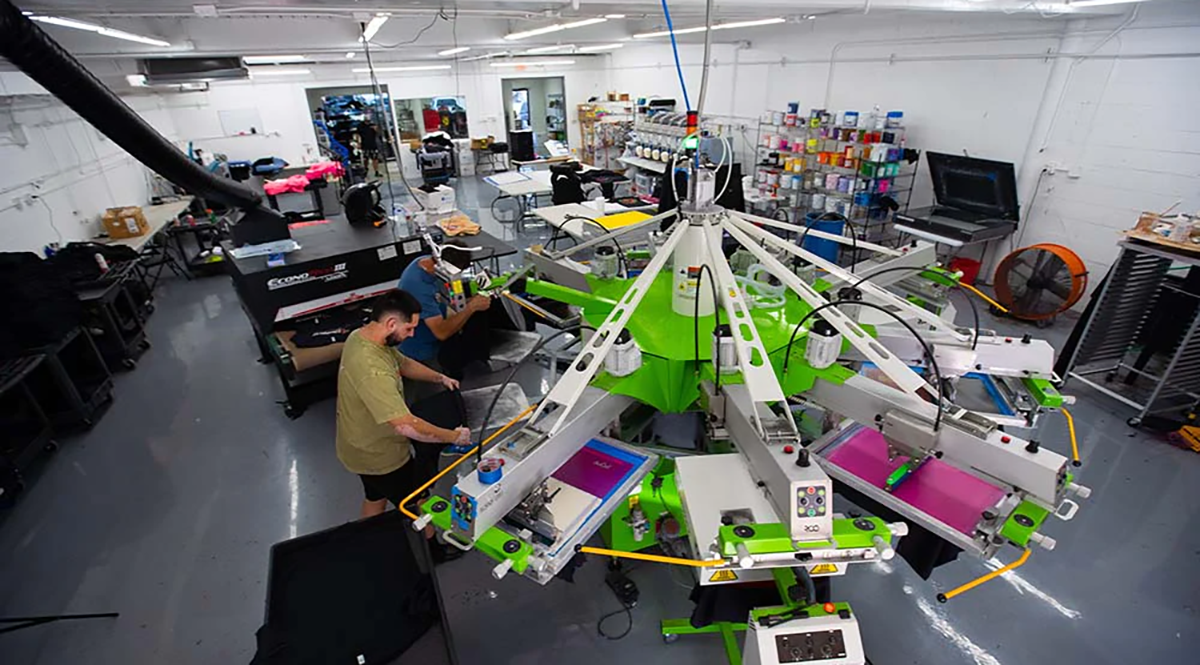
A print shop is the production partner that actually brings your product to life. These facilities handle everything from printing and stitching to packaging and shipping.
In 2026, most high-quality print shops offer multiple production methods, including:
- DTG (Direct-to-Garment) for detailed, full-color apparel prints
- Screen printing for bold designs and high-volume drops
- Embroidery for premium hats, hoodies, and jackets
- Sublimation for all-over prints on items like mugs, blankets, and phone cases
Creators don’t need to own machines or learn manufacturing logistics—the print shop does the heavy lifting while you focus on design, marketing, and community.
What Does “POD” Actually Mean in Printing?
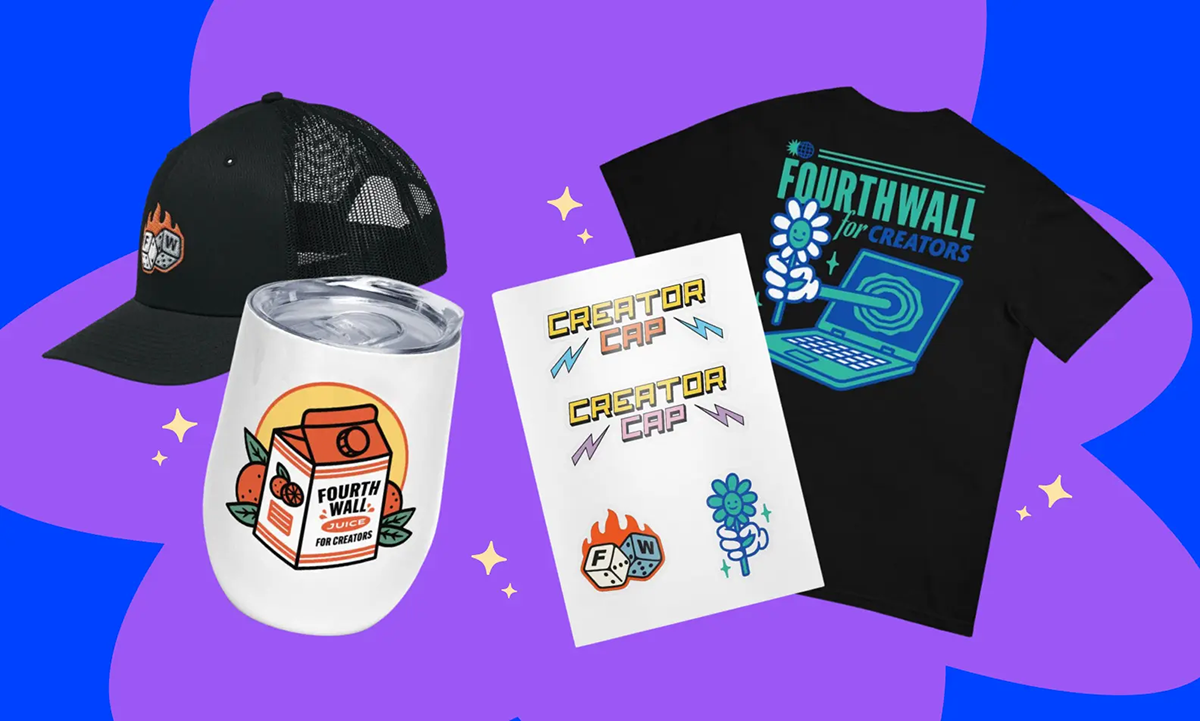
POD literally stands for Print on Demand, but in practice, it’s shorthand for creator-friendly commerce.
Modern eCommerce platforms (especially creator-first ones like Fourthwall) have turned POD into a plug-and-play system.
You pick products from a massive catalog, upload your designs, set your prices, and publish your store. From there, orders are printed one by one, branded with your designs, and shipped directly to your customers.
No warehouses. No middlemen. No guesswork.
Is Print-on-Demand the Same as Dropshipping?
Short answer: Nope—and the difference actually matters.
- Dropshipping is about speed and convenience. You’re selling pre-made products that already exist in a supplier’s warehouse, and once an order is placed, that item ships out as-is. Customization is minimal, branding options are limited, and you’re often competing with dozens (or hundreds) of other sellers offering the exact same product.
- Print-on-demand, on the other hand, is about control and creativity. Every product is made after the sale, using your designs, branding, and creative direction. That means custom products like hoodies, tees, phone cases, or wall art are produced specifically for your customer—not pulled off a generic shelf.
The long-term impact is enormous.
Dropshipping tends to be transactional and price-driven, while POD supports real brand-building, higher perceived value, and more substantial profit margins.
That’s why creators who care about identity, community, and longevity consistently choose print-on-demand over traditional dropshipping.
How Creators & Brands Are Using POD in 2026
This is where things get fun.
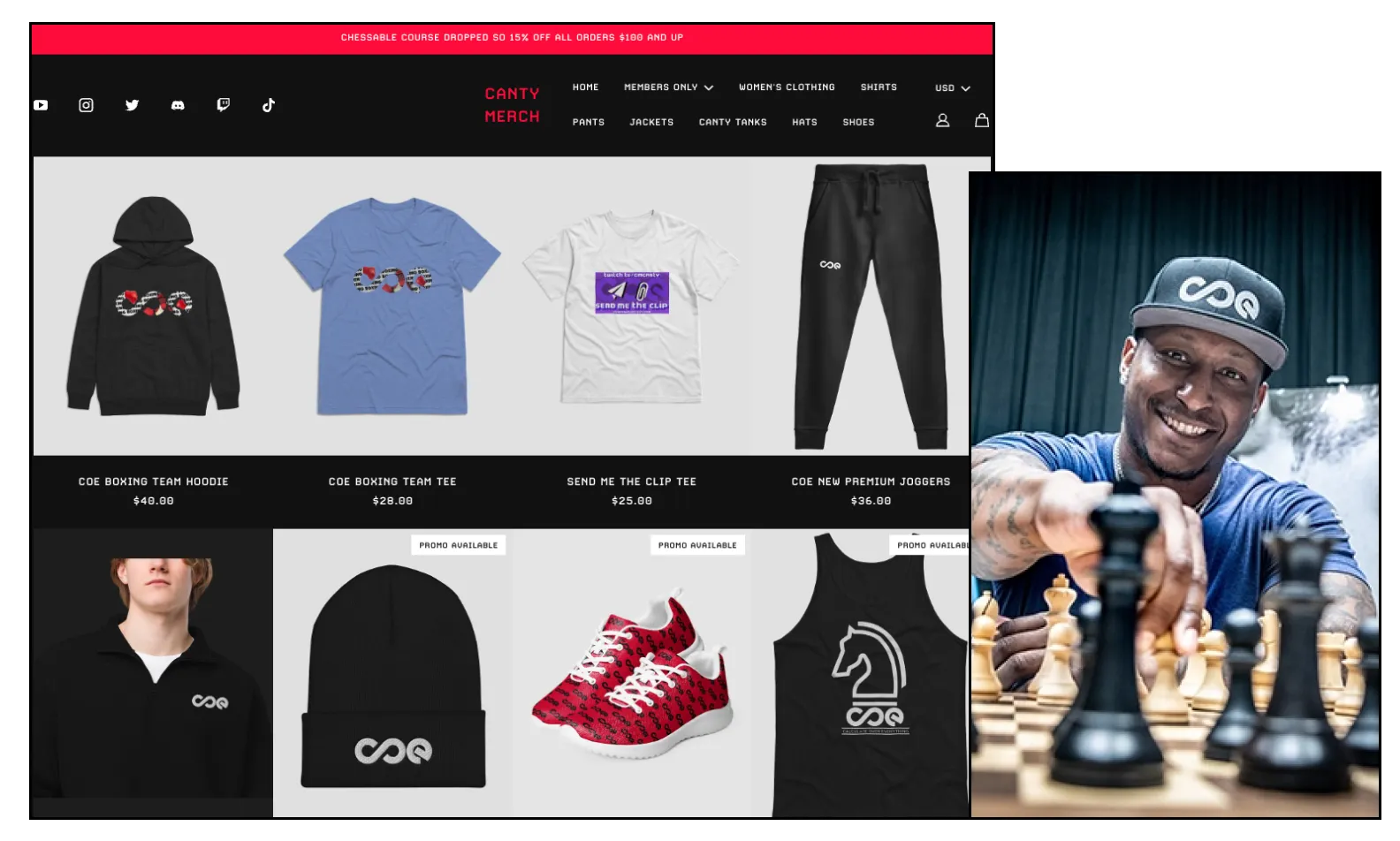
Today, creators aren’t just “slapping logos on tees.” They’re using POD to:
- Launch limited-edition drops tied to videos, streams, or cultural moments
- Test new designs weekly without financial risk
- Bundle merch with digital products or memberships
- Offer premium items like embroidered apparel and knitwear
- Run global stores without worrying about fulfillment or shipping logistics
POD has shifted from being about merch to community-driven product storytelling.
What to Look for in a Print-on-Demand Supplier
Not all POD suppliers are built the same, and in today’s market, the gaps are way more apparent. The right partner can help you scale cleanly, while the wrong one can quietly tank your brand.
Here’s what actually matters when choosing a print-on-demand supplier today.
1. Print Quality (This Is Non-Negotiable)
If your prints crack, fade, or arrive crooked, your audience won’t care how “easy” the platform was to use.
Look for suppliers that offer consistent DTG, embroidery, and sublimation quality, with clear examples of real products, not just glossy mockups.
Premium hoodies, sharp phone cases, and durable wall art should look good out of the package, not just on the product page.
2. A Strong, Up-to-Date Product Catalog
A good POD supplier should give you more than just tees and mugs.
In 2026, top suppliers offer a deep product catalog that includes apparel, accessories, home goods, tech items, and seasonal or trending products.
This lets you test new ideas fast, expand into higher-margin items, and avoid getting boxed into one type of merch.
3. Transparent Pricing & Healthy Profit Margins
If you don’t understand your costs, your profit margins will disappear fast.
Your supplier should clearly break down base product pricing, printing costs, and shipping costs upfront.
Hidden fees, confusing markups, or unpredictable pricing make it harder to run a sustainable ecommerce business—especially when scaling.
4. Fast & Reliable Order Fulfillment
Speed matters more than ever.
Look for suppliers with proven order fulfillment systems and realistic shipping times.
Customers expect updates, tracking, and reliability, especially for limited drops or time-sensitive launches.
Remember, slow fulfillment is one of the fastest ways to lose repeat buyers.
5. Global Fulfillment & Reasonable Shipping Costs
If you’re selling online in 2026, you’re selling globally, whether you plan to or not.
A strong POD supplier should offer international fulfillment options that keep shipping costs reasonable and delivery times competitive.
This is especially important if you’re running a global eCommerce store or building an audience across multiple regions.
6. Branding & White-Label Capabilities
Your brand should be front and center—not the supplier’s.
Look for white-label options such as custom packing slips, branded packaging, and no external logos on products or in emails.
This keeps your merch feeling intentional and professional, not like a random dropshipping order.
7. Easy Store Integrations & Automation
Manual work doesn’t scale.
The best POD suppliers integrate seamlessly with modern eCommerce platforms like Shopify and Etsy, as well as creator-first tools like Fourthwall.
Automation ensures orders flow instantly from your store to fulfillment without spreadsheets or copy-pasting.
8. Mockups & Design Tools That Don’t Lie
Mockups sell, but only if they’re accurate.
Look for suppliers with a reliable mockup generator and realistic previews that reflect the final product.
Clean mockups help you launch faster, test designs, and market confidently without misleading customers.
9. Support That Actually Responds
When something goes wrong (and it will), support matters.
A solid POD supplier should offer responsive customer support, clear policies, and an easy way to resolve misprints or shipping issues.
If “contact us” feels like shouting into the void, that’s a red flag.
10. Built for Creators, Not Just Sellers
The best POD suppliers understand creator workflows.
They support limited drops, custom products, bundles, and fast iteration, without forcing you into rigid eCommerce setups.
That’s why many creators gravitate toward platforms that combine POD, fulfillment, and storefront tools into one ecosystem.
Bottom Line
Choosing a print-on-demand supplier isn’t about who has the most products—it’s about quality, reliability, and long-term scalability.
If your goal is to build a genuine brand (not just sell merch once), your supplier needs to grow with you. So pick wisely, because your audience will notice!
Get Started With Print-on-Demand Using Fourthwall
If you want POD without the chaos, Fourthwall makes it ridiculously straightforward.
You can choose from apparel, accessories, home goods, and tech products, upload your designs, and publish everything to a fully branded storefront.
Fourthwall handles production, fulfillment, and shipping through trusted partners, so you can stay focused on growing your audience and selling products that actually feel worth buying.
No upfront costs. No inventory stress. Just ideas → products → sales.
That’s print-on-demand in 2026.
FAQ: Print-on-Demand
What is print-on-demand (POD)?
Print-on-demand (POD) is a production model where custom products are created only after a customer places an order.
This eliminates inventory risk and allows creators to sell merch like hoodies, phone cases, mugs, and wall art without upfront costs.
How does print-on-demand work in eCommerce?
In a POD eCommerce store, orders are automatically sent to a fulfillment service upon purchase.
The provider handles printing, order fulfillment, packaging, and shipping while you manage designs and marketing through an ecommerce platform.
Is print-on-demand profitable in 2026?
Yes, POD can be profitable when paired with smart pricing, niche targeting, and quality fulfillment.
Creators who use premium custom products, strong branding, and controlled shipping costs often achieve healthy profit margins.
What’s the difference between print-on-demand and dropshipping?
Dropshipping sells pre-made products from existing inventory, while POD creates customized products after purchase.
POD gives you complete control over design, branding, and white-label presentation, which is why many creators prefer it.
What are the best print-on-demand platforms?
Some of the most popular POD providers today include Fourthwall, Printful, Printify, CustomCat, Teelaunch, Spreadshirt, Zazzle, and Redbubble.
However, the best print option really depends on your product catalog, shipping times, and the level of control you want over fulfillment.
Matt Keyser is a writer at Fourthwall who lives at the intersection of social media and Creator culture. With 4+ years of experience covering industry trends, his work focuses on helping Creators and brands understand how to turn their passion into a thriving business while maintaining a constant pulse on the latest eCommerce and social media trends.


You might also like

9 Best Kajabi Alternatives for Course Creators in 2026

What to Sell Online: How to Find a Product People Want

8 Best Spreadshirt Alternatives for Print-on-Demand in 2026

7 Best Sellfy Alternatives for Creators and Brands in 2026

27 Best Digital Products to Sell as a Creator
.webp)
Top 8 Wix Alternatives for Creators Building an Online Store in 2026

How to Create and Sell Print on Demand Journals and Notebooks

9 Gumroad Alternatives for Digital Creators in 2026

10 Best Stan Store Alternatives for Creators in 2026

Keep up with the latest from Fourthwall
New features, product updates, trend breakdowns, and creator stories — straight to your inbox.