
10 Best Printed Mint Alternatives for 2026
Where to Find High-Quality Merch Without Compromising Branding


Lifestyle and boutique POD products are having a moment, with more sellers building stores around candles, home goods, curated apparel, and gift-ready accessories.
Printed Mint has become a reliable partner for anyone stepping into that niche, thanks to its focus on quality, branding, and products that feel polished right out of the box.
The company caters to sellers who want more than standard POD fulfilment and need a platform that supports a higher-end customer experience.
In this article, you’ll see what sets Printed Mint apart, where it falls short, and discover some of the best alternatives to consider if you’re looking to sell lifestyle and boutique products online.
What Is Printed Mint?
Printed Mint is a U.S.-based print-on-demand and dropshipping company known for premium craftsmanship and full white-label packaging.
Launched by former online retailers who were frustrated with generic POD solutions, the company was built to bring brand-first fulfilment to small and mid-sized eCommerce shops.
Their mission centers on empowering creators with high-quality printing, boutique packaging, and a smooth customer experience.
While their catalog isn’t the largest, their identity is built on quality, consistency, and presentation.
What Makes Printed Mint Stand Out?
Printed Mint’s entire platform is shaped around quality, branding, and the kind of presentation that helps small shops feel like established lifestyle brands.
For those looking to brand out and sell more specialty products like self-care items, kitchenware, or animal apparel, Printed Mint is right up your alley.
Here’s a closer look at the standout tools and details that make the platform a favorite among sellers who care about the customer experience.
Premium White-Label Branding

Printed Mint puts your brand at the center of the experience, not theirs.
Every order arrives with branded tissue, custom inserts, and kraft packaging that feels intentional and elevated, giving customers the sense that the product came straight from your studio.
For sellers in gifting or lifestyle niches, this level of detail adds real perceived value and supports a more premium price point.
Beautiful Boutique Product Catalog

The platform avoids overwhelming sellers with endless generic SKUs and instead focuses on a curated lineup of candles, pouches, mugs, pillows, home goods, and lifestyle items.
These products feel crafted for Etsy shops, home decor boutiques, wellness brands, and gift-forward stores.
Printed Mint’s catalog helps sellers create cohesive collections that look more like a boutique than a bulk POD lineup.
Simple, Template-Based Design Tools
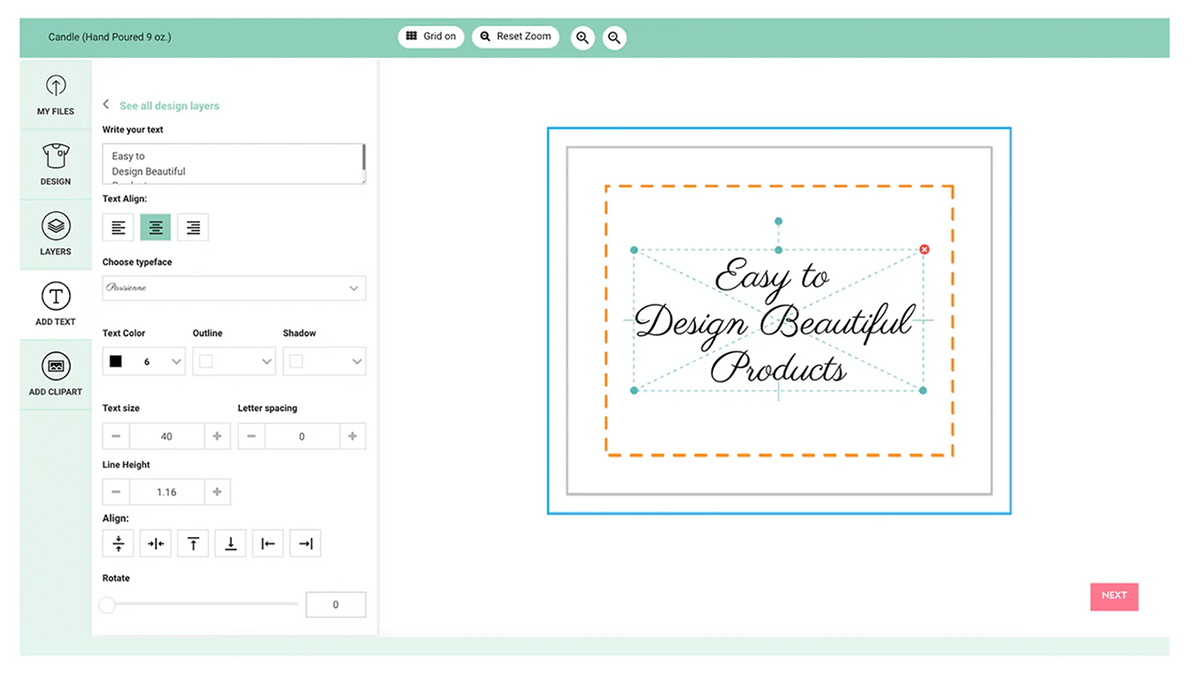
Printed Mint uses template-driven design rather than an on-platform editor, giving creators full control through their preferred software, such as Photoshop or Illustrator.
Every product comes with a downloadable template that outlines artwork size, safe areas, full-bleed zones, and file requirements, helping sellers avoid issues like pixelation, clipping, or white edges during printing.
For brands that prefer designing offline and want accuracy over drag-and-drop editing, this approach keeps the workflow clean, precise, and easy to manage.
US-Based Fulfillment and Consistent Quality
All products are printed and shipped from Printed Mint’s Arizona facility, which helps maintain consistent quality and predictable production timelines.
Their mix of sublimation, DTG, latex printing, and decal transfer ensures color accuracy and strong durability across materials.
Because everything stays under one roof, quality control is tighter than with multi-supplier POD networks.
Fast, Reliable Shipping

Printed Mint offers a 2-4 business-day production window, which is solid for handcrafted-style POD products.
Standard USPS shipping usually takes 3 to 5 business days, keeping delivery times reasonable for U.S. customers.
Sellers who need quicker turnarounds during peak season can tap into priority fulfillment without disrupting their workflow.
Responsive, Human Customer Support

Their support team is known for quick, thoughtful responses rather than scripted replies.
Sellers consistently note that the team understands POD challenges and provides concrete solutions rather than generic troubleshooting steps.
Their active community channels also make it easy to stay updated on production changes and ask for advice from both staff and fellow sellers.
Pricing
Printed Mint positions itself as a premium POD provider, and its pricing reflects that.
Mugs range from $5.50 to $7.95, shirts from $10 to $13.50, candles from $13 to $17, and shipping starts at $4.50 to $5.00, depending on category.
With limited bulk discounts, the best margins come from stores priced around $30 and up, especially brands selling gift-ready products with strong perceived value.
Why You Might Want to Look For a Printed Mint Alternative
Printed Mint offers high-quality print-on-demand products, but it isn’t the perfect fit for every eCommerce business.
Sellers who rely on wide integrations, large catalogs, or scalable order fulfillment may find that certain limitations hinder growth.
If you're evaluating whether a mint alternative might better suit you, here are the main constraints to keep in mind:
📲 Limited Integrations Beyond Shopify and Etsy
Printed Mint only connects directly with Shopify and Etsy, which creates friction for sellers who use other eCommerce platforms or online marketplaces.
Brands operating on WooCommerce, Amazon, eBay, or in a multichannel setup may struggle to build a seamless workflow without native integrations.
While API and CSV uploads are available, they require more hands-on management and lack the automation found in platforms like Printify, Gelato, or Spreadshop.
If your business depends on automated order fulfillment across multiple channels, this limitation can slow down operations and impact scalability.
🧩 Smaller Product Variety for SKU-Heavy Stores
Printed Mint offers a curated set of customizable products, but its catalog is still far narrower than that of large online printing services, which carry hundreds of SKUs.
Stores that rely on constant product testing, extensive merchandise lines, or broad custom products may run out of options quickly.
If you sell apparel in multiple fits or need more niche items like hats, shoes, stickers, magnets, or plush toys, platforms like Fourthwall, Printify, or Gelato offer more flexibility.
Sellers who build momentum through high-volume experimentation often prefer POD networks with diverse online printing catalogs and expansive inventory.
⛔️ No Bulk Discounts for Scaling Brands
Printed Mint’s pricing stays the same whether you order one item or hundreds, which can make scaling more expensive compared to other printing services.
For businesses that grow through bulk ordering prints or recurring merch drops, the lack of volume discounts makes margins tighter as order volume increases.
Providers with built-in tiered pricing, discounted rates, or fulfillment centers optimized for scaling often offer better long-term value.
If your strategy depends on high-volume custom products, large apparel runs, or efficient kitting, a mint alternative with more flexible pricing may be the smarter investment.
Overall Thoughts

Printed Mint’s focus on packaging, presentation, and consistent print quality makes it one of the strongest print-on-demand partners for boutique eCommerce stores.
Everything from the curated catalog to the template-based design process leans into craftsmanship, which is why so many Etsy and Shopify shops use it to deliver products that feel gift-ready right out of the box.
Where Printed Mint truly shines is in the customer experience. The unboxing feels intentional, the print quality is dependable across categories, and the branded packaging gives even small sellers the look of an established lifestyle brand.
If you're selling candles, home goods, apparel with a personal touch, or any product where presentation matters, Printed Mint can elevate your storefront without requiring extra labour on your end.
That said, it’s not built for every type of seller. Budget-driven shops, large-scale apparel businesses, and high-volume stores that rely on wide integrations or hundreds of SKUs will hit limitations fast.
Printed Mint is a platform that rewards quality over quantity, branding over speed, and a curated strategy over aggressive scaling.
If your goal is to build a thoughtful brand with products that feel custom-made and beautifully delivered, Printed Mint is absolutely worth using. If your focus is mass production, rapid testing, or multi-channel POD fulfillment, you’ll find a better fit with larger networks.
Top Printed Mint Alternatives for Print-on-Demand
1. Fourthwall
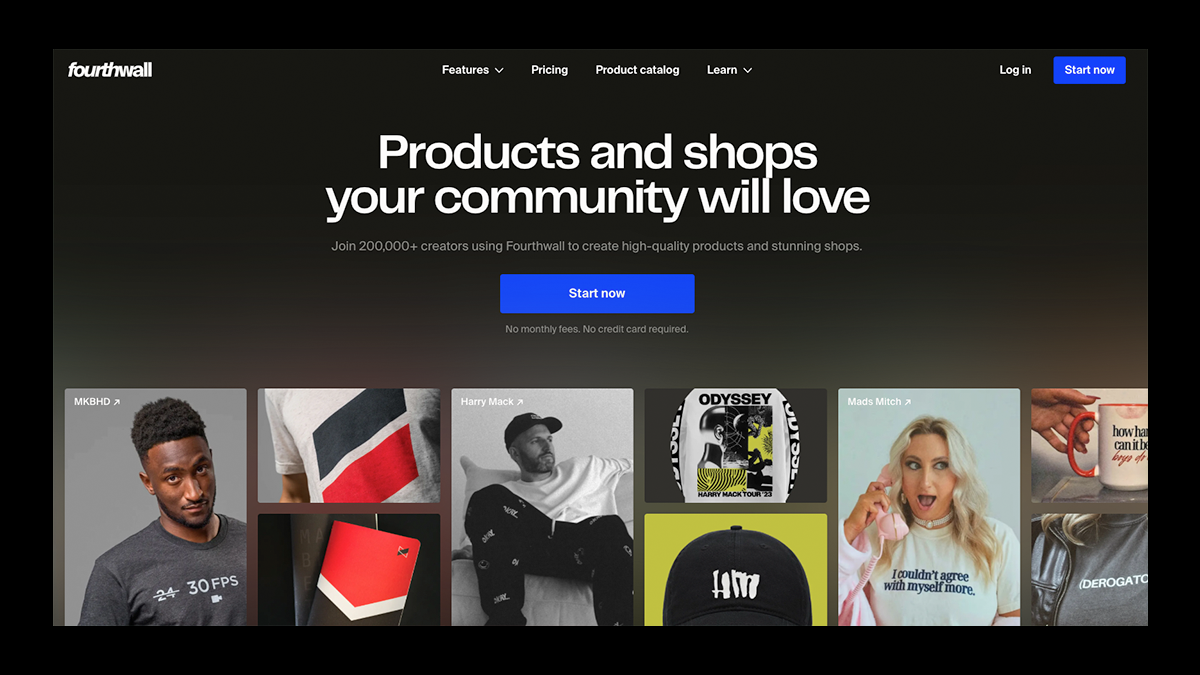
For sellers who want everything in one place, Fourthwall blends eCommerce, printing services, and audience-building features into a single platform.
Our catalog includes 360 plus customizable products, including premium blanks from Bella+Canvas, Cotton Heritage, Lane Seven, and Stanley/Stella, as well as unique categories that Printed Mint doesn’t offer, like cellphone cases, all-over print items, stickers, magnets, pajama sets, footwear, swimwear, bags, and long-form apparel lines.
Production supports DTG, screen printing, DTF, sublimation, embroidery, and more across fulfillment centers in the US, UK, EU, and Australia, giving you global coverage and competitive shipping times.
Creators also get tools for limited drops, preorders, digital downloads, memberships, tips, and gated content, making Fourthwall more than just a print-on-demand solution.
And with Integrations like TikTok Shop, YouTube Merch Shelf, Spotify, and Twitch Gifting, you can sell directly where your audience already spends time, without extra plugins or messy multichannel setups.
Add built-in email marketing, promo codes, branded site design, and real-time 3D mockups, and Fourthwall becomes a full business engine rather than a simple fulfillment partner.
💰 Pricing
- Free Plan: $0/month — No platform fee on physical products, 5% fee on digital products and memberships, and full access to 3D mockups, branding tools, analytics, and core integrations.
- Pro Plan: $19/month or $180/annually — 0% fees on digital sales, a free .store domain, monthly sample credit, unlimited team roles, advanced analytics, and priority support.
✅ Pros
- Designer-first storefront with full customization
- Supports DTG, screen printing, DTF, sublimation, and embroidery
- 360 plus premium products, including bottoms, footwear, pajamas, swimwear, stickers, and magnets
- Real-time 3D product mockups for retail-ready presentation
- Sell physical goods, digital downloads, memberships, tips, and gated content
- Native integrations with TikTok Shop, YouTube, Twitch, and Spotify
- Built-in email marketing, promo tools, and audience features
- Global fulfillment in the US, UK, EU, and Australia
- Strong support with a creator-first approach
❌ Cons
- No built-in marketplace, so you must supply your own traffic
- Not ideal for high-volume wholesale or B2B manufacturing
- Missing niche print methods like engraving or embossing
2. Contrado
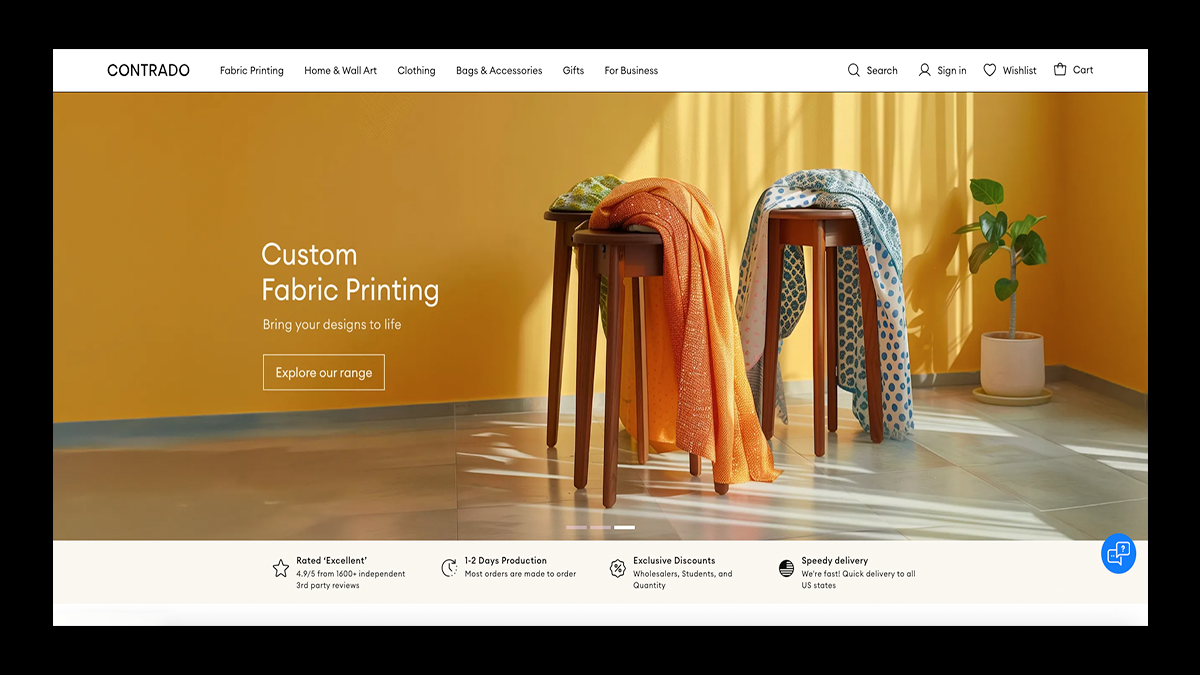
While Printed Mint focuses on boutique home goods and gift-ready items, Contrado specializes in artisan-quality apparel, handmade accessories, leather goods, high-end textiles, home décor, wall art, and fully customizable all-over print fashion.
For sellers who want their brand to feel like a premium designer label rather than a traditional print-on-demand shop, Contrado delivers the tools and materials to make that possible.
Every item is made to order in Contrado’s UK facility, allowing them to control print quality, reduce waste, and avoid the environmental cost of long-distance manufacturing.
Their eco-conscious lineup includes organic, vegan, biodegradable, and recycled materials, and even leftover fabric scraps are repurposed for crafters to reduce landfill waste.
Brands looking to offer ethically produced, luxury products with exceptional color accuracy and textile craftsmanship will find Contrado’s catalog unmatched across the POD industry.
💰 Pricing
- Free to Use: Pay-Per-Product — Contrado’s pricing reflects its premium materials, artisan production, and handcrafted processes. While higher than typical POD suppliers, the quality supports brands with upscale pricing strategies.
✅ Pros
- Huge premium catalog including luxury apparel, leather goods, shoes, accessories, and fine art prints
- Made-to-order UK production that reduces overproduction and waste
- Eco-conscious options, including organic, vegan, biodegradable, and recycled materials
- Exceptional print detail with low-water, low-waste printing methods
- Fast fulfillment times, often within 1–2 days
- Extensive customization with all-over print, textile variations, and bespoke manufacturing
❌ Cons
- Higher base prices than most POD platforms, challenging for beginners
- International shipping from the UK can be costly for global customers
- Not every product is eco-friendly, though the catalog is expanding
3. ShineOn
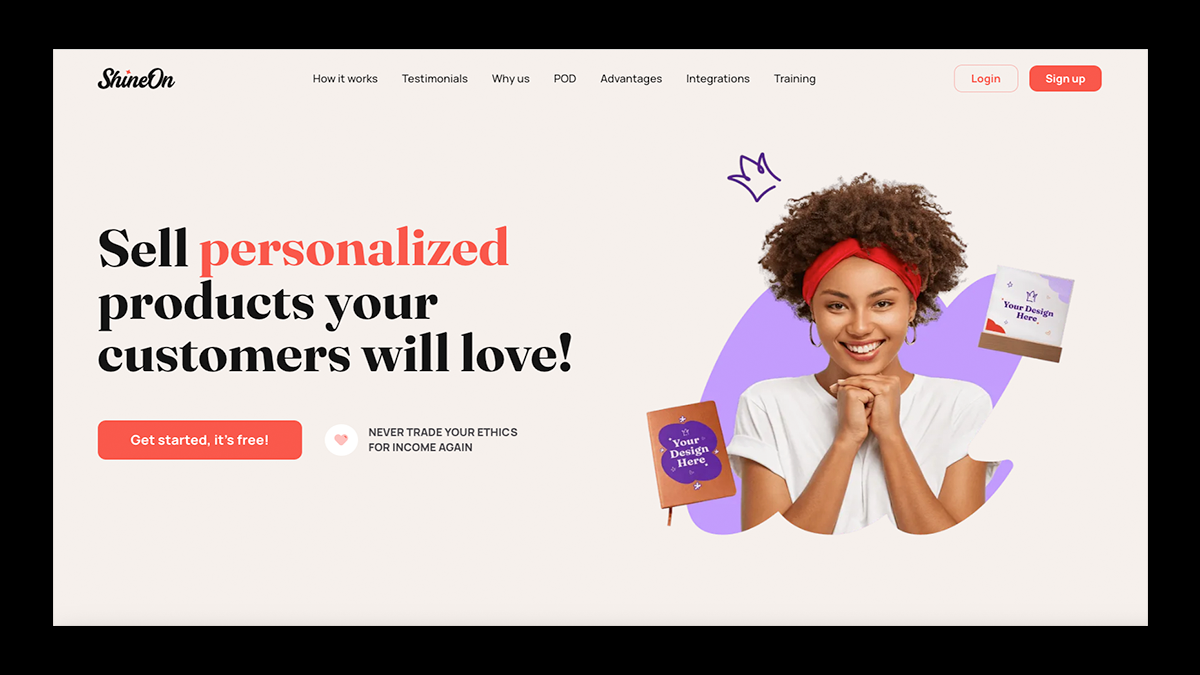
ShineOn is a powerful alternative to Printed Mint for sellers who want high-margin, emotionally charged gift products rather than lifestyle items or home goods.
Instead of mugs, pouches, or candles, ShineOn specializes in customizable jewelry, message-card pieces, watches, engraved gifts, and sentimental accessories designed for niches like relationships, family, and special occasions.
Its entire platform is built for rapid product testing, making it ideal for creators running Facebook ads, viral campaigns, or impulse-driven eCommerce funnels.
Sellers can launch dozens of variations quickly, test which designs convert, and scale the winners without managing inventory or complex fulfillment workflows.
ShineOn also offers fast US-based production, global shipping, and plug-and-play integrations with Shopify and Etsy.
For brands built around emotional storytelling, personalized gifts, or high AOV offers, ShineOn delivers a level of speed, profit potential, and simplicity that Printed Mint simply can’t match.
💰 Pricing
- Free to Use: Pay-Per-Product — ShineOn charges only for the item and fulfillment when a customer places an order. Fees are included with Shopify and Etsy integrations.
✅ Pros
- High-margin jewelry and gift products designed for emotional marketing
- Rapid product testing model with fast turnaround times
- Seamless Shopify and Etsy integrations
- Great for Facebook ads, viral campaigns, and niche gift stores
- Strong community, training resources, and creator support
❌ Cons
- Their product catalog is heavily focused on jewelry
- Limited non-gift categories compared to big POD networks
- Not ideal for stores needing apparel, home goods, or lifestyle products
4. Gelato
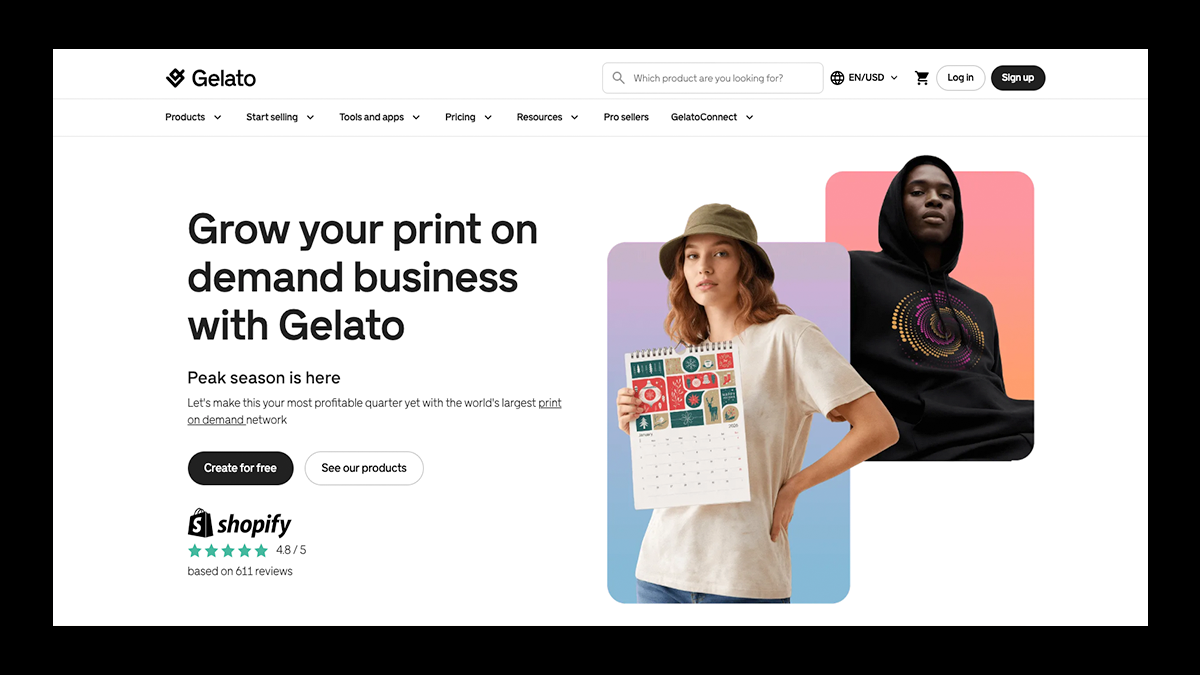
If global speed, smart automation, and sustainable production had a single home in the POD world, it would look a lot like Gelato.
With more than 140 production partners across 32 countries, most orders are made close to the customer, lowering shipping costs, reducing carbon impact, and keeping delivery times competitive in nearly every major market.
Gelato shines for brands that sell art prints, posters, cards, calendars, and photo products, but it also supports apparel, mugs, and accessories for creators who want more variety than what Printed Mint offers globally.
Its Personalization Studio gives customers a real-time editing experience, while Price Navigator uses AI to help sellers set profitable pricing across different regions.
For eCommerce brands that want smoother automation, faster fulfillment, and a greener supply chain, Gelato stands out as a forward-thinking alternative to niche-focused POD providers.
💰 Pricing
- Free Plan: $0/month — Local production in 30+ countries, standard mockups, and core integrations.
- Gelato+: $25/month or $249/year — Up to 20% off products, premium mockups, branded packaging, and millions of assets.
- Gelato+ Gold: $129/month or $1,285/year — Up to 25% off products, deeper branding discounts, and Price Navigator access.
- Platinum Plan: Custom pricing — Enterprise onboarding, dedicated support, and customized workflows.
✅ Pros
- Massive local fulfillment network with fast, low-impact shipping
- Eco-certified materials and sustainability-first production
- Real-time customization via Personalization Studio
- AI-assisted pricing and automation tools
- Strong integrations with major eCommerce platforms
❌ Cons
- Smaller catalog than networks like Printify
- Premium features locked behind paid plans
- No warehousing or inventory storage options
- Region-specific limitations on certain product types
5. Printify
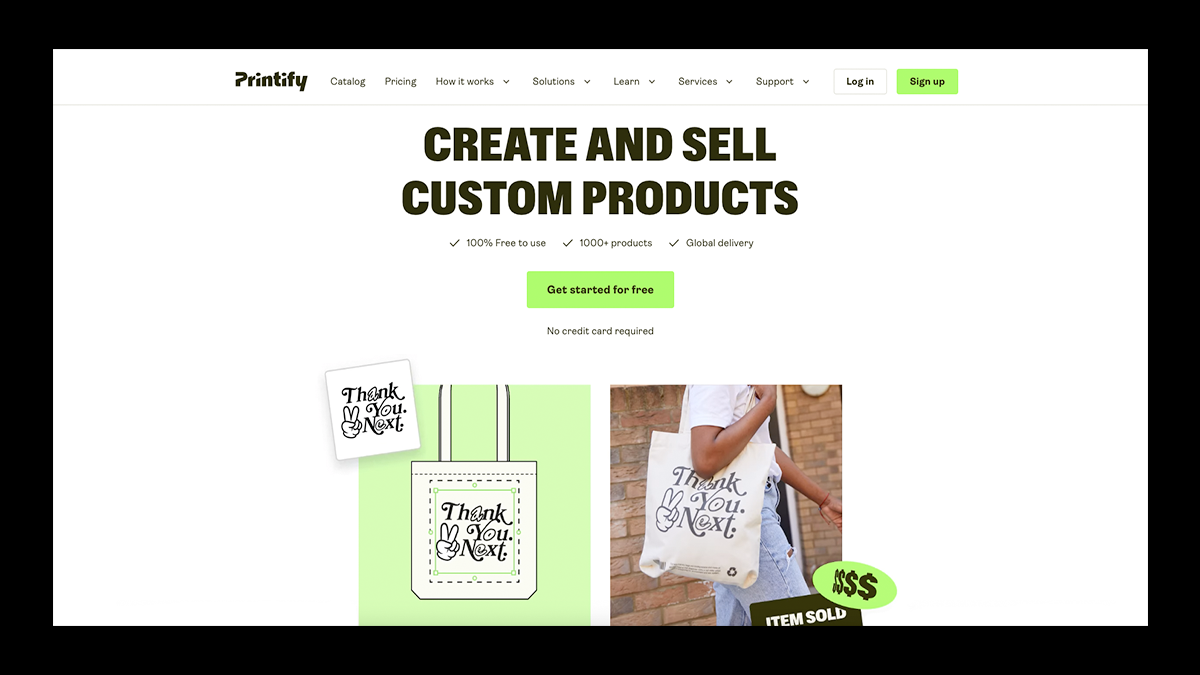
Printify is a standout alternative to Printed Mint for sellers who want maximum flexibility, massive product variety, and control over costs.
With over 1,300 customizable products through more than 100 global print providers, you can sell apparel, tech accessories, biodegradable phone cases, home décor, and far more than Printed Mint’s lifestyle-focused lineup allows.
This makes Printify the better choice for stores that thrive on wide assortments, constant product testing, or niche-specific collections.
Its Product Creator and AI-powered mockup tools make design simple, while Printify Choice automatically routes orders to the best available supplier to reduce delays.
Deep integrations with Shopify, Etsy, Amazon, eBay, WooCommerce, TikTok Shop, and more give multichannel sellers a seamless workflow that Printed Mint can’t match.
For high-volume apparel brands, global stores, or anyone looking to scale, Printify remains one of the most powerful POD platforms available.
💰 Pricing
- Free Plan: $0/month — Access 1,300+ products, unlimited designs, all integrations, manage up to 5 stores, and use Printify Choice.
- Premium Plan: $29/month or $299/year — Up to 20% off product costs, manage up to 10 stores, and access advanced fulfillment features.
- Enterprise Plan: Custom pricing — Unlimited stores, bulk order tools, API access, SLA-backed fulfillment, and dedicated account management.
✅ Pros
- Industry-leading catalog with 1,300+ customizable products
- 100+ global print partners for fast, localized fulfillment
- Choose providers by cost, quality, rating, and turnaround time
- AI-powered mockup generator and Product Creator
- Deep integrations with Shopify, Etsy, Amazon, TikTok Shop, Walmart, WooCommerce, and more
- Pop-up store feature for quick testing without launching a full website
❌ Cons
- Print quality and reliability vary by provider (sampling is essential)
- Limited branding options unless using Enterprise
- No built-in storefront or hosted checkout
- No digital product, fan-tipping, or membership features
- Support can be slow during peak seasons
6. Gooten
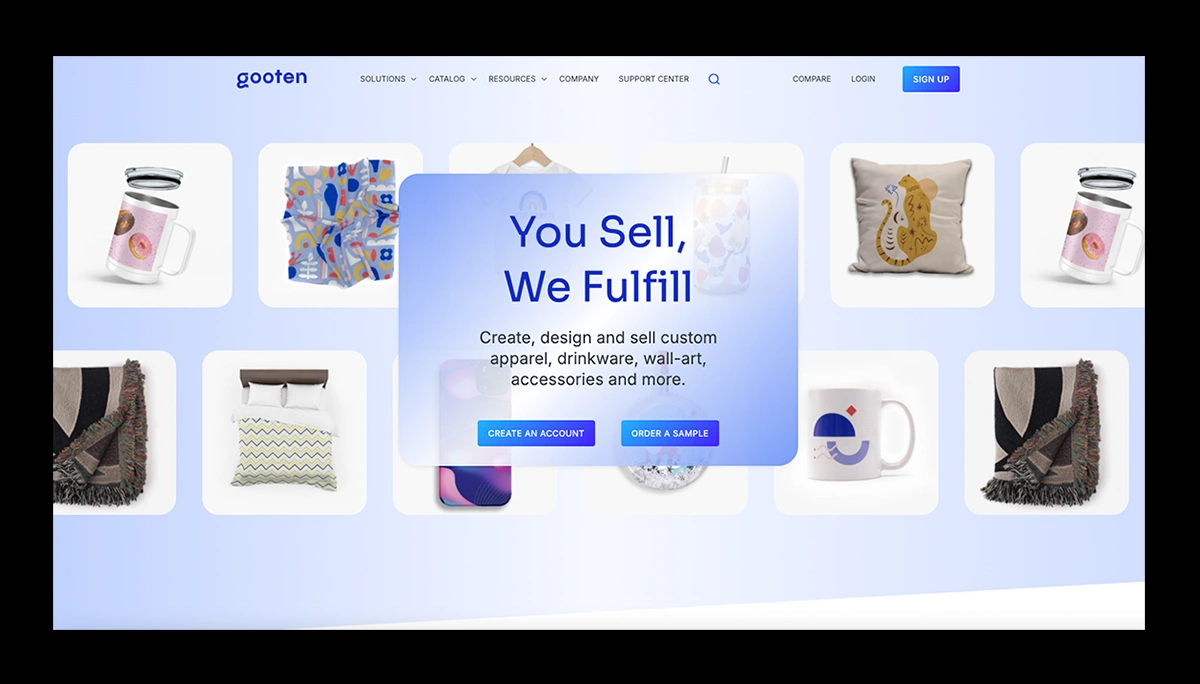
Gooten is engineered for sellers who want their fulfillment to run quietly and reliably in the background while they focus on marketing, growth, and product strategy.
Its catalog spans 150+ SKUs, including apparel, wall art, home décor, drinkware, pet beds, yoga mats, and travel accessories, giving sellers far more range than Printed Mint’s lifestyle-focused lineup.
Where Gooten truly shines is in operational strength.
The platform offers multi-store syncing, CSV bulk uploads, API access, custom routing rules, preferred vendor settings, and supplier blacklisting, giving sellers precise control over how orders move through the network.
Its distributed production model minimizes disruptions during peak seasons, and the VIM loyalty program rewards scale with better margins and priority support.
For brands that care about logistics, automation, and predictable fulfillment more than premium packaging, Gooten is a powerful alternative built for serious, long-term growth.
💰 Pricing
- Free to Use: $0/month — Pay-per-product. Volume-based perks are available through the VIM Silver, Gold, and Platinum tiers.
✅ Pros
- Global production network with reliable multi-region routing
- Automation-heavy workflows for hands-off fulfillment
- Strong margins with competitive base pricing
- Multi-store syncing, CSV bulk uploads, and full API access
- Integrations with Shopify, Etsy, WooCommerce, BigCommerce, and custom builds
- Enterprise routing controls, like preferred vendors and supplier blacklisting
❌ Cons
- Quality can vary across partners in the distributed network
- Limited branding options compared to boutique POD providers
- Basic mockups without advanced 3D visualization
- Interface feels more functional than creative
- Faster support is often reserved for VIM-tier sellers
7. Apliiq
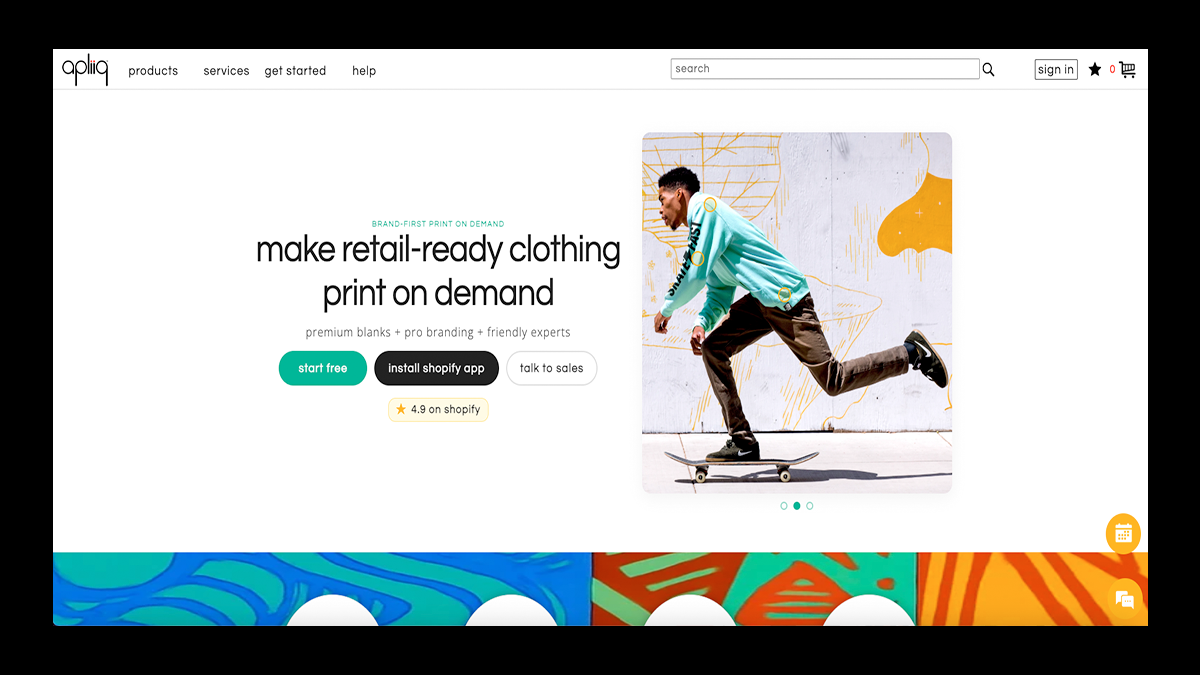
Apliiq is what you get when print-on-demand meets true fashion design, giving creators the freedom to build clothing lines that feel handcrafted instead of mass-produced.
Unlike Printed Mint’s focus on boutique gifts and lifestyle items, Apliiq lets you shape every detail of a garment through woven labels, custom pockets, hood liners, appliqué, embroidery, and private-label branding.
Production in Los Angeles and Philadelphia keeps quality tight and allows for sustainable inks, premium blanks, and consistent color across collections.
Their catalog leans heavily into streetwear and lifestyle staples (hoodies, joggers, tees, flannels, hats) sourced from brands like AS Colour, Bella+Canvas, and American Apparel.
You can create one-off pieces or scale into bulk manufacturing without changing your workflow, making it ideal for designers building a long-term brand.
For sellers who care more about identity, craftsmanship, and originality than mass-market speed, Apliiq stands out as one of the strongest boutique-focused POD platforms available.
💰 Pricing
- Free to Use: $0/month — Pay per garment and customization; transparent pricing with bulk discounts for larger orders.
✅ Pros
- Exceptional branding flexibility: woven labels, patches, neck prints, appliqué, custom pockets, and premium packaging
- U.S.-based production with sustainable inks and eco-conscious manufacturing
- High-quality streetwear and lifestyle blanks from AS Colour, Bella+Canvas, American Apparel, Yupoong, and more
- Perfect for private-label, boutique, and small-batch apparel brands
- Supports both POD and bulk manufacturing with no minimums
- Responsive support through phone, chat, and email
❌ Cons
- Longer fulfillment times for heavily customized garments
- Limited eCommerce integrations (Shopify, WooCommerce, Etsy)
- Smaller product variety outside of apparel
- Higher base costs due to premium materials and advanced customization
8. Zazzle
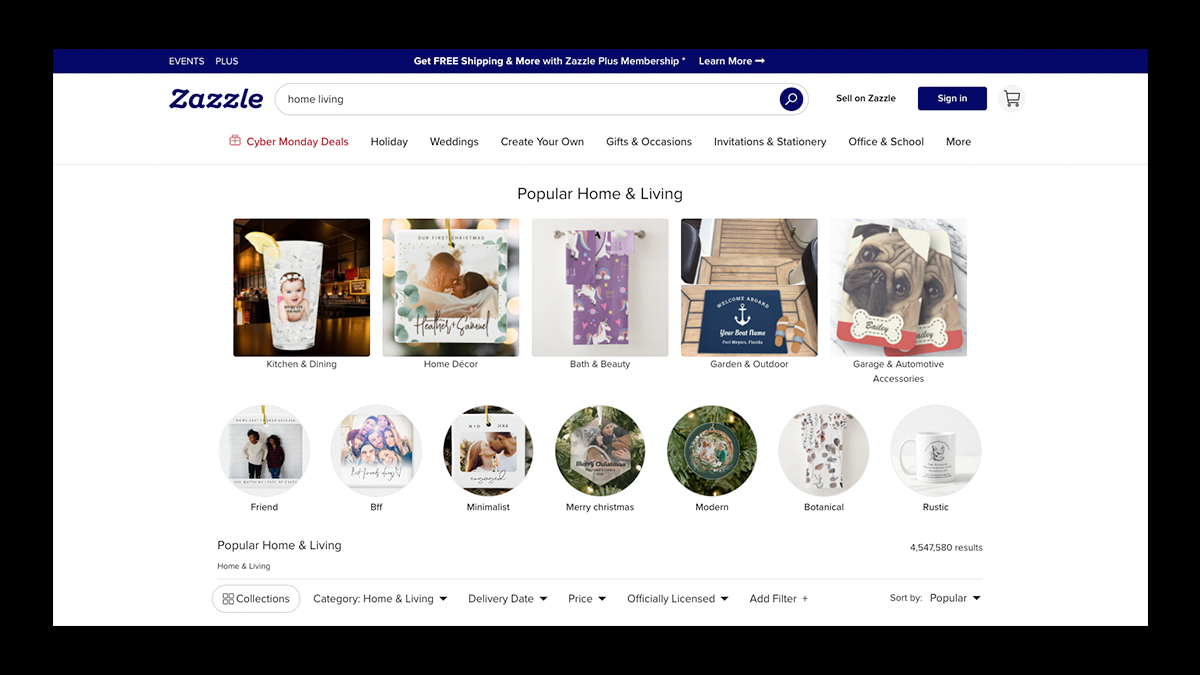
Zazzle stands out as a print-on-demand marketplace built for creators who thrive on experimentation, customization, and broad product variety.
The platform offers 1,000+ customizable items, giving artists room to place their work on apparel, mugs, invitations, stationery, home décor, party supplies, and specialty gifts without juggling multiple POD providers.
Its interactive design editor lets shoppers personalize products on the spot, boosting engagement and helping your designs reach a wider audience.
A major advantage is Zazzle’s massive built-in marketplace, home to 30+ active buyers searching for creative, event-driven, and highly personalized products.
Designers don’t have to manage storefronts, handle fulfillment, or worry about customer service because Zazzle prints, ships, and supports every order behind the scenes.
For creators who want exposure, passive income potential, and a way to test countless artwork formats, Zazzle delivers scale and convenience that boutique POD services can’t match.
💰 Pricing
- Free Plan: $0/month — List designs on the marketplace with no subscription fees.
- Royalties: Set royalties between 5% and 99%, depending on your pricing strategy.
✅ Pros
- Huge marketplace with 30M+ active buyers already built in
- 1,000+ customizable products across apparel, gifts, stationery, and décor
- Customer-facing design editor for instant personalization
- Fully hands-off printing, shipping, and customer service
- Strong potential for passive, evergreen design income
❌ Cons
- Very limited brand control or storefront customization
- High competition and lower visibility for new designers
- Smaller margins than traditional POD (often around 10–15 percent)
- Their seller dashboard feels dated compared to modern platforms
9. Spreadshop
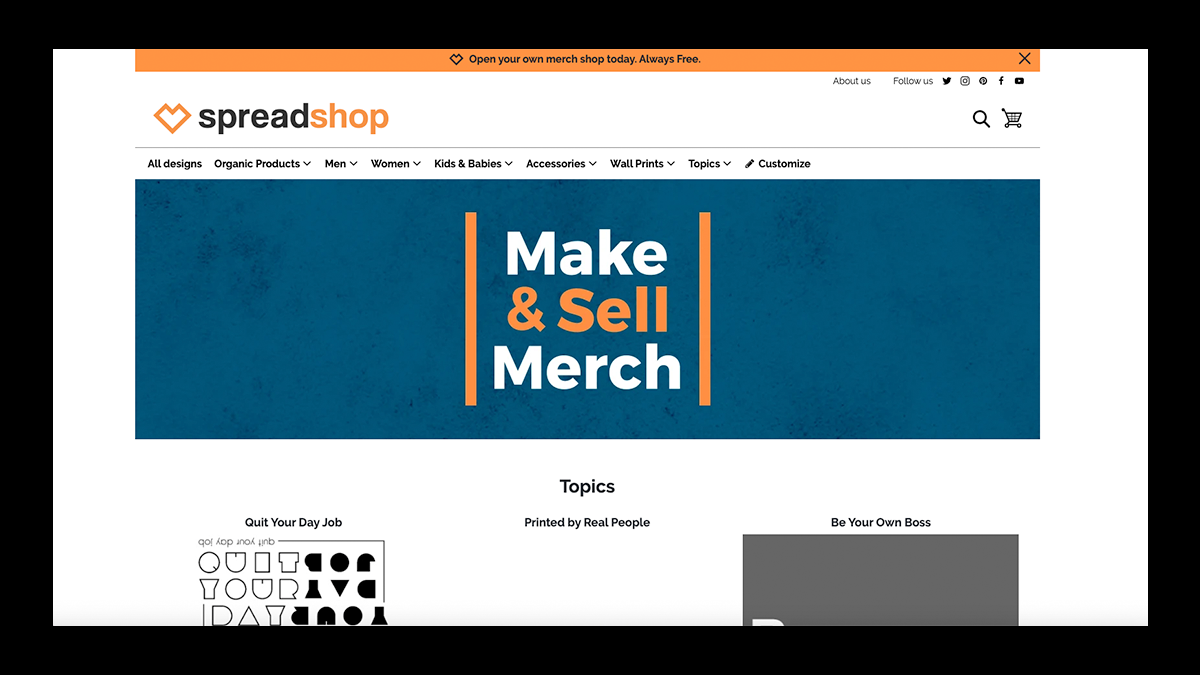
Powered by Spreadshirt’s long-established global production network, Spreadshop delivers consistent print quality, fast fulfillment, and the reliability of a platform that has spent nearly two decades refining its workflow.
Their catalog covers apparel, accessories, mugs, posters, and stickers—a broader range of merch staples than Printed Mint’s boutique home-goods selection.
Creators can upload designs in bulk, apply them across multiple products at once, and publish a polished catalog far faster than on most traditional POD setups.
Spreadshop also handles customer service, returns, payments, and fulfillment, giving influencers, artists, and beginners a hands-off path to selling without operational headaches.
With tools for theme customization, social media marketing, built-in mockups, and optional CSS controls, Spreadshop makes it easy to launch a clean, branded storefront without monthly fees or hosting costs.
💰 Pricing
Free to Use: $0/month — You set retail prices, Spreadshop deducts its base cost, and you keep the profit.
✅ Pros
- Completely free storefront with no hosting or subscription fees
- Bulk design uploads and rapid product creation
- Customizable themes with optional CSS for deeper control
- Performance bonus system for higher margins as you scale
- Integrations with YouTube Merch Shelf, WordPress, Joomla, and Drupal
- Ability to list products on the Spreadshirt Marketplace for added exposure
❌ Cons
- Less customization than Shopify, WooCommerce, or standalone stores
- Limited advanced branding options (no custom packaging or inserts)
- Best suited for creators rather than premium fashion or boutique brands
- No built-in email marketing or customer list ownership
- Reporting tools are more basic than full eCommerce dashboards
10. TPOP
For those looking for a sustainability-first alternative to Printed Mint, TPOP is one of the strongest eco-focused POD platforms available.
The company is committed to removing plastic from the fulfillment process entirely, shipping every order in recyclable cardboard or kraft envelopes sourced from FSC- and PEFC-certified materials.
Its catalog centers on organic cotton apparel, recycled textiles, reusable accessories, and eco-conscious lifestyle goods, giving creators a curated lineup that supports ethical branding without sacrificing quality.
TPOP prints using vegan, water-based inks certified by OEKO-TEX ECO PASSPORT and GOTS 5.0, ensuring each product meets strict environmental standards and keeps chemical impact low.
Beyond traditional POD features, TPOP includes a built-in storefront builder, allowing sellers to launch a complete, SEO-optimized site without relying on Shopify or outside apps.
With plastic-free delivery, responsible sourcing, and a production model designed to avoid waste from mass overproduction, TPOP delivers one of the most ethically consistent print-on-demand experiences available today.
💰 Pricing
- Free Plan: €0/month — Full POD catalog, store builder, and zero commissions.
- Unlimited Plan: €30/month — Up to 1,000 product creations, advanced CMS features, and AI tools.
- Business Plan: €70/month — Unlimited products, premium support, bulk management tools, and advanced branding.
- Enterprise: Custom — Tailored solutions for larger brands.
✅ Pros
- Fully eco-focused production with plastic-free shipping
- Organic cotton, recycled textiles, and vegan-certified inks
- Built-in storefront builder with no third-party tools required
- Branded packaging options, including custom packing slips and inserts
- Strong educational resources through TPOP Academy
- High-quality DTF and sublimation printing
❌ Cons
- Smaller catalog than global POD networks
- Longer shipping times for customers outside Europe
- Limited integrations beyond Shopify, Etsy, and WooCommerce
Your Next Big Move Starts Here: Create with Fourthwall
The right platform depends on your goals. Some sellers need global fulfillment. Others want deep apparel customization, a massive catalog, or eco-focused production.
And some need tools that go far beyond printing and shipping.
If you want a platform that brings everything together (product quality, design flexibility, storefront control, creator tools, and automated fulfillment), Fourthwall is the strongest all-in-one option on the list.
You get a fully branded store, a modern product catalog, fast production, memberships, digital downloads, tipping, global reach, and the kind of business tools that help creators scale without stacking apps or plugins.
Whether you're starting from scratch or leveling up an existing shop, Fourthwall gives you the control, polish, and long-term growth foundation that most POD platforms don’t come close to offering.
Your next step is simple: launch a free Fourthwall store and see how much easier your business can run when everything is built to work together.
FAQ: Printed Mint Alternatives
What makes Printed Mint different from other POD providers?
Printed Mint sets itself apart by placing heavy emphasis on premium branding and presentation, offering touches such as branded tissue paper, custom inserts, and kraft packaging that most POD platforms don’t.
Their catalog is curated with boutique-style lifestyle goods rather than mass-market SKUs, giving stores a more polished, cohesive feel.
This emphasis on unboxing and quality control helps smaller brands deliver a retail-ready customer experience without handling fulfillment themselves.
Why do sellers look for alternatives to Printed Mint?
Many sellers outgrow Printed Mint because it only integrates natively with Shopify and Etsy, making multichannel sales harder to automate.
The catalog is intentionally curated, but too small for SKU-heavy businesses or stores that rely on rapid product testing.
Without bulk discounts or volume-based pricing, scaling can also become expensive, pushing high-volume sellers toward larger POD platforms with broader catalogs and more flexible fulfillment options.
Which alternative is best for apparel brands?
Apliiq is one of the strongest choices for apparel-focused brands thanks to its deep customization options, including private-label tags, woven labels, embroidery, appliqué, custom pockets, and true cut-and-sew production from its U.S. facilities.
This level of control lets creators build garments that feel like real retail pieces rather than standard POD blanks.
Moreover, Fourthwall is an excellent alternative for branded apparel, offering a large catalog of premium blanks, global fulfillment, embroidery, screen printing, DTF, and full storefront control, all in a single platform.
Which alternative is best for jewelry or sentimental gifts?
ShineOn is the strongest platform for jewelry and emotional gift products thanks to its focus on message-card pieces, engravable items, custom pendants, and relationship-based niches.
The platform is built for rapid product testing, allowing sellers to launch variations quickly and scale only the designs that convert.
Its high-margin price points and strong Shopify/Etsy integrations make it especially appealing for creators running viral ads or special-occasion gift stores.
Matt Keyser is a writer at Fourthwall who lives at the intersection of social media and Creator culture. With 4+ years of experience covering industry trends, his work focuses on helping Creators and brands understand how to turn their passion into a thriving business while maintaining a constant pulse on the latest eCommerce and social media trends.


You might also like

9 Best Kajabi Alternatives for Course Creators in 2026

What to Sell Online: How to Find a Product People Want

8 Best Spreadshirt Alternatives for Print-on-Demand in 2026

7 Best Sellfy Alternatives for Creators and Brands in 2026

27 Best Digital Products to Sell as a Creator
.webp)
Top 8 Wix Alternatives for Creators Building an Online Store in 2026

How to Create and Sell Print on Demand Journals and Notebooks

9 Gumroad Alternatives for Digital Creators in 2026

10 Best Stan Store Alternatives for Creators in 2026

Keep up with the latest from Fourthwall
New features, product updates, trend breakdowns, and creator stories — straight to your inbox.