
Best Fourthwall Alternatives in 2026: Let’s Compare
Choosing Your eCommerce Platform? Check Out Fourthwall vs. Everyone Else



There are many print-on-demand eCommerce platforms looking to work with content creators who want to monetize their work while building deeper connections with their audiences and fans.
Fourthwall stands out as one of the leading platforms, offering an all-in-one solution that includes customizable merchandise, branded websites, extra membership features, and community-building tools.
Below, we'll provide a quick comparison of Fourthwall with its top competitors, examining key features, strengths, and weaknesses to help you see which platform best supports your creative goals, monetization strategy, and long-term brand growth.
Let’s take a closer look to help you make an informed decision on which one might best suit your goals for your content, brand, and business.
Top Alternatives to Fourthwall for Content Creators in 2026
1. Shopify

Compared to Fourthwall, Shopify excels in eCommerce flexibility, offering complete control over store design and scaling options.
However, it doesn’t offer the built-in membership and community features that make Fourthwall unique.
Shopify is a good option for those looking to run a more traditional online store, but it may require additional tools or integrations to match Fourthwall's integrated, all-in-one features.
✅ Pros:
- Highly customizable store setup
- Full control over branding and design
- Scalable by using a variety of apps and integrations
- Solid ecommerce features for growth
❌ Cons:
- Monthly subscription fees
- Requires more technical knowledge for setup
- Additional transaction fees for non-Shopify payments
2. Printful
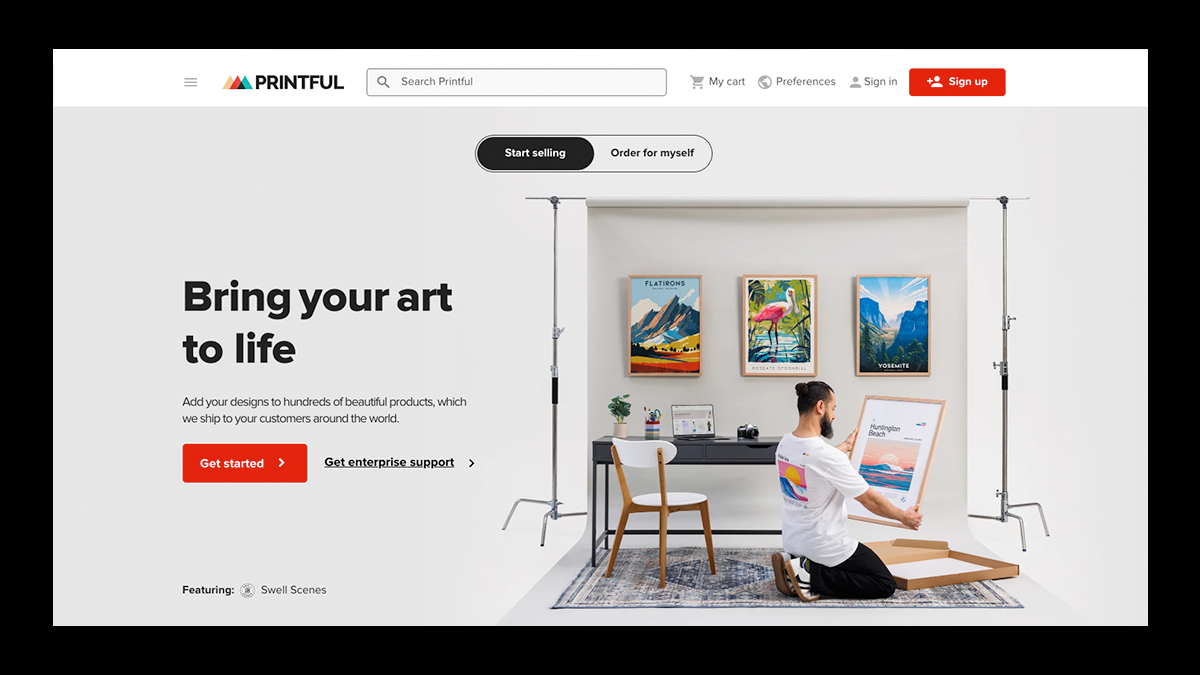
Compared to Fourthwall, Printful’s focus is primarily on product quality and fulfillment services, making it an excellent choice for creators who are mostly interested in the merch itself.
But unlike Fourthwall, Printful doesn't provide the same level of integrations, and also requires an external platform for marketing and selling your merch, which can be a challenge for creators looking to grow their brand beyond merchandise.
✅ Pros:
- High-quality printing with no minimum order requirement
- Wide range of products available for customization
- Easy integration with other platforms like Etsy, Shopify, and WooCommerce
❌ Cons:
- No built-in storefront (creators need to host their store on an external platform)
- Higher base costs for products
- Limited customization options on their platform
3. Printify
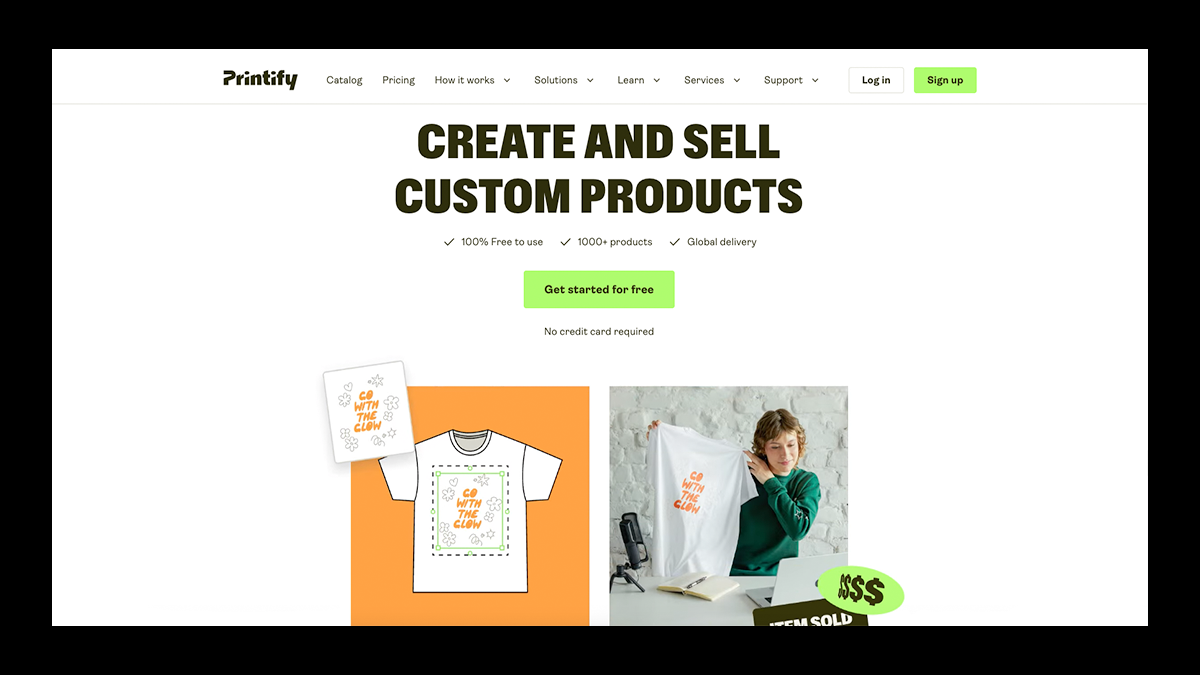
Compared to Fourthwall, Printify offers a wide variety of products and competitive pricing for creators looking to scale their businesses.
But because it focuses primarily on print fulfillment, it lacks community-building tools and other streamer- and business-friendly features that Fourthwall offers.
✅ Pros:
- Large selection of products from a wide range of print providers
- Competitive pricing for creators looking to scale
- No monthly fee to use the platform
❌ Cons:
- That same range of print can result in inconsistent print quality
- Customer service can be hit or miss
- Limited design tools for storefront customization
4. Teespring (Spring)
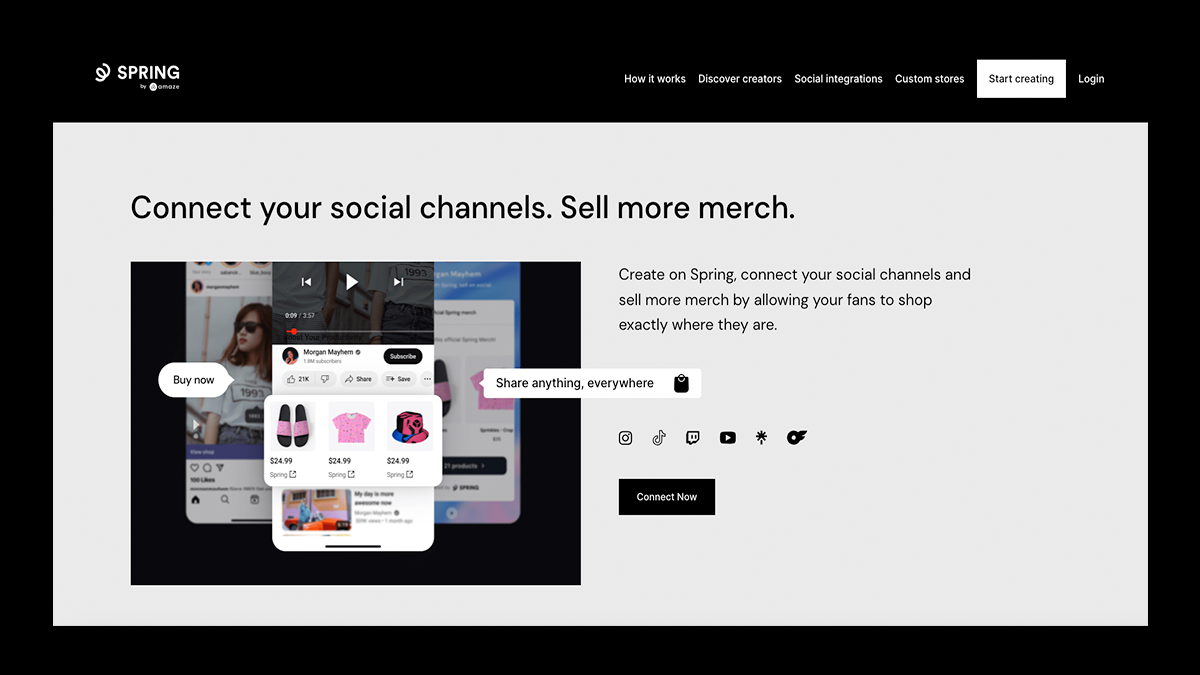
Compared to Fourthwall, Teespring (now called Spring) is a solid entry-level option for creators just getting started in print-on-demand.
It does lack the robust customization and membership features of Fourthwall, though, making it less suitable for creators looking to really build a community from their audience.
✅ Pros:
- No upfront costs or subscription fees
- The platform is easy to use for creators starting out
- Has its own built-in marketplace for visibility
❌ Cons:
- Limited customization options for store design
- Focused primarily on merchandise above all else
- Payouts can be delayed
5. Patreon

Compared to Fourthwall, Patreon excels at fostering ongoing relationships with fans through subscriptions and exclusive content; it’s very much a fan-forward service.
But it’s weak on ecommerce and merchandising, so if you're looking to sell products and build a community all in one place, Fourthwall may be the better option.
✅ Pros:
- A membership-focused platform for creators with a strong fan base
- Provides recurring revenue via Patreon support in the form of subscriptions
- Does have built-in community tools (exclusive content, live streaming)
❌ Cons:
- No POD integration for merchandise sales
- Limited ecommerce features
- Platform fees can be pricey (5-12% of your earnings)
6. Ko-fi

Compared to Fourthwall, Ko-fi is excellent for creators seeking micro-donations and simple membership systems, but it lacks Fourthwall's full POD and community-building features.
It's a great starting point; however, it falls short for creators who want more product offerings and more opportunities to engage with fans.
✅ Pros:
- Simple setup focusing on micro-donations and tips
- Does support selling digital products and memberships
- No platform fees for donations
❌ Cons:
- Limited options for physical product sales
- Less comprehensive community-building tools
- Very basic customization options for the storefront
7. Spreadshop

Compared to Fourthwall, Spreadshop provides a straightforward POD solution but lacks in-depth customization options and community features.
For creators seeking a simple POD store without the complexity of a full suite of options, Spreadshop might suffice, but Fourthwall’s all-in-one nature sets it apart, especially for those looking to build their audience.
✅ Pros:
- Free store creation with no upfront fees
- Offers a range of products and customizable designs
- Integrates with Shopify and other platforms
❌ Cons:
- Limited product range compared to other platforms
- Basic store customization options
- Higher product pricing
8. Bonfire
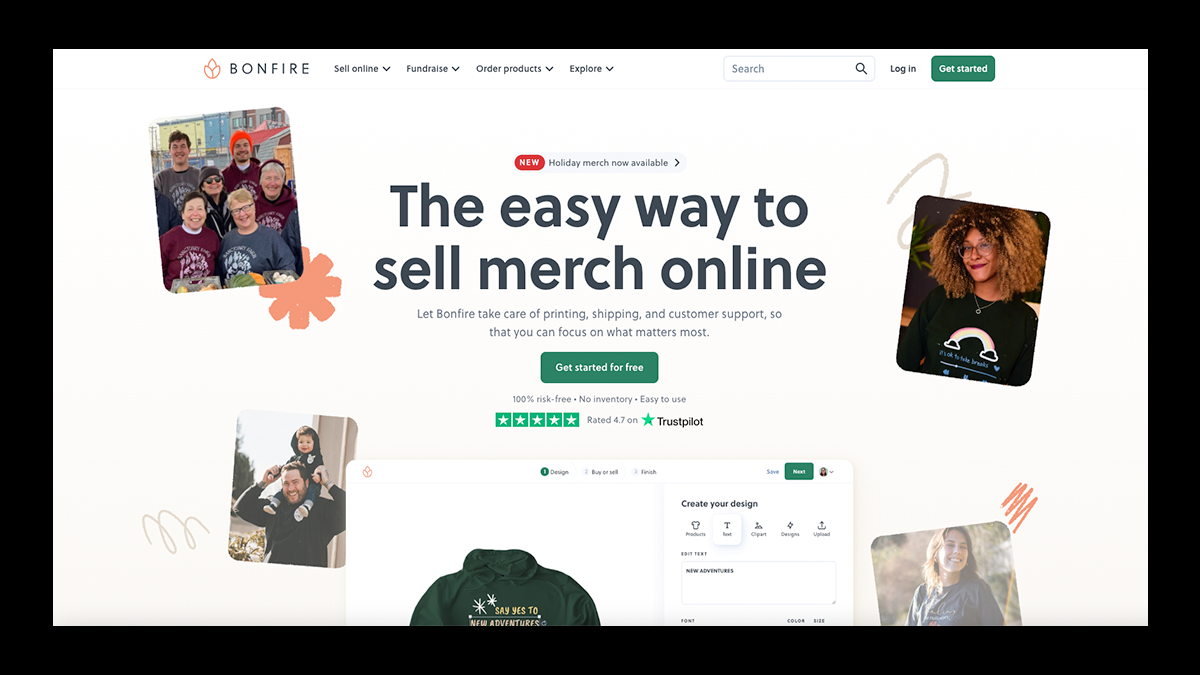
Compared to Fourthwall, Bonfire offers a more philanthropic angle, making it ideal for creators who are focused on charity or community-driven projects.
It can be difficult to build audiences or businesses with Bonfire, however, as it lacks the customization, branding, and eCommerce features that Fourthwall provides.
✅ Pros:
- Simple platform for designing and selling merch
- No upfront costs for creators
- Charity-focused, allowing creators to donate profits
❌ Cons:
- Limited customization options for storefronts
- Higher product prices
- No built-in marketing tools
9. Redbubble
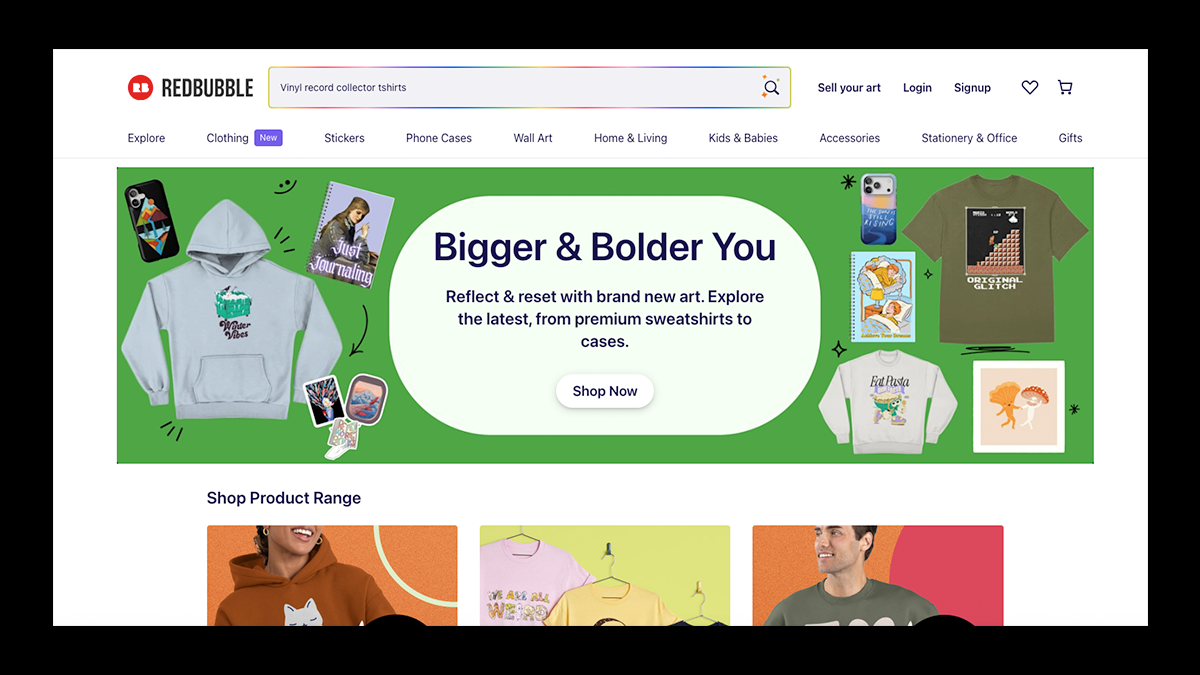
Compared to Fourthwall, Redbubble is a massive marketplace with great visibility and is known for artistic merch, but it comes with the drawback of being highly competitive and offering less control over branding and customer interaction.
Fourthwall offers more flexibility for building a unique brand, artist, or otherwise, and for engaging directly with customers, which can be more beneficial for long-term growth.
✅ Pros:
- Large marketplace with millions of buyers
- Wide variety of product options
- Easy-to-use platform for creators and artists
❌ Cons:
- Limited control over store branding
- A saturated marketplace makes it tough to stand out
- Lower profit margins due to marketplace fees
10. Etsy

Compared to Fourthwall, Etsy is perfect for creators looking to tap into an established marketplace and is a well-known e-commerce brand name.
But its customization options are few for your storefront, and unlike Fourthwall, it doesn’t offer community-building features.
This makes Etsy less suitable for creators looking to build a personalized, comprehensive brand.
✅ Pros:
- Built-in marketplace with an established customer base
- Great for handmade products, unique products, and digital files
- Large audience reach
❌ Cons:
- Several transaction and listing fees can be tricky to keep track of
- Competitive marketplace with high promotional costs
- Limited control over customer data
What to Look for in a Fourthwall Alternative
Now that you’ve browsed through the alternatives, it’s easy to see that there are several important factors to consider when choosing a platform to sell your products and grow your brand:
- Product selection: Ensure the platform offers a wide variety of customizable products that suit your niche and that you can customize to your liking.
- Profit margins: Compare base pricing, platform fees, and potential earnings for each platform to ensure your effort and products get the revenue they deserve!
- Customization options: Look for platforms that give you full control over your store’s branding and layout, from drag-and-drop design to unique templates.
- Community-building tools: Research whether the platform offers features such as memberships, fan engagement tools, and content exclusivity.
- Customer support: Quick and responsive support can be a game-changer when issues arise, so check out how well the platform’s customer service options work.
Why Fourthwall is Still the Ultimate Platform for Creators
While the platforms listed above all offer their own advantages, Fourthwall still stands out as the ultimate all-in-one solution and center of operations for creators.
Combining print-on-demand merch, membership options, storefront customization, social media integrations, and community-building tools, Fourthwall is designed to help creators streamline their operations and focus on growing their brand.
Whether you're looking to sell merch, offer exclusive content, or hype your audience with lots of unique features and benefits, Fourthwall empowers creators to do it all without the need for additional tools or hassle.
Looking for a comprehensive, hassle-free platform that can grow with your creative business? Fourthwall is the clear choice, so get started on the site today!
FAQ: Fourthwall Alternatives
What are the best alternatives to Fourthwall for creators and brands?
Some of the best Fourthwall competitors include Shopify, Printful, Printify, Teespring (Spring), and Patreon, each catering to different types of creators and businesses.
While most of these platforms focus on print-on-demand, ecommerce, or fan memberships, none combine all of these features as seamlessly as Fourthwall, which offers an all-in-one experience for selling products, memberships, and digital content.
How do Fourthwall’s pricing and fees compare to other print-on-demand platforms?
Fourthwall offers a free plan with no upfront costs and no fees on physical merch sales, charging only small percentages on digital products (3%) and memberships (5%).
Many competitors, like Shopify and Etsy, require monthly subscriptions or take larger per-sale cuts, making Fourthwall one of the most affordable and transparent platforms for creators who want to maximize their profits.
Which platform offers the best community and fan engagement tools?
When it comes to fan engagement, Fourthwall stands out from other competitors thanks to its built-in membership system, custom fan tiers, and integrations with YouTube, Twitch, and TikTok.
Unlike most platforms that focus solely on ecommerce, Fourthwall’s community-driven tools allow creators to build deeper relationships with fans through exclusive content, perks, and direct communication.
How does Fourthwall compare to Shopify for ecommerce and merch sales?
Shopify is a powerful ecommerce platform with extensive customization and app integrations, but it often requires multiple platforms or plugins to achieve what Fourthwall provides natively.
Fourthwall simplifies the process with built-in print-on-demand tools, memberships, digital product sales, and branded storefronts, providing creators with a comprehensive business solution that eliminates the extra subscriptions and setup time often required by competitors.
Kristi Kates is a writer at Fourthwall who covers the Creator economy from the inside, as a working musician and Partnered Twitch streamer. She brings 15+ years of music and culture journalism to her work, including a run as Editor in Chief of the indie-rock magazine Pyxis, and writes to help Creators build merch, memberships, and audiences that last.


You might also like

Printful vs. Printify for Creators in 2026 (and When Fourthwall Fits Better)

How to Create a Digital Product and Sell It

8 Best TeePublic Alternatives for Artists in 2026

9 Best Printify Alternatives for Print-on-Demand in 2026

8 Best Spring (Teespring) Alternatives for Creators After Its Shutdown

30 Best Print on Demand Products for Creators in 2026 (From Tees to Plushies)

9 Best Kajabi Alternatives for Course Creators in 2026

What to Sell Online: How to Find a Product People Want

8 Best Spreadshirt Alternatives for Print-on-Demand in 2026

Keep up with the latest from Fourthwall
New features, product updates, trend breakdowns, and creator stories — straight to your inbox.