
How Donut Media Built One of YouTube's Biggest Automotive Brands
From YouTube shows and merchandise to sponsorships and media ventures, here's how Donut Media built one of the internet's most recognizable automotive brands.


Donut Media is one of the largest automotive media brands on YouTube, reaching millions of viewers through educational, entertainment-focused content about cars and car culture.
The company grew by making automotive content more entertaining and accessible. Instead of assuming viewers already understood cars, Donut created shows that combined automotive knowledge with storytelling, humor, and memorable on-screen personalities.
One of Donut's biggest strengths is that it was never built around a single Creator. Instead, it developed multiple hosts, recognizable shows, and a brand that could continue growing beyond any one personality or platform.
In this breakdown, we'll explore how Donut Media grew its audience, how its business model works, how it approaches merchandise, and what Creators can learn from one of the most successful brands in automotive media.
Donut Media: Quick Bio Stats
Who Is Donut Media?
Donut Media was founded in 2015 as a digital automotive media company. Unlike many popular automotive brands on YouTube, it wasn't built around a single Creator or professional driver. Instead, it set out to create entertaining content that made car culture easier to understand.
The company gained early traction through Up to Speed, a series exploring the history of iconic cars, manufacturers, and automotive personalities.
As the audience grew, Donut expanded its lineup with shows such as HiLow, Money Pit, and Past Gas, while introducing hosts including James Pumphrey, Nolan Sykes, Jeremiah Burton, Zach Jobe, and Justin Freeman.
The brand later expanded beyond YouTube with podcasts, merchandise, and collectibles. In 2021, Donut Media was acquired by Recurrent Ventures, marking another milestone in its growth into one of the largest automotive media brands on YouTube.
Why Donut Media Blew Up
One of Donut Media's biggest strengths was making automotive content accessible without making it feel watered down.
Shows like Up to Speed turned automotive history into fast-paced stories packed with humor, memorable moments, and personality. Viewers didn't need deep technical knowledge to enjoy the content, making the channel approachable for newcomers while still entertaining longtime enthusiasts.
Donut also built repeatable show formats instead of relying on one-off videos.
HiLow is a good example. Every season asks the same question: do expensive parts really perform better than cheaper alternatives? The format is simple enough to understand immediately but flexible enough to generate new builds, episodes, and debates.
The same strategy carried over to Money Pit. Rather than showcasing a finished project car, the series walked viewers through upgrades step by step, explaining not just what to modify but why.
Another advantage was the team's structure. Donut developed multiple recognizable hosts with different interests and areas of expertise. That gave viewers more reasons to stay engaged and made the brand more resilient as it grew.
Most importantly, Donut built franchises rather than standalone videos. Someone might discover the channel through Up to Speed, stay for HiLow, move on to Money Pit, and later become a Past Gas listener. Each show strengthened the others, turning casual viewers into long-term fans.
Breaking Down the Donut Media Business Model
Over the years, Donut has expanded beyond YouTube into multiple businesses that serve the same audience. Let's look at how each part of the business fits together.
Content drives the business
With more than 9 million YouTube subscribers, Donut Media attracts millions of automotive enthusiasts through popular series like HiLow, Money Pit, Up to Speed, and Real Mechanic Stuff. While YouTube ads generate revenue directly, the bigger value comes from audience attention.
Every video allows Donut to promote sponsors, podcasts, merchandise, and other products. Its recurring series are especially valuable because they consistently attract viewers and create long-term monetization opportunities.
Sponsorships and brand partnerships
One of Donut's biggest advantages is the quality of its audience.
Car enthusiasts are valuable customers for automotive brands, which makes sponsorships a major part of the business. Over the years, Donut has worked with companies such as Hankook, Forza Horizon 5, and other brands looking to reach automotive consumers.
These partnerships often extend beyond a single video. A sponsor can appear across multiple shows, podcasts, events, and special projects, allowing Donut to create larger and more valuable partnerships.
Podcasts and content licensing
Donut has also expanded into formats that don't depend entirely on YouTube.
Its podcasts, including Past Gas and The Big Three, give fans additional ways to engage with the brand while creating new sponsorship opportunities.

The company has also generated revenue through licensing deals, including agreements that brought HiLow episodes to Tubi.
Both moves help Donut reach audiences beyond its primary platform while creating additional revenue streams.
Products beyond content
Beyond apparel and accessories, Donut has expanded into categories that naturally fit its audience. STOCKY, the company's collectible die-cast car brand, is one example.
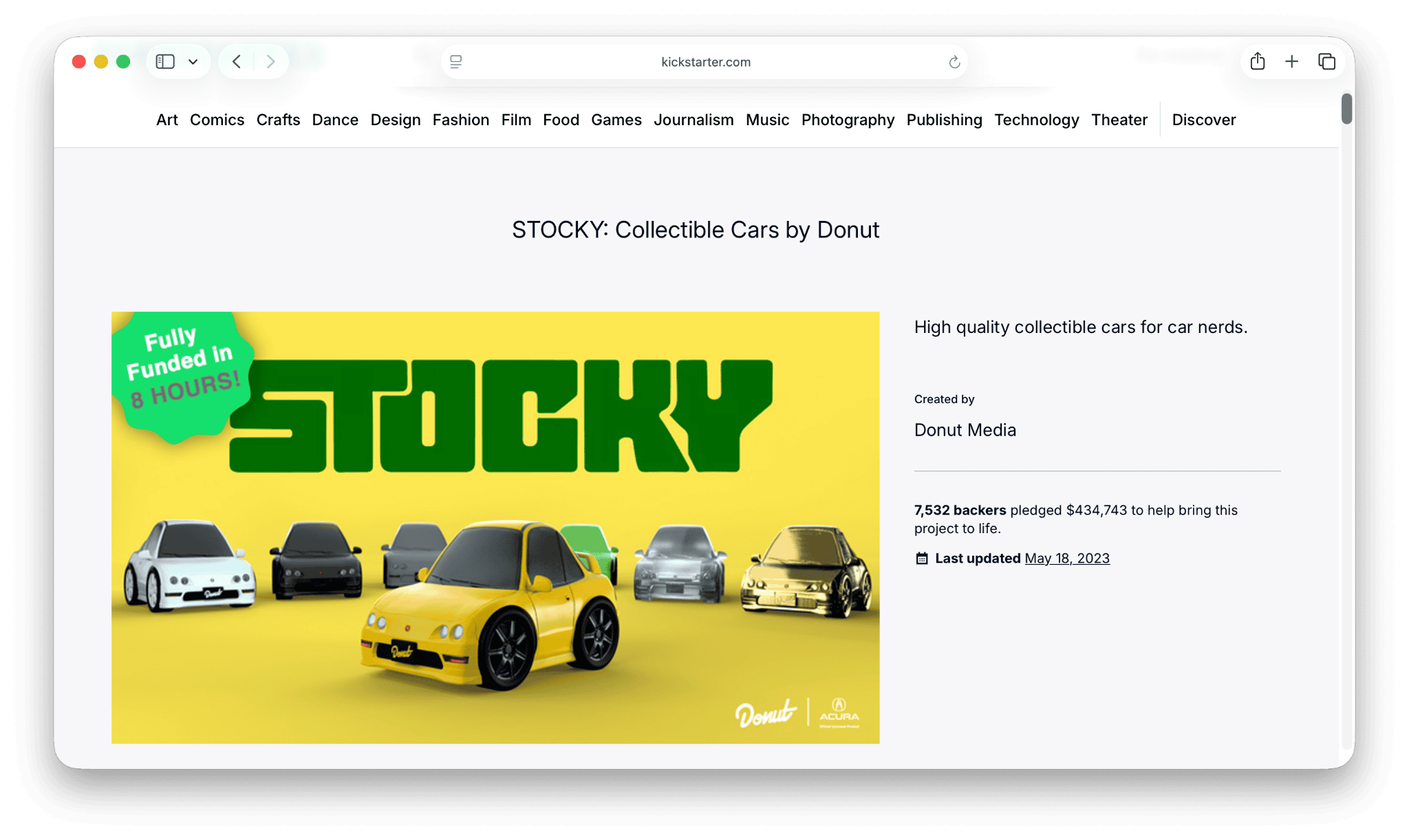
Because the product aligns with existing interests within the community, it gives Donut another way to generate revenue without moving far from its core niche.
Taken together, these revenue streams show how Donut has evolved beyond a YouTube channel. The company uses content to attract attention, then builds additional businesses around the interests of the audience it has already earned.
Why Donut Media's Merch Resonates With Car Enthusiasts
One thing becomes clear almost immediately when browsing Donut Media's store. The products are designed for car enthusiasts first.

Collections like Cars Are Pain, Give It The Beans, and Real Mechanic Stuff feel familiar because they're rooted in the same culture that powers the content. Donut builds products around ideas, experiences, and jokes that already exist within the automotive community.
That's a big reason the merchandise works.
Fans aren't simply buying products because they watch a YouTube channel. They're buying products that reflect an interest they already have. The merchandise gives them a way to express that identity outside of the videos.
Turning shows into product franchises
Donut's content strategy carries over into its merch strategy.
Shows like Money Pit, HiLow, and Real Mechanic Stuff have developed loyal followings of their own. Over time, those series have become recognizable brands within the larger Donut Media brand.
That creates natural opportunities for merchandise. Donut builds collections around concepts that audiences already know and enjoy. The demand is created by the content first, making the products feel like a natural extension of the viewing experience.
Extending the audience experience
The company has also expanded beyond apparel. One example is STOCKY, its line of collectible die-cast cars. The move fits naturally with the interests of Donut's audience and shows how the brand can expand into new product categories without moving away from what fans already care about.
What Creators Can Learn From Donut Media
Donut Media didn't become one of YouTube's biggest automotive brands by accident. Here are five lessons Creators can apply from the company's growth:
1. Build a scalable brand from content
Many Creators focus on publishing their next video. Donut focused on building repeatable shows.
Series like Up to Speed, HiLow, Money Pit, and Past Gas became recognizable properties with their own audiences. Over time, viewers returned for the formats themselves, not just the individual episodes. That's a much stronger position than relying on one-off hits.
2. Make your niche accessible
Donut didn't grow by targeting the most knowledgeable car enthusiasts. It grew by helping more people enjoy car culture.
Shows like Up to Speed and Money Pit made automotive topics easier to understand without making them feel oversimplified. That strategy helped Donut attract both newcomers and experienced enthusiasts.
3. Build a brand bigger than one personality
Most Creator businesses depend heavily on one person. Donut took a different path.
By developing multiple hosts, recurring shows, and recognizable formats, the company built a brand that audiences could follow beyond any individual Creator.
4. Expand around existing audience interests
Donut's podcasts, collectibles, partnerships, and merchandise all connect back to the same audience.
Nothing feels random.
Each new product or business venture builds on interests that already exist within the community.
The lesson is simple: expansion works best when it follows audience demand.
5. Turn content into intellectual property
One reason Donut has been able to expand beyond YouTube is that many of its shows function like media properties.
HiLow isn't just a video series. It's a recognizable concept. The same is true for Up to Speed, Money Pit, and Past Gas. Creators who develop strong formats often create opportunities that extend beyond content itself.
Conclusion
For years, many Creator businesses were built around a single person. The audience followed the Creator, bought from the Creator, and often left when the Creator moved on.
Donut Media points toward a different model.
The company built shows that people wanted to follow, products that fit naturally into the audience's interests, and a brand that became bigger than any individual host. As a result, the business is tied less to a personality and more to the experience it consistently delivers.
That's one of the biggest shifts happening in the Creator economy. The strongest Creator businesses aren't simply building audiences. They're building brands that people return to regardless of who's on screen.
Connect with Donut Media
FAQ
Donut Media was founded in 2015 by Mike Frederick and Ben Girard as a digital automotive media company based in Los Angeles. Both founders came from a background in digital video and shared a vision of building an automotive brand around entertaining storytelling rather than traditional car journalism. The company grew from a small team into one of YouTube's largest automotive brands before being acquired by Recurrent Ventures in 2021.
James Pumphrey stepped back from full-time hosting duties at Donut Media after years of fronting Up to Speed, Past Gas, and other flagship shows, though he has continued to make occasional appearances. His reduced role was part of a broader shift at Donut following the company's 2021 acquisition by Recurrent Ventures, which brought changes to the roster of on-camera talent. Donut Media has continued producing shows with hosts including Nolan Sykes, Jeremiah Burton, Zach Jobe, and Justin Freeman.
Donut Media's HiLow show streams for free on YouTube and is also available on Tubi through a licensing deal that brought episodes to the ad-supported streaming service. The series follows the same format across both platforms, with hosts building a low-budget and high-budget version of the same car and comparing them head-to-head. New HiLow episodes typically debut on Donut Media's main YouTube channel before rolling out to streaming distribution partners.
Donut Media is owned by Recurrent Ventures, which acquired the company in 2021 and continues to operate it alongside other automotive properties including The Drive and Car Bibles. The acquisition gave Donut Media additional resources for expanding into podcasts, collectibles like STOCKY die-cast cars, and streaming licensing deals. Recurrent Ventures also owns lifestyle and outdoor media brands across categories including boating, science, and cannabis, positioning Donut Media within a larger digital media portfolio.
Money Pit project cars from Donut Media have been sold, kept as long-term test vehicles, or auctioned off to viewers depending on the season, with several documented in follow-up videos on the Donut Media YouTube channel. The Money Pit format focuses on building daily-driveable modified cars step by step, which means the finished cars often become part of the Donut fleet before eventually moving on. Fans can track the current status of past Money Pit builds through updates on Donut's channel and social media.
Richard is Head of Organic Growth at Fourthwall, with 14+ years of experience in the creator economy and ecommerce. He’s built businesses across the spectrum—from print-on-demand stores to custom cut-and-sew clothing lines, as well as selling digital products. He helps creators navigate merch strategy and build sustainable businesses.


You might also like

How TJ Hunt Built a Multi-Million Dollar Car Creator Brand

How Chris Heria Built One of YouTube's Biggest Calisthenics Brands

How Hopescope Built One of YouTube's Biggest Shopping Channels

How Anna DeGuzman Made a Career by Showing Up Before She Felt Ready

How Being Unconventional Made Anthpo One of the Internet’s Most Original Creators

How Beth Cast Turned Her Personality Into a Multi-Platform Brand

Brett Chody’s Journey to Building a Community One Mile (and One Bite) at a Time

How Kenzie Yolles Built a Loyal Following by Never Pretending to Be Anyone Else
.webp)
Third-Party Logistics (3PL): Benefits and Challenges Explained
Keep up with the latest from Fourthwall
New features, product updates, trend breakdowns, and creator stories — straight to your inbox.