
The Top Celebrity Clothing Brands and Why They Succeeded
Discover the celebrity clothing brands that grew into lasting businesses and the lessons Creators can learn from their success.


The best celebrity clothing brands succeed because they offer more than famous names. Brands like SKYLRK, SKIMS, Golf Wang, and Fenty built lasting businesses through distinctive products, strong brand positioning, and smart launch strategies. This guide breaks down 10 celebrity clothing brands, including businesses that generate billions in annual sales or multi-billion-dollar valuations, and the practical branding lessons Creators can apply to their own clothing brands.
Justin Bieber's SKYLRK has been one of the biggest celebrity fashion launches in recent years. After months of teasing the brand through his own wardrobe, it reportedly generated around $15 million in sales across Coachella's two weekends.
SKYLRK is just one example of how celebrity clothing brands have evolved.
Celebrity clothing brands have grown far beyond merchandise. Some have become billion-dollar businesses. Others have built recognizable identities, loyal customer bases, and products that continue selling long after the initial hype fades.
Of course, they didn't all get there the same way.
Some became known for a signature product. Others built anticipation before launch, developed a distinctive design language, or found a customer they served better than anyone else.
In this guide, we'll look at 10 celebrity clothing brands, the decisions that helped them succeed, and the business strategies behind their growth.
Why Celebrities Are Launching Clothing Brands
Celebrities already have something most new clothing brands spend years trying to build: attention.
A clothing brand gives them a way to turn that attention into something they own. They control the products, pricing, marketing, and customer experience while building a business that can outlast sponsorships, campaigns, or tours.
Clothing also makes sense for people whose style is already part of their public image. Fans naturally notice what musicians, athletes, actors, and Creators wear. A clothing brand gives them a way to turn that interest into products people can buy.
It's also much easier to launch a brand today. Ecommerce platforms, print-on-demand services, manufacturing partners, and social media have lowered many of the barriers that once made starting a clothing business far more difficult.
10 Celebrity Clothing Brands Worth Studying
Celebrity clothing brands can start with a built-in audience, but lasting success usually comes from what happens after the launch. The brands below all found different ways to build businesses people kept coming back to.
Here's what they did and why it worked:
1. SKYLRK (Justin Bieber)
Long before SKYLRK had a store, Justin Bieber was already wearing the product.
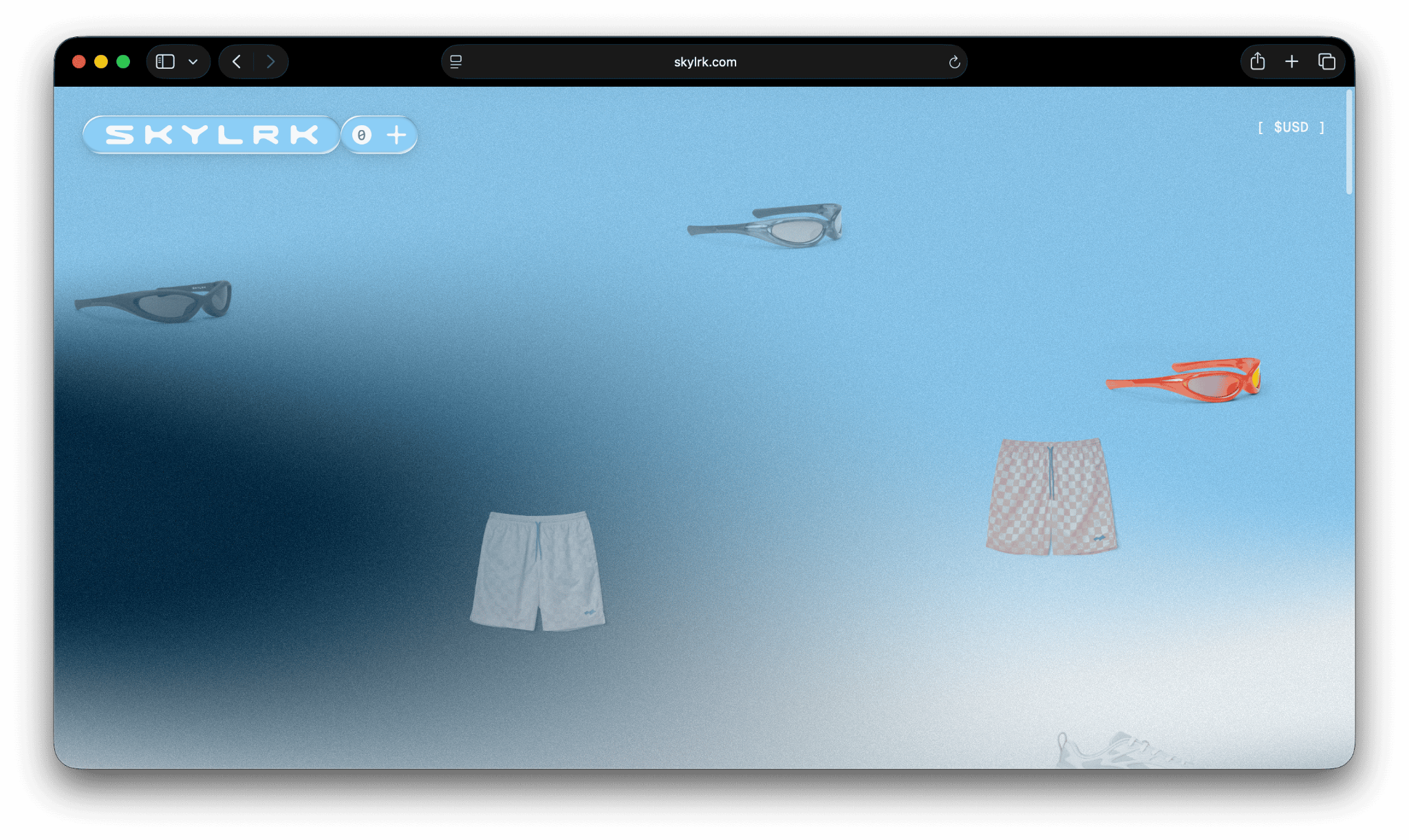
That worked particularly well because Bieber has spent years developing a recognizable personal style built around oversized hoodies, baggy silhouettes, beanies, unusual footwear, and sunglasses. SKYLRK took many of those familiar elements and pushed them further with colorful sweats, molded slides and mules, and futuristic bubble-framed eyewear.
Then he wore the pieces everywhere.
As early as 2023, Bieber was photographed wearing SKYLRK sneakers. Over the following year and a half, more samples appeared in his outfits and Instagram posts, from beanies and hoodies to sunglasses and footwear.
Without saying much about the brand, he made the products familiar through the outfits people were already paying attention to.
That groundwork paid off at Coachella 2026. SKYLRK sold products through festival merch, its own SKYLRK Shop, and online between the two weekends. The brand reported $15 million in total sales, including $5.04 million during the first weekend alone.
2. Golf Wang (Tyler, the Creator)

Golf Wang looks like Tyler, the Creator because Tyler has never treated fashion as something separate from the rest of his creative work.
His style has evolved over the years, from colorful T-shirts, shorts, tube socks, and skatewear to cardigans, loafers, knitwear, tailoring, and preppy influences. Golf Wang evolved with it, turning bright colors, playful graphics, unusual patterns, and unexpected combinations into the brand's signature style.
The result is a brand that doesn't depend on Tyler's face to be recognized. A patterned cardigan, graphic jacket, colorful sneaker, or playful accessory can carry Golf Wang's personality on its own.
That world extends beyond clothing. Golf Wang now has permanent stores in Los Angeles, New York, and London, while temporary holiday shops have appeared across North America, Europe, Asia, and Australia.
3. October's Very Own (Drake)

October's Very Own’s (OVO) owl has become almost as recognizable as the person behind it.
OVO started as the name of a blog created by Drake and his team before expanding into music, events, clothing, and collaborations. Throughout that growth, the owl remained the symbol tying everything together.
The clothing has stayed remarkably focused. Hoodies, varsity jackets, outerwear, and other streetwear staples regularly feature the owl alongside references to Toronto and Canadian culture. OVO Fest, the Toronto Raptors partnership, and collaborations with Roots and Canada Goose reinforced that connection.
Even collaborations with Jordan Brand, the NBA, and the NFL still feel unmistakably like OVO. The brand adapts to different partners without losing what makes it recognizable.
4. SKIMS (Kim Kardashian)

SKIMS started with a problem Kim Kardashian knew personally.
She had worn shapewear for years, sometimes altering or dyeing pieces herself when she couldn't find the fit or shade she wanted. When SKIMS launched in 2019, that experience shaped the product: shapewear offered across a broad range of sizes and skin-tone shades.
SKIMS became known for solving that problem first, then expanded into underwear, loungewear, swimwear, menswear, and other categories. Today, the company describes itself as a "solutions-oriented" brand, and that thinking still shows up in how many of its products are marketed around a specific fit, fabric, or use case.
Kim has also kept SKIMS in front of audiences far beyond her own followers. Campaigns have featured everyone from NBA and WNBA stars to musicians and actors, while collaborations with Swarovski, The North Face, Dolce & Gabbana, and Team USA have given the brand new reasons to enter the conversation. Its partnership with Nike has since developed into NikeSKIMS, taking the same fit-focused positioning into activewear.
The numbers show how far that strategy has travelled. SKIMS raised $225 million in 2025 at a $5 billion valuation and projected more than $1 billion in net sales for the year.
5. Victoria Beckham

Victoria Beckham had fame when she entered fashion. What she needed was credibility.
When her label debuted in 2008 with a small collection of dresses, Beckham was still widely known as Posh Spice and one half of one of the world's most famous celebrity couples. Building a serious luxury label meant convincing customers, buyers, and fashion critics that the clothes deserved attention on their own.
She earned that credibility the same way established fashion houses do.
The early dresses became known for their cut and fit, and the label gradually expanded into tailoring, denim, leather goods, footwear, and eyewear. Beckham also became a regular on the fashion calendar, eventually moving her runway shows to Paris Fashion Week. Over time, sharply cut tailoring, strong silhouettes, and polished wardrobe pieces became the brand's signature.
The journey wasn't easy, and the business went through difficult periods along the way. But the persistence paid off. Sales reached £89 million in 2023, up 52% from the previous year, and the business surpassed £100 million in annual sales in 2025.
Today, Victoria Beckham is sold through hundreds of stores around the world and has received major industry recognition, including Brand of the Year at the British Fashion Awards.
6. Jessica Simpson Collection

The Jessica Simpson Collection started with footwear in 2005 and steadily expanded into apparel, handbags, accessories, fragrance, and other lifestyle categories. The products were designed for mainstream shoppers, giving the brand room to reach people well beyond Simpson's music and reality TV audience.
Distribution played a huge role in that growth.
The collection became widely available through retailers like Macy's, Dillard's, Nordstrom, and Belk. By 2015, it covered 31 product categories and generated approximately $1 billion in annual retail sales. Today, the business spans more than 50 categories.
That scale makes Jessica Simpson's story different from many of the celebrity clothing brands on this list. Shoppers could walk into a department store looking for shoes, find a Jessica Simpson pair they liked, and buy it without being a fan of Jessica herself. The product and retail presence helped the brand reach customers far beyond her original audience.
7. Honor The Gift (Russell Westbrook)

Russell Westbrook could have built a clothing brand around basketball. Honor The Gift tells a much more personal story.
By the time he launched the label in 2017, Westbrook had already built a reputation as one of basketball's most adventurous dressers. His game-day outfits regularly attracted attention, and his fashion work included collaborations with Barneys New York and a book about style.
Instead, Honor The Gift draws from South Central Los Angeles, where Westbrook grew up.
His experiences there continue to shape the collections, with recurring themes around community, perseverance, and the neighborhood that raised him. Even the name reflects Westbrook's belief in recognizing your gifts and making the most of them.
The story resonated quickly. Westbrook has said the first collection sold out in roughly 24 hours. Since then, Honor The Gift has expanded into wider retail distribution and opened its first flagship store on La Brea Avenue in Los Angeles, bringing the brand back to the city that inspired it.
8. Guest in Residence (Gigi Hadid)

After years of modeling for some of the biggest names in fashion, Gigi Hadid could have launched almost anything.
She chose cashmere, and the decision was personal.
When Hadid moved to New York as a teenager, her parents gave her some of their old cashmere sweaters. She wore them for years, and the idea of clothing being worn, loved, and eventually passed from one person to another became part of the thinking behind Guest in Residence.
When the brand launched in 2022, cashmere gave it a clear point of focus. Sweaters, cardigans, polos, pants, loungewear, and accessories turned a material often associated with traditional luxury into something more colorful, relaxed, and suited to everyday wardrobes.
Hadid describes the vision as "funky classics." The phrase captures the brand well. Collections experiment with stripes, bright colors, patterns, and silhouettes while staying rooted in the same idea that introduced the business.
Guest in Residence has since expanded its materials and global distribution, but cashmere remains the thread running through the brand.
9. Good American (Khloé Kardashian)

Good American didn't launch with a full fashion collection. It started with one product the founders believed they could improve.
When Khloé Kardashian and Emma Grede launched the brand in 2016, they focused on premium denim designed to fit a wider range of body types. Jeans were available in sizes 00 to 24 from day one, and every size appeared together on the same shelves and product pages, giving every customer the same shopping experience.
The idea resonated immediately. Good American generated $1 million in sales on its first day, making it what the founders described as the largest denim launch in history. That early momentum gave the brand room to expand into activewear, dresses, swimwear, shoes, and other categories while keeping fit at the center of every new launch.
Today, Good American sells much more than denim. Its reputation, however, was built one category at a time. Customers already trusted the brand for great-fitting jeans, making it much easier to introduce everything that followed.
10. Fabletics Men (Kevin Hart)
Kevin Hart entered fashion with something many celebrity clothing brands spend years trying to build: an established business behind the product.
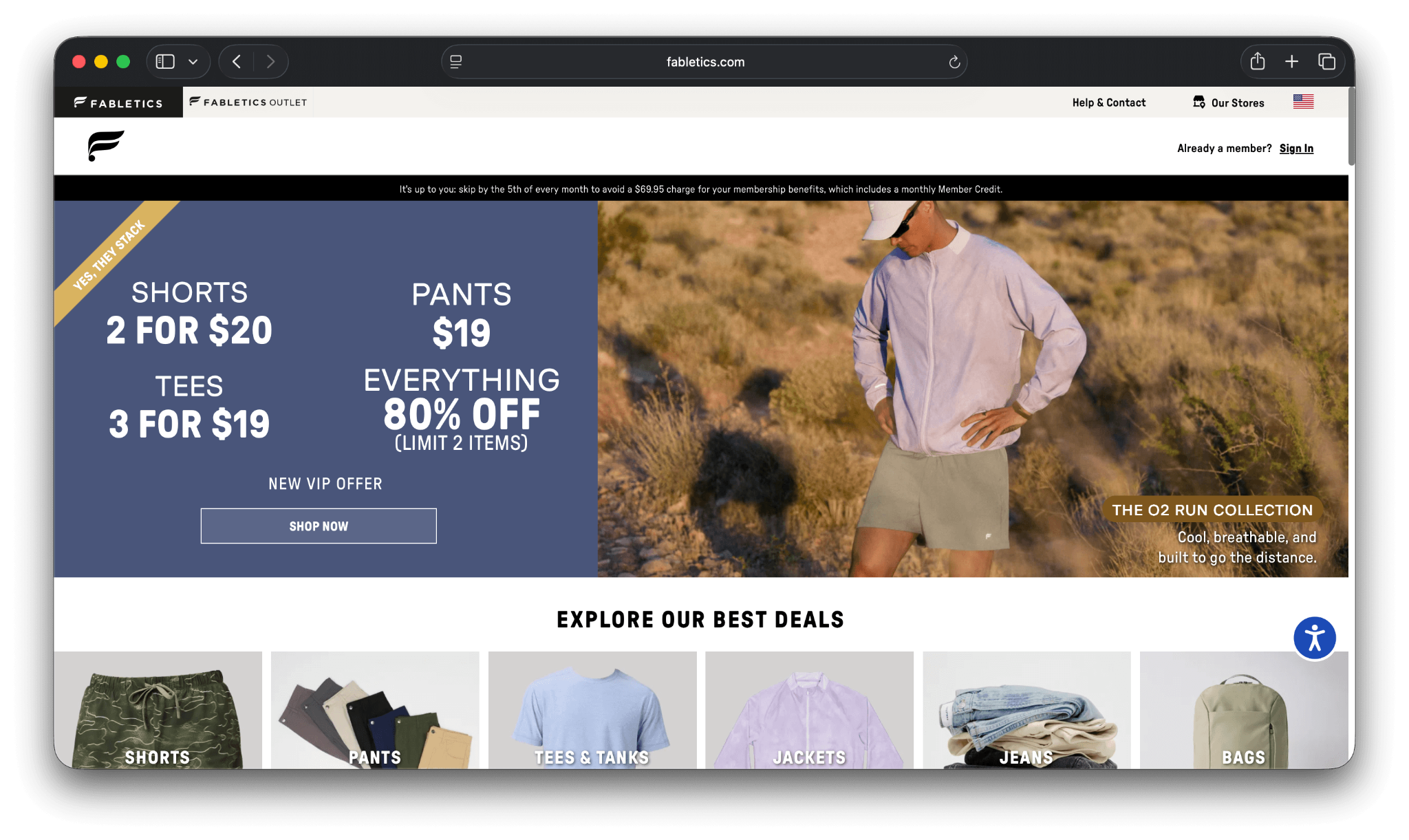
When Fabletics Men launched in 2020, Fabletics had already spent seven years building its manufacturing network, ecommerce platform, membership program, and retail footprint. It had more than two million VIP members and 50 U.S. stores before Hart ever introduced the men's line.
Hart brought something different.
Fitness had already become part of his public image through his workouts, wellness content, and commitment to healthy living. That made him a natural fit for the products while Fabletics handled the infrastructure behind the business.
Together, the partnership combined audience, credibility, and operational experience from day one.
How to Start Building Your Own Clothing Brand
The celebrity clothing brands in this guide operate at a scale most Creators won't start with. The principles behind them, however, work at any stage.
Start with something your audience already associates with you. It could be a visual style, recurring phrase, inside joke, community reference, or the type of clothing you wear most often. You also don't need a huge first collection. A few well-chosen products are enough to learn what your audience responds to before expanding.
The launch matters just as much as the products. Wear your designs before they go on sale, involve your audience in choosing them, or tie the release to a project, milestone, or event they're already excited about. By launch day, people should already have a reason to care.
Once you have that, you need a simple way to turn the idea into a business.
With Fourthwall, you can create a free online store and sell custom apparel without buying inventory upfront.
Choose products, upload your designs, customize your storefront, and set your prices. When someone places an order, Fourthwall handles production, fulfillment, shipping, customer support, and returns.
That gives you the freedom to start small and improve as you go. If one T-shirt becomes a favorite, build around it. If your audience asks for a hoodie version, make one. Remember, the best clothing brands grow by paying attention to what people want more of.
The Best Clothing Brands Give People a Reason to Return
The celebrity clothing brands in this guide don't look alike, and that's exactly the point. They succeeded by finding something customers couldn't easily get somewhere else, then building on it collection after collection.
For some, that was a signature product. For others, it was a distinctive style, a clear point of view, or a launch strategy people looked forward to. Each brand found its own reason to stay relevant long after the first release.
The same opportunity exists for Creators today.
You don't need a celebrity-sized audience or a huge product catalog to build a memorable clothing brand. You need something people can immediately associate with you and a reason to come back when the next collection arrives.
The strongest clothing brands earn that second purchase, then the third, until customers stop buying individual products and start buying into the brand itself.
FAQ
SKIMS, founded by Kim Kardashian in 2019, is currently the most successful celebrity clothing brand, valued at roughly $4 billion after its 2023 funding round and generating over $750 million in annual revenue. Rihanna's Fenty x Puma and Savage X Fenty rank next, followed by Drake's October's Very Own, which reportedly clears nine-figure annual revenue. Longevity, price positioning, and clear customer identity distinguish these winners from the many celebrity brands that fade within 2 or 3 years.
Most celebrity clothing brands fail because they rely on short-term fan hype rather than a durable product identity, a repeatable buyer, and a supply chain that can handle demand swings. Data on celebrity fashion launches from 2015 to 2024 shows roughly 60% of celebrity-founded apparel brands stop operating within 5 years, usually after 1 or 2 sold-out drops followed by declining reorder rates. Winning brands like SKIMS invest years in R&D, fit, and inventory planning before scaling.
Celebrities typically earn between 5% and 15% royalty on wholesale revenue from licensed clothing lines and can earn 20% to 50% of profits when they hold equity in the brand. Kim Kardashian's SKIMS equity stake reportedly generates over $300 million in annual paper gains, while smaller celebrity launches often net the founder six figures rather than millions. The biggest earnings come from brands the celebrity co-owns and operates rather than short-term licensing deals with existing manufacturers.
Most celebrity clothing brands are designed by professional in-house teams while the celebrity signs off on final choices, sets the creative direction, and models the pieces publicly. Kim Kardashian, Rihanna, and Kanye West are known for hands-on involvement in fit and fabric decisions, while other celebrities function more as brand ambassadors than working designers. Fans tend to reward brands where the celebrity's taste and lifestyle are visible in the product line, not just the marketing.
Celebrity clothing brands typically partner with contract garment manufacturers in Los Angeles, Portugal, or Asia and distribute through their own DTC website, a limited retail rollout, and pop-up drops timed to social media buzz. Print-on-demand platforms like Fourthwall now let smaller celebrities launch a full clothing line with zero inventory by producing each item after a sale. Larger brands like SKIMS and Fenty maintain warehouses in the US and Europe to ship in under 5 business days.
Richard is Head of Organic Growth at Fourthwall, with 14+ years of experience in the creator economy and ecommerce. He’s built businesses across the spectrum—from print-on-demand stores to custom cut-and-sew clothing lines, as well as selling digital products. He helps creators navigate merch strategy and build sustainable businesses.


You might also like

8 Best TeePublic Alternatives for Artists in 2026

9 Best Printify Alternatives for Print-on-Demand in 2026

8 Best Spring (Teespring) Alternatives for Creators After Its Shutdown

30 Best Print on Demand Products for Creators in 2026 (From Tees to Plushies)

9 Best Kajabi Alternatives for Course Creators in 2026

What to Sell Online: How to Find a Product People Want

8 Best Spreadshirt Alternatives for Print-on-Demand in 2026

7 Best Sellfy Alternatives for Creators and Brands in 2026

27 Best Digital Products to Sell as a Creator

Keep up with the latest from Fourthwall
New features, product updates, trend breakdowns, and creator stories — straight to your inbox.