
12 Best UGC Platforms for Creators in 2026
Compare 12 leading UGC platforms based on eligibility, fees, campaign access, selection process, and the Creators they serve best.


The 12 best UGC platforms for Creators vary by experience level, location, fees, and how they connect you with brands. Twirl offers paid UGC campaigns with compensation shown upfront, while JoinBrands and Billo are accessible options for beginners. More established Creators can explore platforms like Insense, Aspire, and Collabstr for additional brand opportunities. Compare eligibility, Creator fees, campaign models, and payment terms before deciding where to start.
You want to make more money creating UGC. You have the skills, perhaps even a portfolio, but finding brands willing to pay you consistently is proving harder than expected.
You apply for campaigns and hear nothing back. Cold pitches go unanswered. One paid project comes through, then you are back to searching for the next. At some point, you start wondering where other Creators are finding steady work.
You are not alone. Creators at every stage face the same challenge: finding legitimate opportunities that match their skills and give them a fair chance of getting selected.
This guide compares 12 of the best UGC platforms for Creators, including who can join, how Creators find work, what each platform costs, and the types of opportunities available.
Let’s dive in.
How We Chose the Best UGC Platforms for Creators
We looked beyond the number of brands or campaigns advertised on each platform. A large marketplace offers little value if you cannot join, rarely qualify for its campaigns, or lose too much of your earnings to fees.
These are the key factors we used to evaluate every platform in this guide:
- Access to paid opportunities: We prioritized platforms that offer a clear path to paid campaigns or allow Creators to sell UGC services directly. Platforms centered mainly on gifted products were considered less valuable for Creators trying to earn more.
- Ease of finding work: We examined how opportunities reach Creators. This includes browsing campaign listings, applying to briefs, receiving brand invitations, getting matched by the platform, and publishing services that clients can book.
- Eligibility and availability: We considered country restrictions, application requirements, portfolio expectations, and audience thresholds. These details can determine if a platform is useful to you before campaign quality even enters the picture.
- Creator costs: We reviewed membership charges, commissions, service fees, and other costs that may reduce your earnings. Free access was considered, but we also looked at the value that paid plans provide.
- Quality of opportunities: We considered the types of brands, content formats, and campaign structures available. Platforms with access to established brands, repeat projects, or more substantial briefs may suit experienced Creators better.
- Control over your work: We assessed how much freedom Creators have to choose projects, set rates, negotiate terms, and decide which brands they work with.
No single platform performs best in every category. The strongest option for you will depend on your location, experience, portfolio, and preferred way of finding work. The platform reviews below explain where each one stands out and what to consider before joining.
The Best UGC Platforms at a Glance
Best UGC Platforms for Building UGC Experience
If you're still building your UGC portfolio, working with different brands can help you strengthen your skills and develop a track record. The platforms below give you practical ways to find those opportunities through open campaigns or brand matching.
1. Twirl
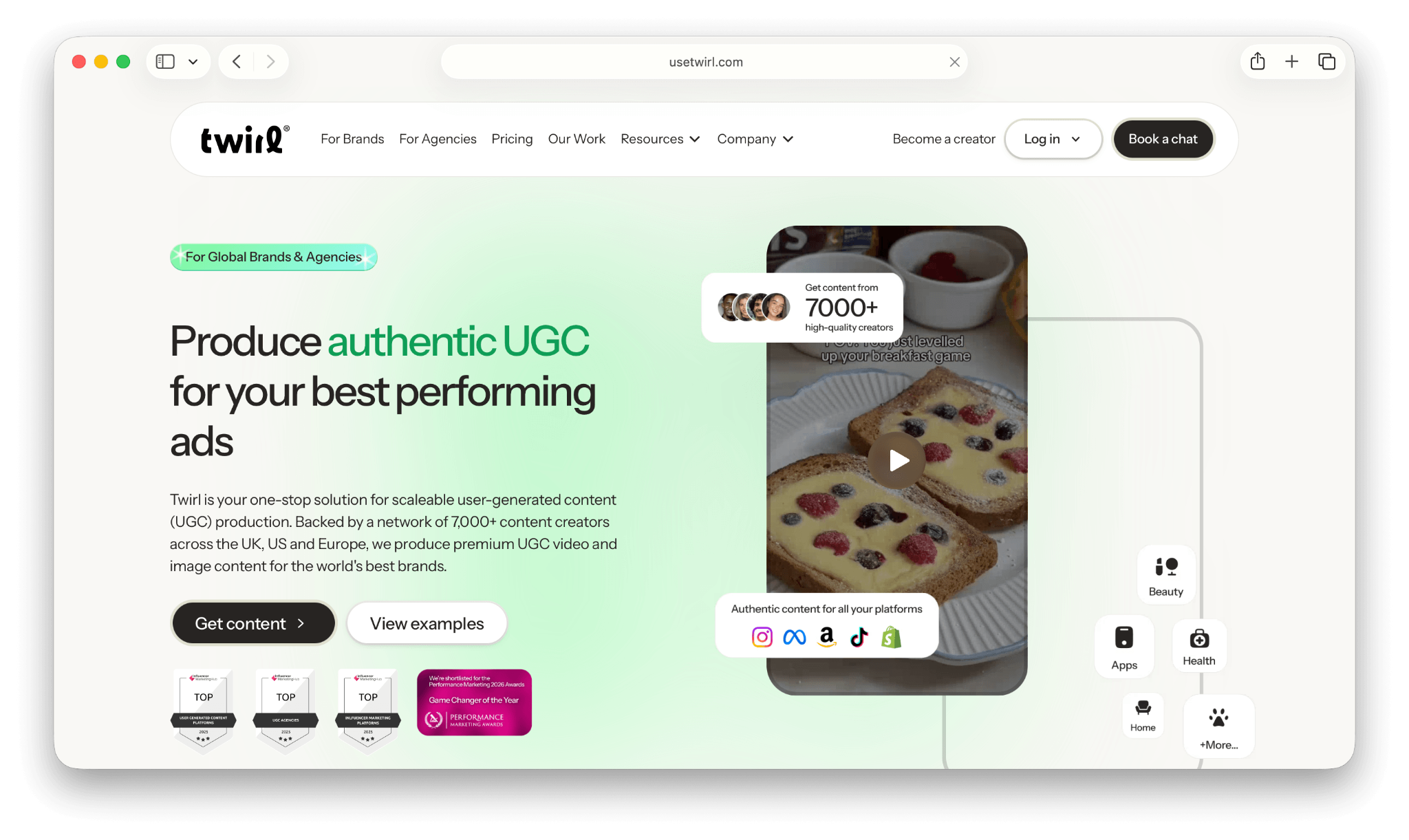
Twirl is a dedicated UGC platform where approved Creators can find paid jobs from consumer brands and agencies. You can browse available opportunities, review the brief and compensation, and apply to projects that match your content style.
- Available countries: Twirl has a large Creator network across the United Kingdom, United States, and Europe, with Creators from other markets also represented
- Requirements: Submit an application and portfolio for review; Creators must be accepted before they can apply for jobs
- Creator cost: Free to join
Once you apply for a job, the brand reviews the applicants and selects the Creators it wants to work with. If chosen, you confirm your availability, complete the content based on the brief, and submit it through Twirl.
Twirl handles much of the communication between Creators and brands, which reduces the amount of outreach and negotiation you need to manage yourself. Compensation typically ranges from $90 to $300+ depending on the scope, such as additional hooks or variations.
Pros
- All listed UGC opportunities are paid
- Compensation is visible before you apply
- Twirl manages brand communication and project workflow
- Creators are paid within 10 days of content approval
Cons
- You must apply and be accepted before accessing jobs
- Brands choose from multiple applicants, so applying does not guarantee selection
- Available opportunities depend on your profile, location, and current brand demand
2. JoinBrands

JoinBrands is a strong starting point for Creators who want to build experience through product campaigns. You can browse available jobs, apply to those that suit you, and create product photos, videos, and social media posts.
- Available countries: United States, Canada, United Kingdom, Australia, and Germany
- Requirements: You must be at least 18 and complete certifications for certain job types
- Creator cost: Free to join; a 20% standard platform fee applies to regular job earnings and performance bonuses
The platform uses short certifications to confirm that you can produce content to its standards. Completing them can unlock more job types while showing brands what you are qualified to create.
You do not need a large following for standard UGC jobs because brands are primarily paying for the content. Eligible Creator Pro members pay a reduced 15% fee. Product reimbursements, Express job earnings, and tips are exempt from the standard platform fee.
Pros
- No large following required for standard UGC jobs
- Several content formats available
- Certifications provide a clear route to more opportunities
- Some types of Creator earnings are exempt from platform fees
Cons
- The standard 20% fee reduces your take-home pay
- Many starter jobs offer modest rates
- Applying for a campaign does not guarantee selection
3. Billo

Billo focuses on short-form product videos that brands can use across organic content and paid advertising. Once your profile is approved, you can browse available jobs, submit a short application, and wait for the brand to select a Creator.
- Available countries: United States, Canada, United Kingdom, and Australia
- Requirements: An approved Creator profile and introductory video
- Creator cost: Free to join
You do not need an existing following to begin. Brands are looking for Creators who can produce convincing product demonstrations, testimonials, unboxings, and direct-to-camera videos rather than provide access to a large audience.
Billo’s focus on performance-driven product content also gives you room to develop valuable skills. As you gain experience, strong work may lead to repeat partnerships. Eligible Creators can also earn more by posting content on their own social accounts or allowing brands to use it in partnership ads.
Pros
- No minimum following required
- Free for Creators to join
- Payments and project communication are managed through the platform
- Additional earning opportunities through posting and advertising add-ons
Cons
- Brands choose between multiple applicants
- Most opportunities focus on short-form product videos
- Access to available jobs does not guarantee consistent work
4. Social Cat

Social Cat connects Instagram and TikTok Creators with small brands looking for content and social media exposure. Instead of browsing a traditional job board, you receive relevant brand opportunities based on your profile. You can express interest in the ones you like, and a conversation begins when the brand likes you back.
- Available countries: United States, United Kingdom, and Australia
- Requirements: A public Instagram or TikTok account with at least 3,000 followers and 100 posts; applications are reviewed for content quality and engagement
- Creator cost: Free
Collaborations can be gifted, affiliate-based, or paid. For paid projects, you and the brand agree on a fee through the platform. This gives you more room to discuss your rate, although many available opportunities may offer products or commission rather than guaranteed payment.
Pros
- Free for Creators
- Paid, gifted, and affiliate collaborations available
- Opportunities are matched to your profile
- Rates for paid collaborations are agreed upon with the brand
Cons
- Requires at least 3,000 followers and 100 public posts
- Available in only three countries
- Supports Instagram and TikTok only
5. Minisocial

Minisocial works differently from most UGC platforms. Instead of searching through campaign listings, you join its Creator database and wait for invitations to campaigns that match your profile.
- Available countries: Minisocial does not publish a complete list of supported Creator countries
- Requirements: Apply to join its Creator database and maintain an active social media presence; acceptance and campaign invitations depend on brand fit
- Creator cost: Free to apply; compensation and product arrangements vary by campaign
If you express interest in a campaign and the brand selects you, the company sends you its product and provides a creative brief. You then create the required photos or videos and may also need to publish the content on your social media account.
This model saves you from repeatedly searching through campaign listings. It can also lead to work with ecommerce brands that have already decided your content and audience fit their needs. The tradeoff is that you have less control over how often opportunities arrive, since Minisocial decides when to invite you.
Pros
- Free to join the Creator database
- Campaigns are matched to your profile
- No need to browse listings or submit repeated cold pitches
- Opportunities to work with established consumer brands
Cons
- No open marketplace for finding work yourself
- Invitations depend on brand fit and campaign availability
- Supported Creator countries are not clearly listed
Best UGC Platforms for Experienced Creators
Once you have a stronger portfolio and experience working with brands, you may be ready for platforms with more selective requirements and broader campaign options. These platforms can open the door to UGC, sponsored content, product seeding, affiliate campaigns, and longer-term partnerships.
6. Insense
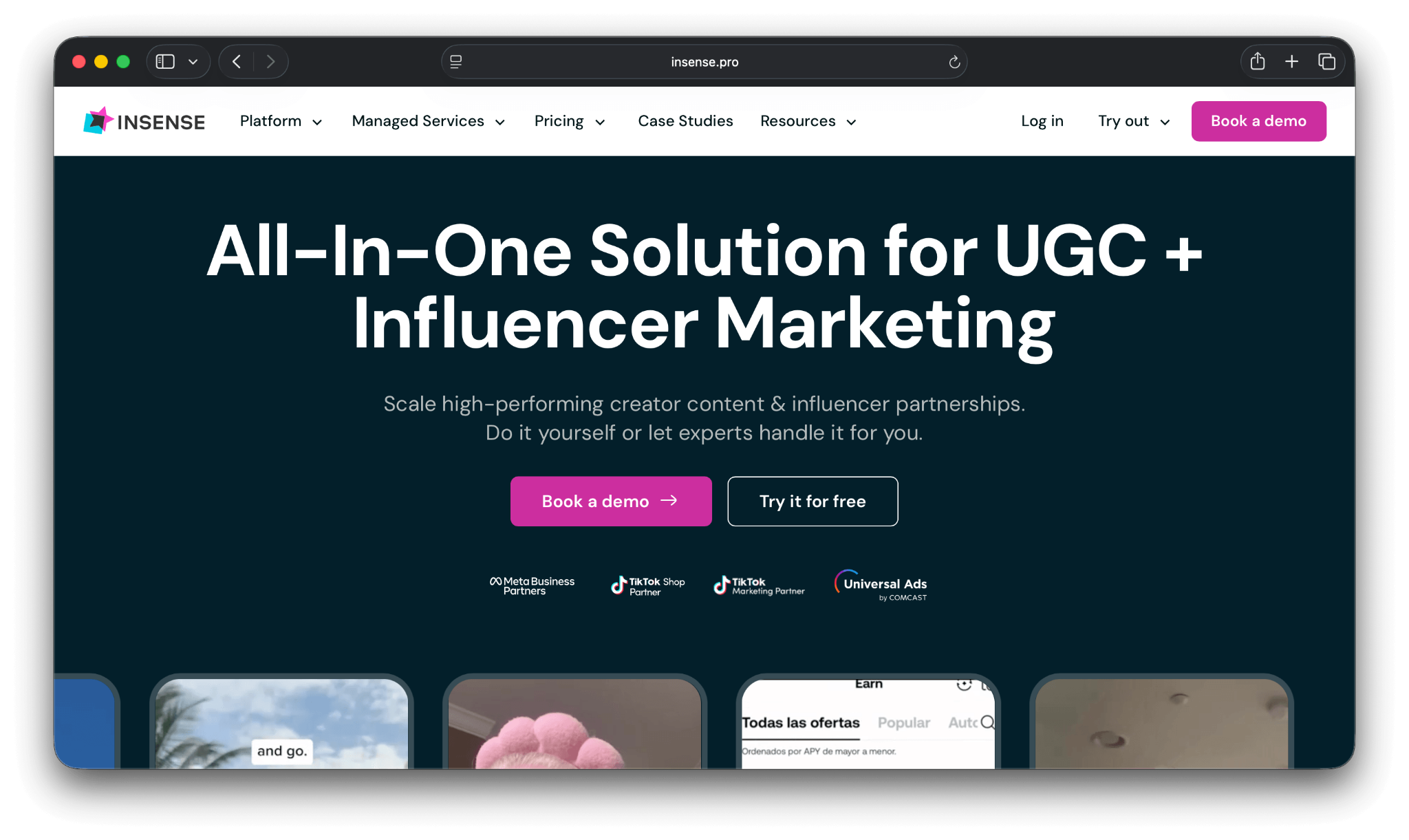
Insense connects Creators with ecommerce brands running UGC, influencer, product-seeding, affiliate, and paid social campaigns. Once approved, you can browse available briefs, apply to suitable campaigns, and negotiate your rate with interested brands.
- Available countries: United States, United Kingdom, Canada, Australia, New Zealand, Singapore, and 16 European countries
- Requirements: A strong UGC portfolio, at least 1,000 Instagram followers or 500 median TikTok views, and a minimum 1% engagement rate
- Creator cost: Free, with no hidden Creator fees
Unlike platforms built mainly around simple product videos, Insense supports several ways to work with brands. You can create content without publishing it, post on your own account, participate in product seeding, or allow brands to promote your content through Meta Partnership Ads and TikTok Spark Ads.
This variety gives experienced Creators more ways to increase the value of each collaboration. You can negotiate your price, build ratings within the app, and earn badges that improve your visibility when applying for future campaigns.
Pros
- Free for Creators
- Available in more than 20 countries
- Several campaign and payment models
- Creators can negotiate their rates
Cons
- Profiles and portfolios must pass a review
- Social media performance requirements may exclude newer Creators
- Some opportunities involve product seeding or affiliate commissions rather than guaranteed payment
7. Aspire
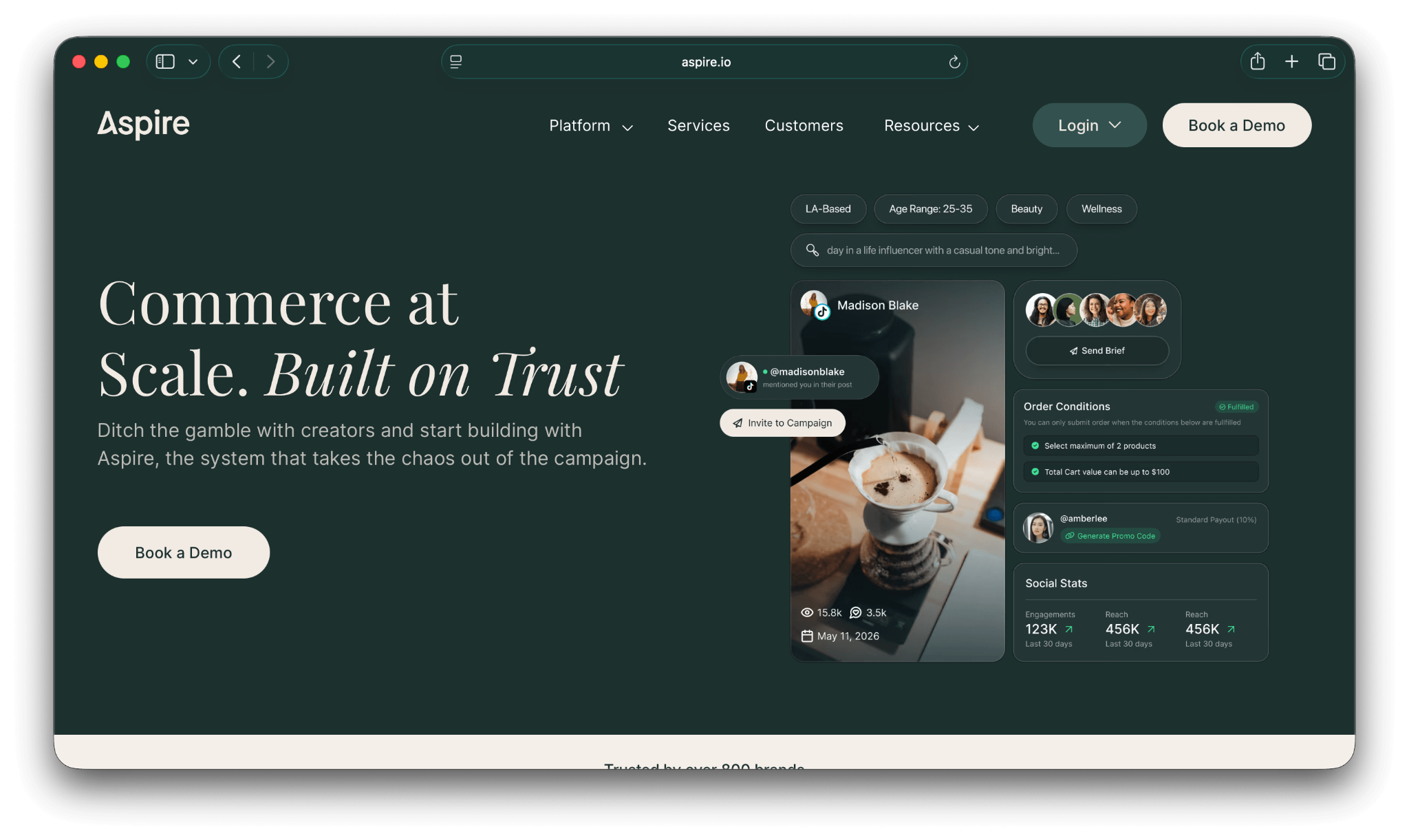
Aspire gives Creators access to campaigns from more than 800 brands. You can browse opportunities that match your profile and apply directly through the Creator Marketplace. Brands can also discover your profile and invite you to collaborate.
- Available countries: Aspire does not publish a fixed list; access and campaign eligibility vary by location
- Requirements: Create a profile and connect your relevant social accounts; brands set their own criteria for each campaign
- Creator cost: Free; Aspire does not charge Creators a commission
Aspire supports several types of partnerships, including sponsored content, UGC creation, product seeding, affiliate campaigns, and longer-term ambassador programs.
Each opportunity comes with its own eligibility requirements. A brand may filter applicants by location, follower count, engagement rate, niche, or content style. You only see campaigns you qualify to apply for, which can save time but may leave newer Creators with fewer options.
Pros
- Free for Creators with no commission on earnings
- Campaigns from more than 800 brands
- Creators can browse opportunities or receive direct invitations
- Supports UGC, sponsored posts, affiliate offers, product seeding, and ambassador programs
Cons
- Each brand sets its own eligibility requirements
- Some campaigns require an established audience or specific engagement metrics
- Opportunities available to you depend on your profile and location
8. Cohley

Cohley connects approved Creators with consumer brands seeking UGC photos, videos, influencer content, product reviews, and product-seeding campaigns. Its network includes more than 200,000 vetted Creators, so you must apply and pass a review before accessing briefs.
- Available countries: Cohley does not publish a complete list of supported countries
- Requirements: You must be at least 18 and submit a professional portfolio or social media accounts for review
- Creator cost: Free to apply; PayPal deducts a 2.9% fee from Creator compensation
Cohley reviews your content quality, portfolio strength, professionalism, and compliance with its policies. Once approved, you can complete your profile, build a portfolio, and apply to briefs that fit your skills. Brands select Creators from the applicants rather than contacting the entire network directly.
For UGC briefs, content quality may carry more weight than audience size. Reach and engagement become more important when a campaign requires you to publish on your own channels.
Content created through Cohley generally becomes the brand’s property and includes broad, perpetual usage rights. This allows the brand to reuse and edit the work without an expiration date, so the compensation should reflect the long-term value of those rights.
Pros
- Access to briefs from established consumer brands
- UGC opportunities where portfolio quality can matter more than follower count
- Clear creative briefs with deliverables and compensation
- Photos, videos, influencer content, reviews, and product-seeding campaigns available
Cons
- Cohley does not clearly publish its country availability
- Creators pay a 2.9% PayPal fee on compensation
- Payments may take at least 30 days after a campaign ends
Best UGC Platform for Setting Your Own Rates
Some Creators prefer to decide what they charge instead of accepting campaign budgets set by brands. The platforms below let you create service packages, set your own prices, and allow brands to book you directly.
9. Collabstr

Collabstr is a Creator marketplace where you can build a public profile and sell UGC services directly to brands. You decide what each package includes, set your price, and add examples that show buyers what they can expect.
- Available countries: Creator payouts are supported in more than 150 countries
- Requirements: Create a profile and submit it for review; approval depends on the quality and completeness of your content and profile
- Creator cost: Free to list; Collabstr deducts a 15% fee from Creator payouts
You can offer UGC independently of your social media following. If you also provide Instagram, TikTok, YouTube, Twitch, or X services, you can list those separately and create packages that include publication to your audience.
Brands can purchase a listed package or contact you to discuss a custom collaboration. You can review the request, negotiate the deliverables, and accept or decline the order.
This storefront model gives you more control than platforms where brands set the campaign budget. It also shifts more responsibility to you. Your pricing, portfolio, package descriptions, and reviews all influence how easily brands can find and book you.
Pros
- Creators set their own prices and package deliverables
- Free to create a listing
- UGC services can be sold without a large following
- Payouts are supported in more than 150 countries
Cons
- Collabstr deducts a 15% fee from Creator payouts
- Profiles must be approved before appearing in the marketplace
- New Creators may have to compete with established profiles and reviews
Best UGC Platform for Managed Brand Campaigns
Some Creators prefer campaigns with clear briefs, defined expectations, and a structured review process. If that's your priority, #paid stands out for its end-to-end campaign management.
10. #paid
#paid connects Creators with brands running sponsored content and UGC campaigns. You can find open opportunities and express interest in relevant campaigns, while the platform may also match you with brands based on your profile, audience, content category, location, and rates.
- Available countries: #paid does not publish a complete list; campaign availability depends on your location
- Requirements: You must be old enough to enter a legally binding contract in your country, create a Creator profile, and connect your relevant social accounts
- Creator cost: Free to join
When a potential campaign matches your profile, you receive a brief outlining details such as the budget, creative direction, target audience, duration, and required deliverables. If you accept, these terms and your Creator fee become part of a collaboration agreement.
The platform coordinates the campaign from selection through content approval. One round of revisions is generally included in the Creator fee, while further revisions may require additional payment. #paid also handles contracts and processes Creator payments after campaigns are completed.
Creators can submit their rates for content creation, posting, and usage rights. Keeping this information current matters because brands use it alongside your audience data and content profile when choosing campaign partners.
Pros
- Free for Creators to join
- Open campaigns and platform-led matching
- Creators can provide their own rates
- Clear campaign briefs and collaboration agreements
Cons
- Country availability is not clearly published
- Opportunities depend on how closely your profile matches active campaigns
- Many partnerships involve sponsored posting, which may favor Creators with an established audience
Best Freelance Marketplaces for UGC Creators
You can also find UGC work outside dedicated Creator platforms. The freelance marketplaces below let you pitch for UGC projects or list your services for clients to book directly.
11. Fiverr

Fiverr allows you to create a public service listing, known as a Gig, for the UGC content you provide. Instead of applying to individual campaign briefs, you build packages that brands can find and purchase.
- Available countries: Fiverr operates globally, although account access and payout methods vary by country
- Requirements: Create and verify a freelancer account, complete your profile, and publish a Gig; users under 18 can only use an account owned by a parent or legal guardian
- Creator cost: Free to list; Fiverr deducts a 20% commission from your earnings
You can create up to three packages within a Gig, each with its own price, turnaround time, deliverables, and revision limit. This makes it possible to offer a basic product video alongside larger packages containing multiple hooks, raw footage, extra revisions, or faster delivery.
A strong Gig gives brands enough information to make a decision without requesting a lengthy proposal. Your title, samples, package descriptions, pricing, and reviews all affect how appealing your service appears. Adding an original video can be especially useful for UGC because clients can immediately assess your delivery and filming style.
Pros
- Available to Creators in many countries
- Creators set their package prices and deliverables
- Clients can purchase services without a separate application process
- PayPal and Payoneer payout options are available
Cons
- Fiverr deducts 20% from every order
- New Gigs can struggle to gain visibility without reviews
- Strong competition may put downward pressure on prices
12. Upwork

Upwork gives UGC Creators access to individual projects and longer-term contracts posted by brands, agencies, and other clients. You can search for suitable jobs and submit proposals, receive invitations from clients, or offer predefined services through Project Catalog.
- Available countries: More than 180 countries, although some locations are restricted
- Requirements: You must be at least 18 or the age of majority in your country, create a freelancer profile, and complete any requested identity verification
- Creator cost: Free plan available; contract fees range from 0% to 15%, and additional Connects cost $0.15 each
Unlike Fiverr, where clients often begin by purchasing a listed package, Upwork places more emphasis on proposals. A typical UGC job post outlines the desired content, budget, Creator location, deadline, and experience level. You can review these details, submit relevant portfolio samples, and explain why you suit the project.
This gives you access to a broader mix of work. Alongside one-off product videos, you may find brands hiring Creators for monthly content packages, multiple advertising concepts, ongoing social media production, or repeat campaigns. Hourly and fixed-price contracts are available.
The open marketplace also creates competition. Applying for every UGC listing can quickly consume your Connects without improving your chances of getting hired. A focused profile and tailored proposals are more useful, especially when they show examples that closely match the brand’s niche and requested format.
Before accepting a contract, clarify the deliverables, revision limits, raw footage, posting requirements, and usage rights. Upwork’s payment system can protect eligible hourly and fixed-price work, but that protection depends on following its contract and submission requirements.
Pros
- Available to freelancers in more than 180 countries
- One-off projects and longer-term UGC contracts available
- Hourly and fixed-price payment options
- Creators can submit proposals or receive client invitations
Cons
- Service fees range from 0% to 15% by contract
- Many proposals require Connects
- Popular UGC jobs may attract significant competition
How to Choose the Right UGC Platform
The best UGC platform depends on more than the brands it features. Factors such as your location, experience, content style, and preferred way of finding work all influence which platform is the best fit.
Here are the key factors to consider before choosing one:
1. Start With Platforms You Can Join
Check the country and eligibility requirements first. Some UGC platforms accept Creators worldwide, while others operate in only a few countries. You may also need a minimum follower count, an active social media account, or an approved portfolio.
This first check can quickly reduce your options. For example, Upwork and Collabstr offer broad international access, while Twirl's Creator network is more concentrated in the US, UK, and parts of Europe.
2. Decide How You Want to Find Work
Each platform gives Creators access to opportunities differently:
- Browse and apply: Twirl, JoinBrands, Billo, Insense, Aspire, Cohley, and Upwork let you search for suitable opportunities and submit applications.
- Receive matches or invitations: Social Cat, Minisocial, Aspire, and #paid connect Creators with relevant brands based on their profiles.
- List services for brands to purchase: Collabstr and Fiverr let you package your UGC services and set your prices.
Applying to campaigns gives you an active role in finding work, but it can take time. Matching platforms reduce the need to search, although the number of invitations you receive depends on your profile and current brand demand. Service marketplaces offer greater control over pricing, but you must create listings that can compete for client attention.
3. Check the Types of Opportunities Available
UGC work can include unboxings, lifestyle photos, testimonials, product demonstrations, paid social ads, or longer-term content packages. Some platforms also mix paid UGC with gifted collaborations, affiliate offers, sponsored posts, and product seeding.
Look closely at what each campaign provides before applying. A free product may help you create an early portfolio sample, but it will not support your income in the same way as a paid project. If earning is your priority, focus on platforms where paid campaigns are clearly identified and regularly available.
You should also consider publishing requirements. Standard UGC projects pay you to create content for the brand’s channels. Influencer campaigns require you to share the content with your own audience. Some Social Cat collaborations require Creators to publish content to their own accounts, while platforms such as Fiverr, Upwork, and Collabstr can be used to sell content without publishing it yourself.
4. Compare Fees With the Earning Potential
A free account does not always mean you keep your full payment. Platforms may deduct a percentage from each project, charge for applications, or offer paid memberships with additional features.
Compare the total cost with the value the platform provides. A commission may be reasonable if the platform brings you strong leads, handles contracts, protects payments, and saves you time. The same fee becomes harder to justify when projects pay modest rates or opportunities rarely match your profile.
Remember to include these deductions when setting your rates. If a platform charges a 20% service fee, your listed price needs to account for the amount you will lose after the project is completed.
5. Review Usage Rights and Payment Terms
Two campaigns offering the same fee can have very different value. One brand may want a single organic social post, while another wants to edit your content and run it as an advertisement for an extended period.
Before accepting a project, confirm:
- Where the brand can publish the content
- How long it can use the content
- If paid advertising rights are included
- If the brand can edit or repurpose your work
- How many revisions the project includes
- When and how you will be paid
Broader usage rights increase the value the brand receives from your content. Your rate should reflect that additional value.
6. Test a Small Group of Platforms
Joining all 12 platforms at once can leave you with several incomplete profiles and little time to submit strong applications. Choose two or three that match your location, experience, and preferred work model.
Complete each profile properly, upload relevant portfolio samples, and use the platforms consistently for a few weeks. Track the opportunities you qualify for, the applications you send, your response rate, and the projects you secure.
This gives you real evidence of where your time produces the best results. You can then focus on the strongest platform while keeping another as a secondary source of UGC work.
Turn UGC Work Into a Bigger Creator Business
UGC platforms can help you find paid projects, build your portfolio, and develop relationships with brands. As your skills and audience grow, you can also look beyond client work for new ways to make money as a Creator.
Digital products, memberships, online courses, and merchandise let you earn directly from your audience. Unlike client projects, these products can continue generating revenue after the initial work is complete.
Fourthwall gives you one place to sell physical and digital products, offer memberships, and build a branded storefront without managing inventory or fulfillment yourself. You can continue creating UGC for brands while developing income streams you have more control over.
Start with two or three platforms that fit your experience and location. Give each one enough time to produce meaningful results, then focus on the opportunities that bring you closer to the Creator business you want to build.
FAQ
Yes, UGC platforms like JoinBrands, Billo, Fiverr, Upwork, and Collabstr accept creators for standard content-creation work without a large following, because brands on these platforms hire based on ability to make short-form video and photo assets rather than audience reach. Campaigns that require the creator to publish on their own account (rather than deliver content to the brand) may add follower or engagement requirements per brief.
UGC platforms match creators with brand campaigns in three main ways: creators browse open campaign briefs and apply, brands invite creators after reviewing their profile, or the platform matches creators to campaigns based on niche and audience data. Twirl, JoinBrands, Billo, and Cohley run apply-to-brief flows, Aspire and Insense mix applications with brand invitations, and Minisocial and #paid lean on curated matching.
Most UGC platforms release payment to the creator after the brand approves the delivered content, not before filming, so creators typically wait through a review and revision cycle before funds settle. Twirl shows compensation upfront on each brief, Collabstr holds payment in escrow at booking and releases it on delivery, and freelance platforms like Fiverr and Upwork release milestone or fixed-price payments once the client marks the job complete.
Usage rights on UGC campaigns are set by the brand's brief, so creators usually cannot repost paid UGC content on their own channels unless the brief explicitly grants those rights. Many briefs require exclusive commercial rights to the footage for a set window, which is why reviewing usage rights and payment terms on every platform before accepting a campaign is standard practice for UGC creators.
UGC creators typically earn $100 to $500 per short-form video and $500 to $2,000 per full ad package (multiple concepts, raw footage, extended usage rights) on platforms like JoinBrands, Billo, and Collabstr. Rates rise with content format, experience, and the usage rights the brand needs, so a one-time organic post pays far less than a package that grants six-month paid-media rights. Platform fees on marketplaces like Fiverr, Upwork, and Collabstr can reduce take-home pay by 5% to 20%. Experienced UGC creators often build monthly income of $1,000 to $5,000 by stacking two or three platforms.
Richard is Head of Organic Growth at Fourthwall, with 14+ years of experience in the creator economy and ecommerce. He’s built businesses across the spectrum—from print-on-demand stores to custom cut-and-sew clothing lines, as well as selling digital products. He helps creators navigate merch strategy and build sustainable businesses.


You might also like

8 Best Spring (Teespring) Alternatives for Creators After Its Shutdown

30 Best Print on Demand Products for Creators in 2026 (From Tees to Plushies)

9 Best Kajabi Alternatives for Course Creators in 2026

What to Sell Online: How to Find a Product People Want

8 Best Spreadshirt Alternatives for Print-on-Demand in 2026

7 Best Sellfy Alternatives for Creators and Brands in 2026

27 Best Digital Products to Sell as a Creator
.webp)
Top 8 Wix Alternatives for Creators Building an Online Store in 2026

How to Create and Sell Print on Demand Journals and Notebooks

Keep up with the latest from Fourthwall
New features, product updates, trend breakdowns, and creator stories — straight to your inbox.