
Company Swag Store: How to Build, Launch, and Manage Company Merchandise
Launch branded merch for employees, customers, and events without inventory, upfront costs, or fulfillment headaches.


Managing company merchandise can get complicated fast, especially when teams are spread across different locations or orders come in throughout the year. A company swag store provides a simpler way to handle it all.
Instead of ordering large quantities upfront and managing inventory yourself, you can create an online storefront where people order the products they want. Depending on the platform you use, items can be produced and shipped on demand, helping reduce extra work, storage needs, and wasted inventory.
In this guide, we’ll explain what a company swag store is, what features to look for, and how to set up a system that grows with your team.
What is a Company Swag Store?
A company swag store is an online storefront where businesses make branded merchandise available to employees, customers, partners, investors, or event attendees.
Rather than relying on spreadsheets, email threads, and one-off orders, companies can use a swag store to handle distribution more efficiently.
For example, instead of collecting employee shirt sizes over Slack every time a new hire joins, a company can direct employees to its swag store to choose the products, colors, and sizes they want.

The same store can also be used for customer merchandise, conference giveaways, or community apparel.
Many companies don't feel the need for a swag store at first. As they grow, that often changes.
New hires need onboarding kits. Event attendees want branded merchandise. Customers ask where they can buy company products. Employees need replacement apparel throughout the year.
Without a dedicated system, keeping up with those requests can quickly become time-consuming. A swag store helps reduce the manual work involved in managing them.
5 Standout Company Swag Store Examples for Inspiration
Not all company swag stores look the same. Some focus on employee apparel. Others sell products to customers and community members. Some build entire merchandise collections around their brand identity.
As you explore the examples below, pay attention to the products they sell, how the stores are organized, and how each brand approaches merchandise differently.
Here are five company swag stores worth checking out for inspiration:
1. Google

Google isn't a single product. Between Search, YouTube, Chrome, Android, and Google Cloud, the company serves billions of users across very different audiences.
That challenge shows up in its merchandise strategy, too.
Rather than building a store around a single logo, Google organizes merchandise around different parts of the brand. Visitors can browse collections tied to YouTube, Google Cloud, Chrome Dino, sustainability initiatives, and other communities within the Google ecosystem.

This makes it easier for different audiences to find products that feel relevant to them.
2. SpaceX

Most companies build merchandise for customers. SpaceX has built merchandise for fans.
Despite operating in aerospace, the company has developed a global following that closely watches launches, follows Starship updates, and celebrates major milestones alongside the brand.
That enthusiasm is reflected in the SpaceX store. Alongside apparel, you'll find mission patches, rocket models, Starship collectibles, and products tied to major moments in the company's journey.

SpaceX uses merchandise to give supporters a way to participate in the story, not just wear the brand.
3. Webflow
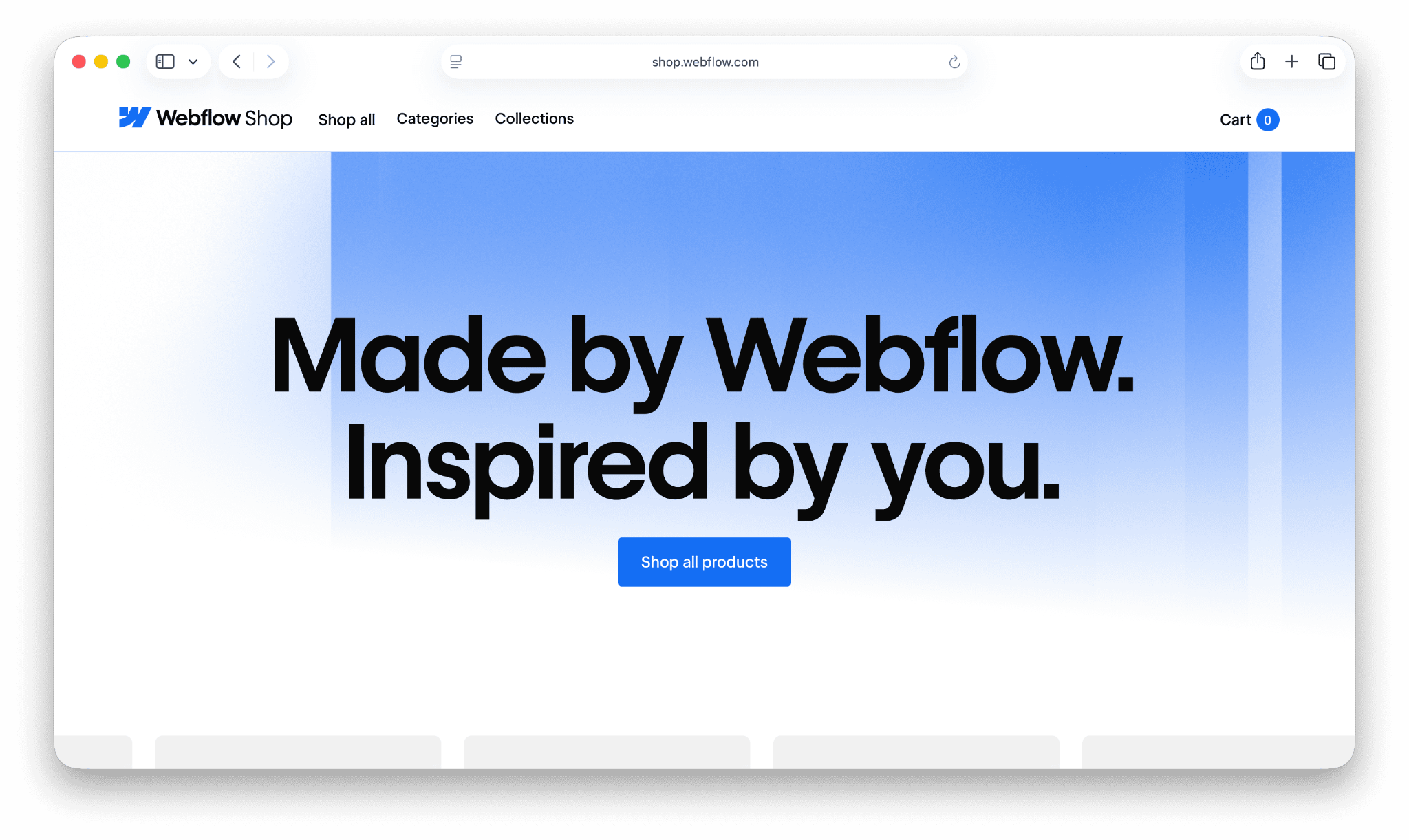
Webflow serves a unique audience. Its customers are designers, developers, and creative professionals who pay close attention to aesthetics.
That creates a higher bar for merchandise.
A generic logo t-shirt might work for some brands, but Webflow's audience expects products that feel thoughtfully designed.
The company's store reflects that. From apparel and accessories to limited-edition collaborations, the products feel consistent with the visual identity and design standards people associate with the brand.

The store itself is also highly curated. Rather than overwhelming visitors with hundreds of products, Webflow focuses on a smaller collection that feels intentional.
4. GitHub
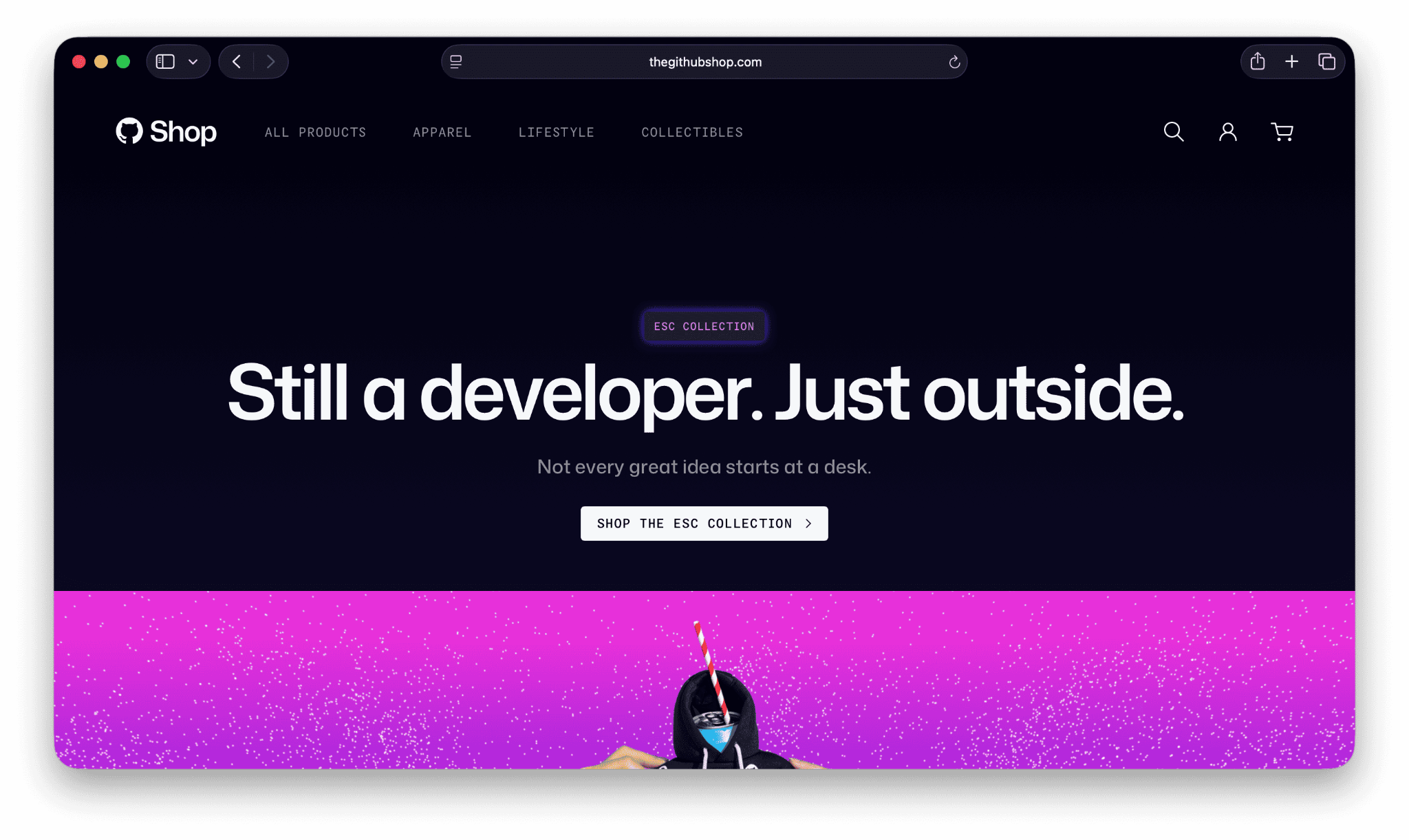
GitHub occupies an unusual position in the tech industry.
Millions of developers use the platform, but many also see GitHub as part of developer culture itself. That's a big reason why its merchandise store extends beyond standard company swag.
Alongside apparel and accessories, the store features products built around Octocat, GitHub's iconic mascot. Over the years, Octocat has become recognizable far beyond the platform itself, giving GitHub a merchandising advantage that many software companies don't have.

The result is a store filled with products that feel collectible and community-driven rather than purely promotional.
5. Figma

Figma's audience cares deeply about design, so expectations for its merchandise are naturally a bit higher.
The company's store reflects that reality, with apparel, accessories, and collectibles that feel intentional and carry the same playful, creative energy people associate with the brand.
That connection extends to products that nod to design culture, giving users a subtle way to express that they're part of the community.

For a company whose customers often see design as more than just a job or skill, that sense of belonging feels like a natural extension of the brand itself.
What Companies Can Learn From These Swag Stores
The examples above may come from different brands, but they highlight some of the same challenges companies face when building a swag store:
What products should you offer? How should you organize them? And how do you create a store that stays useful as your company grows?
Here are a few lessons worth keeping in mind:
1. Start With Why People Need Merchandise
Before choosing products, define the store’s purpose.
Some organizations use swag stores for employee onboarding, while others support events, promotional campaigns, or partner gifting.
That purpose should guide every decision, from product selection and store organization to user access.
The most effective swag stores are built around a clear business need, not a random collection of branded products.
2. Organize Products Into Collections
Google is a good example of this. Rather than putting everything in one catalog, the company organizes products around different communities and initiatives.

The same principle works for businesses of all sizes. Collections can be created around employees, customers, events, product lines, or campaigns, making the store easier to navigate as it grows.
3. Give People a Reason to Care
The most memorable products usually connect to something larger than the company logo.
SpaceX celebrates missions. GitHub builds around Octocat. Figma incorporates design culture.
The lesson here isn’t limited to large brands. Company milestones, events, and community initiatives often create stronger merchandise ideas than logos alone.
4. Plan for Growth From the Start
Many swag stores begin with a handful of products and gradually expand over time.
The important thing is choosing a setup that can support new collections, audiences, and campaigns without forcing the team to rebuild the entire program every few months.
That's one reason many companies look for platforms that can handle product creation, fulfillment, and store management in a single place.
Why Companies Choose Fourthwall for Corporate Swag
The examples we covered earlier highlight what's possible with a company swag store. The next step is figuring out how to build and manage one without creating more work for your team.
That's where the platform behind the store matters.
Here are six reasons companies choose Fourthwall for corporate swag:
1. No Monthly Fees or Long-Term Contracts
One of the first questions teams ask is how much a company swag store costs.
With Fourthwall, there are no monthly fees, setup costs, or long-term contracts. Companies simply pay for products and standard payment processing when orders are placed.
This makes it easier to launch a store, test new merchandise programs, and scale over time without committing to expensive software or vendor agreements.
2. No Need to Guess How Much Swag You'll Need
Planning merchandise for a new hire program, conference, customer campaign, or company event often means estimating demand in advance.
Fourthwall's print-on-demand model removes that guesswork. Products are only created after an order is placed, so teams don't have to worry about overordering, storing inventory, or ending up with boxes of unused swag after an event.

3. No Long Setup Process for Events, Onboarding, and Team Programs
Sometimes a swag initiative comes together in a matter of days, not months.
With Fourthwall, teams can choose products, upload designs, customize their storefront, and launch quickly without a lengthy implementation process.
Whether you're creating onboarding merchandise for new hires or preparing for an upcoming conference, getting started doesn't require a major project.
4. No Need for Extra Help to Update Your Store
Company swag programs change over time.
You might want to add a new employee collection, launch event merchandise, update designs, or introduce seasonal products.
Fourthwall's no-code platform allows marketing, people operations, and community teams to manage those updates themselves without relying on developers for routine changes.
5. No Need for Separate Stores for Different Audiences
Employees, customers, partners, and event attendees often want different types of merchandise.
Instead of managing separate swag programs, companies can organize products into collections and serve multiple audiences from a single storefront.
This makes it easier to keep merchandise organized as programs grow.
6. No Need to Manage Sales Tax and Compliance
Managing sales tax can add unexpected complexity to a merchandise program, especially when orders come from different locations.
As the merchant of record, Fourthwall handles sales tax collection and remittance on eligible transactions.
For many teams, that removes one of the biggest administrative headaches associated with running an online company swag store.
How to Set Up a Company Swag Store on Fourthwall
Setting up a company swag store on Fourthwall is straightforward, even if your team has no ecommerce experience.
Because Fourthwall handles print-on-demand production, payments, and fulfillment, many companies can launch a store in less than an hour.
Whether you're creating a public merch store, an employee swag store, or both, the process is largely the same.
Step 1: Create Your Store and Add Products
Start by creating a Fourthwall storefront and selecting the products you want to offer.
Choose from customizable products such as t-shirts, hoodies, hats, mugs, tote bags, and more. Upload your logo, artwork, or designs, then preview how they'll look before publishing them.
Next, customize your storefront with your company's branding. Add your logo, brand colors, banners, and imagery so the store feels consistent with the rest of your brand. Once everything is ready, publish your store.
Step 2: Give Employees Access to Merchandise
After launching your store, decide how employees will access company swag.
Many companies use promo codes that cover part or all of an order, allowing employees to choose the products and sizes they prefer.
You can also share direct product links with specific teams or individuals. Gift cards work well for onboarding programs, employee recognition, and company events.
This gives employees more flexibility while reducing the administrative work involved in distributing swag.
Step 3: Expand Your Store Over Time
Most companies don't launch with dozens of products. Many start with a small collection of branded apparel and gradually add merchandise for employees, customers, events, and marketing campaigns.
As your needs evolve, you can introduce new products, collections, and designs without rebuilding your store.
Since Fourthwall manages production and fulfillment, scaling your swag program doesn't mean taking on additional inventory or shipping responsibilities.
Building a Company Swag Store Is Easier Than Ever
Merchandise works best when it feels connected to something bigger than the transaction itself.
Whether it's Google creating collections for different communities, SpaceX turning milestones into collectibles, or GitHub building products around Octocat, the strongest stores give people another way to connect with the company.
The good news is that building a company swag store no longer requires large inventory purchases, complicated logistics, or months of planning.
Today, businesses can launch a store, offer merchandise to employees and customers, and expand their collections over time as their needs evolve.
If you're ready to create a company swag store for employees, customers, or events, Fourthwall makes it easy to get started without monthly fees or inventory requirements.
FAQ
A company swag store produces items on demand as employees or fans claim them, while bulk swag requires the company to order fixed quantities upfront and warehouse the inventory. Bulk swag typically costs 15-40% less per item at scale but ties up capital, forces size and preference guessing, and leaves 20-40% of stock unused. On-demand stores like Fourthwall's have no minimums and no unsold-stock risk, which suits distributed teams and unpredictable event calendars.
Companies with global employees usually run their swag store on a platform that ships internationally from multiple production hubs, letting each order print at the closest facility to cut cost and delivery to 5 to 10 business days. Fourthwall's Merchant of Record model handles duties, VAT, and customs paperwork for over 200 countries, so HR teams do not need regional tax IDs or freight forwarders.
Employee credit systems, where each staff member gets a fixed dollar allowance per quarter or year, control spend and drive higher perceived value than open ordering because the credit feels like a benefit rather than an expense. Open ordering with no cap works for smaller teams where budget predictability matters less, or for public-facing stores where fans and customers buy swag directly. Most Fortune 500 swag programs use a hybrid model with employee credits for new hires and open ordering for anniversaries.
Companies measure swag store ROI by tracking employee usage rate, net promoter score lift after swag delivery, and reduced spend on lost or wasted bulk inventory, since traditional bulk swag typically wastes 30-40% of units. HR teams also benchmark recruiting and retention impact, since employees who receive high-quality swag report 20-30% higher engagement in HR surveys. Marketing teams tie public swag store revenue and social impressions directly to brand awareness.
Companies can launch a swag store on Fourthwall in under an hour by picking products from the catalog, uploading their logo or design, customizing storefront colors and pages, and publishing. No-inventory print-on-demand platforms compress setup that once took weeks into a same-day process. Traditional bulk-inventory swag store setups still take 4 to 8 weeks between product selection, sample approval, minimum-order production, and warehouse intake.
Richard is Head of Organic Growth at Fourthwall, with 14+ years of experience in the creator economy and ecommerce. He’s built businesses across the spectrum—from print-on-demand stores to custom cut-and-sew clothing lines, as well as selling digital products. He helps creators navigate merch strategy and build sustainable businesses.


You might also like

How Alix Earle Turned GRWM Videos Into a Netflix Series and a Skincare Brand

Making It Together: Inside Evan & Katelyn's Rise From IKEA Hack to Trusted DIY YouTubers

Brett Chody’s Journey to Building a Community One Mile (and One Bite) at a Time

From Actor to ADHD Educator: How Jessica McCabe Turned a Coping Mechanism into a Credible Brand

How Halley Kate Williams Turned a Pet-Brand Venture into a Full Apparel Collection

How Hopescope Built One of YouTube's Biggest Shopping Channels

How Coyote Peterson Created an Extensive Merch Collection Centered on His Content

How LaurenZside Turned Gaming Videos Into a Multi-Business Creator Brand

How Chris Heria Built One of YouTube's Biggest Calisthenics Brands

Keep up with the latest from Fourthwall
New features, product updates, trend breakdowns, and creator stories — straight to your inbox.